
Under the category of ridiculous but true, today we have news that the Department of Housing and Urban Development, which is slated for a $6.8 billion budget cut in Mr. Trump’s first budget proposal, is spending $165,000 on new furniture to remodel the office of its new chief, Ben Carson– reportedly at his wife’s insistence. Reported in full by the Guardian.
(This is not the new furniture. Photo courtesy of pixabay.com and maryrodgers1982)

Many Republican propagandists have tried to tie Barack Obama to Saul Alinsky in some way, in part because of Alinsky’s radical reputation, but aside from a similarity in that both were, for a time, community organizers, Obama was only ten years old when Alinsky died– so it is unlikely that they ever met or that Obama studied under Alinsky. There has also circulated a document falsely claiming to show Alinsky’s goals, which I will not reproduce here. The web site snopes.com evaluated those claims and found them without foundation. They did, however, present a real list of rules from Alinsky’s work, published in 1971, and that is probably just as maddening to conservatives:
Always remember the first rule of power tactics: Power is not only what you have but what the enemy thinks you have.
The second rule is: Never go outside the experience of your people. When an action is outside the experience of the people, the result is confusion, fear, and retreat.
The third rule is: Wherever possible go outside the experience of the enemy. Here you want to cause confusion, fear, and retreat.
The fourth rule is: Make the enemy live up to their own book of rules. You can kill them with this, for they can no more obey their own rules than the Christian church can live up to Christianity.
The fourth rule carries within it the fifth rule: Ridicule is man’s most potent weapon. It is almost impossible to counterattack ridicule. Also it infuriates the opposition, who then react to your advantage.
The sixth rule is: A good tactic is one that your people enjoy. If your people are not having a ball doing it, there is something very wrong with the tactic.
The seventh rule: A tactic that drags on too long becomes a drag. Man can sustain militant interest in any issue for only a limited time, after which it becomes a ritualistic commitment, like going to church on Sunday mornings.
The eighth rule: Keep the pressure on, with different tactics and actions, and utilize all events of the period for your purpose.
The ninth rule: The threat is usually more terrifying than the thing itself.
The tenth rule: The major premise for tactics is the development of operations that will maintain a constant pressure upon the opposition. It is this unceasing pressure that results in the reactions from the opposition that are essential for the success of the campaign.
The eleventh rule is: If you push a negative hard and deep enough it will break through into its counterside; this is based on the principle that every positive has its negative.
The twelfth rule: The price of a successful attack is a constructive alternative. You cannot risk being trapped by the enemy in his sudden agreement with your demand and saying “You’re right — we don’t know what to do about this issue. Now you tell us.”
The thirteenth rule: Pick the target, freeze it, personalize it, and polarize it.
(photo of a radical skateboarder courtesy of pixabay.com and vivisorg; see Alinsky’s sixth rule)

Establishing the origins of such weapons has been difficult. In November, Russia used its Security Council veto to end the work of an independent panel investigating chemical weapons used in the Syrian conflict. The Joint Investigative Mechanism, as it was known, had found that both the Syrian government and Islamic State militants had used chemical weapons in the war, though Russia’s ambassador to the United Nations labeled the panel’s reporting “a joke.”
This is the last paragraph of an article in the New York Times that describes the extensive and long-standing (since the 1960s) cooperation between North Korea and Syria in missile and chemical weapons technology. The Syrians even built, with North Korean help, a plant to produce plutonium, whose primary use is in nuclear weapons. Israel bombed and destroyed that plant in 2007. Russia supports the Syrian government in the civil war and spends a small sum on supporting the North Koreans, primarily to keep the United States off balance.
Stories such as this undermine the futility of attempting to end the use of chemical weapons, or the war on civilians generally. The United Nations, the only world-wide organization with a mandate to end war, is hamstrung by a civil war that appears to represent the vendetta of a Syrian minority religious community and certain individuals in supreme power from that group against a country full of citizens from other religious faiths. There is no suitable mechanism in the United Nations to deal with civil wars.
Such disturbances are described as “internal matters” and the UN merely bestows legitimacy on one particular claimant to represent the nation.
After the next world war, if there is a civilization able to sustain any world-wide organizations, perhaps then the issue of civil wars with at last be dealt with by some mechanism.
An idealist would suggest a world-wide court of democratic adjudication which could document the claims of populations and somehow administer justice and rehabilitation to places in danger of destruction by civil war. Such a court would determine the areas of land to which people could legitimately lay claim and the forms of government that would be established (presumably by consent of the governed.)

Just over a hundred years ago, in 1915, Einstein introduced general relativity to the world. It was so complex that it was said that only three people in the world understood it. That is not actually true; quite a few people had a pretty good idea of what Einstein was proposing. What is true is that, a hundred years later, our computers are not up to the task of calculating solutions to his equations, as David Wilshire said in 2008:
“But Einstein’s equations (1915) are in general so complex that we cannot solve them for the distribution of matter we actually see, even on a computer.”
Many things have happened in the last hundred years. When I was a child, the concept of what I am doing right now was a distant dream: using a computer as a typewriter as well as a telegraph machine– with color illustrations. Computers brew coffee, drive cars, and help us observe galaxies 10 billion light-years away. We have decided that the Universe is 13.8 billion years old, is expanding and is flat, but with no edges and no corners.
One of the things that has happened relatively (!) recently is that a mysterious quantity, dark energy, has been proposed as an explanation for a puzzling observation: the rate of expansion of the Universe actually appears to be speeding up. This really doesn’t make sense, particularly because if it were true, eventually the entire Universe would be ripped apart– possibly soon, as one recent science-fiction short story has made painfully real for us.
As David Wiltshire explained in 2008 in a simple overview and in this highly technical paper describes, this is only an apparent problem due to the inhomogeneity of matter distribution that was created when the Universe first appeared. Matter is inhomogeneously distributed because, due to the uncertainty principle (with which Einstein famously had a lot of trouble), when space and time first appeared, one couldn’t be sure whether there was matter or space in any particular place.
As a result of this inhomogeneity in the beginning, at the present time there are huge voids in the Universe– voids within which there is virtually no matter at all, only space. We exist within a filament or bubble which contains a significant density of matter; virtually all stars, galaxies, and so forth exist within these locally dense areas. The Universe as a whole can be thought of as a huge Swiss cheese, a very tenuous one.
Because of this, all stars that are observed to be travelling away from us following the Hubble Constant are apparently also speeding up their withdrawal. This apparent speeding up is due to our local clock time, which has slowed down in relation to the average clock time in the Universe; the average clock time runs faster because it is measured within those voids.
In other words, the apparent speeding up of cosmic expansion is due not to a mysterious dark energy (which has not yet been found) but to normal Einsteinian mechanics. Every “standard candle” we observe that is telling us how far away it is and what the Hubble Constant is, is located within a region of space that contains matter and thus has its time slowed down relative to the clocks within the voids. Of course, those voids don’t contain any clocks because they are empty, but if they did, they would run faster than ours.
Empty space is expanding at a rate that tells us that it is negatively curved, like a saddle; our space, the space that contains matter, is not expanding because its gravity binds it together. Here is a quote from the abstract of the latest paper:
“Generic averages of Einstein’s equations in inhomogeneous cosmology lead to models with non-rigidly evolving average spatial curvature, and different parametrizations of apparent cosmic acceleration. The timescape cosmology is a viable example of such a model without dark energy. ”
It’s pretty complicated, but eventually the majority of cosmologists will get their heads around it and forget about searching for dark energy. It has only been ten years or so since Wiltshire pointed out that our clocks are running slower than the Universe’s average clock, and less than a hundred years since Edwin Hubble discovered (in 1922-23) that there was a larger Universe outside the Milky Way– a universe that, he announced in his first published paper in 1929, is expanding.
(Here is David Wiltshire’s latest paper, with Lawrence H Dam and Asta Heinesen. Here are more references to the absence of dark energy: an article in the International Business Times from 9/14/2017 where the theory is called “timescape cosmology”; and an article from Science April 3, 2017)
(After that, you’re on your own. See Wikipedia for more information about Edwin Hubble and cosmology)
(photo courtesy of pixabay.com and geralt)
(Please notify me in the comments about any errors)
Quote of the Day: The Russians are Coming

Washington (CNN) — US Cyber Command chief Adm. Mike Rogers told lawmakers on Tuesday that he has not been granted the authority by President Donald Trump to disrupt Russian election hacking operations where they originate.
Asked by Democratic Sen. Jack Reed if he has been directed by the President, through the defense secretary, to confront Russian cyber operators at the source, Rogers said “no I have not” but noted that he has tried to work within the authority he maintains as a commander.
Let us be clear: we expect Admiral Rogers to confront the Russians on his own authority and we do not find the lack of direction from Mr. Trump to be surprising.
On Tuesday, Rogers reiterated that he still views Moscow as a threat to the 2018 elections, a stance that is consistent with what he and other top national security officials told the Senate Intelligence Committee earlier this month.
“We expect Russia to continue using propaganda, social media, false-flag personas, sympathetic spokesmen and other means to influence, to try to build on its wide range of operations and exacerbate social and political fissures in the United States,” Director of National Intelligence Dan Coats previously testified.
“There should be no doubt that Russia perceives its past efforts as successful and views the 2018 US midterm elections as a potential target for Russian influence operations,” he said.
A third grader should understand at this point that the Russians are coming and we should be very, very cautious around strangers.
Web Site Specializing in Biomedical News

This website you will find useful if you want to dive deeply into biomedical news: statnews.com but be aware that it is ultimately sponsored by Elsevier, which is a giant medical publisher, particularly of journals. Elsevier does not have a sterling reputation– see also Retraction Watch– but it does generally provide information, in a stodgy sort of way. You will be shocked, shocked I say, by the User Agreement that they bind you to– an agreement that is there, apparently, to provide employment to lawyers and nothing else. Oh, well, even lawyers gotta eat.
(photo courtesy of pixabay.com and DarkoStojanovic)

The LA Times reported yesterday that a man was arrested while riding a white Arabian horse on the 91 freeway in Los Angeles on Saturday– his blood alcohol level was 0.21%. He claimed to be celebrating his 29th birthday. Apparently there were additional charges pending on this young man. There is, in fact, a specific section of the vehicle code that requires a person riding an animal to obey the same rules as a person in a motor vehicle. You’re not supposed to ride a horse on the freeway anyway.
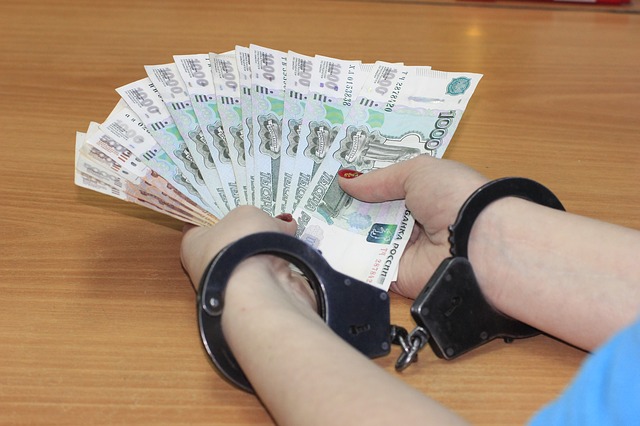
‘A policy dispute’
Quote of the Day: Russian Agents Use Cheap and Effective Methods to Sabotage American Social Media

From the Hill:
A former FBI official said Sunday that Russia’s interference in the 2016 presidential election was cheap and effective in sowing discord between Americans.
Leo Taddeo, the former special agent in charge of the Special Operations/Cyber Division of the FBI’s New York office, told AM 970 The Answer’s John Catsimatidis that the Russian meddling described in indictments filed by Robert Mueller’s special counsel office “really undermined” American democracy.
“I think it’s fairly clear the Russians have a cheap and effective way to sow discord and confusion and really undermined the basic principles of democracy,” Taddeo said. “It really wouldn’t matter what the issue was, as long as people were disagreeing.”
. . .
“If Americans aren’t so confident in their president or the Congress or their government in general, then it makes America weaker when it comes time to act on the foreign stage … It’s a brilliant use of a simple technique that’s cheap relative to other intelligence operations [designed] to weaken us,” Taddeo added.
. . .
“This indictment serves as a reminder that people are not always who they appear to be on the internet,” Deputy Attorney General Rod Rosenstein told reporters while announcing the indictments.
“The indictment alleges that the Russian conspirators want to promote discord in the United States and undermine public confidence in democracy,” the deputy attorney general added.
The purpose of Russian activities– which we can call “sabotage” although it no longer involves throwing wooden shoes into machinery– is to weaken American confidence in their essential institutions, especially the democratic process. Russians particularly dislike democracy because it interferes with the ability of their oligarchs (rich men in industry) to control the government by monopolizing the positions of power held by elected officials. With democracy, positions of power are elective– held by the consent of the people who are governed; in an oligarchy, positions of power are permanently usurped by a few wealthy individuals.
The social media used by the Russians for their sabotage are inherently unstable and prone to causing dissension. Users of these media feel free to espouse extreme views because they feel anonymous when posting on large, faceless sites like Facebook and Twitter. There are almost no consequences for posting offensive speech.
(Photo courtesy of pixabay.com and Anestiev)

For whatever reason, there’s a faction in our country that sees public action for the public good, no matter how justified, as part of a conspiracy to destroy our freedom.
This paranoia strikes both deep and wide. Does anyone remember George Will declaring that liberals like trains, not because they make sense for urban transport, but because they serve the “goal of diminishing Americans’ individualism in order to make them more amenable to collectivism”? And it goes along with basically infantile fantasies about individual action — the “good guy with a gun” — taking the place of such fundamentally public functions as policing.
Anyway, this political faction is doing all it can to push us toward becoming a society in which individuals can’t count on the community to provide them with even the most basic guarantees of security — security from crazed gunmen, security from drunken drivers, security from exorbitant medical bills (which every other advanced country treats as a right, and does in fact manage to provide).
In short, you might want to think of our madness over guns as just one aspect of the drive to turn us into what Thomas Hobbes described long ago: a society “wherein men live without other security than what their own strength and their own invention shall furnish them.” And Hobbes famously told us what life in such a society is like: “solitary, poor, nasty, brutish and short.”
. . .as I have said before, government doesn’t have to be bad; good government provides individuals with public transportation, security, medical care without crushing bills, and armed responses by trained personnel to active shooters– There were revelations that there was an armed security guard from the local police stationed at Parkland who waited four minutes outside the school while a killer rampaged inside and shot 17 people to death in six minutes. Only in Florida, a “stand your ground” state, where amateur shooters are promoted by the state government.)
(quoted from Krugman’s op-ed column in the NYT; there’s little to add because Krugman hits the nail on the head, as usual)
(image courtesy of pixabay.com and Open-Clipart-Vectors; chosen because Lenin believed that government had to be destroyed in order to be remade– not because he was a “collectivist”)
This comment was submitted in response to Krugman’s piece:
Joe Gilkey
Seattle 1 hour ago
While arming teachers in this day and age is not a good idea, we do have an abundance of highly qualified veterans in need of a good job that would make short work of these cowards that prey on unarmed students. It would be worth every penny of the added expense if future perpetrators knew they would be up against combat experienced ex servicemen with protective vests and automatic weapons, who would without question risk life and limb to protect a school full of children. There may be innocent life lost with this approach to protection, however it would put an end to these massacres occurring today. Trump was right in saying this was a soft target, and until we reach the end of the violent reactionary potential of today’s youths, we do have the people with the needed skills, and the willingness, to prevent any more of these unopposed tragedies.
This was the most popular comment, from Australia:
TJ McWoods
Tasmania 13 hours ago
As an expat of 14 years, raising a teenager in Australia, and viewing the USA from a great distance, the differences between nations is stark.
My daughter takes yearly water safety classes taught through year 10 in Oz. School safety means not running in the hallways. She will never experience an active shooter drill. Australia has NEVER experienced a school shooting.
My daughter has yet to see an armed security guard anywhere in Australia but I clearly remember my then 10 year old daughter asking me why an armed guard was in grandma’s local (USA) library.
My daughter has never met an Australian who owns a gun. I doubt she ever will.
My daughter will likely never lose an Australian relative, friend or school mate to a gun death. I’ve lost a grandmother and 2 close friends to gunfire, but that was in the USA. Hasn’t happened here.
My daughter does not get startled by noises that sound like gunfire. I still instinctively look for cover. She thinks I’m weird.
Fortunately we get to see all the US mayhem from afar. Unfortunately, 10’s of millions of American school children do not.
This comment was also very popular:
David Doney
I.O.U.S.A. 13 hours ago
One of many obvious problems with arming teachers is that shooters nervous they might face a teacher with a pistol* will simply pick a different soft target (e.g., restaurants, malls, day care centers, etc.) Are we going to arm everyone? Day care center nannies with shotguns, anyone?
In addition to the prudent measures we hear about all the time, we can take a lesson from cars and healthcare insurance (pre-Trump) and require all gun owners to be insured. They would have to be members of a well-regulated state militia with financial liability for the misdeeds of its members, with insurance premiums paid for by those members based on the risk profile of the militia.
This is only fair, as who has to pay for the misdeeds of the shooters? You and me through higher law enforcement and health insurance costs.
*Pistol-toting half-trained teachers are not a big worry for a moderately skilled shooter with an assault rifle anyway. And they can kill dozens before teachers can react with such weapons. And do you want the teachers in a gun battle with an assailant with your kids in the crossfire? We have to get the guns off the street.
Obviously, arming teachers (as Don the Con suggested) is a bad idea– taking down a teenager armed with an AR-15 requires special training and experience, not something the average teacher can acquire.

