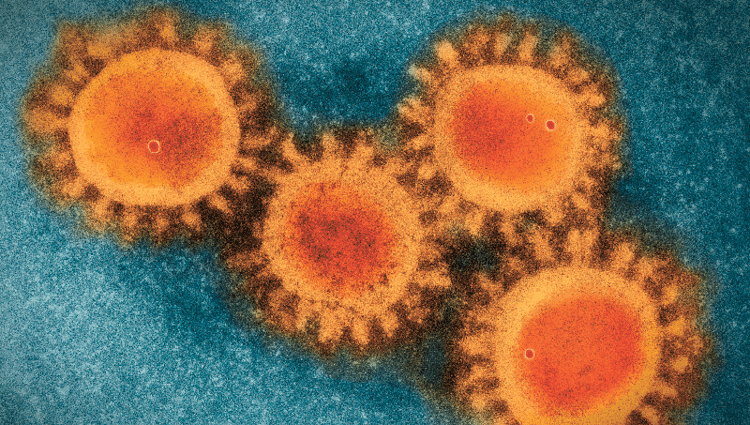
SARS-COV-2 virions by EM: JAMA Open Network
This MedRxiv paper indicates a higher prevalence of COVID-19 cases than individual tests would have showed. A STAT news article reporting on the paper says that the number of cases in the community served by the wastewater treatment plant(s) was reported as 446, but analysis of the wastewater with the same technology as the individual tests (RT-PCR) suggests at least 2300 people were infected, with a small possibility that as many as 100,000 people could have had the virus. This discrepancy may relate to the lack of available individual testing; how much virus RNA is shed in the stool may vary, but previous tests suggest that stool virus is no longer infectious due to breakdown by the digestive process.
Another study from the Netherlands found SARS-COV-2 RNA in wastewater on February 6, three weeks before anyone in the country had reported a positive test. These studies are based on those done at the time of the first SARS epidemic in 2003. The company which performed the tests, Biobot, plans to expand testing to many other wastewater plants in the US. They are offering free testing for municipalities at this time.
These studies show that the virus has been spreading in communities worldwide long before anyone was tested, not a surprise considering many cases of COVID-19 are asymptomatic. Remember that studies reported in MedRxiv have not yet been peer-reviewed, so there may be methodological or other errors. Nonetheless, this particular research appears to be solid and to be the basis for wider community testing.
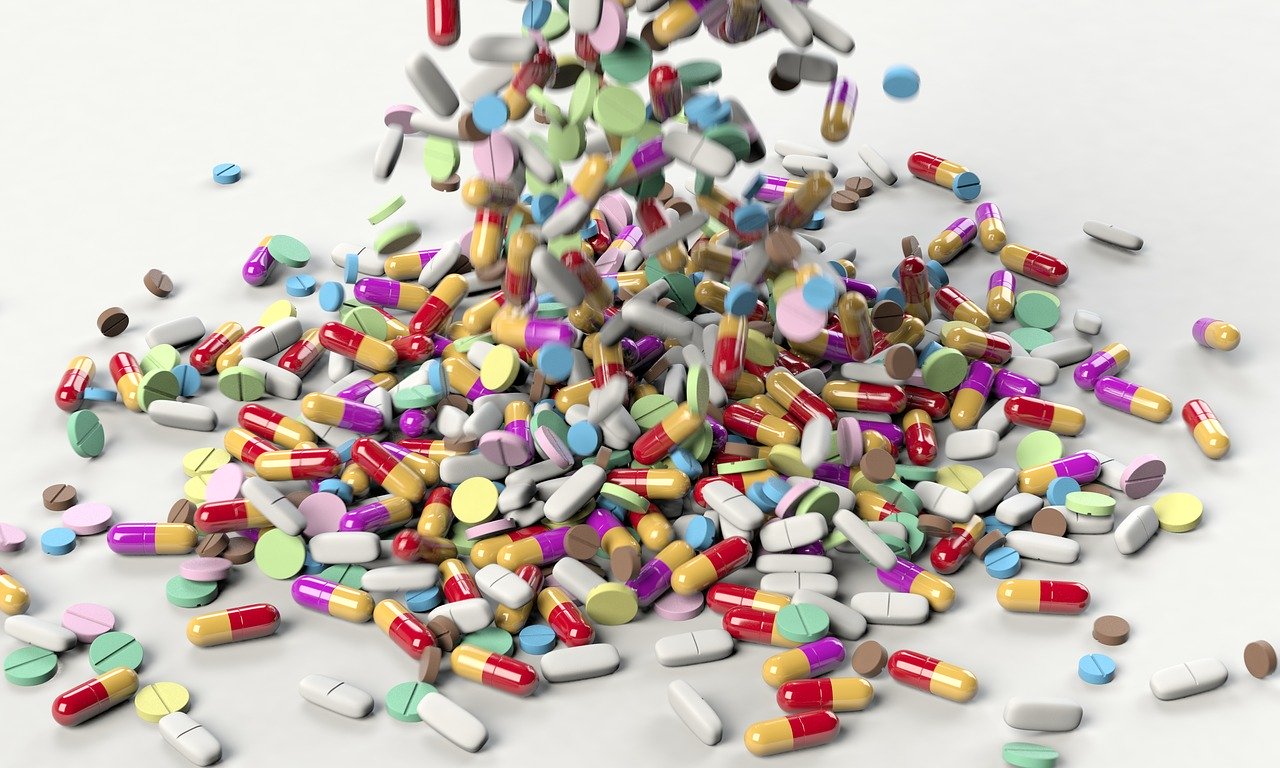
photo courtesy of qimono (Arek Socha) via pixabay.com
According to STAT news (statnews.com) the Drug Enforcement Agency (DEA) has responded to reported shortages of certain essential controlled drugs (fentanyl, for example) by increasing quotas. As I noted on a previous post, Schedule II drugs are produced under a yearly quota system that limits how much can be prescribed and dispensed. Pharmaceutical companies have responded by cutting back on production of generic versions and increasing the amounts of brand-name, higher-profit versions. This is from the statnews article:
The agency is increasing production quotas by 15% for several controlled substances, including fentanyl, morphine, hydromorphone, codeine, ephedrine, and pseudoephedrine, as well as certain so-called intermediates that are essential to producing these medicines. The DEA also plans to approve increased imports of ketamine, diazepam, midazolam, lorazepam, and phenobarbital
Because of the pandemic, however, supplies of Schedule II drugs used in patients who are intubated and on ventilators have become very tight. The percentage of orders fulfilled has dropped. In response, the DEA ordered increases of their quotas. This is a .pdf file from fda.gov.
Increases also apply to certain over-the-counter drugs like pseudoephedrine (Sudafed) that are limited due to their possible use as raw ingredients for illicit production of methamphetamine.
Whether this increase will result in an improvement in the supplies of these drugs is an open question. Reading the DEA order, it appears to be quite tentative– while the demands are great, not to say unprecedented.
Quantum uncertainty makes long-term predictions of the orbits of black hole triplets impossible

three body problem, from livescience web site
Science News reports (based on a paper published by the Royal Astronomical Society) that new calculations show the prediction of the orbits of triplets of black holes is fundamentally impossible. This is because the uncertainty principle limits the accuracy of positional determinations. The orbits of three bodies are chaotic, that is they are highly sensitive to the initial positions of the bodies. This makes their orbits impossible to determine very far into the future. There are a few solutions to the equations representing these orbits, but they are far between.
New calculations show that predictions of these orbits are impossible to nail down with certainty, and the uncertainty only gets worse with time. When the uncertainty principle is included in the calculations (the principle is actually a mathematical equation that tells you just how close you can get to accurate determination of speed and location of any one particle), the result is that, no matter how accurate your measurement of the initial positions of the three bodies, after a while your prediction of the orbits will be wrong.
“The Three Body Problem” is a famous science fiction trilogy, written by an author raised in the People’s Republic of China (PRC). The novel is deeply influenced by the culture of communist China. It makes for fascinating reading. You can spend quite a bit of time while you are in self-imposed isolation reading this trilogy, and you will gain much knowledge and understanding, both of science fiction and the psychology of people who live in China. Since this is one of the two largest countries on Earth, I think that understanding the psychology of its people is important.
SARS-COV-2 virions by EM: JAMA Open Network
There has been a lot of publicity surrounding the new test for SARS-COV-2: a point-of-care test that gives you results while you wait (positive in five minutes, negative in fifteen minutes). This test is not yet widely available, and until it is, people who have symptoms should not wait but should isolate themselves. Even if you have had tests for influenza, strep throat, and other respiratory infections that show another condition, you could still be co-infected with the novel coronavirus. Self-isolation will prevent transmission of all types of infections.
Patients with typical symptoms of dry cough, fever, headache, and possibly sore throat, loss of sense of smell (without a stuffy nose) or upset stomach, vomiting, or diarrhea: assume that if there is novel coronavirus circulating in your community, you have it. A SARS-COV-2 test may not be available due to shortages of supplies, and even if you have had the test, you may not get results for some days. So isolate yourself, don’t go to work, and notify all your contacts that you are sick. You don’t have to tell them that you have the novel coronavirus; you might have a cold or flu. Regardless of your actual type of infection, you will prevent passing it on to others if you isolate yourself until you feel better.
Treatment is another issue. Most infections of this type (upper or lower respiratory) are caused by viruses that cannot be killed any known medications. You should take a cough medicine, a decongestant, and acetaminophen (paracetamol). If the acetaminophen doesn’t help, then you should take ibuprofen for fever, aches, and pains. International medical organizations have stated that there is no evidence that ibuprofen makes your illness worse, despite theoretical considerations that have been widely aired. Always take ibuprofen with food to prevent upset stomach. Never exceed the recommended total daily dose of acetaminophen of 3,000 milligrams, as your liver could be affected. Check the ingredients of combination medicines for colds and flu, as they often contain acetaminophen with other ingredients.
If you are given hydroxychloroquine (HCQ) (and you can get it by prescription if the pharmacy has any), you should start taking it as soon as possible, and never exceed the prescribed dose. Overdoses of HCQ can be fatal, and the difference between the potentially effective dose and the toxic dose is small. We do not yet know whether HCQ is helpful in treatment of COVID19, but if you can get it, you can take it and keep in mind that it is an experiment, not a cure-all.
If you are given an antibiotic, you should take it at the recommended dose (several times every day in most cases) and at recommended times (some are taken on an empty stomach and others with food). Read the label, please. Be sure you take your antibiotic with or without food exactly as the doctor or pharmacist tells you. Some antibiotics don’t work unless they are taken on an empty stomach; others may cause severe stomach upset if not taken with food (some will cause diarrhea by killing beneficial bacteria in your intestines). Take your antibiotic for five to seven days, or at least three days after you start to get better. Do not stop the antibiotic too early, nor should you take it off and on, as any possible effect will not happen unless it is taken regularly. Whether an antibiotic will do you any good is an entirely open question. Most likely it will not make any difference, but if you take it, you should take it as recommended.
SARS-COV-2 virions by EM: JAMA Open Network
A study of pooled samples, 292 in total, taken between January 1 to February 26, 2020, revealed only two positive results by RT-PCR (reverse transcriptase-polymerase chain reaction), both in late February. This study, while intended to demonstrate the greater sensitivity of pooled samples from nasopharyngeal swabs and bronchoalveolar lavage (BAL), seems to have inadvertently demonstrated that the novel coronavirus wasn’t circulating undetected before the first positive patients came to light.
As a post yesterday noted, even the great sensitivity of RT-PCR is not able to detect all cases of the virus in the routine nasopharyngeal swab test– BAL is the most reliable way to detect the actual virus, showing it in 14 of 15 confirmed cases. Nasopharyngeal swabs showed virus in roughly 75%, or three-quarters, of all confirmed cases.
The importance of these tests is that, first, swab testing will not detect the virus in all patients who have the infection. BAL is most reliable, but it requires bronchoscopy, which is not a good idea because it can spread the virus all over the room during the procedure. Second, the study referenced above shows that the virus was not present before it was first reported in late February in the San Francisco area.
Patients with typical symptoms of dry cough, fever, headache, and possibly sore throat, loss of sense of smell (without a stuffy nose) or upset stomach, vomiting, or diarrhea: assume that if there is novel coronavirus circulating in your community, you have it. A SARS-COV-2 test may not be available due to shortages of supplies, and even if you have had the test, you may not get results for some days. So isolate yourself, don’t go to work, and notify all your contacts that you are sick. You don’t have to tell them that you have the novel coronavirus; you might have a cold or flu. Regardless of your actual type of infection, you will prevent passing it on to others if you isolate yourself until you feel better.

image courtesy of pixabay.com

photo courtesy of kzd via pixabay.com
(photo courtesy of pixabay.com)
The New York Times, in a piece entitled “They Turned Out to Vote in Wisconsin During a Health Crisis. Here’s Why.” quoted an in-person voter in Wisconsin, Clarence Carter, 70, as saying that he filed for an absentee ballot weeks ago but never received it. He said “his wife has health issues and couldn’t stand in the line… The polling place next to my house closed down, so I’m here… I’m just disappointed. This is really crazy.”
The piece finishes: “So why vote?” Mr. Carter said, “It’s the ballot or the bullet.”
Republicans should be put on notice. They have been said to prefer their own rule to allowing democracy to function normally. If they continue to do so, they will be risking Civil War II.

photo courtesy of pixabay.com and ErikaWittlieb
The US Supreme Court put the final nail in the coffin for attempts to allow full access by mail-in votes in Wisconsin. The Court, by 5-4, refused to allow a delay for one week in the cut-off for mail-in ballots to be counted. This leaves voters who have not yet received the mail-in ballots high and dry. In order to vote, they will be forced to attend polling places in person. Because of refusal by volunteers to help out at polling places for fear of infection, only 5 of 180 polling places will be open today.
This catastrophe prefigures what will happen in November if the pandemic continues to rage. Mail-in balloting is only allowed in mostly Democratic states because Republicans rightly figure they cannot be re-elected if they allow everyone to vote without exposing themselves.
The situation is dire because about a third– up to 40%– of voters are supporters of He-who-must-not-be-named (you know, [redacted], or Don the Con). These people are brainwashed to blindly stay in line by Fox (Faux) “News”. These people cannot be redeemed (except possibly by infection with the novel coronavirus, not that I would wish that fate on a dog, much less a Republican).
Yet rejection of the Republican/fascist model of government depends on all of the other 60% coming to the polls en masse to cast their votes and throw the bums out. How difficult this is can be seen when we look at the results in Wisconsin and other gerrymandered states. 54% of voters cast votes for Democratic state candidates in Wisconsin, yet nearly two-thirds of the state representatives elected were Republican. Democratic voters have been carefully packed into districts that over-represent the majority by expert gerrymanders aided by computer programs.
The prospect for democratic government in November is appalling. If He is re-elected, we will descend into a proto-fascist, narcissistic form of government that will be dysfunctional for all but the elite and unable to support those who most need it: the lower half of the population. I fear more for our country than I have ever feared before, even after Nixon was re-elected in 1972. I remember those days well: we hate-watched Nixon as he proceeded to govern from the right and approach the most totalitarian government in the world with an olive branch (I’m talking about Nixon and China, in case you forgot).
I had hope for our country after Nixon resigned, but now I am in abject fear. If I could die to get Biden elected in November, I would gladly offer my life. But my death would serve no purpose. If He is re-elected, the country will descend into a situation in which the separation of red and blue states and incipient civil war is possible. I will probably live to see this day, but I won’t enjoy it.

photo courtesy of Gerd Altmann (geralt) via pixabay.com
A comparative study of RT-PCR (reverse transcriptase-polymerase chain reaction) testing for COVID-19 found widely varying sensitivity for different test sites. A total of 1070 tests were done in 205 patients. Broncho-alveolar lavage specimens (obtained at bronchoscopy, a risky procedure in these cases) were positive in 93% (14/15) tests. Here is a quote from the article:
Most of the patients presented with fever, dry cough, and fatigue; 19% of patients had severe illness. Bronchoalveolar lavage fluid specimens showed the highest positive rates (14 of 15; 93%), followed by sputum (72 of 104; 72%), nasal swabs (5 of 8; 63%), fibrobronchoscope brush biopsy (6 of 13; 46%), pharyngeal swabs (126 of 398; 32%), feces (44 of 153; 29%), and blood (3 of 307; 1%). None of the 72 urine specimens tested positive.
The article goes on to say that nasal swab specimens that were positive had the largest amounts of virus present. While virus was found in feces and another article suggests that fecal-oral transmission might be an issue, attempts to isolate “live virus” in cell culture from feces were unsuccessful in yet another study (which I couldn’t find after seeing it a few days ago– there are already over a thousand studies on BioRxiv).
This result gives us cause for concern about official figures for the new virus and our policy of isolating people until they get negative test results. Bayesian analysis (statistical decisions based on “prior probability”, or likelihood based on what you already know before testing) suggests that patients with cough, fever, and other consistent symptoms who have negative tests for influenza should be presumed to have the novel coronavirus even if an initial nasopharyngeal swab test is negative. For example, noncontrast CT (computer-assisted tomography) could be done to detect the typical ground-glass opacities (areas of darkening) found in the lungs of COVID patients– this is what the Chinese did during their epidemic.
Detection of SARS-COV-2 in asymptomatic patients still depends on nasopharyngeal swabs. Once the recently approved blood antibody test becomes widely available, we may discover that many more people have had asymptomatic or mild infections than we suspected.
Finally, “potent neutralizing antibodies” specific to SARS-COV-2 (not to SARS-COV) were found in this March 21 study, suggesting that infection with COVID-19 will result in immunity after recovery. This is a good indication that people who survive the infection will be able to avoid re-infection and need not be further isolated.

