
photo courtesy of pixabay.com
Paul Krugman, in his latest column, warns that the latest authoritarian moves by [redacted] may lead to the death of democracy as we know it. He points to what has happened under the rule of Viktor Orban, the leader of Hungary. He was headed for authoritarian rule all along, and now he has used the excuse of the pandemic to create rule by decree, censor and shut down the free press, and throw opposition leaders in jail.
The debacle in Wisconsin in Tuesday is a perfect example of the playbook by which the Republicans can suppress the vote. Under cover of people’s fear of exposure to the virus, all but five of the state’s 180 polling places were shut down. Absentee balloting was restricted, and many people who applied for ballots weeks ago never received them. As a result, a hyper-conservative supreme court justice appears to have won re-election to further stack the high court. In the 2018 elections, the voting districts were so heavily gerrymandered that, despite getting 53 percent of the vote, Democratic state representatives only got 36 percent of the seats.
The same thing could happen in numerous red states and even in swing states, setting up the Republicans to win in November despite their numerical inferiority among registered voters.
The answer to this onslaught on democracy is for every Democrat to work tirelessly to obtain “certificates of immunity” from the new antibody tests for SARS-COV-2. In this way, they can vote in person without fear of being infected or exposing others. This is of the highest priority, and there are only six months to get this done.
The alternative is the re-election of [redacted] and the collapse of American democracy. The country will be fragmented into red and blue territories, and civil war will be the next result. Democrats cannot take this assault on democracy lying down, for the good of the lower 99% of the population. Whether they like it or not, the best interests of the 1/3 of people who are die-hard Republican cultists would be better served by their loss at the polls. They are blindly voting against their own interests and if the new virus doesn’t open their eyes, nothing will.

cartoon courtesy of pixabay.com
Jennifer Rubin at the Washington Post was said to be a conservative, but she has been a reliable “never-[redacted]” type for a long time. Today, her opinion column didn’t disappoint. She describes all the fantasy things that He has promised in his daily “briefings” (which are running to a less-than-brief 2 hours at times). She describes the terrifying unemployment figures, which are if anything an underestimate of the true numbers of people out of work. She says that Biden has an average 6-point lead in election polling. There’s more, but I’ll just close with this quote:
In the past, media saturation, out-and-out lying and right-wing media propaganda seemed to get him through the immediate news cycle. Now, his media blather is white noise in the background. In the foreground is a vivid and terrifying pandemic he did not prepare for and resists using his full authority to combat. It may have taken a pandemic to drive home the message to Trumpian Republicans: Facts matter.

Iceland flowers by David Mark via pixabay.com
USA Today reports that Iceland’s random testing and voluntary social distancing policies have worked. The figures: 0.3-0.8% of the population tested positive, with more than 1600 cases but just six deaths. That’s out of a population of roughly 364,000 people, a medium sized town in the US. Most importantly, about 50% of those testing positive had no symptoms at the time they were tested.
That is particularly important giving the way the testing was conducted. Subjects were chosen at random using the country’s telephone directory. This suggests that the true figure for asymptomatic infections is really more like half than the 25% previously estimated in the US.
Clearly, the 25% figure was just a lower bound on the estimate of asymptomatic infections. Barring some unusual complications, these numbers from Iceland are more likely to be accurate than anywhere else given their selection methods.

image courtesy of Christian Dorn via pixabay.com
Studies in BioRxiv are reporting that the GI route is a potential site of infection and possible transmission to others. One study reports on the presence of virus entry receptors on enterocytes (cells lining the GI tract). Others say that patients have complained of abdominal pain, vomiting, or diarrhea even prior to other symptoms of COVID-19. Even the initial US case reported GI symptoms at the onset of his illness.
If these reports are borne out, then the implications for diagnosis, treatment, and prevention of infection with the new virus are significant. GI symptoms should be added to the checklist of potential diagnostic signs: fever, headache, sore throat, runny nose, cough, tightness or pain in the chest, and difficulty breathing (dyspnea).
Sanitary precautions may be added to the public health workload. Fortunately, since the removal of the pump handle from the Broad Street well in London in 1854, we have made broad strides in the prevention of enteric (GI) infection spread.
By the way, I have been doing a little light reading in the evenings: “Ghost Map” (2007) is a book on the epidemic of cholera in London in 1854. John Snow was a pioneering anesthesiologist and experimentalist who gave a new anesthetic, the first ever, to Queen Victoria during her confinement with her eighth child. He discovered and proved that cholera was spread by water. The water in question was contaminated with stool from infected patients.
Despite having proven the water-borne nature of cholera, Snow was unable to see the offending bacterium under his primitive microscope. An Italian scientist had been studying the disease, and he was the first to find Vibrio cholera in his microscope. To do so, he took intestinal specimens from dead cholera victims and stained them to increase the bacteria’s contrast (make them stand out from unstained tissue). He found a series of small, comma-shaped dots in the intestinal mucosa which he did not find in the intestines of patients who had died from other causes. He wrote a report, which was in Italian and was generally ignored. John Snow died without ever hearing that the actual bacteria causing the infection he had successfully controlled had been seen.
At the time of the story, the “water closet” (the toilet as we call it in the US) was an innovative fashion which helped reduce the odor problem in English households of means. To make a long story short, open pit latrines (outhouses) had been the standard practice for disposal of solid waste from human defecation (taking a shit).
The cost of emptying cesspools (the open pits) made for a perverse incentive for London landlords: rather than pay the removal crews, they simply allowed the cesspool overflow to accumulate in the cellar. Once removed from the cesspool, the piles of stool were carted out to farms outside of London. The length of the trips and the noisome exposures of the removal crews made for a good rate of pay, too good for the penny-pinching landlords.
The solution was almost worse than the problem: the new water-closets emptied into sewers which were originally designed for storm water runoff, not human waste disposal. The sewers drained into the Thames river. Once the new water closets were hooked up, the drainage of human waste into the river destroyed what had been a productive fishery and created a foul, nasty-smelling river Thames.
I haven’t yet reached the point in the book where the solution to the Thames pollution problem is laid out. I can’t wait to go back to my recreational reading.
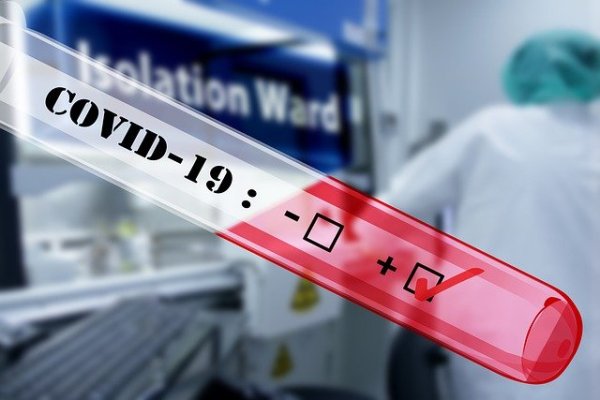
photo courtesy of Gerd Altmann (geralt) via pixabay.com
The Los Angeles Times reports that a pilot study of 1,000 patients in Los Angeles county and Santa Clara will begin today. Patients have been recruited by social media to come to a drive-in testing center at which they will have a finger-prick blood test. The test is on a stick like the newer pregnancy tests. It will give reports of positive or negative, depending on whether antibodies have been detected in the blood.
Unlike the nasopharyngeal swab test, which checks for the presence of the actual SARS-COV-2 antigen or the virus itself, this test will tell us whether patients have developed blood antibodies from an infection. These antibodies, which will be present in blood even after an inapparent or asymptomatic infection, will be lasting. The presence of antibodies will suggest that the patient is now immune from COVID and could end self-imposed isolation.
This new test is key to ending the lockdowns that have paralyzed the country and the world. Rapid rollouts of antibody testing will be essential. Already, Germany has introduced mass antibody testing– as usual, they are way ahead of most of the world in responding to the pandemic. Several laboratory testing companies are involved in producing the new test– one says they will have 750 tests a day and are striving to increase their capacity. Shortages of swabs and other supplies will not stop the new test because it depends only on lancets, alcohol wipes (already in universal use for diabetic home blood sugar fingersticks), and the test stick itself.
photo courtesy of Gerd Altmann (geralt) via pixabay.com

a photo of me, by me, looking quizzical. I’m not mad, really I’m not. Or we’re all mad here.
This morning I posted a link to a NYT story that had multiple bits of new information. One of the more important bits (that I didn’t get to this morning) was that seismometers all over the world have responded to the lockdown orders that have some 90% of the world’s population staying home other than for essential activities. I personally was little affected by that order (even though I live in California).
As a result of that “stay at home” order, we (not I) are mostly staying at home. I still take walks in the splendid isolation of my abode among the peach and almond trees. I still go to the pharmacy for the medications that I take, most important of which is ibuprofen. I still go to the grocery store. All my banking needs are taken care of online and most of my bills are paid online.
My wife is still working as a physician assistant. We still fill up the gas tank on our Toyota Highlander. Nothing has changed except that I am posting to this blog more frequently.
Yet the seismometers say the world is quieter, and as a result we can hear the smaller earthquakes and the little things that are just the earth’s crust moving around. What is more, the air quality in Los Angeles has greatly improved. Now wouldn’t it be grand if all of the people who were running around like chickens with their heads cut off would just stay still?
I know, that’s terribly cynical. I do feel bad, very bad, for all the people who are dying miserably, alone, because they are under quarantine or isolation in the hospital. Yet human existence is suffering, or so the Buddha says.
So, if you meet the Buddha on the road, kill him. Or don’t. I’d rather you didn’t. You don’t have to follow every ridiculous instruction you get, do you?
Only follow an instruction if it makes sense– or if you can make sense out of it, which means you may have to think about it for a while.
What did the Buddha mean when he said, if you meet the Buddha on the road, kill him? Let me know if you figure out what it means. I’ll be sitting here, quietly listening.
Jobless claims hit 17 million, with many unable to file due to crashing websites and busy signals

photo courtesy of kzd via pixabay.com
The NYT reports that the stock market has responded to the news that the jobless rate has risen by 6.6 million in the past week. Other reports say that many who lost work are unable to file because they couldn’t get through on the web site or were forced to dial up repeatedly by busy signals. Some were compelled to physically go to unemployment offices, and Florida has begun handing out paper claims. Once a person has filed (which takes 20 to 30 minutes on the web site) it takes two to four weeks to begin receiving benefits, which are less than half of an employee’s previous wages. The federal stimulus package (the third) offers an additional $600 a week to jobless benefits.
Meanwhile, the Fed reports that it will start buying “junk bonds”. These bonds are high-risk and high-profit for investors when they come through. It is unclear how this will benefit the average worker fired through the lockdown, who has no stake in the junk bond market.

image (an old engraving) courtesy of pixabay.com
An article in last night’s NYT reveals that the test positive rate for the disabled living in group homes was five times that in the general population, and the death rate was also five times as high. Disabled people in NY mostly live in group homes rather than at home with relatives, although many are still cared for by family and friends. The article details the difficulties of social distancing, especially with many psychological care workers unable to go to the homes as usual. It also indicates that 10% of those who test positive are dying, similar to the rates of death in countries like Italy where most of the population is older (and consequently sicker).
Other reports from veteran’s homes indicate that patients with COVID were kept with other patients in rooms with four occupants until their tests came back positive, too late to remove them from their rooms and isolate them. This isolation and re-shuffling resulted in infections being passed on to other residents with ruthless efficiency. One veteran’s home has had 25 deaths in the course of a few days over late March. Some rooms had six occupants and people were kept in the dining hall. Now there have been so many deaths that the original rates of four to a room have been re-established.
Reports from Japan show a similar picture: one group home in Chiba had 86 positive test results. This is dramatically worse than in NY because Japan as a whole only had 2,000 positive tests at the time (over a week ago).

caption courtesy of pixabay.com and OpenClipArtVectors
An article in last night’s NYT contains several new tidbits about the novel coronavirus. The first is that genetic analysis of thousands of virus genomes has revealed that most of the cases in New York have come from Europe, long before the ban on travel from Europe by the federal administration and He-who-must-not-be-named. It seems that these cases came in as early as mid-February, after cases had been detected in wastewater samples from the Netherlands.
Other tidbits will follow in succeeding posts. PS much of the coronavirus news coverage has been placed in the “free” category by multiple web sites.

