
photo courtesy of pixabay.com and ErikaWittlieb
The New York Times reported on April 6 that a critical memo written by trade advisor Peter Navarro on January 29 warned of the coming pandemic, but was ignored by the White House. [redacted] later claimed that he had not seen it, despite evidence to the contrary. For six weeks after this memo, nothing serious was done. The White House cut off most travel from China on the 29th, but by then, people coming from China had already seeded the virus on the West Coast. Later, people from Europe brought the virus to the East Coast, long before travel from there was cut off. Finally, on March 13, a state of emergency was declared. The Defense Production Act has not been fully utilized, and organized preparations have been ignored and are still being ignored.
Numerous explanations have been given for this delay, from impeachment to distrust of the “deep state”, but none of these hold water. The only reasonable explanation is that [redacted] simply didn’t believe the warnings because they didn’t suit his narcissistic, sociopathic world view. Nothing could be allowed to upset his great economy– until it did.
We are witness to a continuing failure to heed warnings and a continuing failure to mount an organized response to this pandemic. There were multiple warnings from many sources; what’s more, there are plans for just such an eventuality already laid out. We are in trouble, and there will be more loss of life and more economic hardships to come. The end result may be destruction of democracy if the November election cannot go forward with full participation of the electorate. People who don’t normally vote must be incentivized to vote this time, or democracy will end. Mark my words.

Coronavirus by Engin Akyurt via pixabay.com (open access)
An article in the LA Times published March 31 related the results of tests performed March 12-16 on a series of patients with “mild” flu-like illnesses. Of 131 patients screened, 7 came up positive on the RT-PCR test that indicates the presence of virus RNA in a person’s nasopharyngeal secretions. This test is generally believed to show about 2/3 to 3/4 of actual patients, that is, a sensitivity of roughly 60-80%. The sensitivity varies with the series and depends partly on the adequacy of sample collection, the type of swab used, and numerous other factors. Theoretically, the test should show virtually all of the actual patients secreting virus through their noses and throats, but there are numerous barriers to such sensitivity.
The point is that, on performing screening of some of the many patients who were treated at that center, 5% were positive. This would be described as a “point prevalence” (number of patients with illness at any one moment) in patients with symptoms– not necessarily with fever or shortness of breath. Six of the 131 had fever and one had a cough. All were described as “not so sick they would have stayed home.” None of them tested positive for influenza or RSV (respiratory syncytial virus), common causes of flu-like illness. Most importantly, none of them had travelled recently or had contact with a known case of the novel coronavirus.
In the article headlined in my last post, there is this nugget:
The California Department of Public Health and the CDC did not begin community surveillance for COVID-19 in Santa Clara County until March 5. Samples were collected from 226 coughing, feverish patients who visited four urgent care centers; 1 in 4 turned out to have the flu. The state tested samples from a subset of 79 non-flu patients. Nine of them had COVID-19.
These two screening studies performed a week or two apart in separate parts of California showed that the prevalence of COVID-19 in symptomatic patients was 5% and 4%. This was nearly a month ago. Imagine what the prevalence would be now. We desperately need studies of blood antibodies to SARS-COV-2 in order to determine who is immune and can come out of lockdown and who must stay isolated.
Coronavirus by Engin Akyurt via pixabay.com (open access)
An article in the LA Times published March 31 related the results of tests performed March 12-16 on a series of patients with “mild” flu-like illnesses. Of 131 patients screened, 7 came up positive on the RT-PCR test that indicates the presence of virus RNA in a person’s nasopharyngeal secretions. This test is generally believed to show about 2/3 to 3/4 of actual patients, that is, a sensitivity of roughly 60-80%. The sensitivity varies with the series and depends partly on the adequacy of sample collection, the type of swab used, and numerous other factors. Theoretically, the test should show virtually all of the actual patients secreting virus through their noses and throats, but there are numerous barriers to such sensitivity.
The point is that, on performing screening of some of the many patients who were treated at that center, 5% were positive. This would be described as a “point prevalence” (number of patients with illness at any one moment) in patients with symptoms– not necessarily with fever or shortness of breath. Six of the 131 had fever and one had a cough. All were described as “not so sick they would have stayed home.” None of them tested positive for influenza or RSV (respiratory syncytial virus), common causes of flu-like illness. Most importantly, none of them had travelled recently or had contact with a known case of the novel coronavirus.
In the article headlined in my last post, there is this nugget:
The California Department of Public Health and the CDC did not begin community surveillance for COVID-19 in Santa Clara County until March 5. Samples were collected from 226 coughing, feverish patients who visited four urgent care centers; 1 in 4 turned out to have the flu. The state tested samples from a subset of 79 non-flu patients. Nine of them had COVID-19.
These two screening studies performed a week or two apart in separate parts of California showed that the prevalence of COVID-19 in symptomatic patients was 5% and 4%. This was nearly a month ago. Imagine what the prevalence would be now. We desperately need studies of blood antibodies to SARS-COV-2 in order to determine who is immune and can come out of lockdown and who must stay isolated.

corona photo by mohamed Hassan courtesy of pixabay.com (creative commons)
The Los Angeles Times reports that Dr. Jeff Smith, chief executive of the Santa Clara County government, told county leaders in a briefing on Friday that “The virus was freewheeling in our community and probably has been here for quite some time”. He was also quoted as saying that data collected by the Centers for Disease Control and Prevention (CDC, a federal government body) indicated that the virus entered the state some time in December (presumably late December, but I’m guessing at that time frame).
Mild cases of COVID-19 closely resemble the seasonal flu and would not have attracted any attention unless a CT scan (computer-assisted tomography scan) was performed and showed an unusual “ground-glass” appearance of a lung infiltrate. The Bay Area, of which Santa Clara County is a part, is an entry and exit site for visitors from China as well as people of Asian descent who have settled here for more than a century. Bruce Lee, one of the most famous actors ever from Hong Kong, was born in San Francisco.
Santa Clara County, according to the LA Times report, had its first two cases “almost a week” before the federal government approved testing for the virus on February 4. Both were returning from travel to Wuhan, a province of China. Testing was limited to “some health departments” with restrictions limiting testing to those who were sick from, or known to be exposed to, someone already known to have COVID-19. The Diamond Princess cruise ship was a focus of federal interest, and a passenger from that ship tested positive “five days after the ship’s January 20 departure from Japan”. A total of 712 people from that ship had positive test results, and nine people died. It was not until February 27 that a woman who had already been hospitalized for a week or more was tested on the insistence of her family. By then, community spread was evident when attempts were made to track down the source of the new infections that were reported.
Research is now focusing on banked blood samples in the search for earlier cases. This search will be for antibodies to the virus, which appear about two weeks after one falls ill. The National Institutes of Health (NIH, another federal group) is looking at samples from blood banks in Los Angeles, San Francisco, and elsewhere across the United States.
The LA Times story also details the case of the second death in that area, a woman who fell ill in mid-February and died March 9. She had been a stay-at-home daughter of 68, taking care of her elderly mother. By some eerie coincidence, she was of Iranian extraction; that country has seen a severe outbreak of the virus, with many deaths. She had not been tested until February 27, despite already being in the hospital for some days. Her family was unable to be at her bedside when she died because everyone had been isolated in the mistaken belief that she was the only one in the family with exposure. That cannot have been true, based on what we now know about community spread in the Bay Area.
ERROR: I stated that the case detailed was the second death in the area. On further review of the article, I realized that it stated that the case was actually the first reported death from COVID-19 in Santa Clara County.
Coronavirus by Engin Akyurt via pixabay.com (open access)
A new study published by the NEJM (New England Journal of Medicine) yesterday (Note: Virus research reports are free to all to read under rules agreed to by most media) revealed clinical data for 53 patients with severe COVID-19 due to SARS-COV-2 (the novel coronavirus, or just the virus). Over a thousand patients have been treated under the “compassionate use protocol” (a plan which allowed Gilead to provide remdesivir to selected patients upon individual application). Gilead sponsored and controlled this study, which makes sense given that they are the sole source for this still-investigational drug.
Originally, remdesivir was developed to treat Ebola virus, but it wasn’t successful there; most patients with Ebola died regardless of treatment, and the epidemic was stopped by careful contact tracing and isolation. In addition, Ebola appears to be attenuated (weakened) by serial transmission (in moving from one patient to the next) so that by the fifth successive patient infected, the clinical disease manifestation (the patient’s outcome) was manageable and survivable. Each jump of Ebola from animal (bats, probably) to man resulted in massive, fatal infection leaving a highly infectious corpse to be buried by traditional methods of washing and handling. Those who attended the funerals of Ebola victims frequently became the next to die. Now there are a few scattered cases of Ebola cropping up here and there, but there is no sustained outbreak. Traditional burial practices have changed, which has helped.
Gilead has a good drug, and it is still under patent, so they have an incentive to test and promote remdesivir for the next disease. This disease promises to be a real money maker for the pharmaceutical industry in general, or at least Gilead in particular. Therefore, they sponsored, paid for, supplied drug for, collated data for, and wrote up the first draft of the study I am referencing.
The results of this study are encouraging. It is not meant to be anything like conclusive, merely a demonstration that the drug is safe and appears to have a beneficial effect. Furthermore, stronger studies are likely to be in the pipeline. In keeping with the “compassionate use” idea, the patients selected for this study were mostly severely ill; over half were on ventilators and most had been sick for over ten days already.
According to the protocol, remdesivir was given intravenously once a day for ten days. No other investigational drugs (including hydroxychloroquine) were given during remdesivir treatment. Antibiotics and other supportive medication were given as desired by the individual doctors treating each patient. 68% of patients showed significant improvement after eighteen days, and 84% by twenty-eight days. Seventeen of thirty patients on mechanical ventilation were extubated (had their endotracheal tubes removed) and three of four patients stopped ECMO (extra-corporeal membrane oxygenation, or passing the blood through a membrane filter which supplies oxygen to substitute for the lungs). Eighteen percent of patients on ventilators died and thirteen percent died overall. These figures compare favorably with the numbers in patients not treated with remdesivir, who were not directly included in the study (there was no matching of placebo or control patients due to the compassionate use protocol).
This study is far superior to the reported studies of hydroxychloroquine for several reasons. First, it included many patients who were severely ill at the outset of treatment, with low oxygen saturation (oxygen blood levels), older, and generally sicker before they were infected. Second, only patients with severe kidney failure and liver inflammation were excluded; mild renal insufficiency, diabetes, hypertension (high blood pressure), and other diseases were allowed.
Controlled studies comparing the outcomes in similar patients who were not given remdesivir will soon follow. An advantage of the patent protection and profit motive afforded Gilead for this drug is that they are sure to collect data and publicize it as quickly as possible, to benefit from the demand for more of this drug.
Whether the profit motive ends up being beneficial for humanity in this case is still open to question. Much depends on who will pay and how much. If rich governments like the United States pay for widespread treatment, then Gilead’s profit will wind up being a rounding error in the overall federal stimulus plan, which exceeds $2 trillion already.
If private patients in the US are forced to pay for remdesivir treatment, then the results will be widening inequality, bankruptcies, and pressure on Medicaid (the federal program which pays for some indigent patients to receive medical care). The pandemic has already resulted in widening income inequality as most workers in service-sector jobs are becoming unemployed. Those who live paycheck-to-paycheck are suddenly coming up short in food, rent, and emergency expenses. Inequalities in exposure to the virus (service-sector employees cannot work from home), infection, and outcomes (death or recovery) are already becoming starkly apparent.
These inequalities will lead to a further drive towards authoritarianism. This is so because income and wealth inequality is a prime source of public unrest, and authoritarian leaders thrive on popular discontent.
It gives anti-democratic bosses an excuse for cracking down on dissent, blaming the usual suspects, and aggrandizing their powers. Fortunately for the US, the man nominally in charge is as incompetent as he is narcissistic, as scatter-brained as he is sociopathic, and is as obvious a liar as he is nepotistic.

photo courtesy of pixabay.com
Paul Krugman, in his latest column, warns that the latest authoritarian moves by [redacted] may lead to the death of democracy as we know it. He points to what has happened under the rule of Viktor Orban, the leader of Hungary. He was headed for authoritarian rule all along, and now he has used the excuse of the pandemic to create rule by decree, censor and shut down the free press, and throw opposition leaders in jail.
The debacle in Wisconsin in Tuesday is a perfect example of the playbook by which the Republicans can suppress the vote. Under cover of people’s fear of exposure to the virus, all but five of the state’s 180 polling places were shut down. Absentee balloting was restricted, and many people who applied for ballots weeks ago never received them. As a result, a hyper-conservative supreme court justice appears to have won re-election to further stack the high court. In the 2018 elections, the voting districts were so heavily gerrymandered that, despite getting 53 percent of the vote, Democratic state representatives only got 36 percent of the seats.
The same thing could happen in numerous red states and even in swing states, setting up the Republicans to win in November despite their numerical inferiority among registered voters.
The answer to this onslaught on democracy is for every Democrat to work tirelessly to obtain “certificates of immunity” from the new antibody tests for SARS-COV-2. In this way, they can vote in person without fear of being infected or exposing others. This is of the highest priority, and there are only six months to get this done.
The alternative is the re-election of [redacted] and the collapse of American democracy. The country will be fragmented into red and blue territories, and civil war will be the next result. Democrats cannot take this assault on democracy lying down, for the good of the lower 99% of the population. Whether they like it or not, the best interests of the 1/3 of people who are die-hard Republican cultists would be better served by their loss at the polls. They are blindly voting against their own interests and if the new virus doesn’t open their eyes, nothing will.

cartoon courtesy of pixabay.com
Jennifer Rubin at the Washington Post was said to be a conservative, but she has been a reliable “never-[redacted]” type for a long time. Today, her opinion column didn’t disappoint. She describes all the fantasy things that He has promised in his daily “briefings” (which are running to a less-than-brief 2 hours at times). She describes the terrifying unemployment figures, which are if anything an underestimate of the true numbers of people out of work. She says that Biden has an average 6-point lead in election polling. There’s more, but I’ll just close with this quote:
In the past, media saturation, out-and-out lying and right-wing media propaganda seemed to get him through the immediate news cycle. Now, his media blather is white noise in the background. In the foreground is a vivid and terrifying pandemic he did not prepare for and resists using his full authority to combat. It may have taken a pandemic to drive home the message to Trumpian Republicans: Facts matter.

Iceland flowers by David Mark via pixabay.com
USA Today reports that Iceland’s random testing and voluntary social distancing policies have worked. The figures: 0.3-0.8% of the population tested positive, with more than 1600 cases but just six deaths. That’s out of a population of roughly 364,000 people, a medium sized town in the US. Most importantly, about 50% of those testing positive had no symptoms at the time they were tested.
That is particularly important giving the way the testing was conducted. Subjects were chosen at random using the country’s telephone directory. This suggests that the true figure for asymptomatic infections is really more like half than the 25% previously estimated in the US.
Clearly, the 25% figure was just a lower bound on the estimate of asymptomatic infections. Barring some unusual complications, these numbers from Iceland are more likely to be accurate than anywhere else given their selection methods.

image courtesy of Christian Dorn via pixabay.com
Studies in BioRxiv are reporting that the GI route is a potential site of infection and possible transmission to others. One study reports on the presence of virus entry receptors on enterocytes (cells lining the GI tract). Others say that patients have complained of abdominal pain, vomiting, or diarrhea even prior to other symptoms of COVID-19. Even the initial US case reported GI symptoms at the onset of his illness.
If these reports are borne out, then the implications for diagnosis, treatment, and prevention of infection with the new virus are significant. GI symptoms should be added to the checklist of potential diagnostic signs: fever, headache, sore throat, runny nose, cough, tightness or pain in the chest, and difficulty breathing (dyspnea).
Sanitary precautions may be added to the public health workload. Fortunately, since the removal of the pump handle from the Broad Street well in London in 1854, we have made broad strides in the prevention of enteric (GI) infection spread.
By the way, I have been doing a little light reading in the evenings: “Ghost Map” (2007) is a book on the epidemic of cholera in London in 1854. John Snow was a pioneering anesthesiologist and experimentalist who gave a new anesthetic, the first ever, to Queen Victoria during her confinement with her eighth child. He discovered and proved that cholera was spread by water. The water in question was contaminated with stool from infected patients.
Despite having proven the water-borne nature of cholera, Snow was unable to see the offending bacterium under his primitive microscope. An Italian scientist had been studying the disease, and he was the first to find Vibrio cholera in his microscope. To do so, he took intestinal specimens from dead cholera victims and stained them to increase the bacteria’s contrast (make them stand out from unstained tissue). He found a series of small, comma-shaped dots in the intestinal mucosa which he did not find in the intestines of patients who had died from other causes. He wrote a report, which was in Italian and was generally ignored. John Snow died without ever hearing that the actual bacteria causing the infection he had successfully controlled had been seen.
At the time of the story, the “water closet” (the toilet as we call it in the US) was an innovative fashion which helped reduce the odor problem in English households of means. To make a long story short, open pit latrines (outhouses) had been the standard practice for disposal of solid waste from human defecation (taking a shit).
The cost of emptying cesspools (the open pits) made for a perverse incentive for London landlords: rather than pay the removal crews, they simply allowed the cesspool overflow to accumulate in the cellar. Once removed from the cesspool, the piles of stool were carted out to farms outside of London. The length of the trips and the noisome exposures of the removal crews made for a good rate of pay, too good for the penny-pinching landlords.
The solution was almost worse than the problem: the new water-closets emptied into sewers which were originally designed for storm water runoff, not human waste disposal. The sewers drained into the Thames river. Once the new water closets were hooked up, the drainage of human waste into the river destroyed what had been a productive fishery and created a foul, nasty-smelling river Thames.
I haven’t yet reached the point in the book where the solution to the Thames pollution problem is laid out. I can’t wait to go back to my recreational reading.
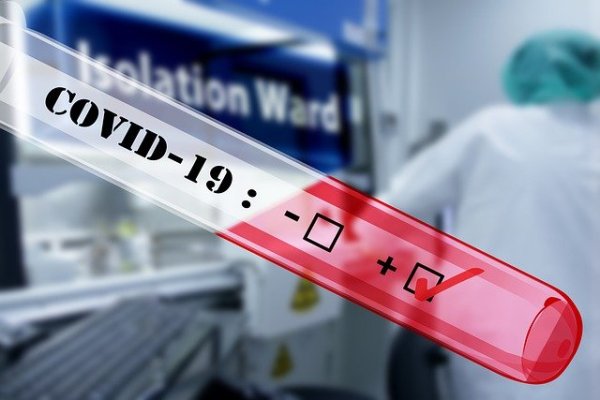
photo courtesy of Gerd Altmann (geralt) via pixabay.com
The Los Angeles Times reports that a pilot study of 1,000 patients in Los Angeles county and Santa Clara will begin today. Patients have been recruited by social media to come to a drive-in testing center at which they will have a finger-prick blood test. The test is on a stick like the newer pregnancy tests. It will give reports of positive or negative, depending on whether antibodies have been detected in the blood.
Unlike the nasopharyngeal swab test, which checks for the presence of the actual SARS-COV-2 antigen or the virus itself, this test will tell us whether patients have developed blood antibodies from an infection. These antibodies, which will be present in blood even after an inapparent or asymptomatic infection, will be lasting. The presence of antibodies will suggest that the patient is now immune from COVID and could end self-imposed isolation.
This new test is key to ending the lockdowns that have paralyzed the country and the world. Rapid rollouts of antibody testing will be essential. Already, Germany has introduced mass antibody testing– as usual, they are way ahead of most of the world in responding to the pandemic. Several laboratory testing companies are involved in producing the new test– one says they will have 750 tests a day and are striving to increase their capacity. Shortages of swabs and other supplies will not stop the new test because it depends only on lancets, alcohol wipes (already in universal use for diabetic home blood sugar fingersticks), and the test stick itself.
 Conrad Theodore Seitz