
Coronavirus by Engin Akyurt via pixabay.com (open access)
The largest study to date reporting on the use of hydroxychloroquine (HCQ) for COVID-19 involved 181 patients, 84 receiving HCQ and 97 not. The study included all patients hospitalized between March 17 and 31 at four tertiary care centers in France who required oxygen supplementation. Treatment began within 48 hours of admission. Patients were excluded if they had renal failure or another contraindication to HCQ, if they were already on another investigative antiviral drug, or if they already had acute respiratory distress syndrome (ARDS). There were some other criteria of lesser importance; the interested reader is referred to the full text of the article for further information.
The results would be disappointing to [redacted]. About a quarter of the patients in both groups developed ARDS within 7 days; 20.2% of the patients in the HCQ group and 22.1% in the no-HCQ group died or went to the ICU (a non-significant difference). Eight patients receiving HCQ had changes in their electrocardiograms (ECG’s, showing their heart’s electrical rhythms) that required stopping HCQ.
This is the largest reported study of HCQ in COVID-19 to date and it has the strength of a fairly well-matched control group from the same center. It didn’t show any difference in results with treatment, and almost 10% of patients treated with HCQ were stopped due to side effects of irregular heart beats.

photo by Thanasis Papazacharias courtesy of pixabay.com
Multiple news outlets have announced that [redacted] will include “President [redacted]” on the memo line of the stimulus checks to be mailed out to eligible Americans as part of Congress’s virus relief package. His initial attempts to “sign” the checks were stymied by a law that requires a career Treasury employee to sign the checks; this is why paper money has the signature of an unknown Treasury worker on each bill. The law was passed to prevent political advertising from being a part of the money that the Treasury hands out for such things as Social Security, tax refunds, and the like. So He had them include his name on the memo line. This took a change in the programming of the check printers.
The Treasury Department denies that this change will delay the issuance of paper checks, but some IRS employees apparently have said the opposite. Clearly there will be some delay because the inclusion of His name is a change from established procedure. The power that He exerts over the Treasury and other executive branch departments makes this change a foregone conclusion. Whether anyone will be fooled by this into voting for Him (when they otherwise would not) is entirely open to question.
Why are we not surprised? That [redacted] would make the most of any opportunity to advertise his “largesse” (with the taxpayer’s money, eventually, although it is pure debt initially)… when he has falsely claimed to be a multi-billionaire (if he has a net worth, it’s all tied up in unsalable real estate) , a successful businessman (he opened two casinos in Atlantic City a block apart and ran them both into the ground– who loses money from owning a casino?), a straight-talker (with over 18,000 lies and misrepresentations under his belt as President), a representative of the common man (who makes little effort to disguise his disdain for people who are not multi-millionaires, calling them “losers”), and all-around “greater President than Lincoln” (I won’t dignify this claim by bothering to refute it).
Fortunately, I will not be exposed to this naked political propaganda as I am on the “direct deposit” list as a recipient of Social Security retirement checks from the Treasury. I am not holding my breath waiting to receive this money. If He could find any way to punish his opponents by cancelling their payments or with-holding their Social Security, He would do so.
For the reason that I oppose him, and don’t wish to be found out by His internet spies, I have been hiding His name by using [redacted] whenever referring to His August Narcissism. Also, I got tired of waiting for “Don the Con” to catch on; it seemed like the perfect nickname, but no-one refers to Him that way. Finally, I am so sick and tired of seeing him, hearing his voice, or even seeing his name mentioned, that I am sparing myself the nausea that almost overcomes me every time his name is mentioned.
I am heading this post with a picture of Roman coins because the face on the obverse of each is an ancient form of political advertising. The face, for so many illiterate ancients, served as shorthand for the name of the Emperor. The identification of the coin with the ruler served the purpose of telling people where the money originally came from– the Emperor’s personal treasury, in many cases.

death tombstone by Stefan Keller courtesy of pixabay.com
ProPublica reported on April 14 a dramatic increase in deaths at home, especially in cities like Detroit and New York and more so in low-income areas. Detroit has seen a four-fold increase in home deaths and New York has had six times as many as compared to a year ago. At the same time, overall mortality (death) rates have increased. Some people may be dying at home from other diseases, afraid to contact medical help because of the risk of contracting COVID-19 from interactions with the health system. Others are dying with the virus because they were told to shelter in place or because their disease overtook them before they had an opportunity to seek help.
Overall increases in death rates suggest that it is the latter: people are dying from the virus because they didn’t seek help or were told not to come in. The death rate statistics lag behind the rapidly enlarging case counts for two reasons: one, it usually (but not always) takes up to two weeks to die after falling ill, and two, statistics are collected more slowly for deaths, particularly at home.
New York City, among the first to report “data on at-home deaths”, reported last week that about 200 people a day are dying at home or elsewhere outside of a hospital. This compares to an average of 35 a day over the last four years. Middlesex, Massachusetts (of which Cambridge is the best-known city) “reported 317 at-home deaths in March”, a 20% increase over the three-year average. In late February, a conference in neighboring Boston was held that was afterwards linked to more than 100 infections.
This information feeds into a general impression that death statistics for the new virus are an undercount. Many dead people are never tested for SARS-COV-2 because of lack of materials, despite the need to protect autopsy personnel, funeral home workers, and first responders from exposure to corpses that probably are teeming with secreted virus.
The deaths reflect the fact that people 65 and older are at high risk of dying from the new virus. For Massachusetts in March, elder deaths increased by 3.6%, translating to an additional 250 deaths for the state. This leaves out the first two weeks in April, a period during which cases skyrocketed in Massachusetts. The additional deaths make clear that the count of 89 deaths from the virus in the state in March is surely a gross undercount. “As of Monday, Massachusetts’ official COVID-related death count [for April] was more than 840.”
In Detroit, there were 150 “dead person observed” reports “in the first ten days in April”. The average over the last 3 years was 40. Almost all such incidents this year were in areas of low median income, places especially targeted by the virus. In other areas, 911 calls have dropped; in Seattle, “EMT… calls dropped by more than 25% in the first ten days of April compared … [to] … last year.” We don’t know whether emergency calls decreased because people were afraid of contact with other patients or providers with the virus.
The CDC says that death certificates can show “probable” or “presumed” COVID-19 on death certificates if the symptoms prior to death are compatible, even if the patient wasn’t tested for the virus. However, official death tolls mainly “haven’t included people who died before they were confirmed positive.”
Complete death counts will take weeks to compile because of staff shortages and/or aged computers; for California, detailed figures on deaths for the whole state will take a month to obtain and ProPublica will pay $325 for the report. In Hawaii, public health record “processing” has been stopped temporarily.
These at-home deaths show that the numbers we see on TV, even from the Johns Hopkins web site (which is the best), are only “the tip of the iceberg”. We should be very concerned, and we should redouble our efforts to find out why certain people get terribly sick from this virus. The best way to reduce the effects of the pandemic is to find out ahead of time who is going to go into critical condition after infection with SARS-COV-2. Then we can isolate those most at risk and start releasing the rest from their self-imposed “social distancing” and stay-at-home orders.
hospital by Silas Camargo Silao via pixabay.com
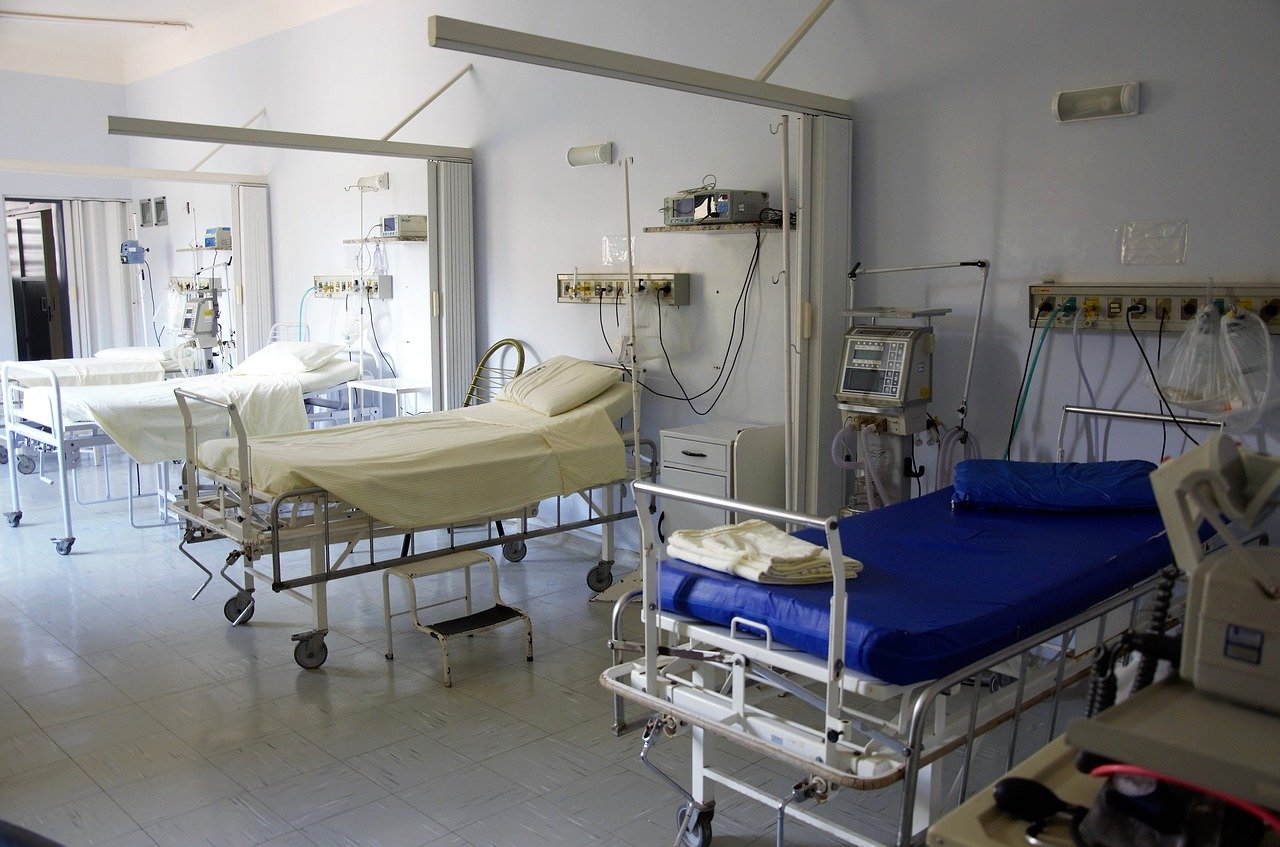
Politico’s article from April 14 explains why rural hospitals are “on the ropes”: they were struggling before, and now the community-owned ones can’t get stimulus loans due to an oversight in the $2 trillion bailout package recently approved federally. Read the article for details on which hospitals are closing and which few have gotten loans.
Without properly focused action by the federal government, the medical system is going to be forced through the wringer. Many rural people will be left behind, forced to drove long distances to get medical care. This is an unnecessary disaster, and it is facilitated by the lack of federal oversight and help for rural communities.
Having worked in rural hospitals, I know how important they are to these communities. They are a lifeline for critically injured patients and those who need medical help who can’t drive to the next big city. Without them, these communities will face further contraction and poverty.
Coronavirus by Engin Akyurt via pixabay.com (open access)
Politico reported on April 14 that lab testing for the novel coronavirus has dropped in the last week, as follows:
American Clinical Laboratory Association reported that the number of samples commercial labs handle each day fell from 108,000 on April 5 to 75,000 by April 12. The group’s members, including commercial giants Quest and LabCorp, analyze about two-thirds of all coronavirus tests in the U.S.
Reasons for the drop in testing are complex. One is the testing criteria by the CDC, which prioritize sick people in hospital and healthcare workers who are ill. The criteria have not been changed recently, but they de-emphasize less seriously ill outpatients. Many hospitals are full and emergency rooms overflowing, while others have closed down due to employee illness or budget shortfalls. There are three levels of priority, first seriously ill inpatients and healthcare workers, second people in long term care facilities with symptoms and those over 65 or with chronic conditions with symptoms and ill first responders, and third people in critical infrastructure work with symptoms, and so on. Those who just want to be tested without symptoms are not considered a priority, that is they can’t get tests. You can see CDC’s criteria here.
Public health labs, which do a smaller proportion of tests, said that they have not noticed a drop in test requests, but they do not keep figures on this subject.
Another problem for testing is spot shortages of test swabs and other parts of the test kit. Protective equipment for those who perform tests are also in short supply.
Wyoming’s health labs reported reducing the number of tests because of a shortage of reagents used to do the actual test in the lab.
This drop in testing comes as the case numbers have exploded. I won’t give the latest figures but you can go to Johns Hopkins for the numbers.
Meanwhile, a preprint study on MedRxiv from April 11 showed that self-collected samples performed as well as samples obtained by clinicians swabbing the nasopharynx in detecting active virus shedding. Self-collected testing could reduce a number of problems with using personal protective equipment while obtaining specimens and increase sample collection. Oral saliva and sputum collection could save on swabs as well.
This morning, I saw on TV a report sourced from the New York Post (a rag I don’t read because of its pro-[redacted] bias) that New Jersey has opened a new parking lot test site that uses saliva samples collected by patients, presumably in their cars. Here’s hoping that this newer form of testing will be widely adopted. It is better for two reasons: first, no swabs are needed, and second, interactions with health-care providers are greatly reduced.
I don’t need to tell you that this means trouble for the hopes to “re-open America”. There has been a slight drop in the last week in the rate of new cases, and the rate of testing may be to blame. We can’t deal with this pandemic if we don’t get numbers on how many people have been infected.

a photo of me, by me, looking quizzical. I’m not mad, really I’m not. Or we’re all mad here.
NBC News opinion published a piece today that manifests my opinion exactly. I’ve been thinking this for many years and saying it for the past ten. It’s about time that a national news organization exposed the pernicious conspiracy that is causing “deaths of despair” among working-class Americans. Here’s a link to the opinion piece.
I’m putting my face on this post, because I have little to lose. I’ve given up my place as a little man in the medical hierarchy. I am sick of being compromised. My father was almost a member of this white working class group that almost died from the effects of overly expensive health care. He dragged himself out of poverty, then was struck down by polio. He stumbled, almost literally, and rose again through his own efforts. He had to “use whatever means available” regardless of their effects on his soul and his righteousness. I learned from him, but I only got so far.
I swore that I would never bend to these corporate conspirators who used the free enterprise system to lift themselves above other human beings and then used their advantages to walk all over the people they subjugated. I’m mad now. I was forced to knuckle under to those same corporate leaders in order to make a living. I would have been better off if I had become a mathematician and retreated into the world of numbers.
This pandemic has exposed the bitter reality for many Americans: they cannot access medical treatment for acute illnesses if they do not have insurance. They cannot access health care (preventive medicine) without “health insurance”. Even patients with Medicare are stunned by huge copays for new drugs that are advertised glowingly on television shows that they now watch obsessively. Life is hard, then you die– if you’re an American, you pay a fine of roughly $8,000 a year for using our medical system.
This is wrong. Advanced societies have figured out how to provide medical and health care to their citizens and residents without having to pay a huge premium to the owners of the system. The reason our society (America) pays so much for health is that the people who run the system have an unregulated profit-making system that they have gamed. Lobbyists for these system-runners (pharmaceutical, hospital, doctor, nursing home, and so on) control the levers of power in Washington and all the state legislatures.
Enough. Go and vote the bums out, but be warned: the new boss is just the old boss with a new name. To quote Louis Carroll: “We’re all mad here.”

a photo of Grecian mountains and sea by MustangJoe via pixabay.com
A piece in the Medpage Today online paper from April 13 describes glucose-6-phosphate dehydrogenase (G6PD) deficiency disease as follows:
G6PD deficiency is a common, X-linked recessive genetic condition that affects some 400 million people worldwide. It is the most common human enzyme defect.
This means that G6PD deficiency is inherited (passed on from parents to children) and the gene for it is carried on the X-chromosome (the one that determines your gender, that is whether you are a boy or a girl biologically). Mothers pass one X chromosome on to all of their children. Fathers pass either an X or a Y chromosome on to their daughters and sons, respectively. With only one X chromosome, sons are more likely to suffer from this disease than daughters (daughters will have roughly half of their body cells with one of the X’s and half with the other). There are at least 186 known variations of this gene, each of which represents a certain degree of deficiency. Genes for this disorder are particularly common in people from the Middle East, Mediterranean area, Africa, and Asia, and Mediterranean variants are some of the most dangerous. The prevalence on Sardinia (an island between Italy and Spain) is particularly high, 7.5% overall, with some locales having much higher rates. African-American males are said to have a prevalence of 10% for some variant of this genetic deficiency.
Deficiency of the G6PD enzyme results in a relative weakness in the cell’s ability to produce NADPH (just stick with the abbreviation, trust me on this). Cells that do not have mitochondria, mainly red blood cells which carry oxygen from the lungs to the rest of the body, are particularly susceptible to this weakness. The most important clinical effects of this deficiency are neonatal jaundice (excess bilirubin in newborn babies, who turn yellow, which can be very serious) and acute hemolytic anemia (a condition in which red blood cells break down after exposure to some drugs). There are other manifestations (ways to appear): one problem is that patients with this condition are intolerant to fava beans (broad beans) and develop that acute hemolytic anemia after eating them. Mostly the condition causes no symptoms and the patient is usually not aware that he (or she) has it. It is most often discovered when a routine blood count is done and oddly shaped red blood cells are seen. Men are mostly affected by this problem, but a few women also have it.
There is no definite connection established between G6PD deficiency and susceptibility to severe COVID-19 complications, but there are some suggestive links. The fact that more men than women die of the new virus, the fact that black Americans seem to be dying in greater numbers (although there are several other possible reasons that this could be so), and the high death rates in Italy and Spain, are all possibly related. There is a possible connection in that the enzyme deficiency makes people more susceptible to oxidative stress (damage due to “free-radical oxygen”), which is a feature of inflammation caused by certain viral infections.
Parents of children with this condition are petitioning NIH, WHO, and CDC for studies to be performed that could clear up this issue and establish whether there is a link between G6PD deficiency and severe COVID-19. Further details are in the Medpage Today article.

ventilation pipe by Bilderjet courtesy of pixabay.com
Medscape reported on April 13 about a big set of patients from the United Kingdom who were in intensive care, a study that came out online from the Intensive Care National Audit & Research Centre (ICNARC). Here is their “Latest News” page. This is a quote from Medscape:
[the ICNARC report] … include data from 3883 patients with confirmed COVID-19 who were admitted to intensive care units (ICUs) in England, Wales, or Northern Ireland and for whom data on the first 24 hours of ICU care are available. Of those, 871 patients died, 818 patients survived to ICU discharge, and 2194 patients were still receiving ICU care. Among patients whose ICU outcome is known, 66.3% of the 1053 patients who required mechanical ventilated [sic] died, compared with 19.4% of the 444 patients who required basic respiratory support.
The conclusion is that two-thirds of the patients on ventilators died, but only about 20% of those who were on oxygen passed away. This report is similar to, but worse than, the numbers from smaller sets of patients with the new virus who were on ventilators. The ICNARC report compared these figures with those from patients with acute respiratory distress from viral pneumonia over the last two years, before the pandemic: about 35% of the earlier set of patients on ventilators died, a little over a third.
So far, there has been no explanation of why the mortality (death rate) is so much worse in patients with COVID-19 than in previously studied patients with viral pneumonia, presumably a comparable illness. This disparity deserves further study; are patients with the new virus on ventilators longer than with older viruses? Is it because of treatment for the infection?
A British-Canadian specialty physician expert in critical care wrote in the Spectator on April 4 that ventilators aren’t a panacea for severely ill patients with the new virus. He described the trauma of putting a patient on a ventilator in a short piece that is well worth reading.
In the piece, Dr. Matt Strauss explained that being on a ventilator means you can’t cough and you have to be sedated (made unconscious with drugs) in order to tolerate it. He said that when the lungs can’t exchange air due to disease that damages the tissue, the ventilator can only do so much. The lungs have to heal in order to get off the ventilator, and this takes a long time when infected with the new virus. The longer you are on a ventilator, the weaker you get from immobility (not being able to move). There is also direct ventilator-induced damage to the lungs. He said (this is also partially quoted in the Medscape piece), “It is therefore at least conceivable that putting patients on ventilators for Covid-19 pneumonia could be a bridge to nowhere.”
What is certain is that, if you are sick enough with COVID-19 to need mechanical ventilation, your chances of survival are less than 50/50. A curative drug is needed to speed up the lung’s recovery from infection with the virus, and no such drug is currently approved. Remdesivir is a promising drug that was developed for Ebola (where the prognosis is even worse) and it can be made quite cheaply (sorry, no reference for this, but one source said it could be made for $0.93 for a day’s dose). The early trial recently reported looked at 53 patients, more than half of whom were already on ventilators, and the results were hope-inducing (see previous post about this trial). Hydroxychloroquine (HCQ) has seen mixed reviews in clinical trials, succeeding in mild disease but not in severe cases (see previous post about the HCQ trials reported so far). I saw on TV this morning that a trial of the combination HCQ-azithromycin in Brazil had to be stopped because of cardiac toxicity.
The reports that have come out recently (see my previous posts) indicate that many, if not most, people who get COVID-19 have asymptomatic disease or mild cases. It is the small proportion (20% or less) who get severe disease that we need to worry about.
Coronavirus by Engin Akyurt via pixabay.com (open access)
A non-peer-reviewed study on the preprint server MedRxiv published March 30 examined a cohort of 175 patients who recovered from “mild” COVID-19 with blood tests for antibodies to SARS-COV-2. They found widely varying levels of neutralizing antibody (specific antibodies for the virus) with a correlation between age and levels. Older patients and those with higher levels of CRP (C-reactive protein, a measure of the severity of illness) had higher antibody levels (titers). Ten patients had undetectable antibody– no antibody was found; two patients had extremely high titers of antibody.
It appears that patients with more severe illness developed higher antibody titers. It is possible that the high levels of antibody may indicate more tissue damage from the infection. The authors also speculate that recovered patients with high antibody titers would be useful for obtaining serum to use in treatment of acutely ill patients.

isolation from Free-Photos courtesy of pixabay.com
This article from JAMA (Journal of the American Medical Association) Psychiatry discusses at length the looming mental health crisis we all face because of our isolation and unemployment due to the novel coronavirus. More than 20 million people (sorry, no reference for that number) have lost their jobs, and many of them are unable to access unemployment benefits because the state systems for registering have broken down. Going to the unemployment office in person is impossible, and reaching the office by phone or internet is impossible, so that extra $600 a week is just a fantasy extolled by politicians.
Facing financial ruin and unable to commiserate with our friends, many people will be driven to the brink of suicide by this pandemic. The physical toll in catastrophic illness and death will touch many older people, who would have been supported by their Social Security and retirement benefits if they had lived. But young people and black or brown people will be faced with extreme financial and mental stress, not physical illness. Coping mechanisms are vital to survival, and reaching out for help is necessary if you feel overwhelmed. There are hotlines, but who will answer now?
Then there are the people with pre-existing health conditions who develop COVID and are treated with disrespect: “I feel like you sent me home to die.” That’s what one patient told his doctor. I’m not a doctor anymore, thank heavens. I’m not sure I could treat all these stressed-out people with the calmness and reassurance that they need. Some people are so naive and helpless that they can’t think of the simplest thing and ask absurdly obvious questions that put the “clinician” (health care provider) on the spot.
The most bizarre result of this pandemic in the US is the largest increase in firearm sales ever– more than was provoked by the election of Barack Obama. Firearms are the most common method of suicide in the US, and despite a ban on research into firearm violence, it is apparent that easy access to a firearm is a risk factor for suicide.
A little-known bit of information: suicide rates in the Northern Hemisphere peak in late spring and early summer. This happens to be that season.
We need more access to mental health care, especially through “tele-health”– that is, over the phone or via internet and applications like Skype. There is no greater need than at this time.
The article referenced above lists the National Suicide Prevention Hotline at 800-273-TALK and claims that this line remains open. I was afraid to call it and check because I don’t need help right now. I hope it’s there when I need it.
 Conrad Theodore Seitz