
Coronavirus studies by Engin Akyurt via pixabay.com
Read this Washington Post update page today. It’s free– no subscription required for COVID-19 articles. Miami-Dade County has closed their beaches for the July 4 holiday. In other news, video surfaced of White House staffers removing social distancing stickers placed on every other seat at the BOK arena prior to the rally held in Tulsa last weekend. The European Union is considering not allowing Americans to visit as tourists when they reopen on the first of July.
Fake face-mask exemption cards are being circulated by a Facebook group. The Washington Post writes:
In an alert, the DOJ said the bogus cards circulating online claim the holder does not have to abide by ordinances requiring face mask usage, claiming that doing so poses a mental or physical health risk. They cite the Americans With Disabilities Act and include a Department of Justice seal and phone number.
“If found in violation of the ADA you could face steep penalties,” the cards say.
They feature an eagle logo and the website for the Freedom to Breathe Agency and caution that businesses or organizations that deny access to cardholders “will also be reported to FTBA for further actions.”
But the FTBA is not a government agency — it’s the Facebook group that shared the cards, CNN reported. Founder Lenka Koloma told the network that people should only wear masks “whenever they wish to be silenced and muzzled.”
After CNN asked Facebook for comment about the group, it was removed, the network reported.

photo by Manfred Antranias Zimmer courtesy of pixabay.com
The Vedas are religious (liturgical) texts; precursors to the texts were passed down in an oral tradition from roughly 1500 BCE on. The texts were first written down in “Vedic” Sanskrit around 500 BCE. Sanskrit is the ancestor of numerous languages spoken and written in India today, it is still used in some Indian villages, and it is taught in many Indian schools. It is the language used in Hindu sacred texts and rituals to this day. Some Buddhist hymns and chants are still spoken in Sanskrit.
The Sanskrit language is known from the beginning of the second millenium, that is 2000 BCE, and was standardized in a treatise on language by an author named Panini (Dakṣiputra Pāṇini) in the mid-first millenium (between 700-400 BCE.) He is known as the “father of linguistics.” Controversy about the exact dates for his life continues; he may have lived as late as Alexander the Great (c. 350 BCE) or as early as 700 BCE. There also is controversy as to the existence of written Sanskrit before his time.
The earliest known examples of written information about Buddhism are in a derivative of Sanskrit called Magadhi Prakrit (as well as some in Greek): the Edicts of Asoka inscribed on stone pillars found all over India. They are dated to the reign of Asoka, 268-232 BCE, and contain references to Buddhism and certain Buddhist precepts or rules of dharma.
Going back to the origins of Hinduism, Wikipedia says: “Vedism refers to the oldest form of the Vedic religion, brought to India by the Indo-Aryans who migrated around 1500 BCE. Brahmanism refers to the further developed form which took shape at the Ganges basin around ca. 1000 BCE.” Brahmanism, when mixed with the non-Vedic religious traditions of the Indo-Aryans of the Ganges plain, became Hinduism.
The Encyclopedia Britannica says, “Brahmanism emphasized the rites performed by, and the status of, the Brahman, or priestly, class as well as speculation about Brahman (the Absolute reality) as theorized in the Upanishads.” The Upanishads were one of the four parts of the Vedas. The Vedas were: the Rigveda, the Yajurveda, the Samaveda and the Atharvaveda. Each Veda had four divisions: “the Samhitas (mantras and benedictions), the Aranyakas (text on rituals, ceremonies, sacrifices and symbolic-sacrifices), the Brahmanas (commentaries on rituals, ceremonies and sacrifices), and the Upanishads (texts discussing meditation, philosophy and spiritual knowledge).”
Current archaeology holds that the Indo-Aryans of the Sintashta culture migrated from Central Asia into northern India in the period roughly around 2400-1800 BCE. This migration is thought to have something to do with the invention of the “war chariot”, a two-wheeled vehicle with an axle in front that yoked two or four horses. The war chariot utilized a charioteer or driver and could carry passengers or cargo. It was used as a platform for mobile archery in ancient warfare and for travel.
Indian (nationalist) theory holds that there was no migration and that the Indo-Aryans were indigenous to the Ganges plain. This theory is not accepted by outside experts.
The Sintashta were a bronze age culture and there is evidence of intensive copper mining and bronze metallurgy at their archaeological sites. The migration of Sintashta peoples from the area of Kazakhstan may be related to climate change; their lands, already arid, may have become colder and even drier. Much of what is known about Sintashta culture comes from their extravagant burials with quantities of “grave goods” including bronze weapons and tools.
The Sintashta people traded extensively with Iranian and Mesopotamian cultures; their primary export was copper and its alloy, bronze. The best known archaeological site is known as Sintashta, in northern Kazakhstan. At this site, there is evidence of forges where copper ore was smelted and mixed with arsenic to make bronze. The site originally consisted of roughly fifty buildings surrounded by a palisade and a ditch; it is known as a “fortified metallurgical center.” Five cemeteries have been found associated with the site; the funerary sacrifices, including horses, bear strong similarities to the rituals described in the Rig Veda.
These people appear to have migrated south and made contact with another group of peoples associated with what is now called the “Bactria-Margiana Archaeological Complex” located south of the Amu-Darya River and north of the Hindu Kush, roughly in Afghanistan and southern Turkmenistan. These archaeological sites are known for their impressive fortified structures which are identified as palaces or temples (it is unclear exactly what purpose the buildings served.) The people who lived there practiced irrigated agriculture centered on oases. Their largest settlement may have held as many as 20,000 people in the era around 2400-2000 BCE.
Continuing south (according to currently accepted archaeology) the Sintashta people, who we can now call Indo-Aryans, wound up in northern India around the plain of the Ganges River. The root of the word “Aryan” actually means a “member of one’s own group, in contrast to an outsider”– not unlike the “Indians” of the American Southwest who called themselves “the human beings.” Thus, the term “Aryan” as connoted by racist Western Europeans is something of a self-referent that could be used by any racial group to denote its own people.
These “Indo-Aryans” originally worshipped the god Indra and performed sacrifices called “Yajna” in front of sacred fires. They called themselves “aryas”, meaning “those who performed noble deeds.” Their land was called “Aryavarta”, which is in northern India. The term “Aryas” appears in the Rig Veda and in that document appears to mean “one who sacrifices properly” or one who is pious, as opposed to “aravan” or “not liberal, envious, hostile.”
The religions of India were described by Nehru as collectively called “arya dharma” and include Hinduism, Buddhism, Jainism, and Sikhism. In Buddhism, the term “arya” refers to one who is noble or a spiritual warrior, and “ārya pudgala” refers to a person who has virtue and has reached a certain level of spiritual awakening.
The denotation of the term “aryan” was altered in popular discourse during the nineteenth century by certain authors who misidentified these Indo-Aryans as coming from northern Germany (or Atlantis) and being blonde and blue-eyed. This has eventuated in the co-opting of the term by racists and its misuse for white nationalism. This is off-topic and may be discussed elsewhere– not here.
The peoples of the Western Ganges plain had a type of pottery called “Black and Red Ware” during the transition from the Bronze Age to the Iron Age, around 1450-1200 BCE. This type of pottery also was popular in the Eastern Ganges area and Central India, and continued for longer, until it was succeeded by the “Northern Black Polished Ware” type around 700-500 BCE. Black and Red Ware is not found west of the Indus Valley.
The Indo-Aryan peoples of the Vedas developed a distinctive form of pottery known as “Painted Grey Ware” which is fine, grey pottery painted with geometric patterns in black. This type of pottery is found in settlements beginning with dates of roughly 1500-700 BCE. It is associated with small to medium sized villages with primitive moats, domesticated horses, ivory working, and the beginnings of iron metallurgy. Rice, barley, millet, and wheat were grown, and cattle, pigs, sheep, and horses were domesticated.
Settlements of this time were built with houses made of mud brick or wattle-and-daub (sticky mixtures on top of woven wood frames.) Larger settlements had paved streets, water channels, embankments, and grain storage buildings. Carbon dating of painted grey ware seems to set its earliest creation around 2000 BCE. There appears to have been gradual growth and enlargement of settlements to city-size during the millenium or so that this type of pottery was used on the Ganges Plain.
Copper was first smelted (as far as we know, since there is no written record) in around 5000 BCE. Smelting bronze from copper and arsenic is first known from 4200 BCE in Asia Minor. Arsenic is frequently an impurity in copper ore, so this combination would have happened naturally. Bronze is much harder than copper, Tin was added to copper first around 2000 BCE; tin is much rarer than other metals, so it was hard to find. Bronze with tin is even harder than ordinary wrought iron.
Smelting iron requires higher temperatures than copper. The first evidence of smelted iron is found around 2000 BCE. Early iron was smelted in a “bloomery” in which the ore is not heated enough to melt the iron but the necessary oxidation-reduction process goes forward with the addition of lime to the ore. When iron ore is smelted, the iron is reduced by reaction with carbon monoxide (which is formed by incomplete burning of charcoal) and it becomes metallic at 1250 °C (2282 °F or 1523.15 K), nearly 300 degrees below its melting point. To reach these temperatures, a charcoal fire must be sustained with forced air in a brick-lined kiln (like those used to fire clay for pottery.)
Once the iron has been reduced from ore (which was iron oxide) into the metallic form, it is a light, spongy mass (bloom) which must be hammered (wrought) down into the final product: wrought iron. Hammering the iron expels the slag (non-iron impurities) and condenses the iron into a hard, ductile mass with a very low carbon content.The first known archaeological evidence of this process comes from Tell Hameh, Jordan, and is carbon-14 dated to 930 BC. This date does not conform to the asserted beginning of the Iron Age in India, however, and I don’t know why that is.
The principal advantage of iron over copper is that iron ores are much more common than copper ores. The disadvantage is the higher heat needed to produce wrought iron– copper melts at 1130 C (2066 F), although it can be smelted at a lower temperature (reduced and extracted from ore, not like melting.) For comparison, a campfire only reaches 600 Celsius (1112 Fahrenheit) while charcoal can reach temperatures of 1100 Celsius or 1260 degrees with forced air.
Making charcoal for smelting was a prime cause of deforestation in ancient and medieval times. Parenthetically, laws were passed in England in the 16th century to prevent the country from being completely denuded of trees. For this reason as well as convenience, people switched to using coal for large scale heating and metallurgy even before the Industrial Revolution.
The transition from the Bronze Age to the Iron Age occurred in northern India during the Vedic period. This was the period in which the religious rituals of Brahmanism and Hinduism were being codified. It is not known when these rituals and the liturgical text were committed to writing, but the original written materials were long ago lost to deterioration, decay, or burning.
The oldest known writing is known independently from Egypt, roughly 3250 BCE, Mesopotamia, between 3400 and 3100 BCE, China, about 2000 BCE, and Meso-America around 650 BCE. Symbols on pottery discovered in Romania are dated to between 4500 and 4000 BCE (known as Vinca symbols), but their significance as writing and authenticity are disputed.
This is part two of a continuing series of posts about ancient India, the roots of Hinduism and Buddhism, and on the ancient world in general.
photo by Manfred Antranias Zimmer courtesy of pixabay.com
The Vedic period in India ran from about 1500 BCE to 500 BCE. The Vedic civilization encompassed a large region of northern India that includes the modern states of Delhi, Haryana, Punjab, and western Uttar Pradesh. The “Indus Valley Civilization” (IVC) preceded the Vedic period and started around 3300 BCE; this earlier civilization was contemporaneous with ancient Egypt and Mesopotamia, although it was much larger in area.
The IVC was characterized by urbanization, with dwellings made of baked clay, extensive water supply and drainage systems, and multiple structures not used for dwellings (ceremonial buildings.) The IVC technology used metals including lead, copper, tin, and bronze (copper with 10-20% tin “often with the addition of other metals (such as aluminium, manganese, nickel or zinc) and sometimes non-metals or metalloids such as arsenic, phosphorus or silicon.”) The IVC is known as a Bronze Age civilization.
The decline of the IVC is currently thought to be due to climate change and drought, although there is much uncertainty about earthquakes, an Aryan invasion, and other factors. The archaeological evidence shows that the urban cultures of the IVC were replaced by nomadic, pastoral peoples.
The Vedic period corresponded to the transition from the Bronze Age to the Iron Age. It was characterized by the appearance of the Vedas, liturgical works that form the basis for Brahmanism and the Hindu religion. The Vedas were originally orally transmitted and only written down centuries later. The earliest Veda was called “Rigveda-Samhita” and is thought to have appeared after 1500 BCE.
The Rigveda-Samhita contains accounts of conflicts between Aryan and Dasyu groups of people. According to archaeologists and anthropologists from outside India, the Aryans were immigrants to northern India who brought with them a culture that was different from the Dasyu. According to Indian experts, however, the Aryans were indigenous. The conflicts described in Rigveda-Samhita are semi-legendary and say that the Dasyu were demons who did not sacrifice to the gods or follow their commandments.
Archaeological evidence shows that the Aryans transitioned from a semi-nomadic pastoral way of life to a settled agricultural one during the early Vedic period 1500-1200 BCE. They began to use iron axes and ploughs, and cut down the forests of the Ganges plain to grow crops.
They developed a “varna” system which divided society into four groups: the kshatriya (warriors), Brahmin (priests), vaishyas (free peasants, agriculturalists, or traders), and shudras (slaves or laborers.) A fifth group was called dalits (“broken” or “scattered”) and roughly corresponds to what is today known as the “untouchables.” Some experts says the groups were hereditary; others say that one could change groups depending on circumstances.
There are four Vedas, each of which is divided into four subdivisions. The main Vedas are the Rigveda, the Yajurveda, the Samaveda and the Atharvaveda. “Each Veda has four subdivisions – the Samhitas (mantras and benedictions), the Aranyakas (text on rituals, ceremonies, sacrifices and symbolic-sacrifices), the Brahmanas (commentaries on rituals, ceremonies and sacrifices), and the Upanishads (texts discussing meditation, philosophy and spiritual knowledge)”
All the Vedas are described as “what is heard” as opposed to “what is remembered” and are thought to be written by superhuman or impersonal means– that is, they are divinely inspired. In modern times, the mantras they contain are recited not for their literal meaning but for their sounds. Reciting the mantras is thought to regenerate the cosmos. Religious traditions that consider the Vedas to be primary authorities are called “astika” (orthodox.)
Religious traditions that deny the primal authority of the Vedas are considered “nastika” (heterodox): these include Buddhism, Jainism, Sikhism, Lokayata (materialism), and Ajivika (a school of thought which has been lost but which apparently denies the existence of free will.) There are some details of Ajivika philosophy in a separate page on Wikipedia.
This is the first of a series of posts on the Vedic period in Indian history. They will draw on the relevant documents in Wikipedia to summarize their contents.
Coronavirus studies by Engin Akyurt via pixabay.com
Update: at 12:22 PM Eastern time, the Post reported that Florida had found 8,942 new infections yesterday– eclipsing the record of 5,551 set two days ago.
The Washington Post reported today, June 26:
Nationally, 39,327 new infections were reported by state health departments on Thursday, surpassing the previous record set a day earlier. Texas alone reported a record 5,996 new cases (along with a record high for coronavirus hospitalizations), and the state’s rolling average has jumped by 340 percent since Memorial Day.
Worldometer reported 40,184 new cases in the US for June 25.
The governor of Texas has closed bars and is reducing restaurant capacity, in a reversal of reopening plans set in motion over a month ago. Florida is also announcing bar closures. Nationally, daily new cases have doubled since June 2. The age mix of new cases has changed; younger people are a larger percentage than when the pandemic struck four months ago. LA’s mayor has asked people to stay home as much as possible and announced a near-doubling of test capacity to 13,700 tests per day.
California data showed 56% of positive tests were in patients 18-49 years old and less than 15% were over 65. At the outset of the pandemic, over a quarter of positive tests were found in those over 65, and most deaths were also in this age group.
Centers for Disease Control head Robert Redfield announced that antibody studies reveal the true number of new cases is probably ten times the rate revealed by tests of antigen positivity, suggesting that as many as 20 million Americans have been infected with COVID-19. Most have recovered, but according to worldometer, nearly 127,000 have died. According to Johns Hopkins, there were 124,509 deaths total as of this morning. New Jersey changed its criteria and has reported 1854 probable deaths based on a look back at nursing home data.
According to worldometer, California, Texas, and Florida all have recorded more than 5,000 cases daily, and Arizona has listed over 3,000 new cases.
Overall, new data are showing out of control transmission of coronavirus in the US; even as cases have dropped on the East Coast, they are skyrocketing in the South and West. Despite claims by Republican congressmen that the George Floyd protests are responsible, there is no indication that this is true. Rather, it appears that young people congregating without masks in places like bars is causing this increase.
There has been no well-coordinated federal response to this pandemic. States and local governments have been forced to step up, and they have spent money that they don’t have on mitigation. Since states cannot borrow money, they will be forced to shut down essential services unless the federal government bails them out– which has not happened and is unlikely to happen until the end of July at the earliest.
The same Johns Hopkins site reports 490,632 worldwide deaths and 9,654,269 confirmed cases as of June 26. The US leads the world by a large margin (2,435,814 cases), with Brazil (1,228,114), Russia (619,936), and India (490,401) following. The pandemic is spreading throughout South America with deadly effect and destroying the already fragile economies of South America and Mexico.
Coronavirus studies by Engin Akyurt via pixabay.com
The Centers for Disease Control (CDC) today (June 25) published a new document listing risk factors for severe COVID-19 (the disease caused by the virus SARS-COV-2) which separates risky conditions into two categories: those that definitely cause increased risk and those which maybe increase risk.
The following conditions definitely increase one’s risk for severe COVID-19, regardless of age: (they include links to CDC’s information pages on each condition)
- Chronic kidney disease
- COPD (chronic obstructive pulmonary disease)
- Immunocompromised state (weakened immune system) from solid organ transplant
- Obesity (body mass index [BMI] of 30 or higher)
- Serious heart conditions, such as heart failure, coronary artery disease, or cardiomyopathies
- Sickle cell disease
- Type 2 diabetes mellitus
The CDC describes children who are “medically complex” as having increased risk, as well as those with congenital heart disease, neurologic, metabolic, or genetic conditions.
The second list includes conditions that might increase one’s risk:
- Asthma (moderate-to-severe)
- Cerebrovascular disease (affects blood vessels and blood supply to the brain)
- Cystic fibrosis
- Hypertension or high blood pressure
- Immunocompromised state (weakened immune system) from blood or bone marrow transplant, immune deficiencies, HIV, use of corticosteroids, or use of other immune weakening medicines
- Neurologic conditions, such as dementia
- Liver disease
- Pregnancy
- Pulmonary fibrosis (having damaged or scarred lung tissues)
- Smoking
- Thalassemia (a type of blood disorder)
- Type 1 diabetes mellitus
The two lists appear to differ from previous information in that the first list includes conditions which definitely increase one’s risk of severe COVID-19 and the second list includes conditions with less definite information about increased risk. Regardless of one’s medical conditions, it appears that increasing age increases one’s risk of severe illness in a continuous fashion, that is, there is no definite cut-off below which one is at lower risk.
The rest of the document includes standard information about reducing one’s risk of contracting an infection with the virus: wearing a face mask, washing hands frequently, avoiding touching objects that may be contaminated, and especially avoiding crowds and people you don’t know. There is also advice about low- and high-risk public gatherings, staying healthy generally, getting one’s vaccines including flu vaccines, and following treatment plans for those conditions you already have.
There is a breakdown of specific treatment plans for each chronic medical condition that reiterates standard medical advice for each condition: have a 30-day supply of medication on hand, follow your doctor’s advice, if you don’t have a healthcare provider, get one, quit smoking, and so on. There are no surprises here.
This document appears to be updated in the sense that it separates conditions that definitely increase risks for severe illness from conditions that have less definite risks. I’m not sure what else is has to offer to anyone other than the most naive reader. Perhaps it was released today because there is little else to say that hasn’t already been said.

Electron micrograph of SARS-COV-2 virions in vitro
Several states are reporting record rates of new confirmed cases of COVID-19. These states are mostly in the South and West. Despite efforts in California to enforce mask-wearing and social distancing while reopening, the state has reported records of new confirmed cases in the last few days. Other states, where “stay at home” orders were withdrawn early on (or never instituted), are reporting massive increases. Florida, California, and Texas are among the largest states in the country, and they all have new record increases; rates are rising in 26 states. Hospitalizations are also increasing rapidly, and death rates will not be far behind.
The Washington Post (June 25) reports that areas in which more people watched or listened to conservative news broadcasts (from Fox and Sean Hannity in particular) have shown less compliance with precautions and less appreciation of the pandemic’s severity. These areas are contributing to the spread of the virus because people are not taking it seriously. The Post states:
There are many reasons our response to the pandemic tied to nearly 120,000 U.S. deaths has faltered, experts say, including the lack of a cohesive federal policy, missteps on testing and tracing, and a national culture emphasizing individualism.
It’s not just federal policy and national culture, though– misinformation plays a large role. The article reports on three studies published recently that show people who rely on Fox News and similar media tend to believe more in conspiracy theories and misinformation about the coronavirus. Those who watched Tucker Carlson (who warned viewers early on how severe the pandemic would be) were likely to change their behavior a week earlier than those who watched Sean Hannity (who early on minimized the outbreak and bad-mouthed experts’ recommendations.) As a result, early infections and mortality from COVID-19 were higher in areas where Sean Hannity was more popular.
The group that watched “far-right” media took the virus less seriously and delayed their responses. As the virus spread from hard-hit New York City and Seattle, Washington, rural and conservative parts of the country weren’t prepared. Conservative media continues to play down the severity of the pandemic and to echo the president’s self-serving claim that he has conquered the virus.
California’s record rate of new cases is superficially puzzling because the conventional view of California is that it is full of left-wing zealots; in reality, there are large pockets of extreme right-wing people. Orange County (the home of Richard Nixon) is one example: an attempt to enforce mask-wearing by public health officials there resulted in a backlash and death threats. The county health officer, Dr. Nicole Quick, resigned over death threats after her May 28 order for everyone to wear face masks. Orange County rescinded its mask order on June 11, but California Governor Gavin Newsom instituted an order for the whole state a week later.
The United States is suffering an out of control pandemic. The root cause of this lack of control is the failure of the head of the federal government to institute a plan at the outset. A plan–any plan– would have given people something to start working with. As we know, the prior federal administration left us with a plan– but it was ignored, and nothing was put in its place. The responsibility for this failure lies with the man who wants more than anything to be president but doesn’t want to actually do the things that being president requires.
Instead of coming up with a plan at the outset when he was first warned about the virus, he chose to do nothing. When pressed, he gave the responsibility to the states. When things started to get really bad, he looked for other people to blame. At first, it was convenient for him that places like New York City and Seattle were the hardest hit, because they were hotbeds of liberalism.
Those places, including New York, New Jersey, Connecticut, and Massachusetts as well as West Coast population centers, are seeing dramatic declines in new cases and relief of the stress on hospitals, apparently due to general adoption of precautions and scientific advice. The South and West are seeing a dramatic rise in new cases, possibly due to misinformation and conspiracy theories spread by Fox News, One America News Network, and other conservative news outlets. Those outlets are taking their cue from the head of the federal government, who has done nothing but blame others.
Coronavirus studies by Engin Akyurt via pixabay.com
A Journal of the American Medical Association (JAMA) Network article published June 19 indicates that use of common antihypertensive medications ACEI/ARB does not affect outcomes related to COVID-19. The retrospective cohort study using data from Danish national administrative registries covering February 22 to May 4 and looking at 4480 patients found 895 who used these drugs to control high blood pressure. The study concluded:
Conclusions and Relevance Prior use of ACEI/ARBs was not significantly associated with COVID-19 diagnosis among patients with hypertension or with mortality or severe disease among patients diagnosed as having COVID-19. These findings do not support discontinuation of ACEI/ARB medications that are clinically indicated in the context of the COVID-19 pandemic.
This study is reassuring because there had been concerns related to the mechanism of infection, namely that the virus SARS-COV-2 uses cell surface ACE-2 receptors to gain access and infect epithelial cells in the respiratory tract. Apparently, taking drugs that inhibit ACE or block the angiotensin receptor do not enhance the virus’ ability to infect or kill cells. Therefore, it is not necessary for patients taking these drugs to control their blood pressure to discontinue them for fear of enhanced infection. This is good because high blood pressure in general as well as advanced age (and higher rates of hypertension) has been found to be associated with higher mortality rates from COVID-19.
The findings from this study confirm prior research that found no association of taking the drugs with increased mortality or infection rates.

EM of sars-cov-2 budding from apoptotic (dying) cells–NIAID
This article comes from Science Direct — Comprehensive Psychiatry for July 2020. It is titled “How to manage obsessive-compulsive disorder (OCD) under COVID-19: A clinician’s guide from the International College of Obsessive Compulsive Spectrum Disorders (ICOCS) and the Obsessive-Compulsive and Related Disorders Research Network (OCRN) of the European College of Neuropsychopharmacology” and the article is almost as long as the title. It is available without a paywall under a Creative Commons license.
Here is the first paragraph:
The rapid advance of the coronavirus COVID-19 pandemic has significantly increased mortality but also has demonstrated considerable potential to negatively impact mental health, including in the young. From a public mental health perspective, guidelines for responding to mass trauma and disaster emphasize the importance of focusing on resilience. In the immediate and ongoing response, consensus guidelines emphasize the importance of interventions that maintain calm, build community, and sustain hope.
The article is a consensus statement from the ICOCS and OCRN on how to manage patients with obsessive-compulsive disorder (OCD) during the pandemic. It recommends temporizing measures to control symptoms rather than any attempt to perform insight-oriented psychiatry (what we normally associate with psychiatric treatment– breaking down barriers and rebuilding a healthier psyche.) The rationale is that any attempt at insight will only make symptoms worse– albeit temporarily– and what is needed now is to keep patients calm while we await “rescue” in the form of a vaccine, or at least abatement of the current emergency situation.
The article recommends, first, to take a calming, compassionate approach to the patient to reduce symptoms. Use telemedicine, that is , phone calls and video calls, to reach out to patients who are isolated by the quarantine. Take a careful history to confirm the diagnosis of obsessive-compulsive disorder and any associated conditions, particularly hypochondriasis. Clarify whether the symptoms represent a rational response to current events or a worsening of previous OCD symptoms.
Establish the patient’s level of insight into her condition– does she feel that her symptoms are irrational or excessive? Are there tics? Are contamination fears being exacerbated by directions to wash hands and avoid fomites? Are there idiosyncratic fears, such as fear of sexually transmitted disease or of antibiotic-resistant bacteria? Comorbid conditions may be exacerbated by the stress, such as anxiety, depression, bipolar disorder, or post-traumatic stress disorder. If other conditions are the primary presenting problem, see also general recommendations here. (These are general psychosocial recommendations for everyone, suffering from mental disorders or not, in dealing with the pandemic.)
Assess suicidal risk. OCD doesn’t usually present a high risk for suicide, but comorbid conditions do, particularly bipolar disorder, substance abuse disorder, and even latent schizophrenia. People with a recent increased severity of OCD, people who are experiencing the illness of close relatives or associates, and people who are feeling extreme stress from isolation in quarantine are at increased risk for suicidal ideation. Use a rating scale and specific questions to assess risk; here is one scale you can use, the Columbia Suicide Severity Rating Scale. Here is a gateway to using the scale in multiple settings: the Lighthouse Project.
Provide balanced information about what to do to keep from catching the virus and what is known about it currently. It is important to have the patient recognize that the situation may persist for a long time, and they need to manage their stress levels over a long period. Tell them to set up a routine that they can continue indefinitely that will help to keep a manageable stress level.
Find out how much TV and internet they are consuming. Ask them to limit themselves to a reasonable amount of this– say, half an hour in the morning and a half hour in the evening. Recommend health education websites, like CDC, (hand sanitizer) WHO, and Johns Hopkins. Or this hand-washing video.
If OCD symptoms are the main problem, assess the effectiveness of medication treatment or start medications. The first choice is a selective serotonin reuptake inhibitor (SSRI)– there are several drugs available and if one doesn’t work, another should be tried. As a third choice, clomipramine is effective but it may require evaluation for safety with an electrocardiogram (ECG). Start the SSRI at a low dose and gradually increase it to reduce side effects. If the SSRI is really not working, an antipsychotic drug like olanzapine, aripiprazole, or quetiapine might be added in severe cases, especially if the patient has a tic.
The patient should be evaluated for adherence to treatment. It is very important to be sure that she is taking the medication regularly as it takes time to work. Using a pill organizer box with slots for each day is helpful to keep the patient on track. If she is not sleeping well, this needs to be treated too; make sure she is going to bed at the same time, avoiding night-time disturbances, not watching TV late at night, and not eating or exercising right before bedtime.
Enlist help from anyone staying with the patient to keep her taking medicine and not watching too much TV. Support from a significant other is necessary, especially for patients who are confused or agitated.
Ordinarily, cognitive behavioral therapy is used for OCD, but during the pandemic this may not be possible and exposure could be dangerous. If symptoms are distressing to the patient during this time, medication is preferable to exposure-based or cognitive behavioral treatment.
A new form of treatment, deep brain stimulation, is available for patients with severe symptoms. If the patient has deep brain electrodes implanted and battery-powered, they should be checked for battery failure if symptoms return. Unfortunately, new patients can’t have electrodes put in when elective surgery has been put on hold due to isolation.
Finally, maintenance of routines, with regular morning arising and evening bedtimes, and social interaction with frequent contact by phone or video, are very important to keep the patient from feeling too isolated. The article recommends morning physical activity under bright lights to help keep up the circadian rhythm. It also advises against late night meals just before bedtime.
Here is a particularly useful quote:
Offer guidance regarding a rational amount of time spent listening to news as a distraction to occupational or preferred activities, provide acknowledgement of fear but also a balanced perspective on risk, address grief and loss of control and recommend hedonic activities especially those that involve children, such as baking, cooking, gardening, inventing a new game or watching a movie.
Help the isolated patient to overcome loneliness and build stability by increasing communication with friends, family members and loved ones, even if at a distance via the multiple online platforms including Facetime; Skype and Zoom. Learning to use these can be a helpful experience in terms of the acquisition and mastery of new skills as well as the pleasure of social contact. In the case of those with a poor social network, telephone helplines such as those run by OCD charities are particularly useful, especially if managed by qualified trained professionals.
There is much more in this long article, but the most important guidance is that patients who are undergoing or considering cognitive behavioral therapy and exposure response prevention (graded exposure to stimuli that induce anxiety) should have their treatment re-evaluated and/or paused during the pandemic because of potential risks. The consensus of these experts is that patients with OCD will need to be more or less cocooned during the pandemic.
Early Buddhism versus the concept of the unchanging self in Hinduism– a highly condensed summary

Gandhara Buddha circa 1900 years ago, courtesy of wikimedia commons
Hinduism and Buddhism derive from the same roots in prehistoric northern India, in the culture of the Ganges River before 500 BC. They share parallel beliefs and have existed side by side. One of the primary differences between the two is that, in Hindu thought, there is a constant and unchanging “Atman” or permanent self, whereas in Buddhist thought, the self is not permanent or even non-existent.
Despite their differences, the two religions are intermingled in important ways; there are even temples devoted to both. Angkor Wat is said to be a combination of the two, originally dedicated to the god VIshnu but changed to a Buddhist temple in the twelfth century. To Hindus, Buddha is an avatar of Vishnu.
The two schools of thought share many concepts. First, there is the eternal cycle (sansara) of birth, death, and rebirth. Second, there is the concept of karma or “the fruits of action”– that is, actions have consequences although the effects may be remote or even occur after one has undergone death and rebirth. Third, there is the concept of dharma, which is natural law, religious duty, right conduct, or simply virtue.
They also share a number of terms that have different meanings in each school. To Hindus, yoga is thought of as a practice of assuming postures that induce union of Atman (the individual self) with Brahman (the universal soul). To Buddhists, however, it has different meanings. In Tibetan Vajrayana Buddhism, “yoga” refers to any of a number of spiritual practices involving tantras (esoteric systems.) This is too complex to even begin to describe here (this includes Vajrayana Buddhism in general.)
Meditation is also shared by both schools of thought. In Hindu meditation, it is a means to attain self-realization. Buddhist meditation, however, is a means to self-effacement. There are several levels of enlightenment attained in meditation, but, to Buddhists, the best is the sudden insight that can even be achieved by a child under certain conditions.
There are major differences between the two schools of thought. First, the Buddha rejected the existence of a Creator God (Brahman) and the idea of an eternal Self (Atman), which are central to Hindu thought. Perhaps “rejection” is too strong a word, however, for Buddhists simply ignore the Brahman and Atman as unnecessary to the liberation from suffering obtained by meditation, right view, and right conduct. The Buddha felt that the devas (the Hindu gods) were still trapped in the same cycle of birth and rebirth as ordinary humans– so they weren’t worthy of special veneration.
The Nobel Eightfold Path does not require that one unify with the Godhead (Brahman) but merely follow right intentions and conduct oneself arightly. One is to attain liberation from suffering by extinction of self-will, selfish desire, and passions, not by yearning for union with Brahman.
To Hindus, the thought of withdrawal from everyday life and existence as a mendicant was escapism. They felt that one must perform the dharmas, or duties of day to day life, study scriptures, support family, and take care of one’s children and parents, before retiring to the forest to meditate in one’s later years. Union with Brahman really only occurred at death– not during daily meditation.
To Buddhists, attachment is the source of sorrow, and to be liberated, one must detach and become “non-involved.” To Hindus, sorrow and happiness is the result of karma (good and bad), and bad karma can be overcome and good karma can be obtained by following dharma or righteous duty.
An example of the difference between Buddhist and Hindu concepts is the Agganna Sutta, a discourse by the Buddha in response to questions from two aspiring monks who are from the Brahmin caste. Brahmins are a high caste and hold a predominant position in society. To the Buddha, the two aspirants describe their origins and say that when they decided to become monks, they were ridiculed by their peers. They were told that it would be foolish for someone of high caste to abandon his position and mix with those of lower caste in the Sangha (religious community) of the Buddha.
The Buddha responds by explaining that everyone, regardless of caste, is allowed to become a member of the religious community, because what matters is not one’s birth but what one does in life. He explains that anyone who does wrong will get into trouble for it, regardless of their caste, while anyone who conducts themself rightly, no matter what their origins, will be rewarded. The Buddha goes on to describe a sort of cosmology, in great detail, reciting the origin of the world and the development of the castes. The reason behind this cosmology is that he is explicitly rejecting the brahmanical doctrine of caste which separates people on the basis of their birth rather than their behavior.
One commentator even describes this cosmology as a satire of the “Brahminical claims regarding the divine nature of the caste system, showing that it is nothing but a human male convention.” (Wikipedia) The sutra is explained as a satire of the Rig Veda “Hymn of the Cosmic Man.” This is not a well-accepted explanation; others describe the verses as a fore-runner of currently accepted scientific cosmology. The real point of the verses is that one’s position at birth does not preordain one’s position throughout life; it is more important to adhere to the truth and do right.
Buddhists appear to reject the Hindu teachings that there is a fixed, permanent self, but they do not seem to have been rejected by Hindus. Rather, the Hindu position looks like one of tolerance to all religions. Hindus do not appear to have been proselytizers, while the Buddhist religion has spread throughout Asia by proselytism. Originally, Hindus were defined by ethnicity rather than by doctrine, although that view is obsolete and has been rejected by India’s Supreme Court.
Buddhists touted their faith without regard to the ethnicity of their subjects, and Buddhism was taught to every ethnic group in Asia (although it seemed to mostly die out in India as it spread elsewhere.) Typically, rulers acquired Buddhism from monks who taught their faith to the court; the countries involved then became officially Buddhist while their subjects were still unconverted.
This quote from Wikipedia summarizes the core difference between the two schools of thought:
Upanishadic [Hindu] soteriology is focused on the static Self, while the Buddha’s is focused on dynamic agency. In the former paradigm, change and movement are an illusion; to realize the Self as the only reality is to realize something that has always been the case. In the Buddha’s system by contrast, one has to make things happen.
Thus, the Hindu worldview is static and the Buddhist is dynamic. To a Buddhist, the universe is characterized by constantly changing phenomena; nothing remains the same and there is no constant upon which one can rely. To the Hindu, there is a universal axis which is stationary and around which the universe revolves; there is a Brahman (Godhead) which is reliable and to which the self (Atman) can be connected.
To both forms of thought, the empirical Truth is the most important thing. Both believe in the primacy of one’s experience and the promulgation of Truth. A person should always see the truth and tell the truth. There is no space for lies and deception. There are no secrets (until you get to esoteric Vajrayana Buddhism.)
[This post is a radically condensed summary of the relevant Wikipedia pages on Buddhism, Hinduism, the Agganna Sutta, soteriology, and so on. The reader is warned that important details have been omitted. Additional posts on these subjects are forthcoming.]
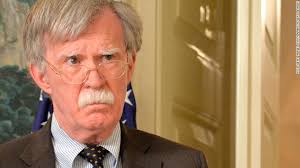
John Bolton, from CNN
John Bolton is a notorious conservative war hawk who was given an interim appointment as ambassador to the UN by George W Bush. He resigned at the end of the interim period when it became clear that the Senate would not confirm him to the position. He was poorly suited to the post, having famously claimed that the UN would function just as well with ten floors chopped off. He was too much of a hawk even for He-who-must-not-be-named, who didn’t want to actually get involved with a war overseas– merely to end all alliances and “foreign entanglements.”
Now, after 17 months as national security adviser, Bolton has become the bete noir of the administration by publishing a book confirming hidden details of the president’s unfitness and ignorance.
While we appreciate the “friendly fire” from Bolton, we need to remember that the only reason conservatives don’t like the president is that he is unable to deliver on their most cherished dreams because of his incompetence. “Never [redacted]” are still unacceptable as leaders for this country because they still push the priorities of the Republican Party: more power for those who already have too much power, and no help for the downtrodden masses.
Remember: those who voted for this president in the first place still want things that are unacceptable to the majority of the country. Just because they have turned on him doesn’t magically make them good people.

