This article details evidence that children are at risk and can transmit SARS-COV-2: Med J Australia

This article by Zoe Hyde, published in the Medical Journal of Australia online on August 12, goes over all the studies that show children can easily catch COVID-19 and pass on the virus to others, especially adults. The article is well worth reading in full for all the references to studies that have been ignored by those who want to open schools for political reasons or just out of ignorance.
The evidence is clear that children were accidentally excluded from many prior studies because schools were closed. In China’s case, transmission was stopped before significant numbers of children were infected.
After schools opened in Israel, outbreaks rapidly ensued. In Chile, an outbreak popped up quickly when a private school opened. Even in the US, closure of schools was associated with a marked drop in disease incidence– with greatest effect in states which acted early when there were few cases.
The author points out that investigation of child cases has been poor, with inadequate testing for asymptomatic cases. The studies that looked for it found that there were many cases in children with no symptoms.
This paragraph from the article says it all:
Schools are clearly neither inherently safe nor unsafe. The risk associated with these settings depends on the level of community transmission, and it must be continuously evaluated. Schools must not remain open for face-to-face teaching in the setting of ongoing community transmission. In regions where community transmission is minimal, risk-reduction strategies must be implemented in schools as a matter of urgency. Comprehensive guidelines have been developed (summarised in Box 1),20 but at a minimum, interventions should include the wearing of face masks by staff and students, increasing ventilation and indoor air quality, and the regular disinfection of shared surfaces.
https://www.mja.com.au/journal/2020/covid-19-children-and-schools-overlooked-and-risk
Here are the recommendations (adapted from Box 1, from reference 20– this document):
Classrooms:
Students and staff should wear face masks
Wash hands frequently
Move class outdoors if possible and repurpose large unused spaces as temporary classrooms
Keep class groups as distinct and separate as possible
Regularly disinfect shared surfaces
Buildings:
Increase ventilation by bringing in more fresh outdoor air
Filter indoor air
Supplement with portable air cleaners
Use plexiglass as a physical barrier around desks
Improve toilet hygiene and keep toilet lids closed, especially when flushing
Activities:
Hold physical education classes outdoors
Replace high-risk activities (e.g., choir practice) with safer alternatives
Schedules:
Stagger school arrival and departure times and class transitions
Modify school start times to allow students who use public transport to avoid rush hour
Policies:
Form a COVID-19 response team and plan
Prioritize staying home when sick
Encourage viral testing any time someone has symptoms, even if mild
Support remote learning options
Protect high-risk students and staff
(source: Jones E, Young A, Clevenger K et al. “Healthy schools: risk reduction strategies for reopening schools.” Cambridge, Massachusetts: Harvard T. H. Chan School of Public Health Healthy Buildings Program, 2020.)

The British Broadcasting Corporation (BBC) posted this story on August 12. The English death count has been reduced by 12% by eliminating deaths that occurred more than 28 days after a positive test. This was done, according to government sources, to bring the definitions in line with other United Kingdom (UK) countries.
This definition is problematic, however, because deaths that occur more than four weeks after diagnosis are quite possibly still due to the infection; many patients have lingered on for long periods after diagnosis.
The large numbers of patients involved make this especially difficult to swallow. What other cause of death can be adduced when the patient was found to have COVID-19 more than four weeks prior to death? Heart failure? Pneumonia? Respiratory failure? Suicide (possibly due to depression from mental effects of the virus?) There are numerous possibilities, but removing these cases from the toll of COVID-19 strikes me as unduly stringent and likely to undercount actual late effects.
Perhaps these 5,000 cases should be further investigated. If they died in car crashes, then they could be removed from the totals, but if they died of late effects from the virus, they should be retained.
That is what the chief medical officers for the four nations in the UK will do going forward. A separate total for those dying within 60 days after diagnosis will be published. Those who died with the virus listed on their death certificate will also be counted, regardless of dates.
An epidemiologist quoted in the story noted that, if an unlimited criterion was used, people who died from unrelated causes months after infection (even if they recovered) would eventually be counted, making the statistics useless from an epidemiological point of view.

This report in The Prospect on August 12 states that 70% of ICE detainees are held in for-profit facilities. There is a reason why the Obama administration ordered an end to for-profit prisons: they are ripe for corruption and influence-peddling. Unlike government-administered prisons, for-profit companies make more money when they have more people, so they have a built-in incentive to keep as many people in prison as possible.
For the corporations that run ICE’s detention centers, transfers are lucrative. Immigration Centers of America (ICA), the for-profit company that operates the Farmville facility, receives its funding from ICE on a per-resident, per-day basis. The more detained individuals ICA has in its custody, the more money the company makes.
https://prospect.org/justice/farmville-ice-facility-almost-every-detainee-has-coronavirus/
One facility in particular, the Farmville, Virginia detention center, has an outbreak of COVID-19 in which 259 of its 298 residents (90%) have tested positive for SARS-COV-2 RNA. The outbreak began with a transfer to the facility of detainees who were known to have some people with positive tests. No attempt was made to isolate the positive cases.
On June 2, ICE flew 74 people out from detention centers in Florida and Arizona, to be transferred to Virginia. Despite 51 of them testing positive for the virus upon arrival, they were taken into the facility anyway.
https://prospect.org/justice/farmville-ice-facility-almost-every-detainee-has-coronavirus/
For-profit prison companies are ripe for corruption and influence-peddling, with incentives to lobby elected officials. In part, this is done by making campaign contributions. There are numerous other ways to corrupt government by for-profit prison companies. These examples from the article tell how some of this corruption works:
From the beginning, ICA had the backing of Virginia’s most powerful. Ken Cuccinelli, then Virginia’s attorney general (now a DHS deputy cracking down on peaceful protesters), advocated fiercely on ICA’s behalf in 2008, against ICE’s own humanitarian concerns. In former town manager Gerald Spates’s telling, ICE initially planned to bring 500 detainees to Farmville, but ICA wanted to house 300 more, to maximize its early profits. Cuccinelli stepped in, ICE’s concerns about space swiftly dissolved, and ICA made its money….
Each year, budget documents show, the town of Farmville receives about a $200,000 cut of ICA’s profits, around 2 percent of its annual budget. … …Its political success—that untarnished reputation among town officials—is rather buoyed by lobbying, and a web of elite connections. … … Across the country, private detention firms have burned up millions on political lobbying …
The industry is larger than just corporations like ICA, which operate detention facilities; it also includes the myriad subcontractor service providers that leech off privatized detention’s profits. ICA, for example, contracts out its medical services to a company called Armor Correctional Health Services …
Armor has donated nearly $70,000 to Virginia politicians since 2013, including $25,000 to Democrat Terry McAuliffe, the state’s former governor. Armor has spent more than $1.2 million on other lobbying.
https://prospect.org/justice/farmville-ice-facility-almost-every-detainee-has-coronavirus/
The current administration has reversed the previous administration’s ban on for-profit prisons in order to provide more opportunities for businesses to corrupt government. The current administration is all about corruption.
There is no bottom to the current administration’s depravity and money-grubbing. The election in November will be the American people’s last opportunity to stop this suborning of corruption, which could destroy our democracy. (“suborn: to bribe, incite, or instigate (a person) to commit a wrongful act.” — Dictionary.com)

This article in the South China Morning Post (SCMP) tells a story about which most Americans don’t know enough. Xinjiang province, in China’s far West, is a major cotton producer; most of China’s cotton comes from this province. Xinjiang is also home to a persecuted minority– the Uighurs.
More than a million (out of roughly 12 million, half of the total population of Xinjiang, which is 22 m) Uighurs are under detention in camps known as “slave labor” camps. They are imprisoned for being “unreliable”– in most cases, without any criminal charges.
The US is involved because John Deere cotton farming equipment is made in the US, and it is the preferred brand in Xinjiang. The equipment may soon be banned from export, and sellers are rushing to deliver it to China before any ban takes effect.
Now, the backstory:
The Uighur people are predominantly Muslim and they have been subjects of China since the seventeenth century. After 1949, when the People’s Republic of China was declared, the Uighurs were designated a discrete minority group by the government. The government’s policy was to assimilate them into the Chinese state by teaching them Mandarin and eliminating expressions of Islam. At the same time, intensive development of the province was begun.
In reaction to Chinese government policy, guerilla groups sprang up; the most prominent was called the East Turkestan People’s Party. The Soviet Union supported these guerilla groups with money and arms. Control passed to the United Revolutionary Front of East Turkestan, directly supported by the Soviets. This support was actually a continuation of the support given to separatist groups by the Soviets since the 1930’s, so there was a regular Soviet policy of destabilization in the area then known as East Turkestan.
Guerilla activity continued into the 1990’s. When the Chinese government cracked down on the guerillas in 1997 with raids and the execution of 30 people during Ramadan (the biggest Islamic holiday), the reaction of outrage was partially expressed as bus bombings.
The Chinese government had been encouraging Chinese people of the Han ethnic group to immigrate to Xinjiang. They supported these immigrants and discriminated against the ethnically Uighur people. The reaction was intense and culminated in the early 2000’s with campaigns of assassination against ethnically Han people. People were stabbed on the street and bombs were set off, most intensively in the period 2009-2016 following a riot in 2009 in which over a hundred people were killed. Many of these attacks were coordinated by the “Turkistan Islamic Party.”
The Chinese government responded by establishing a “police state” in Xinjiang, with thousands of checkpoints; a hundred thousand new police officers in were hired in 2016 alone. Up to then, government policy had been relatively limited– such things as long beards and naming children “Muhammad” or “Fatimah” were banned. Mandarin Chinese replaced the Uighur tongue in primary schools.
In 2016, a new Chinese governor for the province of Xinjiang was named. He was known as a “hard-liner.” He had “re-education camps” built that were officially named “counter-extremism training centers” or “vocational training and education centers.” Eventually over a million people were detained in those camps. (Some estimates, probably exaggerated, put the number at three million.) The total population of Xinjiang is estimated at 22 million.
These places started as indoctrination centers but transitioned to work camps. All of them look like prisons, with fences, guard towers, and gates. The people detained in these places have said that they were tortured or otherwise mistreated. They are “brain-washed” to leave their religion and take up the communist ideology.
The children of these prisoners are kept in “boarding schools” which are described as “de facto orphanages.” The prisoners are eventually released, but not until they have renounced any adherence to religion or “bourgeois” values. The transition to work camps has made these people slave laborers.
Where do these people work? On giant cotton farms, to return to the premise of this post. China produces 22% of the world’s raw cotton, and 84% of China’s cotton is grown in Xinjiang, according to this BBC article. In order to produce all this cotton, John Deere’s equipment is the most popular. According to the SCMP, the US has sold nearly $500 million worth of heavy-duty cotton-harvesting equipment to China since 2017 (apparently almost all of it John Deere brand.)
The SCMP article says that John Deere equipment is preferred because it is much higher quality than Chinese machines. Deliveries of this equipment spiked this spring to a higher level than at any time in the last ten years. Apparently the equipment deliveries are intended to beat a potential ban on US sales to China for Xinjiang by Congress. The law was just signed by the president on June 14.
(Much of the history is sourced from Wikipedia (again) and there is a good article in there on the history of Xinjiang, plus a few more on the re-education camps and just what a police state is.)
(PS the wordpress editor seems to have undergone some work; highlighting text for a hyperlink appears to have stabilized. Glad to see regular improvements; it means someone with skills is taking an interest.)

At the North Paulding High School in Georgia, the superintendent claims that there is no practical way to enforce a policy that is basically an extension of the dress code. Why not suspend students for refusing to wear masks?
That’s what they did to the student who published a photo of the crowded hallway between classes– which photo suddenly went “viral.” (The suspension was reversed after complaints from free speech advocates, or parents, or someone with pull.)
The irony, not to say hypocrisy, of the situation is completely lost on these people. “No practical way”– how about sending the student home with a note? No, they’re afraid of the backlash they would get from their parents…
Read the editorial in Washington Post for details.
Just a personal note: it reminds me of the dress code when I was in high school. One of the rules was that you had to wear socks. I asked why that was an issue and someone (a jock) said “because your feet smell bad if you don’t wear socks.”
Kansas mask mandate reduced SARS-COV-2 spread in counties that complied: Kansas City Star
This editorial in the Kansas City Star states that only 15 of Kansas’ 105 counties, mostly the urban ones, agreed to mandate face masks after the governor ordered it (some counties had already done it on their own.) Those counties have seen a levelling-off or reduction in daily case counts, while the mask-free counties have seen increases.
Dr. Lee Norman, secretary of the Kansas Department of Health and Environment, said that the counties with mandates represent two-thirds of the population of the state and account for the overall decrease in daily case counts. Those counties, he said, have denser populations and more minorities, who are susceptible to serious complications.
Norman was quoted as saying, “Some counties have been the control group with no mask and some counties have been the experimental group where masks are worn, and the experimental group is winning the battle. All of the improvement in the case development comes from those counties wearing masks.”

Two reports of COVID-19 outbreaks at meatpacking plants in South Dakota and Nebraska were published in Morbidity and Mortality Weekly Report (MMWR) by the Centers for Disease Control. The reports show that this virus spreads rapidly in the crowded, low temperature environments of meat processing facilities.
This report of the South Dakota outbreak was dated August 7 and said:
During March 16–April 25, 25.6% (929) of employees at a meat processing facility in South Dakota and 8.7% (210) of their [outside] contacts were diagnosed with COVID-19; two employees died. The highest attack rates occurred among employees who worked <6 feet (2 meters) from one another on the production line.
https://www.cdc.gov/mmwr/volumes/69/wr/mm6931a2.htm?s_cid=mm6931a2_x
The second report, also dated August 7, described a testing program set up by the Nebraska Department of Health and Human Services and run in cooperation with a meatpacking plant. Tests were offered to all workers at the plant, although it is unclear how many total workers there were there. The report begins:
Among 1,216 Nebraska-resident meat processing facility workers tested, 375 (31%) had positive results. During May 8–25, case investigators attempted to interview the 349 workers who had positive test results and available phone numbers; five refused, 99 were not reached after five attempts, and four did not report symptom status, leaving 241 (69%) of the attempted interviews for analysis.
https://www.cdc.gov/mmwr/volumes/69/wr/mm6931a3.htm?s_cid=mm6931a3_x
Of the positive-tested workers who were available to interview, a third reported no symptoms. Most of them were exposed at work, although only 29% reported close contact with someone visibly ill or diagnosed with infection. 13% reported contact with someone outside of work. Two of those with symptoms were hospitalized, and none died.
These two reports from MMWR are limited and inadequate, but they do show that meat processing plants are an ideal place to transmit infection with SARS-COV-2. The low temperatures and crowding probably explain the high transmission rates seen at these plants. Other meat processing facilities have had similar outbreaks, although there is less publicity.
This article from a Lincoln, Nebraska paper dated June 4 says: “More than 3,000 workers at Nebraska meatpacking and meat processing facilities have tested positive for COVID-19, and nearly every plant of any size in the state has had a significant outbreak.” With the exception of one plant run by Cargill in Nebraska City, which acted early to prevent infections.
If there were better separation between workers and more use of masks, this might reduce transmission rates– as was seen at some Cargill plants, according to the newspaper account. Some of the recommendations have been implemented at other plants since the outbreaks occurred.
These reports illustrate two features of the pandemic in this country: poor people who can’t afford to stop working and isolate themselves are most likely to be infected; and those in power will do as little as possible to help them– except for an enlightened few.
For instance, there’s this from Greg Sargent in the Washington Post:
The crisis has also revealed that minority workers are overrepresented in “essential” jobs, putting them at much greater risk, yet often without safety precautions or just compensation. The heavily concentrated meatpacking industry has been been characterized by horrifyingly substandard and lethal conditions.
https://www.washingtonpost.com/opinions/2020/08/07/trump-fiasco-just-got-worse-that-gives-biden-hidden-opening/

This study used 303 people who were placed in isolation due to a positive RT-PCR SARS-COV-2 test but few symptoms in South Korea (the Republic of Korea.) Some 36% of them had no symptoms at the time they were isolated; of these 36%, only 19% went on to develop symptoms– meaning about 29% of the people with positive tests never developed symptoms. The study used quantitative testing to discover how much virus each person shed in their nasopharyngeal and lower respiratory secretions (snot and sputum) and found that, on average, people with and without symptoms produced the same amounts of virus. This suggests that asymptomatic people are equally likely to be infectious to others and should be isolated as well (which we would be doing, if we got the test results in time.)
Here’s the findings and discussion from the abstract:
Findings In this cohort study that included 303 patients with SARS-CoV-2 infection isolated in a community treatment center in the Republic of Korea, 110 (36.3%) were asymptomatic at the time of isolation and 21 of these (19.1%) developed symptoms during isolation. The cycle threshold values of reverse transcription–polymerase chain reaction for SARS-CoV-2 in asymptomatic patients were similar to those in symptomatic patients.
Meaning Many individuals with SARS-CoV-2 infection remained asymptomatic for a prolonged period, and viral load was similar to that in symptomatic patients; therefore, isolation of infected persons should be performed regardless of symptoms.
https://jamanetwork.com/journals/jamainternalmedicine/fullarticle/2769235
These people were relatively young (median age, 25) and two-thirds were women. It took about six days on average to get a person into the quarantine dormitory after making a diagnosis; the location was specially selected to hold those with few or no symptoms. For this reason, the virus amounts described are not typical for patients with severe symptoms.
The symptoms consisted mainly of cough and runny nose (about half of patients for each) with sputum in 28%, followed by sore throat (a quarter), loss of smell, upset stomach, and diarrhea (less than 10% each.) Only one patient was transferred to hospital– for severe vomiting.
On average, those who didn’t develop symptoms at first took 15 days to become symptomatic. One-third of asymptomatic people cleared in two weeks, and three-quarters cleared after three weeks. Patients who had symptoms or developed them cleared in about 30% of cases after two weeks and 70% after three weeks.
The median time to clearing was 17 days in asymptomatic people and 19.5 days in symptomatic (including presymptomatic) patients. It’s important to note that a positive test doesn’t equate to shedding of infectious virus. The study looked at three parts of the virus genome and found that not all parts were detectable in low-positive tests, suggesting that the virus genome was broken up in those cases.
The study suggests that people without symptoms are probably equally likely to transmit infection when they expose others as are patients with symptoms. The authors recommend that asymptomatic people should be isolated too in order to prevent spread of the infection.
The duration of quarantine that best prevents spread is unknown– initially two weeks from onset of symptoms was recommended, but recently that has been reduced to ten days. For someone with no symptoms, there is no clear time, although it’s probably less than for sick people. There is no clear division, and positive tests with highly sensitive assays like the RT-PCR don’t mean someone is still infectious.
Unfortunately, a news story from Santa Clara County, California says that test results are taking as long as 16 days to be returned– rendering them useless from an infection control point of view. We don’t have any way to control the spread of infection by isolating people in this country unless we dramatically improve testing capacity and turnaround time.
The drastic isolation measures that were taken in South Korea are impossible here, in part because so many people are testing positive now, and in part because it takes so long to get the results. A strategy of rapidly producing tests, especially those that give immediate results, would have been a big help. It’s too late now.
It appears that a vaccine, rapidly produced and rapidly administered to everyone, is the only hope to control the spread of COVID-19 in this country. Will there be a national will to accept a vaccine? I don’t think so. Too many people are too selfish and unscientific.
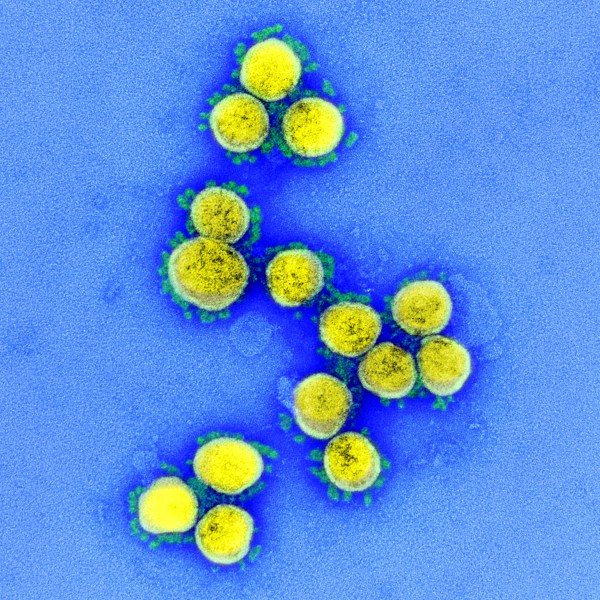
A patient who was admitted for treatment of rectal adenocarcinoma had specimens taken from the rectum during the performance of an ileostomy (the cancer was cut out and his bowel was given a new outlet to the skin.) Three days later he developed symptoms and was diagnosed with COVID-19 that progressed to pneumonia. The samples taken at surgery showed replicating (growing) SARS-COV-2 virions (individual virus particles) in the tissue under the electron microscope (EM.)
The only conclusion you could make from that is that he was shedding virus in his stool three days before he developed symptoms of COVID-19.
This is a typical phenomenon. A case series of 42 patients with confirmed COVID-19 had the virus isolated from the stool of 28 of them, which persisted for an average of a week after it was no longer detectable in the nose.
A large meta-analysis early in the outbreak found 48% of 4243 patients with positive tests for virus RNA in stools, but only 18% had symptoms. Again, virus RNA was detected in stool after it had disappeared from respiratory samples.
Another study, with 95 patients, found that if anorexia and nausea are included as gastrointestinal (GI) symptoms, 58 of the patients (more than half) did in fact have GI problems. 31 of 65 patients whose stool was tested were positive for virus RNA.
This study, which included 116 consecutive patients, identified liver enzyme increases in 40% of the 65 patients tested for liver function. There were 32% of all patients who complained of GI symptoms, but they were mild compared to the cough and dyspnea. The authors also remarked that GI symptoms were never the first sign of illness.
These studies make it clear that SARS-COV-2 frequently, if not always, infects the GI tract, but doesn’t always cause diarrhea. These symptoms are relatively mild– unlike those in the blood vessels, lungs, and heart. The virus even affects skin: this report from the United Kingdom says that 8-9% of patients complained of rashes.
The virus invades the lung and causes pneumonia in a large proportion of patients with symptoms. It also affects the heart in most patients, if the studies of post-viral heart MRI scans are accepted. It seems to be the case that the virus can invade every part of the body because it affects blood vessel endothelium (lining) and there is no organ other than the cornea free of blood vessels.

Just before meeting the president, everybody has to be tested for the virus, because He is a professed “germaphobe” and the tests are available (although there seems to be a problem with a high false-negative rate.) There’s no indication that He understands the concept of false-negative and false-positive, which is not surprising since a lot of doctors don’t understand it either.
Here’s an article in the Washington Post about it. Here’s another story in CNN. It’s unfortunate for him, especially because he aggressively responded to the threat of the novel coronavirus when it first was manifested. It is fortunate for him that he is asymptomatic. I hope it’s not a false-positive, because he could be quarantining for nothing. I also hope he gets tested for antibodies after he comes out of quarantine.
I wish only the best for people suffering from the virus. I don’t have such gentle feelings for a certain president. I hope He experiences justice, in the form of the long arm of the law. In that regard, you do know that He’s under investigation by the New York State Attorney General in Manhattan?
For bank, insurance, and possibly tax fraud (CNN story) going back over many years. It seems that His former lawyer testified under oath that He had a habit of inflating and deflating the values of his properties on applications, depending on which favored His interests more.
Just letting you know how I feel about these things. I don’t like the fact that we are experiencing the worst outbreak of the virus in the developed world. I don’t like the fact that poor people and people of color are experiencing the worst effects, both virological and economical. I don’t like the way this has been politicized. I do like the effects of it upon His chances for re-election.

