Skip to content

Why Money in Politics is a Sin

2013-10-30

The recent (2010) Supreme Court decision that declared a law restricting anonymous contributions to be unconstitutional has opened the floodgates to organized crime to take over our government.  The problem is that money is not, by its very nature, necessarily legally obtained.  Drug barons of South America have billions of dollars at their disposal.    Large contributions from anonymous donors can potentially influence elections of all kinds, although spending a lot of money is not a guarantee to winning office.  Organizations that are criminal in nature can potentially  make very large money contributions to influence elections, and if they are allowed to be anonymous there is little check on their proliferation.  It is not just legally wealthy people who might want to get into office or have a law changed by referendum.

The movies shown on TMC naturally provide an entertaining example of how this problem can work.  The movie in question stars Lee J. Cobb as a lieutenant in the homicide bureau of the Miami Police Department.  He receives a phone call that a woman in a hotel has just seen a man in the hotel across the street from her stabbing another man to death.  The captain of homicide responds to the call since the lieutenant is going off duty.   Next thing he knows, he is getting a call that the captain has been knifed to death too, in the same hotel room.  These murders lead to a hired killer who is working for an extremely powerful illegal organization that wants to legalize gambling in Florida so as to create competition for the already legal places in Nevada and Cuba (this is in 1955.)  This illegal organization has a key man in Florida who is buying the support of all the wealthiest and most powerful men in the state.  Those who won’t be bought, are quietly eliminated by this hired hit man.  All this is in preparation for a referendum by which the people of Florida are supposed to agree to legalize gambling.  Finally, the lieutenant (Cobb) wields a Thompson submachine gun in a shootout with the bad guys who are attacking his girlfriend and their son (who are shooting back from inside a cabin deep in the Everglades.)  The exposure of the illegal money behind the referendum causes the people to reject it.  This point is driven home by commentary from a narrator at the beginning and end of the film.

The whole point of the movie is that an illegal organization could, theoretically, buy an election or a referendum and thereby influence political policy to their advantage.  The fact that gambling was legal in Cuba (where part of the movie takes place) was considered irrelevant by everyone in the movie.

To avoid this possibility, it is Constitutionally necessary (in order to prevent organized crime from influencing politics) to supervise elections by banning anonymous donations, and, as far as possible, remove the influence of money from elections (perhaps by giving free TV airtime to candidates who meet minimal popularity standards.)

Man in a Hat

2013-10-29

Man in a Hat

This unknown man is probably a distant relative of mine.

Stuffing the Teapot
2013-10-29

Stuffing the Teapot

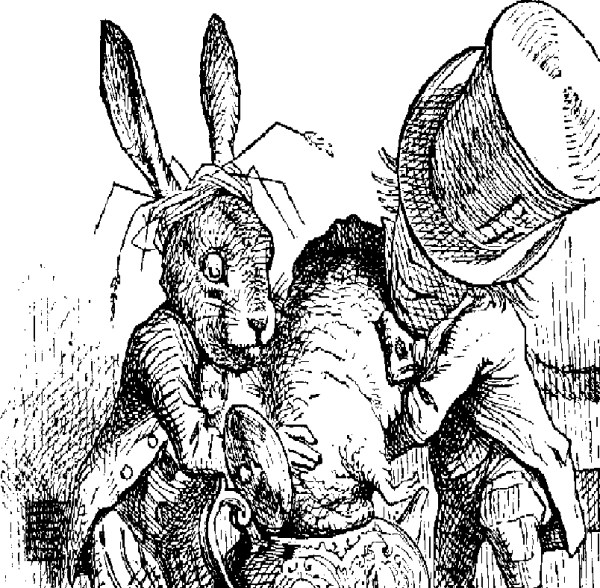
In this original illustration, the Mad Hatter and the March Hare are stuffing the Dormouse into the Teapot. Perhaps the author was making some allusion to the political situation at the time. It’s just as true today as it was then. By the way, in case you didn’t notice, the Dormouse is us.

Indian Maiden Circa 1884

2013-10-28

Indian Maiden Circa 1884

Another Cat Picture

2013-10-28

Another Cat Picture

Kitten on a Chair

2013-10-27

Kitten on a Chair

Three Horses in a Snowy Pasture
2013-10-25

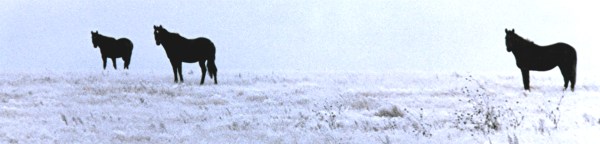
Three Horses in a Snowy Pasture

Geese, Red Barn, Foggy Day

2013-10-23

Geese, Red Barn, Foggy Day

Said to be my Mother’s Father

2013-10-23

Said to be my Mother's Father

In uniform of WW I American Infantry

Why there is No Such Thing as Free Market Morality

2013-10-22


I posted this on my blog in 2013:

Here is a nice blog post from the New York Times online that explains why there is no such thing as “Free Market Morality.” :: http://opinionator.blogs.nytimes.com/2013/10/20/questions-for-free-market-moralists/

The point of the blog piece is that there are many circumstances where free markets fail abysmally in creating moral, or even minimally acceptable, outcomes.  For example, some people are in possession of lands and properties that were bequeathed to them by their parents and grandparents.  The possession of these lands allows them to be rented out for the production of crops or livestock.  When there is a shortage of such land, high rents can be charged and a tenant farmer can be in the position of paying almost as much in rent as he/she will receive in value of crops produced.

Is it fair for a person to work for a year and receive next to nothing in return, just because there is very little land available?  At the same time, landowners could be making a nice profit on their crops because they don’t have to pay anyone rent.  Is the owner a better person because he/she has inherited the land used to make a living?

Here are the questions to ask yourself, if you think “free markets” are truly just

1. Is any exchange between two people in the absence of direct physical compulsion by one party against the other (or the threat thereof) necessarily free?

2. Is any free (not physically compelled) exchange morally permissible?

3. Do people deserve all they are able, and only what they are able, to get through free exchange?

4. Are people under no obligation to do anything they don’t freely want to do or freely commit themselves to doing?


It is clear that some people are born, or are placed into, a position in which they are more advantaged than other people.  Such people are morally obligated (in my book) to share some of their advantage with others.  Notice that I said SOME of their advantage: a part of one’s advantages are due to circumstances beyond their control– thus a portion of their rewards is fairly meant to be shared with others.

In addition, some people are smarter and/or more talented than others.    Such bright people are free to use their abilities to create and to sell their works, but it is not fair for them to cheat or misguide people and gain advantage over them in that way.  This applies particularly to charging higher interest rates or making contracts with hidden clauses because you can fool people into doing so.  While someone with a brilliant singing voice may fairly claim their rewards, a portion of their payback is related to sharp dealings by clever lawyers.  Not all of this is fair, and some should be shared.

Finally, if you perceive a danger and have the opportunity to rescue others or warn them in time, you are morally obligated to take whatever measures you can reasonably perform.  However, there is no legal requirement to do this and there are certain legal complications that appear when one tries to save another and fails (despite their best efforts in many cases.)

There are legal fences around a person’s ability to give away one’s work product (and freedoms) to another which prevent a person, despite all exigencies, from giving away what little freedom one has in order to survive.  These legal rules can be circumvented in most cases with clever language that, in practice, can reduce a person low in status to near-vassalage to a person or corporation with high status.

For example, non-disclosure agreements (a near-universal piece of contract language for underlings to He who must not be named) [this sentence added today] can abrogate a person’s right of free speech in exchange for employment.

In the extreme case, it is not possible to sign oneself into slavery.  This should make it clear that there is a basic principle of fairness, that applies to almost everything.  It is also reciprocity.  Anything that you don’t want done to yourself, you shouldn’t do to anyone else.  And anything that you want done to yourself should also be done to everyone else.  (Almost everything.)