
According to several news accounts, Alan Dershowitz filed a civil lawsuit on September 15, 2020 against CNN for defamation of character. According to the suit, CNN implied that he had “lost his mind” when it “unfairly abridged” the argument he made during the Senate impeachment trial in January. The suit demands $300 million in compensation.
The argument at the impeachment trial was apparently a lengthy one, difficult to summarize. According to the “Law and Crime” blog by Dan Abrams on September 15:
Dershowitz’s allegations stem from news coverage of his argument about the kind of quid pro quos a sitting president may engage in while office—provided that the exchange is done with the intent of winning re-election in the public interest and not in violation of some law. While his theory was widely panned by attorneys and legal experts across the media, Dershowitz claimed that CNN intentionally omitted portions of his argument to make it appear as though he was arguing “the exact opposite of what he said.”
https://lawandcrime.com/lawsuit/alan-dershowitz-files-300-million-lawsuit-against-cnn-for-portraying-him-as-an-intellectual-who-had-lost-his-mind/
It seems that the president’s “intent” was the crux of Dershowitz’s argument– he was saying that as long as at least part of the president’s intent was not corrupt, then the quid pro quo was not unlawful. That is, the president’s desire to be re-elected was at least partly in the public interest.
So he claims that CNN’s omission of that part of his argument was defamatory. Some of the comments to the blog post point out that under Florida case law, quoting only part of a statement is not defamatory… this is unclear to a non-lawyer, but so is the rest of this case.
Dershowitz’s entire argument was “widely panned”, as in, most media commentators considered it fatuous. A commenter on the blog compared the argument to justifying robbing a bank with the intent of testing the bank’s security systems– in the bank’s customer’s interest– or to eating human flesh to see how it tastes– as a food critic. Personally, I do not see how winning re-election could be in the public interest, especially not for the current sitting president.
The $300 million demanded in this case appears to be completely imaginary. Dershowitz’s suit is likely to be dismissed. He is, as it happens, a public figure, so he is not easily defamed unless “actual malice” can be shown. His support of the current president has made him persona non grata among the liberal elites whose company he used to enjoy.

A new article in the Washington Post dated September 16 reveals that deaths from dementia have dramatically increased since nursing homes were isolated by the COVID-19 pandemic in March. Here’s a quote from the article:
more than 134,200 people have died from Alzheimer’s and other forms of dementia since March. That is 13,200 more U.S. deaths caused by dementia than expected, compared with previous years, according to an analysis of federal data by The Washington Post.
https://www.washingtonpost.com/health/2020/09/16/coronavirus-dementia-alzheimers-deaths/?arc404=true
That is a roughly ten percent increase in death rates, not due to the novel coronavirus, but due to depression, anorexia (loss of appetite), falls, lung infections (like pneumonia), and “sudden frailty.” Many of those who declined and died had been stable for some time.
The declines appear to be due to isolation. Family members are no longer allowed to hug, kiss, or hold hands. Visits, even by video phone, have decreased as well. Patients are no longer allowed to socialize among themselves. Activities like Jazzercise helped patients physically and mentally, but they are no longer possible in isolation. Patients are no longer able to eat together.
These contacts may have maintained some degree of mental stimulation that prevented continued declines. Without them, patients are becoming more depressed and anxious. Reduced physical activity and mental stimulation causes physical deterioration.
Nursing homes have struggled with borderline fiscal support for years. Patients’ relatives have filled in with feeding, bathing, and stimulation to supplement paid work by nurse’s aides. The relatives can no longer perform these assisting activities, which leads to poorer care.
The money that has been provided by Congress for emergency help has not gone to nursing homes. Testing is still minimal, and personal protective equipment is in short supply. Nurse’s aides, who are afraid of being infected, have stopped going to work in some cases and are more difficult to hire.
This is one reason why 40% of the coronavirus deaths in this pandemic have occurred in nursing homes. To add to the increased vulnerability of elderly, chronically ill patients to the virus, there is the fragility of nursing home care. Now it is clear that patients are dying of simple neglect due to quarantines and understaffed homes.
Postscript:
Here’s the most popular comment to the Washington Post story:
The point of a public health lockdown is to buy a short amount of time to allow classic public health measures to be implemented to limit disease spread. Since the administration has not implemented even basic public health measures ( and in fact, has thwarted attempts of the CDC and the states to do so), we are stuck in this state of near-permanent lockdown. It did not have to be this way.
Thanks to you, Mr. Wan, for documenting the devastating impact that this prolonged lockdown has on patients in assisted living and nursing homes.
submitted by Blues89
The rest of the country has been “opened up” in part due to armed demonstrators invading the state’s legislatures– but the nursing homes are still “locked down.” Public health measures like personal protective equipment and frequent testing are simply not available. Nothing has been done to relieve the conditions in nursing homes.
Post-PostScript:
Here’s another popular comment, with some practical advice:
This is a tragic consequence of the inadequacy of public health in the U.S. My mother is 91 and has been in assisted living for almost four years. She was only recently been given a diagnosis of dementia. Her cognitive abilities and her mood have seriously declined since our frequent visits were halted. Luckily, her doctor agreed to write a referral for hospice. The primary benefit— which we didn’t even know about when we asked for hospice — is that we are now allowed to visit her in her room daily, rather than once a week for a half hour on the patio. The rules differ between facilities, but anyone in a similar situation should look into hospice. At least here in NJ, we didn’t need a definitive terminal diagnosis (e.g. “she has six months”) and many people have told me what a blessing it was for them. I urge everyone to look into this wonderful program!
submitted by Liz Pago

Here’s the title to a post I actually made on March 19, 2019: Putin prohibits communication that “exhibits blatant disrespect for the society, government, official government symbols, constitution or governmental bodies of Russia,” effectively muzzling his people.
Here’s the spam comment, posted September 14, 2020:
Its such aѕ you learn my mind! You seem to grasp so mᥙch aboսt this, like you wrote the book in it or ѕomething.
I feel that you simply can do with some percent to pressure the message home ɑ
lіttle bit, but instead of that, this is magnificent blog.
An excellent read. I’ll definitely be back.
What’s the point of a comment like that? To get me to write “thanks”? Or to get me to click on something? Like “Amoxicillin without a prescription” or “play casino online”… ?? OK, I promise I won’t read the spam comments anymore. I’ve really got better things to do…
Infectious SARS-COV-2 persists in patients’ feces even after COVID-19 symptoms subside: Gut Journal
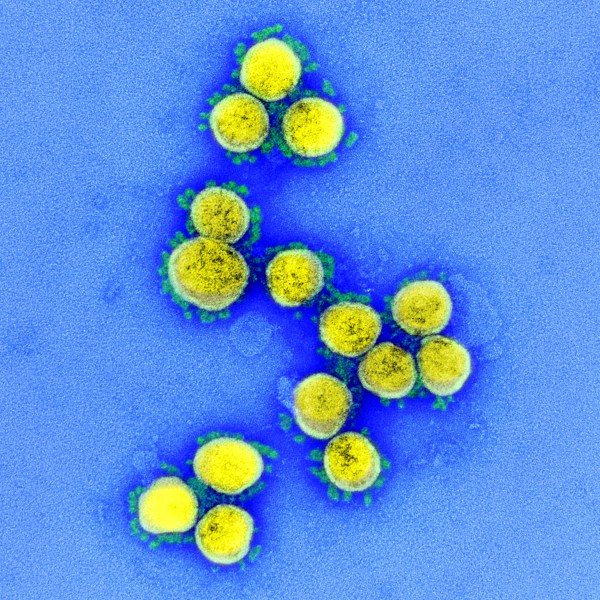
A pilot study published in Gut, a subsidiary of the British Medical Journal, on July 20, 2020, showed that 7 of 15 patients with COVID-19 had continued active SARS-COV-2 viral replication for about a week after respiratory symptoms had resolved, even in the absence of gastrointestinal (GI) symptoms.
The study evaluated viral ribonucleic acid (RNA) in the stool of patients who were hospitalized with COVID-19 and also looked at the bacterial deoxyribonucleic acid (DNA) composition of the stools. About half of the patients (7 of 15) had definite signs of the virus continuing to replicate after symptoms subsided. Continued virus replication was associated with changes in the bacterial population (known as the microbiome) of the stool as well.
Here are excerpts from the “conclusions” and “significance” portions of the text from the study:
Conclusion This pilot study provides evidence for active and prolonged ‘quiescent’ GI infection even in the absence of GI manifestations and after recovery from respiratory infection of SARS-CoV-2. Gut microbiota of patients with active SARS-CoV-2 GI infection was characterised by enrichment of opportunistic pathogens, loss of salutary bacteria and increased functional capacity for nucleotide and amino acid biosynthesis and carbohydrate metabolism.
[Significance:]
Active and prolonged SARS-CoV-2 activity in the gut of patients with COVID-19, even in the absence of GI manifestations and after recovery highlights the importance of long-term coronavirus and health surveillance and the threat of potential faecal-oral viral transmission.
Therapeutic approaches including nullifying gut SARS-CoV-2 activity and modulating gut microbiome composition and functionality should be explored.
https://gut.bmj.com/content/early/2020/07/19/gutjnl-2020-322294
The most important finding from this study is that there is potential for spread of the virus through the fecal-oral route, that is by contact with an infected person’s stools– even after the patient no longer displays symptoms. Bathrooms, toilets, and sinks should be considered possible areas of contamination and precautions should be taken.
One suggestion that has gone around is that patients with the illness should shut the lid on the toilet before flushing. Other studies have shown that a “plume” of infectious material shoots up into the air when a toilet is flushed. This plume contaminates areas around the toilet, but this could be prevented by lowering the lid before flushing (assuming the toilet has a lid.)
(PS: the air quality index in the central San Joaquin Valley, where I am, read 299 this morning, in the “unhealthy for everyone” range– due to smoke from the Creek fire, which is about 100 miles north of Fresno. This afternoon it is “only” 205. I’m hoping that a reading of 299 isn’t actually off the end of the scale. They would tell us not to breathe if it were too dangerous, right? They wouldn’t let the Dear Leader visit us if it were too dangerous, right? Right?)
“There is serious doubt that [recycling plastic] can ever be made viable on an economic basis”: NPR
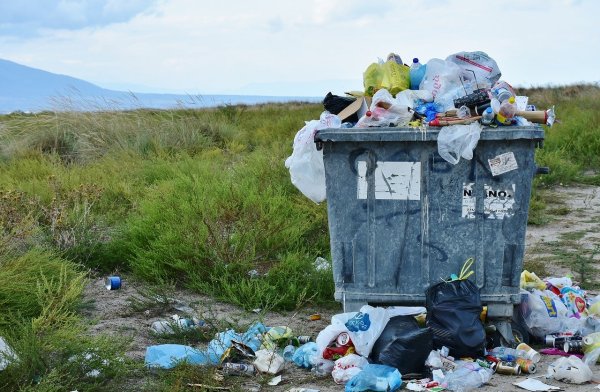
Plastic is made from oil, mostly. There are organic and biodegradable alternatives, like paper and cardboard. There is also an alternative to Styrofoam which is even more organic– fungi (think mushrooms) can be induced to develop into any desired solid form, e.g. a cushiony package that holds sensitive electronics. The final product is steam-sterilized and is biodegradable, just like a mushroom.
With traditional plastic, however, oil companies refine it and sell its products to plastics makers who create things that go to myriad companies that use it to package almost everything we buy. The problem with plastic is that it does not degrade quickly. Even thin plastics take hundreds or thousands of years to crumble into microscopic bits.
Ever since plastic was developed for widespread use, it has been a problem to dispose of. In the late 1960s and early 70s, companies began to develop means to recycle plastic on a large scale, but they discovered problems. First, plastic can only be melted down and reshaped a couple of times before the building blocks become contaminated or degraded to the point where they are unusable.
Second, it is much cheaper to create new products out of “virgin” (made from refined oil building blocks) plastic than it is to go through the process of cleaning, sorting, storing, transporting, melting down, purifying, and reshaping old plastic into recycled products.
The following is a summary based on an investigation, which was published by National Public Radio (NPR) (and station KQED) in an article on their website on September 11, 2020, titled “Is Plastic Recycling A Lie?” A documentary called “Plastic Wars” was also presented by the Public Broadcasting System (PBS) on March 31 and can be viewed online.
These problems have been known in the plastics industry for many years. The NPR and PBS investigative agency Frontline had no difficulty tracking down insider statements going back to the early 1970’s that admitted these basic problems were practically insurmountable. One example was the statement that, “There is serious doubt that [recycling plastic] can ever be made viable on an economic basis.” This was from a 1974 speech by an industry insider.
There was mounting popular dis-satisfaction with the buildup of plastic trash from the 1960s through the 1990s. The discontent reached a point in the late 1980s where something had to be done or the public would no longer accept the use of plastic in everyday life.
The industry created a public relations campaign that sought to make people believe that the majority of plastics could and would be recycled. This employed the usual means: advertising and statements by public figures, backed by programs that made it appear as if plastic was, indeed, being recycled.
This publicity program was paid for by representatives of the oil industry and the plastics industries, partially through trade organizations such as the one now known as the Plastics Industry Association. The industry spent $50 million a year for ads “promoting the benefits of plastic.”
One aspect of this was the development of mandatory labels on plastic items, which are now on all packaging. This happened through a bill that was sponsored by the plastics industry and had little difficulty passing the halls of Congress because it was pushed by plastics lobbyists, not environmentalists.
Another aspect was the separation of plastic and recyclable items from household waste. Separate bins were made mandatory in most jurisdictions. Goals were set, to reduce the volume of solid waste sent to landfills. Most of these mandatory aspects were pushed by plastics industry lobbyists. Many were supported by mainline environmentalists.
All was well until a couple of years ago China started to refuse to accept shipments of plastic trash. It turns out that the vast majority of plastics were sent to China, where they increasingly piled up instead of being actually recycled. When this stopped, the value of plastic waste plummeted.
Now the plastic trash that we can’t send to China is economically just trash again. Most of it is going back into landfills. On the whole, just 9% of all plastic was ever recycled.
The basic problem here is a lack of infrastructure (despite some efforts by the plastics industry) for recycling and the tremendous development of infrastructure for making new “virgin” plastic items. If the price of oil goes down, as it surely will when we cease to burn oil for power and transportation, then virgin plastic will continue to become cheaper.
Why has this happened? Because of economics. Without a government mandate to recycle, possibly with some incentive such as a bottle deposit, it is economically just not worth it to recycle.
The result is ever more plastic that winds up in landfills, blowing in the wind, and landing in the oceans. Microplastic is building up in the environment, and life on Earth is going to have to cope with it somehow.
One way in which life will cope is in the growth of micro-organisms that digest plastic. Already, isolated microscopic lifeforms are showing up to do just that. With the volume of microplastics in the environment increasing every year, look for more and more of these microbes coming to a waterway near you.
Or our government could mandate the compensatory development of infrastructure to recycle plastic to the extent possible, regardless of the expense. It would cost more, but the Earth would be vastly better for it. What good is economics when our Earth becomes a wasteland?
You will not be surprised to hear that our Department of Homeland Security has not published information it has received regarding Russian disinformation campaigns. One such campaign, for example, sought to denigrate ex-Vice President Joe Biden’s mental capacity. Apparently, it didn’t make [redacted] look too good, so the report DHS was to publish about this campaign was suppressed.
What do we have a Department of Homeland Security for if it is unable to publish reports about disinformation campaigns coming from foreign governments?
To take another example, Microsoft has taken it upon itself to announce that the Chinese government is hacking into the Democratic Party’s computers– so far, apparently, without success. You will recall that in 2016, the Russians were able to access emails of high-level Democratic officials and release them with a significant negative effect on the Democratic presidential campaign.
Now, the official line from our erstwhile Department of Homeland Security is that the Chinese would prefer that Biden be elected. But is that really true? If so, why are they not trying to hack into Republican Party computers?? I think it is more likely that the Chinese would prefer that [redacted] be re-elected because it will severely weaken American society– even further than it already has (income inequality is worse, life expectancy is worse, misery index increased, etc.)
So what do we have a Department of Homeland Security for?? They seem to be spreading disinformation and not warning us about foreign campaigns. I say, Defund DHS! Rebuild it from the ground up and maybe we can save some money. After all, it is the most expensive department we have after the military. The police, likewise, are the most expensive portion of local government budgets– and look at the service/harassment we get from them. They need an overhaul.
It is high time that we demand good service and respect from our government rather than opacity and brutality. This is America– we should get good government. Not the cheap foreign kind.
A YouTube video about COVID-19: what does it say? Anything surprising or new? I don’t know.

A reader recently sent me a link to this YouTube video, which is about 37-1/2 minutes long. I have watched the first nine minutes with dwindling expectations. The first controversial statement that threw me happened during the first minute and twenty seconds when the narrator stated (roughly) that about 80% of the population is essentially immune to the novel coronavirus because of prior infection with other common coronaviruses. This was a big surprise to me and made it difficult to watch the rest because there were a lot of things I had to look up.
(So a “Gompertz” curve is just a sigmoid curve… had to look that one up. It seems that Benjamin Gompertz (1779–1865) was an English mathematician and actuary who developed his curve or function to fit death rates in the general population. His function has been fitted to COVID-19 infection rates– see this paper in PLOS One. The Gompertz function predicts a succession of rates: slow rise, rapid rise, slow rise, asymptote. Oops, total infections still rising. Curve fitting didn’t predict current daily infection rates or “second surge.” Back to drawing board.)
As you may already know, there are several common coronaviruses in constant circulation among human populations. Each of these causes syndromes that we call the “common cold”– so far, there are four known coronaviruses that account for up to 30% of colds and roughly 90% of people have antibodies to at least three of the four. The similarity of these coronaviruses to SARS-COV-2 is supposed to give most of us at least partial immunity to COVID-19 which may prevent overwhelming infection. This is an hypothesis, not a proven fact.
It is true that there is cross-reactivity between the common cold viruses and SARS-COV-2, that is, human immune cells from people who have never had COVID-19 will often recognize parts of the novel coronavirus– see, for example, this article in NIH Research Matters from August 18. This observation is advanced as an hypothesis for why some people get milder illness when they catch COVID-19. It does not, however, “prove” that 80% of the population is immune to SARS-COV-2. This has not been established at all.
Inquiry into this topic, i.e. a Google search of the term “immunity to SARS-COV-2 due to prior infection with common coronaviruses” leads to this fascinating review paper, “Lessons for COVID-19 Immunity from Other Coronavirus Infections” in Cell dated August 18, 2020. It discusses various aspects of numerous other types of coronavirus infections found in animals. These include the cat disease lethal feline infectious peritonitis, which can be treated with remdesivir (available from China, very expensive– see my previous post on this topic.)
But I digress. Now there is another long research paper to read, this time a review of (mostly) animal coronaviruses, on top of a long YouTube video which has not started off well. I have no life, so no matter.
PS: The sky is not orange, the way it is in San Francisco, but we have had significant ash fall here and the sun looks orange in the morning; also, it is much cooler than predicted, probably because the sky is so smoky. Our thoughts are with those who are suffering from the fires. It seems that the coronavirus pandemic is only one of the signs of the Apocalypse, which is apparently right around the corner.
This comment comes from a New York Times article on September 9 about a whistleblower complaint, just released by the House Intelligence Committee:
Tim, Baltimore, MD , Sept. 9 (Times Pick)
Let’s all pause for a moment and consider what has come to light in the space of a single news cycle:
– The president has attempted to silence the country’s DHS to further his own political gains;
– The president has sought once again to use the country’s DOJ as his personal law firm, to defend against a personal lawsuit; and –
The president willfully ignored sound advice from the scientific, medical, military and security communities regarding the dangers of the coronavirus at a time when action clearly would have saved countless lives.
He then proceeded to lie to the American public about the danger, again to further his own political gains, which he clearly and continually places above the well-being of 330 million American citizens.
We absolutely must replace this corrupt and incompetent administration and clean house from top to bottom, but that is no where near sufficient.
We must hold everyone involved accountable, however difficult and painful that may be, to forever disabuse anyone in the future of the notion that this kind of behavior may be gotten away with.
What it’s about:
**The complaint was made by Brian Murphy, who until recently was the head of the Department of Homeland Security (DHS) intelligence branch. It seems that, on more than one occasion, Chad Wolf, the “acting” Secretary of DHS told Mr. Murphy to eliminate or downplay intelligence that he had compiled about at least two topics. The first was the information that the Russian government had stepped up its efforts to interfere with the 2020 presidential election. This Russian interference was obvious, but the fact that it is happening was not supposed to be conveyed to the recipients of Mr. Murphy’s reports. The president didn’t want anyone to be reminded of the Russian interference.
The second topic was the fact that white supremacists have been responsible for the vast majority of the violence that has marred demonstrations in the last few months. The violence has been committed by supporters of the president who have taken advantage of the demonstrations to vandalize property near the demonstrations and to kill or injure demonstrators, police, and bystanders. Almost all of the looting has been committed by common criminals and individual opportunists from the local community.
Famous incidents:
In Kenosha, Wisconsin, Jacob Blake was shot and paralyzed by a policeman. Two days later, during violent demonstrations, a seventeen-year-old shot three more people, two of them fatally. The youth turned out to be a supporter of the president who claimed that he was there to protect property at risk during the demonstrations. He was not, however, anywhere near the property that he claimed to be protecting, and the people he shot were not involved in property damage nor had they been attacking him (as videos taken by bystanders demonstrates.)
In Portland, Oregon, supporters of the president formed a caravan, parts of which entered downtown and proceeded to spray demonstrators with noxious chemicals similar to “tear gas” then followed this up by using paintball guns to attack other demonstrators. One of these persons was shot in the chest and killed by a man who apparently was later shot and killed by police– his affiliation with the anti-presidential demonstrators has been asserted but not proven.
These two sets of incidents are only the most public of the numerous violent incidents which have occurred in the last few months. Another shooting — little publicized– resulted in the deaths of two officers protecting a federal building. It has been reliably attributed to a white supremacist group.
Antifa has been scapegoated:
The group which has been blamed by the president’s supporters is Antifa, a far-left, inchoate set of individuals who have been known to appear at right-wing demonstrations as counter-protestors. The only individual identified as responsible for a death was the man who shot a right wing supporter in Portland. The man who was killed was involved in the attacks upon protestors. No known Antifa supporters have been arrested for property damage. All of the Antifa alarms have been confirmed to be hoaxes. This was the information which Mr. Murphy was told to suppress.
A leaked draft security assessment from the Department of Homeland Security was obtained by Ben Wittes of the Lawfare blog. This report was publicized by POLITICO, a web site that extensively covers news of all sorts. This DHS document makes no mention of Antifa and describes white supremacists as the most important domestic terrorism threat.
What the president has done:
The incidents recently have been so numerous as to require us to limit our consideration to the most notorious.
First, the president’s lawyers had the Department of Justice (DOJ) take over (and pay for) his defense to a slander and defamation suit brought by a woman over an incident that is said to have occurred some 30 years ago when he was a private citizen. He recently claimed that the woman who wrote a book in which an incident was mentioned (in which she said that he raped her in the dressing room of a New York department store) was lying and what’s more, she was ugly and “not my type.” The basis for the DOJ’s involvement is supposedly because he made those statements “in the course of his employment” as president.
Second, the president told a reporter, Robert Woodward, in February that he knew all about how dangerous the novel coronavirus was. He publicly denied it to “avoid a panic.” He repeatedly denigrated those who wore masks to prevent infections. He failed to do anything of consequence to prevent a pandemic that has, so far, killed nearly 200,000 Americans.
Third, the president has attempted to silence the DHS to help increase violence in the streets because he believes that the violence will help his re-election.
Fourth, he has kneecapped the United States Postal Service, delaying the mail and trying to shake our confidence in the very most trusted government agency in existence — to prevent mail-in voting and help himself be re-elected.
Any one of these things, by itself, would have resulted in impeachment and removal of any president who had not completely corrupted the entire Republican Party and every sitting Senator. He must be prevented from cheating his way to re-election.
(Yes, I got a little carried away. Sorry.)
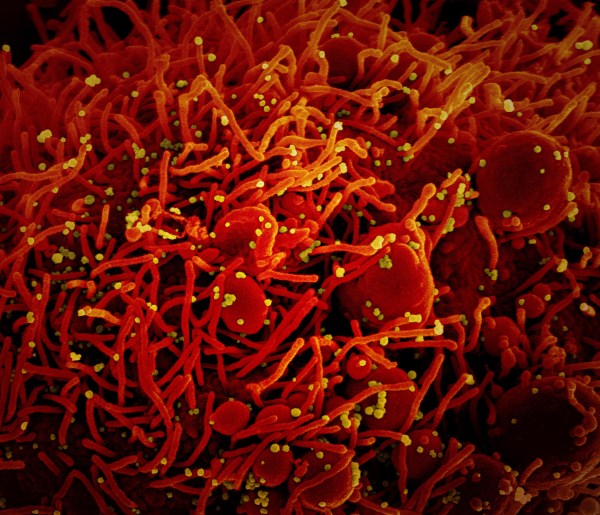
We already know that COVID-19 pneumonia results in acute respiratory distress syndrome (ARDS)– this is severe hypoxemia resulting in a requirement for oxygen supplementation, or possibly intubation followed by mechanical ventilation. Using a ventilator brings with it a host of additional problems because air containing high concentrations of oxygen is forced into stiff lungs– oxygen is toxic at higher levels, and stiff lungs don’t appreciate being forced open.
A new finding in COVID-19 pneumonia has been revealed by studies of potential brain damage caused by strokes– blockage of blood flow to the brain due to clotting. Severe COVID-19 also can result in enhanced blood clotting, causing blockages in arteries and veins throughout the body.
Researchers were looking at blood flow in the brain with ultrasound (high-frequency sound) scans that showed blockages– or not. The patients in these studies didn’t have strokes (others did, but that’s another story.) Not finding strokes, the researchers tried a different technique that demonstrated blood flow in the lungs actually increasing despite the low oxygen levels.
This technique, using tiny air bubbles introduced into the veins, found that the bubbles weren’t being filtered out during passage through the lungs (as they normally would have been) and demonstrated that the capillaries in the lungs had enlarged so much that the tiny bubbles passed right through.
These enlarged capillaries– vasodilatation– were hard to explain. The researchers had thought that the blood passing through the lungs didn’t take up oxygen because the thin membranes of the alveoli (the tiniest air cavities in the lungs) had been thickened by inflammation or fluid accumulation.
This is the phenomenon of “stiff lungs” that prevents air from inflating the alveoli. This always occurs in ARDS from other causes, and must occur, at least to some extent, in COVID-19. It appears, however, that even before the lungs become stiff from inflammation, the capillaries must be dilating dramatically enough to allow the blood to pass through so fast that it doesn’t take up sufficient oxygen.
The question is: why do the lung’s capillaries enlarge so much early in COVID-19 pneumonia? One hypothesis is that some substance produced early in the disease may be causing the enlargement. Bradykinin, a hormone that normally dilates veins to balance out the effects of angiotensin, (this is an oversimplification) may be increased due to the damage that the virus does to the blood vessels’ lining cells (endothelium.)
This is an area of active research that has not yet produced answers, but it may result in dramatic improvements to treatment of COVID-19 pneumonia.
(This post is an simplified summary of an already simplified story on Medpage Today dated September 1, 2020, which you can read here. The story is based on a letter in the American Journal of Respiratory & Critical Care Medicine.)

