You will not be surprised to hear that our Department of Homeland Security has not published information it has received regarding Russian disinformation campaigns. One such campaign, for example, sought to denigrate ex-Vice President Joe Biden’s mental capacity. Apparently, it didn’t make [redacted] look too good, so the report DHS was to publish about this campaign was suppressed.
What do we have a Department of Homeland Security for if it is unable to publish reports about disinformation campaigns coming from foreign governments?
To take another example, Microsoft has taken it upon itself to announce that the Chinese government is hacking into the Democratic Party’s computers– so far, apparently, without success. You will recall that in 2016, the Russians were able to access emails of high-level Democratic officials and release them with a significant negative effect on the Democratic presidential campaign.
Now, the official line from our erstwhile Department of Homeland Security is that the Chinese would prefer that Biden be elected. But is that really true? If so, why are they not trying to hack into Republican Party computers?? I think it is more likely that the Chinese would prefer that [redacted] be re-elected because it will severely weaken American society– even further than it already has (income inequality is worse, life expectancy is worse, misery index increased, etc.)
So what do we have a Department of Homeland Security for?? They seem to be spreading disinformation and not warning us about foreign campaigns. I say, Defund DHS! Rebuild it from the ground up and maybe we can save some money. After all, it is the most expensive department we have after the military. The police, likewise, are the most expensive portion of local government budgets– and look at the service/harassment we get from them. They need an overhaul.
It is high time that we demand good service and respect from our government rather than opacity and brutality. This is America– we should get good government. Not the cheap foreign kind.
A YouTube video about COVID-19: what does it say? Anything surprising or new? I don’t know.

A reader recently sent me a link to this YouTube video, which is about 37-1/2 minutes long. I have watched the first nine minutes with dwindling expectations. The first controversial statement that threw me happened during the first minute and twenty seconds when the narrator stated (roughly) that about 80% of the population is essentially immune to the novel coronavirus because of prior infection with other common coronaviruses. This was a big surprise to me and made it difficult to watch the rest because there were a lot of things I had to look up.
(So a “Gompertz” curve is just a sigmoid curve… had to look that one up. It seems that Benjamin Gompertz (1779–1865) was an English mathematician and actuary who developed his curve or function to fit death rates in the general population. His function has been fitted to COVID-19 infection rates– see this paper in PLOS One. The Gompertz function predicts a succession of rates: slow rise, rapid rise, slow rise, asymptote. Oops, total infections still rising. Curve fitting didn’t predict current daily infection rates or “second surge.” Back to drawing board.)
As you may already know, there are several common coronaviruses in constant circulation among human populations. Each of these causes syndromes that we call the “common cold”– so far, there are four known coronaviruses that account for up to 30% of colds and roughly 90% of people have antibodies to at least three of the four. The similarity of these coronaviruses to SARS-COV-2 is supposed to give most of us at least partial immunity to COVID-19 which may prevent overwhelming infection. This is an hypothesis, not a proven fact.
It is true that there is cross-reactivity between the common cold viruses and SARS-COV-2, that is, human immune cells from people who have never had COVID-19 will often recognize parts of the novel coronavirus– see, for example, this article in NIH Research Matters from August 18. This observation is advanced as an hypothesis for why some people get milder illness when they catch COVID-19. It does not, however, “prove” that 80% of the population is immune to SARS-COV-2. This has not been established at all.
Inquiry into this topic, i.e. a Google search of the term “immunity to SARS-COV-2 due to prior infection with common coronaviruses” leads to this fascinating review paper, “Lessons for COVID-19 Immunity from Other Coronavirus Infections” in Cell dated August 18, 2020. It discusses various aspects of numerous other types of coronavirus infections found in animals. These include the cat disease lethal feline infectious peritonitis, which can be treated with remdesivir (available from China, very expensive– see my previous post on this topic.)
But I digress. Now there is another long research paper to read, this time a review of (mostly) animal coronaviruses, on top of a long YouTube video which has not started off well. I have no life, so no matter.
PS: The sky is not orange, the way it is in San Francisco, but we have had significant ash fall here and the sun looks orange in the morning; also, it is much cooler than predicted, probably because the sky is so smoky. Our thoughts are with those who are suffering from the fires. It seems that the coronavirus pandemic is only one of the signs of the Apocalypse, which is apparently right around the corner.

This comment comes from a New York Times article on September 9 about a whistleblower complaint, just released by the House Intelligence Committee:
Tim, Baltimore, MD , Sept. 9 (Times Pick)
Let’s all pause for a moment and consider what has come to light in the space of a single news cycle:
– The president has attempted to silence the country’s DHS to further his own political gains;
– The president has sought once again to use the country’s DOJ as his personal law firm, to defend against a personal lawsuit; and –
The president willfully ignored sound advice from the scientific, medical, military and security communities regarding the dangers of the coronavirus at a time when action clearly would have saved countless lives.
He then proceeded to lie to the American public about the danger, again to further his own political gains, which he clearly and continually places above the well-being of 330 million American citizens.
We absolutely must replace this corrupt and incompetent administration and clean house from top to bottom, but that is no where near sufficient.
We must hold everyone involved accountable, however difficult and painful that may be, to forever disabuse anyone in the future of the notion that this kind of behavior may be gotten away with.
What it’s about:
**The complaint was made by Brian Murphy, who until recently was the head of the Department of Homeland Security (DHS) intelligence branch. It seems that, on more than one occasion, Chad Wolf, the “acting” Secretary of DHS told Mr. Murphy to eliminate or downplay intelligence that he had compiled about at least two topics. The first was the information that the Russian government had stepped up its efforts to interfere with the 2020 presidential election. This Russian interference was obvious, but the fact that it is happening was not supposed to be conveyed to the recipients of Mr. Murphy’s reports. The president didn’t want anyone to be reminded of the Russian interference.
The second topic was the fact that white supremacists have been responsible for the vast majority of the violence that has marred demonstrations in the last few months. The violence has been committed by supporters of the president who have taken advantage of the demonstrations to vandalize property near the demonstrations and to kill or injure demonstrators, police, and bystanders. Almost all of the looting has been committed by common criminals and individual opportunists from the local community.
Famous incidents:
In Kenosha, Wisconsin, Jacob Blake was shot and paralyzed by a policeman. Two days later, during violent demonstrations, a seventeen-year-old shot three more people, two of them fatally. The youth turned out to be a supporter of the president who claimed that he was there to protect property at risk during the demonstrations. He was not, however, anywhere near the property that he claimed to be protecting, and the people he shot were not involved in property damage nor had they been attacking him (as videos taken by bystanders demonstrates.)
In Portland, Oregon, supporters of the president formed a caravan, parts of which entered downtown and proceeded to spray demonstrators with noxious chemicals similar to “tear gas” then followed this up by using paintball guns to attack other demonstrators. One of these persons was shot in the chest and killed by a man who apparently was later shot and killed by police– his affiliation with the anti-presidential demonstrators has been asserted but not proven.
These two sets of incidents are only the most public of the numerous violent incidents which have occurred in the last few months. Another shooting — little publicized– resulted in the deaths of two officers protecting a federal building. It has been reliably attributed to a white supremacist group.
Antifa has been scapegoated:
The group which has been blamed by the president’s supporters is Antifa, a far-left, inchoate set of individuals who have been known to appear at right-wing demonstrations as counter-protestors. The only individual identified as responsible for a death was the man who shot a right wing supporter in Portland. The man who was killed was involved in the attacks upon protestors. No known Antifa supporters have been arrested for property damage. All of the Antifa alarms have been confirmed to be hoaxes. This was the information which Mr. Murphy was told to suppress.
A leaked draft security assessment from the Department of Homeland Security was obtained by Ben Wittes of the Lawfare blog. This report was publicized by POLITICO, a web site that extensively covers news of all sorts. This DHS document makes no mention of Antifa and describes white supremacists as the most important domestic terrorism threat.
What the president has done:
The incidents recently have been so numerous as to require us to limit our consideration to the most notorious.
First, the president’s lawyers had the Department of Justice (DOJ) take over (and pay for) his defense to a slander and defamation suit brought by a woman over an incident that is said to have occurred some 30 years ago when he was a private citizen. He recently claimed that the woman who wrote a book in which an incident was mentioned (in which she said that he raped her in the dressing room of a New York department store) was lying and what’s more, she was ugly and “not my type.” The basis for the DOJ’s involvement is supposedly because he made those statements “in the course of his employment” as president.
Second, the president told a reporter, Robert Woodward, in February that he knew all about how dangerous the novel coronavirus was. He publicly denied it to “avoid a panic.” He repeatedly denigrated those who wore masks to prevent infections. He failed to do anything of consequence to prevent a pandemic that has, so far, killed nearly 200,000 Americans.
Third, the president has attempted to silence the DHS to help increase violence in the streets because he believes that the violence will help his re-election.
Fourth, he has kneecapped the United States Postal Service, delaying the mail and trying to shake our confidence in the very most trusted government agency in existence — to prevent mail-in voting and help himself be re-elected.
Any one of these things, by itself, would have resulted in impeachment and removal of any president who had not completely corrupted the entire Republican Party and every sitting Senator. He must be prevented from cheating his way to re-election.
(Yes, I got a little carried away. Sorry.)
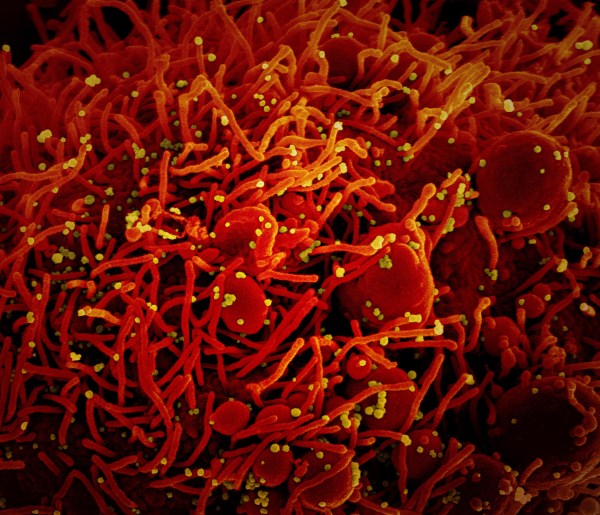
We already know that COVID-19 pneumonia results in acute respiratory distress syndrome (ARDS)– this is severe hypoxemia resulting in a requirement for oxygen supplementation, or possibly intubation followed by mechanical ventilation. Using a ventilator brings with it a host of additional problems because air containing high concentrations of oxygen is forced into stiff lungs– oxygen is toxic at higher levels, and stiff lungs don’t appreciate being forced open.
A new finding in COVID-19 pneumonia has been revealed by studies of potential brain damage caused by strokes– blockage of blood flow to the brain due to clotting. Severe COVID-19 also can result in enhanced blood clotting, causing blockages in arteries and veins throughout the body.
Researchers were looking at blood flow in the brain with ultrasound (high-frequency sound) scans that showed blockages– or not. The patients in these studies didn’t have strokes (others did, but that’s another story.) Not finding strokes, the researchers tried a different technique that demonstrated blood flow in the lungs actually increasing despite the low oxygen levels.
This technique, using tiny air bubbles introduced into the veins, found that the bubbles weren’t being filtered out during passage through the lungs (as they normally would have been) and demonstrated that the capillaries in the lungs had enlarged so much that the tiny bubbles passed right through.
These enlarged capillaries– vasodilatation– were hard to explain. The researchers had thought that the blood passing through the lungs didn’t take up oxygen because the thin membranes of the alveoli (the tiniest air cavities in the lungs) had been thickened by inflammation or fluid accumulation.
This is the phenomenon of “stiff lungs” that prevents air from inflating the alveoli. This always occurs in ARDS from other causes, and must occur, at least to some extent, in COVID-19. It appears, however, that even before the lungs become stiff from inflammation, the capillaries must be dilating dramatically enough to allow the blood to pass through so fast that it doesn’t take up sufficient oxygen.
The question is: why do the lung’s capillaries enlarge so much early in COVID-19 pneumonia? One hypothesis is that some substance produced early in the disease may be causing the enlargement. Bradykinin, a hormone that normally dilates veins to balance out the effects of angiotensin, (this is an oversimplification) may be increased due to the damage that the virus does to the blood vessels’ lining cells (endothelium.)
This is an area of active research that has not yet produced answers, but it may result in dramatic improvements to treatment of COVID-19 pneumonia.
(This post is an simplified summary of an already simplified story on Medpage Today dated September 1, 2020, which you can read here. The story is based on a letter in the American Journal of Respiratory & Critical Care Medicine.)

Moderna and the National Institutes of Health (NIH) are conducting Phase III clinical trials of its vaccine, based on mRNA (a new technology for vaccines) at 89 sites in the USA. 30,000 volunteers will be recruited. The beginning of Phase III was announced on July 27. On August 11, the federal government announced a further $1.5 billion subsidy to Moderna for the vaccine.
In June, the Food and Drug Administration (FDA) announced its criteria for efficacy: the vaccine would have to protect at least 50% of people to be considered effective. They did not say whether that meant that “protection” meant that people would not be infected with SARS-COV-2 or, alternatively, that they would not have symptoms of COVID-19 even if they did get infected. It is possible that a vaccine could protect against symptoms despite infection– and an average of 40% of infected people do not display symptoms anyway.
BioNTech of Germany, Pfizer, and Fosun Pharma of China have been conducting combined Phase II and Phase III trials on an mRNA vaccine that they call BNT162b2 since July 27. These trials are being conducted in the USA and “other countries including Argentina, Brazil, and Germany.” Again, these trials are recruiting 30,000 volunteers, which seems to be a standard number.
The chief executive at Pfizer stated in September that they would know if the vaccine works as soon as October of this year. The federal government has awarded Pfizer $1.9 billion for 100 million doses to be delivered by December (assuming the vaccine works) and Japan has made a deal for 120 million more doses.
CanSino Biologics is working on Phase III trials of its vaccine, called Ad5, using an adenovirus as a vector. The adenovirus is considered nonpathogenic (does not cause disease symptoms.) The vaccine is being developed in partnership with the Chinese Army’s Institute of Biology in its Academy of Military Medical Sciences and it was approved as a “specially needed drug” temporarily on June 25. It is apparently already being used by the Chinese military. The trials are being conducted, since August 9, in Saudi Arabia and Pakistan.
The Gamaleya Research Institute of the Russian Ministry of Health is working on a vaccine that uses two different adenovirus vectors, called Sputnik V. This vaccine was conditionally approved on August 11, and since then Phase III trials have begun and have been expanded to 40,000 “volunteers.” Phase I/II results were published September 4, and the Phase III trials are apparently all being conducted in Russia.
AstraZeneca and Oxford have been developing a vaccine based on a chimpanzee adenovirus, called ChAdOx1. Phase III trials were temporarily halted a few days ago because a volunteer had an unexpectedly severe reaction; it is still not known whether the reaction was due to the vaccine itself. According to the New York Times, “Phase 2/3 trials [are underway] in England and India, as well as Phase 3 trials in Brazil, South Africa, and the [USA].” Indian facilities have already manufactured millions of doses for use in trials. The European Union has also made a deal to accept 400 million doses if the trials turn out well.
Sinovac Biotech is testing an inactivated vaccine under Phase III protocols in Brazil and Indonesia. The Chinese government has given this vaccine a limited emergency approval as well, although there was no information as to who was actually receiving it. The Indonesian government has made a deal to get 40 million doses by March 2021.
Sinopharm and the Wuhan Institute of Biologic Products are developing an inactivated vaccine which is in Phase III testing in the United Arab Emirates, Peru, and Morocco since July and August. The UAE trials are enrolling 5,000 volunteers for this vaccine.
Sinopharm and the Beijing Institute of Biological Products are testing another inactivated vaccine. Phase III tests are underway in the United Arab Emirates, using 5,000 volunteers.
One of the two Sinopharm vaccines has also gotten limited emergency approval from the Chinese government; it is unclear whether it is the Beijing or the Wuhan product. It is also unclear who is receiving the emergency vaccine, but it may be front-line health workers and/or soldiers.
For completeness, we should also mention an Australian trial of the Bacillus Calmette-Guerin (BCG) vaccine, which was developed to protect against tuberculosis and has been in use since 1921. The BCG product does not fully protect against tuberculosis, although it apparently considerably improves physiological defenses against this disease. BCG also provides variable protection against other mycobacteria (tuberculosis is a mycobacterium), leprosy, and even against overall mortality in low-income countries as well as against type I diabetes mellitus (under study.)
BCG has been evaluated against COVID-19 in Rhode Island (see this study) and is currently under Phase III trials in health-care workers in Australia and Netherlands. It is also being tested in Greece.
Most of the above information comes from the New York Times interactive article on vaccines in development.
The significance of the testing locations for these vaccines is that only trials in the USA qualify for FDA approval under normal circumstances. Certainly, the Russian and Chinese vaccines are unlikely to be considered here in the current political climate. Whether the location of Phase III trials matters for the other vaccines is a matter for debate.
An issue that should be recognized, however, is that the US federal executive department, under presidential orders, has refused to participate in the global alliance of more than 170 countries that is working to develop vaccines against COVID-19. The president claims his reason is that the participation of the World Health Organization (WHO) in this alliance (it is also supported by the Global Vaccine Alliance (GAVI), an organization started by Bill Gates to produce vaccines for poor countries, among others) somehow taints this global alliance. I do not support this “reasoning” and feel that it is more in the nature of a personal vendetta against WHO, which the president accuses of being beholden to China.
The financial support of the US government for the Moderna and Pfizer vaccines suggests that these will be the chosen ones for the US, assuming they get positive results. The AstraZeneca/Oxford vaccine is the only other one that is being tested in the US.
Most of the vaccines used in the US before this pandemic are produced by four companies: Aventis Pasteur, GlaxoSmithKline (GSK), Merck, and Wyeth. Of these, only GSK (in partnership with Sanofi) is anywhere near a vaccine– with US government support for 100 million doses– and their Phase III study will not begin until the end of this year. The vaccine they are working on is a recombinant protein-adjuvant type, a traditional route. GSK is also in preliminary work with Translate Bio to develop an mRNA-based vaccine. See this article for information on GSK, Sanofi, and Translate Bio.
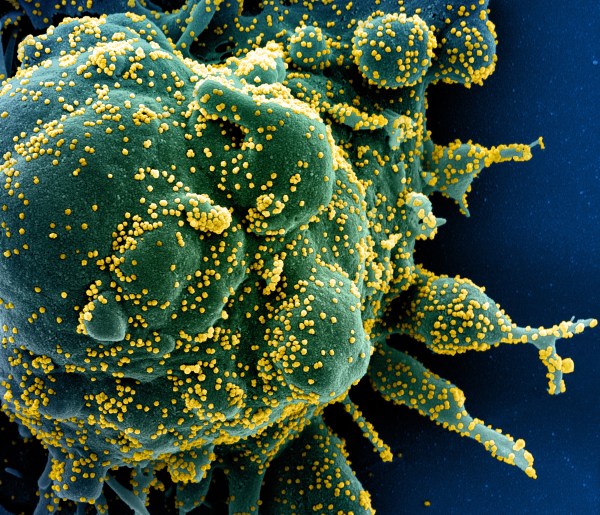
Phase III clinical trials of seven or eight vaccines are in progress. They come from CanSino (Ad5-nCoV, adenovirus-based– actually in limited use in China), Gamaleya (adenoviruses Ad5 and Ad26-based Sputnik V, in limited use in Russia) AstraZeneca/Oxford (AZD 1222, ChAdOx1 chimpanzee adenovirus-based), Moderna/NIH (mRNA-1273, mRNA-based), Pfizer/Fosun/BioNTech (BNT162b2, mRNA-based), SinoVac (CoronaVac, inactivated virus-based), and SinoPharm (two different, inactivated virus-based– one of them already in limited use in China.)
See this New York Times interactive article, updated September 8 and probably daily, for a timely update on the latest vaccine information.
The companies suggest that their final Phase III studies will be finished around the end of this year, but none of them promise anything before the election. The president, by contrast, has virtually promised something before November 3.
A group of five vaccine companies have come together in a statement that they will not release a vaccine until it has been shown to be safe and effective. By “effective”, they have been held to the rather low standard of a 50% reduction in infections.
The real question is whether any company will request an “Emergency Use Authorization” (EUA) before the election– because the FDA can’t offer an EUA unless a company asks for it. At least, I don’t think so. Given that, I don’t see how the president can get to his goal of announcing a vaccine before the election.
If anyone can explain to me how the president can get a vaccine company to ask for an EUA before the election, or force the EUA through without a company request, I wish they would tell me. This question really bothers me because I know the president is desperate to announce a vaccine or at least a breakthrough pharmaceutical (which does not appear to be on the horizon)– so how is he going to do this?
Estimates of Hidden COVID-19, Seattle and Wuhan, January-March 2020: Lancet EClinicalMedicine
This study came out online in Lancet on August 13. It used swabs tested previously for influenza in a surveillance study in the Seattle area early this year. Of 2353 patients tested between February 24 and March 9, 442 were positive for influenza and 25 were positive for SARS-COV-2. A complex analysis led to an estimate of 6635 COVID-19 cases in Seattle for that period. With these methods, the authors were able to estimate that the pandemic started with an introduction to the Seattle area between December 25, 2019 and January 15, 2020 by someone probably infected in Wuhan.
This timing corresponds with another study that found a patient in Europe infected by the novel coronavirus on December 25, 2019, who was retrospectively identified this spring from a stored specimen. His source of infection, unfortunately, remains unknown, but the virus spread to his entire family. [Sorry, I can’t find the reference for that study.]
Clearly, this estimate of 6635 cases is vastly more than the reported number of patients with COVID-19 for that area at that time: a total of 245 confirmed cases were reported before the town was locked down on March 9. It is not that the authorities missed all those cases, just that they were unable to even look for them with the limitations that hindered public health surveillance at that time (some of these hindrances persist to this day.)
In Wuhan, a similar situation held, and the paper estimates that, while 571 patients were officially counted, roughly 15,000 cases of COVID-19 occurred between December 30, 2019 and January 12, 2020. The vast majority of these cases were missed, due to similar limitations of awareness and testing ability. The authors estimated that the infection began with one or a few cases between October 26 and December 13, 2019.
The implication (supported by genetic testing of the virus) is that the jump from animal to humans occurred in October 2019. The exact location of the jump or the species that contributed to this zoonotic spread is still unknown. Bats have been blamed as the original source with considerable evidence, but some scientists believe that an intermediate species was involved.
The article’s “Interpretation” states that:
The spread of COVID-19 in Wuhan and Seattle was far more extensive than initially reported. The virus likely spread for months in Wuhan before the lockdown. Given that COVID-19 appears to be overwhelmingly mild in children, our high estimate for symptomatic pediatric cases in Seattle suggests that there may have been thousands more mild cases at the time.
https://www.thelancet.com/journals/eclinm/article/PIIS2589-5370(20)30223-6/fulltext#seccesectitle0009
This means that, with the benefit of hindsight, we can see the onset of the novel coronavirus and its hidden spread through the community among undetected patients. The virus is far more widespread than initially thought, and many of its victims are asymptomatic or are thought to have the much more common influenza– which has very similar symptoms, although it is less than half as lethal.
A big difference between COVID-19 and influenza is the fact that the novel coronavirus spreads to the blood vessel walls, the heart, the brain, and other organs as well as the lungs– and leads to blood clots, neovascularization, strokes, and myocarditis (inflammation of the heart muscle.) These things very rarely happen with influenza.
The authors suggest that the analytic technique they used to estimate the prevalence of the novel coronavirus could help assess other novel virus epidemics earlier than has currently been possible. A high index of suspicion is essential to detection of new viruses. Caution and good hygiene are also important when dealing with unknown respiratory infections.
Perhaps the Asian habit of wearing masks in public during flu season should be made fashionable in the US. Universal immunization against influenza and with the new coronavirus vaccination, when it is available, should be on our agendas as well.

This is something I’ve been meaning to post about but never had time until now (things have settled down a little bit.) This article is from “Medscape Family Medicine” on April 28, 2020 and it’s called “COVID-19 Crisis Exposes Resident Abuse”. It describes the “abuse” of medical residents… they are conveniently indentured servants to hospitals during this crisis (and before, and after.)
When the Great Dying hit the hospitals in New York in March and April, the residents were conveniently available to do the grueling and dangerous work of taking care for all the patients sick enough with COVID-19 to be admitted to hospital. The attending physicians, by and large, were in hiding, not available to help when they were supposed to be training the residents.
You’ve never experienced abuse of this kind unless you’ve been a medical resident. I only lasted a year at that, and then I took the easy way out by joining the Public Health Service on an Indian reservation. That wasn’t much more fun, but it was better than being forced to work 80-hour weeks and be on call every third night, up all night, asked to do things I had no training for, etc.
Anyway, this is an article about what happens when understaffed hospitals are faced with too many patients: the residents are forced to take up the slack. Even the nurses have it better: they get paid better and their shifts are limited. Read it and weep.
One of the ER doctors notoriously committed suicide in April after she returned to work too soon when she was recovering from a bout of COVID-19. She had no previous history of mental illness– in fact, no one could understand why she would kill herself. She only took ten days off with the virus. Surprise, surprise.
Then there were the medical student and the psychiatry resident who killed themselves two years ago… there wasn’t even a coronavirus then.

The Late Holocene Meghalayan Age, newly-ratified as the most recent unit of the Geologic Time Scale, began at the time when agricultural societies around the world experienced an abrupt and critical mega-drought and cooling 4,200 years ago. This key decision follows many years of research by Quaternary scientists, scrutinized and tested by the subcommissions of the International Commission on Stratigraphy under the chairmanship of Professor David Harper, Durham University, UK.
Agricultural-based societies that developed in several regions after the end of the last Ice Age were impacted severely by the 200-year climatic event that resulted in the collapse of civilizations and human migrations in Egypt, Greece, Syria, Palestine, Mesopotamia, the Indus Valley, and the Yangtze River Valley. Evidence of the 4.2 kiloyear climatic event has been found on all seven continents.
https://www.wired.com/beyond-the-beyond/2018/08/collapse-civilizations-worldwide-defines-youngest-unit-geologic-time-scale/
This worldwide drought coincided with the collapse of the Harappan civilization, 4,200 years ago, prior to the development of the Vedic period in northern India. The drought lasted roughly 200 years and may have caused the collapse of societies all over the world. The collapse was accompanied by starvation, migration, cannibalism, civil war, and loss of continuity for cultures– the disintegration of many societies with universal suffering and many thousands of premature deaths (there were only a few million people in the world at that time.)
The civilizations destroyed included “the Akkadian Empire in Mesopotamia, the Harappan civilization in the Indus Valley, the so-called Old Kingdom in Egypt and the Longshan Culture in East China.” (See reference next paragraph.) No American civilizations are mentioned, perhaps because there are none known that old. The Stonehenge civilization must have been affected, but there are no written records nor surviving artifacts from that period other than the graves and henges (and the ones in western Europe.)
The drought was dated by ice cores from tropical glaciers all over the world. See the article about ice cores from “The Conversation” in this link: “https://theconversation.com/video-how-ancient-ice-cores-show-black-swan-events-in-history-even-pandemics-144784”
(The article linked above describes what would be found in ice cores from the present time: lower carbon dioxide emissions due to pandemic-induced slowing of civilization.)
Prior to the drought, around 7000 BCE, farming and pastoralism (the cultivation of herds of cattle, goats, or sheep) had developed and replaced foraging. This settled life resulted in the growth of urban centers and culminated in the Indus Valley civilization.
The drought roughly corresponds to the end of the urban Indus Valley civilization. After the drought, the redevelopment of urban society in the Ganges plain corresponds to the beginning of the Vedic period. There is some evidence, somewhat controversial, that a migration of Aryan tribes from the northwest occurred after the drought began.
Recovery from the drought began the rebuilding of civilizations worldwide, including the society in northern India which was encompassed by what is now called the Vedic period. Whether migration from other areas or indigenous development stimulated the creation of the Vedas is not clear. What we do know is that early written records collected later on showed a developing society along the Ganges river and the rise of the Kuru kingdom.
The Kuru kingdom was a tribal union in iron-age India that included the modern states of Delhi, Haryana, Punjab and some parts of western part of Uttar Pradesh, It is dated to roughly 1200 BCE and corresponds to the archaeological period known as Painted Grey Ware culture. (Wikipedia)
This kingdom or union was “Brahmanical” and was recorded in Vedic literature. A central feature of Brahmanical society was the concept of Varna, a grouping of people into social classes or castes. Whether this was a pre-existing feature of religious society in the area or introduced by the Indo-Aryans is unclear. We do know that the Vedas were a synthesis of the previous religious culture and the new Indo-Aryan culture. This religious synthesis has lasted to the present day.
At that time, the area of the Ganges plain was deforested and large agricultural regions developed. The region became more and more urban. Towards the end of the Vedic period, roughly around 600 BCE, there was a reaction to the Brahmanical and Hindu culture and religion, and ascetic movements developed.
Asceticism was reflected in the Jain and Buddhist religions. This new asceticism opposed the rituals developed in the Vedas and the social classification of the Varna.
The civilization of the Vedas was disrupted around the time of Alexander the Great when the Nanda empire briefly took over northern India. The Nandas were a short-lived dynasty that supposedly began when a barber became the queen’s lover (by his good looks) and overthrew the king. There was popular resentment of the Nandas because of their “low birth.” Alexander’s men mutinied when they were faced with the prospect of attacking the Nandas, and Alexander was forced to retreat from India.
The Nandas were succeeded by the Maurya empire, a more extensive and longer-lasting dynasty that is said to have been the largest political entity in the Indian subcontinent at its zenith under the ruler Ashoka. The first Mauryan ruler, Chandragupta Maurya, supposedly embraced Jainism. Then Ashoka is said to have converted to Buddhism, and the earliest written records of Buddhism to survive are the Ashokan edicts. These edicts were inscribed on stone pillars, many of which are still standing in the original locations.
The Mauryan empire under Ashoka (around 250 BCE) covered India all the way west to eastern Afghanistan (to the Hindu Kush mountains) and east to Bengal– 1.9 million square miles. Its northern extent was along the south side of the Himalayas and its southern end included Odisha and stopped at Andhra Pradesh.
(All this information is summarized from Wikipedia. It is complementary to what I have described in previous posts, jumping over the descriptions of the Vedas to the following period. The next time I have a chance, I will go over the Mauryan empire.)
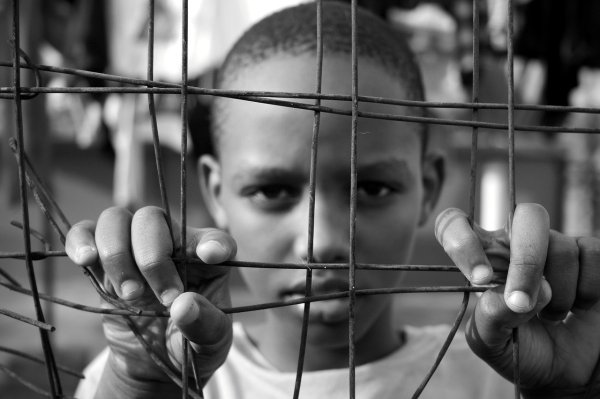
This article, from the National Bureau of Economic Research (NBER) in November 2019, is an example from the ancient “before times” (that is, pre-pandemic) of pervasive racism in America. The underlying research for this article demonstrates that there is systemic racism built into our very democracy. This racism is nearly invisible, yet it reduces the participation of Black people in the electoral process by making them wait longer to cast their votes.
I present the abstract here:
Equal access to voting is a core feature of democratic government. Using data from millions of smartphone users, we quantify a racial disparity in voting wait times across a nationwide sample of polling places during the 2016 U.S. presidential election. Relative to entirely-white neighborhoods, residents of entirely-black neighborhoods waited 29% longer to vote and were 74% more likely to spend more than 30 minutes at their polling place. This disparity holds when comparing predominantly white and black polling places within the same states and counties, and survives numerous robustness and placebo tests. We shed light on the mechanism for these results and discuss how geospatial data can be an effective tool to both measure and monitor these disparities going forward.
https://www.nber.org/papers/w26487
Overt racism, supported by poll taxes or literacy tests, has been outlawed since 1965, when the Voting Rights Act was passed over the objections of 19 Senators, all from Southern States. The Act was gutted by the Supreme Court in 2013. In that year, the Court handed down a decision that cut out an important part of the Act (4b, the preclearance provision)– as described by the Guardian on June 25, 2020:
… the Supreme Court issued one of the most consequential rulings in a generation in a case called Shelby county v Holder. In a 5-4 vote, the court struck down a formula at the heart of the Voting Rights Act, the landmark 1965 law that required certain states and localities with a history of discrimination against minority voters to get changes cleared by the federal government before they went into effect.
It’s hard to overstate the significance of this decision. The power of the Voting Rights Act was in the design that the supreme court gutted – discriminatory voting policies could be blocked before they harmed voters. The law placed the burden of proof on government officials to prove why the changes they were seeking were not discriminatory. Now, voters who are discriminated against now bear the burden of proving they are disenfranchised.
Immediately after the decision, Republican lawmakers in Texas and North Carolina – two states previously covered by the law – moved to enact new voter ID laws and other restrictions. A federal court would later strike down the North Carolina law, writing it was designed to target African Americans “with almost surgical precision”.
… While statewide voting changes get a lot of attention, most of the voting changes the justice department reviewed were submitted by local jurisdictions. Now it’s much harder to even hear about those local changes – which include polling place closures or changing the way candidates are elected – let alone stop them
https://www.theguardian.com/us-news/2020/jun/25/shelby-county-anniversary-voting-rights-act-consequences
The Justices who voted to strike down the preclearance provision (Section 4b) were: Roberts, Scalia, Thomas, Kennedy, and Alito. Since that decision, Scalia and Kennedy have been replaced by Kavanaugh and Gorsuch. In order to restore preclearance, the Congress would have to pass (and the President would have to sign) a new provision 4b that would, presumably, take into account any changes that have taken place in the last 40 years.
The Court’s reasoning for striking down 4b was that “the coverage formula violates the constitutional principles of “equal sovereignty of the states” and federalism because its disparate treatment of the states is “based on 40 year-old facts having no logical relationship to the present day”, which makes the formula unresponsive to current needs.” (The Court failed to do any digging into the facts on the ground as to whether there had been any changes in government proclivities in the last 40 years– and, apparently, there have been no changes, as the experiences of the past seven years have made plain.)
Notwithstanding this reasoning, “Research has shown that the coverage formula and the requirement of preclearance substantially increased turnout among racial minorities, even as far as the year before Shelby County. Some jurisdictions that had previously been covered by the coverage formula massively increased the rate of voter registration purges after Shelby County.” (Quotes are from Wikipedia’s article, “Voting Rights Act of 1965“)
The fact is that local jurisdictions have felt free to eliminate polling places and allocate outdated or malfunctioning voting machines in areas where Black people are over-represented, while areas where White people predominate have enjoyed updated voting machines and additional polling places.
Systemic racism is alive and well all over America. This is only one example of the invidious discrimination that people of color face in this country. The current administration has rolled back or eliminated all attempts to make progress against systemic racism. If re-elected, they will redouble their efforts to “comfort the comfortable and afflict the afflicted.”
Propagandists from authoritarian countries like China and Russia will again be encouraged to engage in “whataboutism” by highlighting the many examples of systemic racism in this country to make us look bad and distract attention from their complete lack of democratic representation. We need to practice what we preach and eliminate these racist practices.
 Conrad Theodore Seitz