The president was infected with SARS-COV-2 by one of his aides, possibly Hope Hicks: Slate

This article from Slate magazine on October 6 suggests that our president received his novel coronavirus infection from his aide Hope Hicks. Ms. Hicks was on the plane with the president when he flew from Minneapolis to Duluth on Wednesday, September 30. The article claims that he was already displaying signs of illness.
From the article, on Wednesday: “Hope Hicks, an aide who had been physically close to the president for long periods during the week, felt sick.”
The article goes on to claim that he concealed his illness in order to attend fundraisers where he expected to obtain $5 million from donors.
I don’t know if I buy this whole story, but it does suggest that he was ill before he acknowledged it– and that he knowingly exposed others in his eagerness to obtain more money for his campaign. He definitely needs the money, since he has been significantly outraised by his opponent for two months running.
In fact, he has burned through more than a billion dollars in campaign cash over the last few years– a record amount of money. Despite all that spending, he is losing badly in the opinion polls, and he is getting desperate.
There is a lot to be said for the argument that this president has NOT been tested “every day” or even every other day. He has relied on testing for other people to whom he is exposed– an illogical idea. Chances are that he has not allowed himself to be subjected to an invasive post-nasal swab on a regular basis.
Like everything else, the assertion that this man is being regularly tested is so much prevarication. The rash of infections that have occurred at the White House was inevitable given that no-one there was wearing masks or respecting “social distancing.”
Other news reports say that contact tracing has not been performed to any significant extent and that the CDC’s offer of help was refused. It is the height of irresponsibility during this pandemic to not provide contact tracing to all of the people that the president has been around during the period from September 26 on.
A large event at the White House on that date has resulted in fourteen known cases of COVID-19, including Senators, the head of Notre Dame, and multiple aides. This event, among others in the ensuing days, would have to be thoroughly evaluated by trained contact tracers to prevent further spread of the virus. It will not be traced, and the pandemic will continue to spread unchecked.

This article in the Atlantic dated October 17, 2018, explains how Newt Gingrich led the Republican Party to its dénoûment today.
When I ask him how he views his legacy, Gingrich takes me on a tour of a Western world gripped by crisis. In Washington, chaos reigns as institutional authority crumbles. Throughout America, right-wing Trumpites and left-wing resisters are treating midterm races like calamitous fronts in a civil war that must be won at all costs. And in Europe, populist revolts are wreaking havoc in capitals across the Continent.
https://www.theatlantic.com/magazine/archive/2018/11/newt-gingrich-says-youre-welcome/570832/
Newt Gingrich was a a 35 year-old college teacher when he entered politics in 1978, finally winning a seat in the US House of Representatives. His message to College Republicans during his campaign was to stop being nice:
“One of the great problems we have in the Republican Party is that we don’t encourage you to be nasty,” he told the group. “We encourage you to be neat, obedient, and loyal, and faithful, and all those Boy Scout words, which would be great around the campfire but are lousy in politics.”
For their party to succeed, Gingrich went on, the next generation of Republicans would have to learn to “raise hell,” to stop being so “nice,” to realize that politics was, above all, a cutthroat “war for power”—and to start acting like it. …
The GOP was then at its lowest point in modern history. Scores of Republican lawmakers had been wiped out in the aftermath of Watergate, and those who’d survived seemed, to Gingrich, sadly resigned to a “permanent minority” mind-set. “It was like death,” he recalls of the mood in the caucus. “They were morally and psychologically shattered.”
But Gingrich had a plan. The way he saw it, Republicans would never be able to take back the House as long as they kept compromising with the Democrats out of some high-minded civic desire to keep congressional business humming along. His strategy was to blow up the bipartisan coalitions that were essential to legislating, and then seize on the resulting dysfunction to wage a populist crusade against the institution of Congress itself. “His idea,” says Norm Ornstein, a political scientist who knew Gingrich at the time, “was to build toward a national election where people were so disgusted by Washington and the way it was operating that they would throw the ins out and bring the outs in.”
https://www.theatlantic.com/magazine/archive/2018/11/newt-gingrich-says-youre-welcome/570832/
The end result of Newt’s plan was the election of 2016, in which the “establishment” candidate was overwhelmed by negative messages from the Republicans and their rumor-mongers about her and her participation in government. Her opponent, on the other hand, claimed to be an outsider and represented an alternative in which government would be radically restructured and even shrunk to the point where it could be “drowned in a bath tub” as one famous Republican, lobbyist Grover Norquist, had it:
I don’t want to abolish government. I simply want to reduce it to the size where I can drag it into the bathroom and drown it in the bathtub.
https://en.wikiquote.org/wiki/Grover_Norquist
The new president immediately set about filling the administration’s politically-appointed posts with rich sycophants who had no experience in government, or else had spent their previous careers (either in government or out) trying to tear down the departments they headed. The professional career civil servants tried to resist.
The president’s executive orders and the changes he instituted in government rules and regulations destroyed the previous departmental structure. They became demoralized and began to quit or retire. Now we have a number of government departments– most of them, in fact– that are dysfunctional and no longer able to perform the services they were instituted to do.
The Postal Service (USPS) is the latest victim: subsidies were refused, previous unworkable and unsustainably expensive orders were continued (I’m talking about the order to prepay USPS retirees’ health expenses, which predictably is bankrupting the Service), and the only thing that is sustaining the USPS now is the massive increase in package deliveries due to online buying caused by the pandemic.
Predictably, the president has threatened to dramatically increase the charges that USPS would be forced to impose upon packages, to the point where the package senders (such as Amazon) would be better off building their own package delivery services. The loss of package revenue would cause the USPS to be bankrupted within six months. This has been the goal of the Republicans for many years: to destroy the USPS and offload its services to private companies, which could charge more and show a profit.
There are certain services, such as mail delivery and prison administration, which are unprofitable, yet vitally necessary for an orderly society. The Republicans are trying to force private, profit making entities into these vital services at the expense of society. The private provision of critical, yet essentially unprofitable services would make society worse while extending the dominance of capitalism into all areas of life.
There’s nothing wrong with capitalism when it provides non-essential things that can be scaled from really cheap all the way to luxuries– things that poor people can live without. Mild regulations, however– that prevent capitalist entities from cheating people and providing unsanitary or unsafe products and services– are critical to our quality of life.
But essential products and services that give us life or death necessities, like prisons, mail delivery, infrastructure (e.g. roads and sidewalks), and medical care are unsuited to capitalist exploitation. Republicans can not seem to understand the differences between essential and non-essential products and services– they don’t want government entities to provide essential things. Republicans only want government to provide armies and police– instruments of control, both internal and external.
Republicans are trying to give us moral regulations that intrude upon personal privacy and women’s right to control their own bodies. At the same time, they are encouraging capitalist entities to take over all aspects of our lives. They want government to provide only moral regulations and battlefield capabilities (like soldiers and policemen.) We must resist these attempts to control our lives and force us to submit to capitalist exploitation.
Government, when it supplies essential goods and services, doesn’t exert control over us (despite Republican claims that “socialism” tries to “control” us by taxing those of us who can afford to pay)– it gives us a better quality of life, regardless of the sizes of our bank accounts.
Newt Gingrich is one of the main architects of the Republican takeover of government that has resulted in the election of the worst American president in history. Newt has been richly rewarded with a government sinecure– his wife is American Ambassador to the Vatican (a “government” that controls nothing but a huge bank account and a few square blocks of land where the leader of one of the world’s major religions resides.)
Newt is happy with what he is done, and is enjoying the rewards of his political career. We need a different government, and a different Ambassador to the Vatican.

The following is a completely personal essay. After writing it, I became concerned that it was too controversial– but, really, it’s not. It’s just too long. All the values in it are in agreement with majority public opinion in the United States. So:
This is about the situation in America and the need for us to come together as a country to return to leadership of the world. America’s greatest strength was its aspiration to be a multicultural democracy of immigrants. The Spanish approach– subjection of the aborigines (Native Americans) and forced conversion to Catholicism– was rejected. The English approach– naive, but well-intentioned– was accepted. We didn’t realize that the diseases we carried would wipe out 95% of the aborigines because they had no immunity.
Over the years, our country gradually became more inclusive and less white supremacist, less patriarchal. Under Theodore Roosevelt and Franklin Delano Roosevelt, our government began to develop equality of representation and checks against capitalist oppression (Food and Drug Administration, Health, Education, and Welfare, Equal Opportunity Commission.)
But our government has been subverted by ultra-conservatives for the last forty years, left to the mercy of capitalists since the deaths of the Roosevelts, and handed over to a psychopathic narcissist for the last four years.
Now we are in danger of being reduced to a secondary power by China’s new strength and Russia’s attempts to weaken us through internal division. We must not start another war, but we must re-assert our power to protect freedom where it still can exist, especially in Canada, the European Union, England, Australia, Taiwan, and the Philippines (and Iceland.)
With our president suffering the mental effects of COVID-19 and the virus sweeping through the Republican leadership, national security heads say the US is distracted by internal problems. We are uniquely vulnerable because of government corruption and incompetence, the pandemic, and internal dissension over racial injustice.
The leaders of antagonistic countries will not respond yet– they will wait until after the election. Our country is likely to be most vulnerable between the election and the inauguration, a period of two and a half months when we will be consumed by legal and public strife over the outcome of the election.
At this time, most of the world is not ruled by democratic governments. US democracy is in peril. Great Britain is formally democratic, but is suffering from continued strife over COVID-19 and Brexit. India’s democracy has been subverted by nationalism. The European Union, while democratically ruled, is also distracted by the pandemic and the rise of right-wing irredentist forces. Poland and Hungary are in the hands of right-wing nationalists.
The second largest country in the world, China, is in the grip of an authoritarian government that is still resentful over its subjugation by Western countries during the period from before the Opium Wars to the Communist victory in 1949– well over a hundred years. The Chinese are still influenced by their desire to shake off foreign countries’ attempts to control their internal affairs.
Since the Communists consolidated control over the entire country in 1949, China turned inward and tried to develop itself without the malign influence of other countries. They realized that they needed help from the rest of the world in the 1970’s. The radical authoritarian Communist Party has controlled China and shaped the minds of its people for seventy years. Now they are trying to extend their authority over the East with attempts to take over the China Sea and control other countries in Asia.
The Chinese Communist Party has begun to extend its control over other countries in the East, from Vietnam to the Philippines. They have used their economic power through the Belt and Road initiative over many poor countries in Asia and Africa, even into South America. The construction of infrastructure throughout the East has been accompanied by huge loans to poor countries, loans that can never be repaid and that will allow China to exert control over the foreign policies of these countries.
Now the Chinese have come into military conflict with India, at a time when India has been weakened by the pandemic. China has gotten the upper hand over the coronavirus through its massive control over the behavior of its people. India has no such social control, and is unable to quarantine its people as a result.
Russia is no longer democratic and has been attempting to revanch its control over territories it lost when the Soviet Union collapsed. They have regained power over the Crimea and are still attacking the rest of Ukraine. They have attacked Georgia and other small countries that used to be part of the Soviet Union.
After a brief period of chaotic democracy, during which oligarchs bought out industries and infrastructure at bargain basement prices, President Putin has gradually returned Russia to a police state. The oligarchs have cooperated with Putin and exert their power through extralegal means.
The opposition in Russia has been nearly crushed by taking over the media and persecuting dissenters. Physical intimidation and assassination have been freely used by Putin’s internal security apparatus for years, even in other countries.
The Middle East is controlled by authoritarian rulers, both in the Arab countries and formerly democratic Israel. Syria’s Assad and Turkey’s Erdogan are only the worst of these brutal tyrants.
Here in the US, we have been taken over by big capitalist interests. A concerted covert campaign by ultra-conservative forces has borne fruit in the capture of parts of the media (e.g. Fox, Facebook, and One America News Network.) The court system has made corporatist and anti-worker decisions at the same time that marriage rights have been extended to same-sex unions by the pressure of public opinion.
Conservatives have controlled the Senate and the presidency for almost four years, resulting in the appointment of many ultra-conservative judges. The rights granted to same-sex unions and the rights of women to control their own bodies are now at risk; worker’s rights are at an eighty year low. Another conservative Supreme Court Justice will seal the high court for many years against democracy (unless the Senate becomes Democratic and the Court is packed.)
Democracy in the US is in danger of voter suppression and intimidation in an attempt to keep control of the presidency and Senate for ultra-conservatives. At the moment, opinion polls suggest that, if a free election were held in November, the conservatives would lose their positions. The ultra-conservatives are panicking and trying to suppress a free vote.
The world is in a disorganized condition at a time when concerted action is needed to stop the carbon dioxide emissions that are causing global warming. Even the Communist Chinese recognize that our world’s ecosystems are on the brink of critical damage due the increase of carbon dioxide and methane in the atmosphere.
Democratic forces in the US and the European Union can band together with the unfree world to stop global warming. At the same time, we must recognize that we need to oppose the control over unfree populations that authoritarian and nationalist governments exert. Cooperation on global warming must be balanced with opposition against authoritarian governments for their control over their people– and we must oppose their attempts to extend their control to other countries.
Taiwan, Ukraine, and the Philippines, in particular, are at risk and need the support of the US government to resist authoritarian encroachment from the Russians and Chinese. Syria, Lebanon, and many other countries are also at risk or have gone under.
Other countries need us to be free and to exert our powerful influence to protect them. Only the end of Republican government control in this country can lead to our extension of protection to small countries that will otherwise be overwhelmed by Chinese bullying and Russian subversion.
The Russian and Chinese governments benefit by our infighting and weakness. It is time for liberal forces in America to reassert control over our government so that we can help the rest of the world, at least the parts that have not yet been overwhelmed.

This article in the Washington Post from September 24, 2020 tells the story of genomic epidemiologic analysis for the COVID-19 outbreak at a meat-packing plant in Postville, Iowa. It’s a long, detailed, fascinating story for anyone who is interested in how genomic epidemiology can trace the spread of the virus called SARS-COV-2 from one person to another.
The genomic study is described in this MedRxiv article, in pre-peer-review research online.
The WaPo article describes the unique situation in meat-packing plants, where minority, immigrant workers are forced to work close together for low wages at a grueling job– one that has been designated as “essential” by our president as a political favor to his agri-business lobbyist “friends.”
The story also tells how the outbreak was kept a secret. Even the employees themselves were not told who among that had gotten sick, nor how many. The aim? To keep panic from spreading in a small community with few medical resources– a weakness that could easily have been remedied by the company that controlled the plant and the town.
Ironically, in the absence of accurate, timely information, panic spread all the more quickly among the employees and people of the town. In the end, most of the people who worked at the plant were infected. More than a quarter of the plant developed antibodies in a serum study conducted after the outbreak had crested. The town and the area continue to have active cases and mask-wearing is a rare exception among the population, who seem to think the virus is gone.
The plant had a long and troubled history. From the article:
Agri Star confirmed Postville’s first coronavirus cases in mid-March, fracturing the uneasy peace among its diverse residents: the Orthodox Jews who help run the plant, the immigrants from Somalia, Mexico and Central America who make up much of its workforce, the White descendants of the German and Scandinavian farmers who founded the town generations ago.
https://www.washingtonpost.com/graphics/2020/national/genetic-science-coronavirus-outbreak-iowa/
The plant was targeted by ICE:
Twelve years earlier, the plant had been the target of one of the largest Immigration and Customs Enforcement raids in history. The town rebounded after Friedman, a Canadian business magnate, bought the plant out of bankruptcy in 2009. But the effects of the raid are still felt in the way people mostly keep to their ethnic enclaves. Conversations about the coronavirus are held in hushed tones — when they are held at all.
The people working at the plant were also often members of the community:
“The problem was here, but people didn’t want to talk about it,” said one ranch worker, whose wife — an Agri Star employee — was hospitalized with covid-19 for more than a week.
The people who controlled the plant talked about it among themselves, but they didn’t tell the workers:
Agri Star acknowledged three early cases connected to the plant in a brief statement in The Yeshiva World, an Orthodox Jewish online news publication. But Toj and her colleagues, many of whom speak little English, didn’t read the article. Though Guerrero said the company told supervisors to notify anyone who worked near someone who tested positive, six workers who got sick told The Post that no one from the plant warned them about their potential exposure or asked who else they might have infected. Workers said they were forced to triangulate their risk based on snatches of rumor and snippets of fact.
The town had minimal health resources:
The closest health clinic to Postville had so few covid-19 tests that many residents were sent to Gundersen’s main hospital in La Crosse, where Kenny worked, more than an hour away.
The company could have asked for help from the state, but they waited a month after it should have known that it had an uncontrolled outbreak:
The company said it asked the state to test its workers on April 20, more than a month after it confirmed the first infections connected to the plant.
Before then, plant executives told employees to stay home if they had symptoms, Pérez said. That wasn’t much of an option for Agri Star’s low-wage employees, who, like about a quarter of all U.S. workers, have no paid sick leave. The emergency coronavirus legislation passed this March includes a requirement for paid sick leave, but it does not apply to businesses like Agri Star with more than 500 employees — even when workers are instructed to quarantine.
The article goes on to describe the acute, coronavirus-positive illnesses that several workers suffered a few days after they were instructed to clean out the offices, bathrooms, and dining areas that the rabbis had used when they had been certifying the kosher portion of the meat (the rabbis left and did not return to work.) Some of these employees conducted the cleaning without any protective equipment; most of them became ill. One of them called the plant supervisor for financial help when they were forced to stay home due to illness; no help was given.
Townspeople became anxious about the high case counts; “the county’s positivity rate was almost as high as Manhattan’s.” But the state health department refused to disclose anything about the illnesses:
But when the Republican councilman asked the state health department for a breakdown of infections in each of the county’s 18 townships, the state refused.
Officials claimed that would violate medical privacy law, even though many other states stratify case counts by Zip code. The state wouldn’t even tell Ellingson how many cases were in his own town. When he persisted, the department stopped returning his calls.
The reporting from state health department generally is deficient:
A review of outbreak data led by former CDC director Tom Frieden found that no state discloses even half of what health experts consider “15 essential indicators” for managing the disease.
As the government shifted its coronavirus reporting system, numbers have vanished from CDC Web pages. News organizations have had to sue for information about racial disparities in deaths. In many Florida counties, officials won’t tell parents whether there are coronavirus cases at their children’s schools.
Iowa is no exception. The state has refused to release its pandemic plan, which guides its response to the coronavirus, saying the document is “confidential.” The health department’s covid-19 dashboard doesn’t list hospitalizations among health care workers or outbreaks in congregate facilities such as homeless shelters and prisons.
The genomic study found that a widespread outbreak centered on the meat-packing plant occurred in late March and early April. This was never acknowledged by Iowa health department officials. The people who worked for the health department were threatened with firing and even imprisonment for reporting on the outbreak. It’s all in the article, and it is outrageous.
Data from the outbreak was reported on MedRxiv by Paraic Kenny, a tumor geneticist:
“A single viral introduction led to unrestrained spread within the facility,” Kenny wrote in a study on the website MedRxiv, where scientists post “preprint” research that has not yet been published in a peer-reviewed journal. His research, he said, showed “the collateral damage resulting from widespread dissemination of this disease from a meat-packing epicenter across a large midwestern region.”
It’s a long article, but fascinating and outraging if you have any interest in why the US has, as of today, more than 7.4 million known cases of COVID-19 reported– the largest outbreak in the world (with the possible exception of India, which has more than four times as many people as the US.)
The bottom line is that the public health system was completely unprepared to respond to the novel coronavirus, and the authorities and the owners of the meat-packing plant kept everything a secret as much as possible. No one helped– when the CDC could have responded with a lot of assistance if they had been asked.
This is a continuing outrage. As of now, the virus has penetrated to the highest level of government due to secrecy and incompetence. The expertise was available from the CDC, but it was never used because the administration tried to play it down and failed. All because of the colossal ego of one man.

COVID-19 in India: large study shows surprisingly low death rates among elderly: ScienceMag.

A large study of India’s COVID-19 cases, with nearly 85,000 index cases, shows some surprising differences from the experiences of other countries. As you may have heard, India has reached over six million cases; we expect the total confirmed case count to exceed that of the US in the next month, although the known death count is much less and the number of cases per capita is also less than that in the US.
This is the first large study from a country with a low socioeconomic status, giving important information about the disease in poor people with few resources.
The study was published as a preprint in Science magazine on September 30, 2020. Here is the abstract:
Although most COVID-19 cases have occurred in low-resource countries, little is known about the epidemiology of the disease in such contexts. Data from the Indian states of Tamil Nadu and Andhra Pradesh provide a detailed view into SARS-CoV-2 transmission pathways and mortality in a high-incidence setting. Reported cases and deaths have been concentrated in younger cohorts than expected from observations in higher-income countries, even after accounting for demographic differences across settings. Among 575,071 individuals exposed to 84,965 confirmed cases, infection probabilities ranged from 4.7-10.7% for low-risk and high-risk contact types. Same-age contacts were associated with the greatest infection risk. Case-fatality ratios spanned 0.05% at ages 5-17 years to 16.6% at ages ≥85 years. Primary data are urgently needed from low-resource countries to guide control measures.
https://science.sciencemag.org/content/early/2020/09/29/science.abd7672
Here are the prime findings from this study:
- An extensive contact-tracing effort (over 3 million exposed contacts with over half a million tested) found that most infectious contacts were with people of roughly the same age, especially for the youngest and oldest groups.
- Case-fatality rates were lower than expected for elderly individuals– mortality rates levelled off after age 65. This may reflect a healthier group of people among the very old in India.
- The highest risk of infection was among household contacts (about 10%), but the few cases who were examined with prolonged exposure during travel showed extremely high risk of contact infection (about 80%).
- 71% of cases did not pass on the infection to anyone, but a small proportion of cases passed it on to many people (super-spreaders.)
- Time from hospital admission to death averaged five days, whereas in the US it averaged two weeks. This may reflect weak hospital care.
- Even the youngest children passed on the infection to others at similar, significant rates– showing that children do pass it on.
These findings reflect better contact-tracing in that country, showing what can be done with effort. They also show that children are effective spreaders of COVID-19, contrary to assertions that some have made.

“Adaptive and Dark Personality in the COVID-19 Pandemic: Predicting Health Behavior Endorsement and the Appeal of Public-Health Messages” by Pavel S. Blagov in Social Psychological and Personality Science on July 7, 2020, is available here. From the abstract:
In a survey of 502 online participants, normal-range traits (esp agreeableness and conscientiousness) predicted endorsement of social distancing and hygiene, as well as the appeal of health messages in general. Consistent with the EPPM, conscientiousness and neuroticism had an interaction. Dark traits (esp psychopathy, meanness, and disinhibition) predicted low endorsement of health behaviors and the intent to knowingly expose others to risk. Most participants preferred a message appealing to compassion (“Help protect the vulnerable…”), but dark traits predicted lower appeal of that message. Personality appears relevant to epidemiology and public-health communication in a contagious-disease context.
https://journals.sagepub.com/doi/10.1177/1948550620936439
In a nutshell, people who won’t wear masks generally have “dark traits”, especially psychopathy, mean-ness, and disinhibition. You knew that, but you just didn’t have words for it.
What other “dark traits” are there? Not being agreeable and conscientious, for one. Others are: “egocentricity, grandiosity, glibness, remorselessness, deceptiveness, manipulativeness, recklessness, unreliability, and antisociality” (from the text.)
Psychologists often use what they call the “Five Factor Model” which gives (surprise!) five different categories of personality: “Openness, Conscientiousness, Extraversion, Agreeableness and Neuroticism” (from ScienceDirect, in their explanatory page generated by the question “What are the factors in the five-factor model?”) They also use a two-factor model that can generate a 2-dimensional graph of interpersonal traits; this includes only Dominance-Submission and Affiliation-Disaffiliation as variables (from the same page.)
The “Dark Triad” of traits are: narcissism, Machiavellianism, and psychopathy (from Wikipedia.) These traits also could predict refusal to wear a mask.
So we can say that people who won’t wear masks are open, extraverted, unconscientious, disagreeable, and non-neurotic– or we can just say that they are dominant and disaffiliated.
Either way, Americans are more that way. Woe betide us.
(PS the opposite of “dark triad” is the “light triad”: “Kantianism, humanism and a faith in humanity.” –from ABC’s Australian bureau, available here.) Of course, you knew Australians are nicer people– mostly. We’ll get into that some other time, including “what is Kantian?”
Why Don’t Americans wear masks? Because they are narcissistic and psychopathic and just mean.
I was shocked, yes shocked, to learn that Americans are considered more narcissistic than people of other countries. That is the conclusion of actual, peer-reviewed psychological research.
That is why we won’t wear masks. Because we’re narcissists. Thus sayeth the Washington Post.
I can’t think of anything to say that would contradict that assessment. Americans are more narcissistic than people of other countries. Not all of us are, but a lot. A lot of us are rude, aggressive, short-tempered, and just plain mean. A lot of us are even psychopathic sociopathic. We would deny it, but it’s true.
I’m going to do something highly narcissistic. I’m going to leave this post short and sweet. I have some ‘personal’ things to worry about– my wife is sick, and she needs my help. You’ll have to do without my wonderful posts for a day or two.
A new article online, published September 21, 2020, on the preprint version of Science Translational Medicine, a subset of Science magazine, looks at the responses of children to SARS-COV-2 infection (COVID-19) and finds a difference in the serum concentrations of immune proteins.
Innate vs Acquired Immune Systems
First, a few words (oversimplified, a summary derived from Wikipedia) about the two main forms of immunity found in all vertebrates (higher animals, with spines): innate and acquired. The innate immune system is inherited from lower forms of life and includes basic responses to all pathogens (organisms which infect other organisms.) The acquired immune system evolved in higher animals and is primarily limited to vertebrates.
The innate immune system starts with a physical barrier (the skin and, inside, the endothelial cells lining the respiratory and digestive tracts.) It continues with specialized immune cells (often called white blood cells or leukocytes) that reside in every tissue of the body. Each individual cell also has innate immune components that include proteins called “toll-like receptors” or TLR. (See also a previous post in which I described a deficiency of TLR-7 which caused severe disease in twin brothers with COVID-19.) Each cell produces “cytokines” (cell-signaling proteins) when it is attacked.
The adaptive immune system is activated by the innate immune system and takes longer to respond. Its components include antibodies and higher forms of immune cells. Immune cells in the innate system (including “dendritic cells” present in all body tissues) break up pathogens and present parts of them (known as “antigens”) to cells in the adaptive immune system.
The acquired immune system develops a memory that enhances the body’s later response to a pathogen after it is defeated the first time. The memory includes antibodies, specialized proteins that are created for each individual type of pathogen in the days and weeks after an infection. Cells that produce antibodies are called “T lymphocytes.” The memory also persists in cells that give us “cell-mediated immunity” and are called “B lymphocytes.” Both types of lymphocytes can persist for decades after a single infection.
The acquired immune system kicks in when the innate immune system doesn’t immediately wipe out an invading pathogen. The acquired system takes four to seven days to rev up in humans.
New Findings About Children
From the abstract of the Science article:
We compared cytokine, humoral, and cellular immune responses in pediatric (children and youth, age < 24 years) (n=65) and adult (n=60) patients with COVID-19 at a metropolitan hospital system in New York City. The pediatric patients had a shorter length of stay, decreased requirement for mechanical ventilation and lower mortality compared to adults. The serum concentrations of IL-17A and IFN-γ, but not TNF-α or IL-6, were inversely related to age. Adults mounted a more robust T cell response to the viral spike protein compared to pediatric patients as evidenced by increased expression of CD25+ on CD4+ T cells and the frequency of IFN-γ+CD4+ T cells. Moreover, serum neutralizing antibody titers and antibody-dependent cellular phagocytosis were higher in adults compared to pediatric COVID-19 patients. The neutralizing antibody titer correlated positively with age and negatively with IL-17A and IFN-γ serum concentrations.
https://stm.sciencemag.org/content/early/2020/09/21/scitranslmed.abd5487
The higher concentrations of IL-17A and IFN-gamma in children are related to their innate immune systems, which respond to unfamiliar infections. IL-17A is a cell-signaling protein that promotes inflammation by starting a cascade of cell signals resulting in attraction of immune cells to areas of inflammation– areas invaded by pathogens like the novel coronavirus. IFN-gamma is another cell-signaling protein which is important to virus immune responses.
IL-6 (another cell-signaling protein) has a broad range of activity, both pro- and anti-inflammatory, and high levels are associated with severe COVID-19 with a poor prognosis. TNF-alpha (yet another cell-signaling protein, formerly known as cachectin and now called simply TNF) induces fever, cachexia (loss of weight associated with illness) and other signs of inflammation. At extremely high levels, TNF can cause septic shock. Both TNF and IL-6 inhibit viral replication (multiplication of viruses within a cell.)
Conclusions About Children
From the article:
Dual cytokine (IL-17A and IFN-γ)-producing resident memory cells have been described in the lung (19) and a protective role for Th17 cells has been described in pulmonary infections (20). Possibly, the higher concentrations of IFN-γ and IL17A in the serum of pediatric patients with COVID-19 reflected increased expression by cells in the respiratory tract, and these local cytokines may have protected the patients from progressive respiratory disease. …
The age-related difference in IL-17A concentrations in serum is consistent with described dysfunction of innate immune responses in older individuals (22). Decreased expression of pattern recognition receptors such as RIG-I by monocytes has been found with aging and has been postulated to account for reduced Type 1 interferon release. Invariant NKT cells, which secrete IL-17A and have cytolytic function, also decrease in number and function with aging (23). …
The bottom line is that higher levels of IL-17A and IFN-gamma appear to show the stronger innate immune response of children to SARS-COV-2 exposure and are probably related to robust reaction of cells (particularly dendritic cells) in the lung to infection. This stronger immediate immune response, not dependent on the acquired immune system but due to quick reaction by the innate immune system, may explain why children show fewer and milder signs of infection when COVID-19 occurs.
At the same time, delayed occurrence of the MIS-C syndrome probably is due to late over-reaction of the acquired immune system, two or more weeks after infection. This syndrome, while dramatic, usually has a more benign prognosis– that is, children usually recover from it (although not always.)
Lower levels of “serum neutralizing antibody titers and antibody-dependent cellular phagocytosis” in children appear to be due to the fact that the innate immune system has terminated the SARS-COV-2 infection quickly and stopped the acquired immune system from being fully activated.
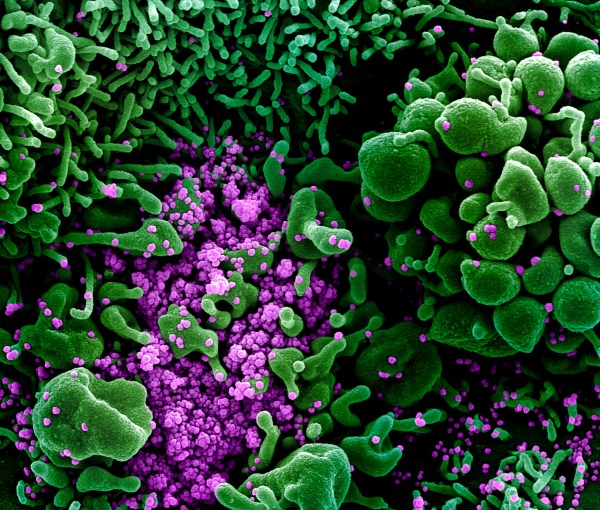
A preprint published on MedRxiv dated September 22, 2020 revealed that a mutation in SARS-COV-2 RNA has taken over in Houston (and probably many other areas) based on sequencing of over 5,000 cases. The mutation causes the replacement of a single amino acid at location 614 in the spike protein. It is known as D614G (arginine –D– replaced by glycine –G.)
This mutation was discovered in February and was followed in the United Kingdom (UK) with sequencing of over 25,000 cases there. A paper discussing this sequence database was published in MedRxiv on September 1, 2020. The findings of that paper agree with the Houston paper in all important respects but the new paper adds more information.
The mutation produces viral particles with many more spikes on their surfaces. It is these spikes that the virus uses to attach to host cells by grabbing on to their angiotensin-converting enzyme 2 (ACE-2) receptors. ACE-2 receptors are present on the outer membranes of most endothelial cells (those that line the inside surfaces of the nose, throat, eye conjunctiva, and gastrointestinal tract as well as inside blood vessels.)
This mutation increases infectiousness but not lethality. Initial viral loads were increased in the nasopharynxes (noses and throats) of patients infected with the mutated virus, but these patients were no more likely to have severe disease. This mutation has taken over, outcompeting the previous version of the virus by spreading more easily.
The fact that infections with this mutation are no more severe is logical when we consider that making the patient sicker doesn’t help the virus spread– killing the patient isn’t good for the virus.
The sequencing of so many separate viruses has revealed numerous mutations, many of which were seen in only a few cases. The authors of the paper advocate for virus sequences from many more patients to help us monitor the spread of the virus and trace contacts.
Another reason to sequence more viruses is that some mutations will reduce the ability of antibodies to neutralize the virus. In fact, the authors found that monoclonal antibody CR30022 was less able to recognize some mutations. This could be a factor in patients who have repeated infections with different strains of the virus.
This may also impair the ability of manufactured monoclonal antibodies to treat the disease in new cases. Monoclonal antibodies are being actively studied as a treatment for COVID-19, but the fact that they have to be separated and manufactured (which takes several months) may make them too late to be helpful in some new cases.
Mutations could also affect the ability of vaccines to provide protection against the virus. If this happens repeatedly, we could find ourselves in the same position as we are with influenza: we will need new immunizations on a yearly basis.
 Conrad Theodore Seitz