
A model of SARS-COV-2 transmission published in JAMANetwork Open from the Centers for Disease Control (CDC) on January 7, 2021 shows that more than half of new COVID-19 cases are passed on by asymptomatic or presymptomatic carriers.
From the abstract:
Design, Setting, and Participants This decision analytical model assessed the relative amount of transmission from presymptomatic, never symptomatic, and symptomatic individuals across a range of scenarios in which the proportion of transmission from people who never develop symptoms (ie, remain asymptomatic) and the infectious period were varied according to published best estimates. For all estimates, data from a meta-analysis was used to set the incubation period at a median of 5 days. The infectious period duration was maintained at 10 days, and peak infectiousness was varied between 3 and 7 days (−2 and +2 days relative to the median incubation period). The overall proportion of SARS-CoV-2 was varied between 0% and 70% to assess a wide range of possible proportions.
Main Outcomes and Measures Level of transmission of SARS-CoV-2 from presymptomatic, never symptomatic, and symptomatic individuals.
Results The baseline assumptions for the model were that peak infectiousness occurred at the median of symptom onset and that 30% of individuals with infection never develop symptoms and are 75% as infectious as those who do develop symptoms. Combined, these baseline assumptions imply that persons with infection who never develop symptoms may account for approximately 24% of all transmission. In this base case, 59% of all transmission came from asymptomatic transmission, comprising 35% from presymptomatic individuals and 24% from individuals who never develop symptoms. Under a broad range of values for each of these assumptions, at least 50% of new SARS-CoV-2 infections was estimated to have originated from exposure to individuals with infection but without symptoms.
Conclusions and Relevance In this decision analytical model of multiple scenarios of proportions of asymptomatic individuals with COVID-19 and infectious periods, transmission from asymptomatic individuals was estimated to account for more than half of all transmissions. In addition to identification and isolation of persons with symptomatic COVID-19, effective control of spread will require reducing the risk of transmission from people with infection who do not have symptoms. These findings suggest that measures such as wearing masks, hand hygiene, social distancing, and strategic testing of people who are not ill will be foundational to slowing the spread of COVID-19 until safe and effective vaccines are available and widely used.
https://jamanetwork.com/journals/jamanetworkopen/fullarticle/2774707
This study was reported in the Washington Post today with commentary. The article is freely accessible via the link– you don’t need a subscription to the Post to read it. Sorry I don’t have time to go over the study and comment in detail, but it basically confirms what scientists have been saying for months: the virus is spread by asymptomatic carriers in roughly half of cases.
Carriers don’t have as much virus in their breath as people who are sick (especially those who are gravely ill) but they spread the virus just as readily, and the higher contagiousness of the new UK strain B.1.1.7 makes this even more dangerous.
(Electron Micrograph of SARS-COV-2 from Groopman lab)

I neglected to mention in my previous rant about yesterday’s riot at the Capitol that the double standard displayed by DC police in their treatment of the white mob yesterday was starkly apparent even to those who have not been paying attention.
The juxtaposition of the Bible-toting president walking through a square violently cleared of peaceful protestors on June 1, 2020 with the lack of excitement showed by White insurrectionists says volumes about the attitudes of Capitol police and Washington DC metropolitan police.
Clearly, white lives matter more than black lives to the police.
(photo by Dkadume courtesy of pixabay.com)

Who has been enabling the president’s actions and the wide swath of damage he has wreaked upon the government– not to mention the damage to the country?
Who are the people who, actively, or passively, helped the president get to the position he has been in for the last four years, and especially yesterday? Before we answer that question, let’s review what happened yesterday.
What Happened Yesterday? A riot.
The soon-to-be ex-president has been promoting a “wild” rally in the capital for weeks. He has been saying the election was “rigged” for months– well before mail-in ballots were even solicited. He lied to everyone about the role the Vice President could play in front of Congress yesterday– and called him a coward when Mr. Pence gave a written statement that he couldn’t and wouldn’t play that role.
When the crowd assembled– many people, possibly hundreds of thousands– he gave a speech just before Congress was to meet to ceremonially confirm the decision of the Electoral College. In that speech, he repeated the same lies he has been telling for months.
Instead of his promised “facts” about alleged fraud and illegal voting, he rehashed a litany of debunked conspiracy theories and wrong statistics. He repeated the canard that the election must have been stolen because so many Republicans thought it was stolen– ignoring the fact that he was the one who had been telling them all along that it would be stolen.
He told the crowd that, if Vice President Pence had the courage, he could simply invalidate the results of the Electoral College unilaterally. He said that the Congress was getting ready to complete the process of “stealing” the election from him and had to be stopped.
He told them to march down Pennsylvania Avenue and make sure that the Congress didn’t certify the votes of the Electoral College. He told them to be “strong”; he said that his own Vice President (who had wisely and publicly concluded that he had no power to abrogate the Electoral College’s conclusion) was “weak” and a traitor to his cause.
So the crowd walked down Pennsylvania Avenue to the Capitol Building and entered it, as easily as you please. The police were unprepared for the pressure of the crowd– they were undermanned and underequipped, almost by design. They were so undermanned that they would not have been able to stop them without shooting, which they were loath to do because many had friends in the crowd (and there were no Black or Brown people to shoot at.)
It took six hours for the Capitol police, reinforced by hastily called-up FBI SWAT teams, city police, officers from the Bureau of Alcohol, Tobacco, and Firearms (BATF), and several other agencies, to clear the Capitol. They were so undermanned that they couldn’t arrest anyone because they didn’t have enough officers to keep arrestees under control (at least that’s what they said.)
Who done it? (who made it possible?)
So who is responsible for the behavior of the President of the United States? Who has enabled his five-year reign of lies? Who allowed him to incite a riot? (Seriously, all the elements of the offense are there; it only takes a courageous prosecutor to assemble them and present the facts to a jury.)
It was business leaders who contributed money to all of the Republican PACs that enabled him to pay for all his publicity and his thinly disguised bribes. It was business leaders who paid for the mailers soliciting more money from individual Republican voter/donors. It was business leaders who decided that televising his rallies in full was good for TV’s bottom line. It was business leaders who wanted what he had to offer: a plan tailored to suit the interests of every billionaire and would-be billionaire– tax cuts for the rich and corporations, fewer pesky business regulations, conservative business-favoring judges, and hollowing out government agencies meant to keep business honest.
Here’s a quote from Andrew Ross Sorkin, a business reporter for the New York Times, in an article on January 7, 2021, about who is responsible for the money that has supported the soon-to-be former president for the last five years:
Yet in this moment when our democracy is under siege, important questions must be asked about business leaders who enabled Mr. [redacted] and, in turn, share some degree of responsibility for the disgraceful acts that took place in Washington yesterday.
And there were many enablers — educated, smart, articulate, often wealthy people who were willing to ignore Mr. Trump’s threat to democracy in the name of economic growth, lower taxes, lighter regulations, or simply access and proximity to power.
https://www.nytimes.com/2021/01/07/business/dealbook/capitol-mob-enablers.html
These business people who held the purse strings and made the decisions are responsible for the mess we are in now. They made it possible for the man who will not be named to ride down the golden escalator and speak to a crowd who was paid (reportedly $50 a head) to listen to his seditious lies as he launched his candidacy for president.
These are the people who most need to be held accountable, and are least likely to suffer in the slightest from the deadly riots yesterday in our capital. One woman was shot dead by police while trying to break into an interior room in the Capitol Building– she should have known better; she was a combat veteran who should have been at home with her husband no matter how much she disagreed with the politics of Joe Biden. Three other people died in “medical emergencies”, meaning they may have suffered fatal heart attacks from the chaos and excitement yesterday.
Stephen Schwarzman, head of Blackstone, is one enabler.
All of these people’s blood is on the hands of the soon-to-be ex-president and his enablers– and they know who they are. Many of them are already furiously trying to cover their tracks.
Here’s a quote from Stephen Schwarzman, the 73-year-old cofounder and CEO of the Blackstone Group, a ” private equity alternative investment management firm” (Google). Mr. Schwarzman was one of the soon-to-be ex-president’s “most ardent backers and confidants on Wall Street” (New York Times). This statement was quoted from the above article in the Times:
The insurrection that followed the president’s remarks today is an affront to the democratic values we hold dear as Americans. I am shocked and horrified by this mob’s attempt to undermine our constitution.
https://www.nytimes.com/2021/01/07/business/dealbook/capitol-mob-enablers.html
I think he would have better said, “I am shocked, shocked to find that there is gambling going on in there.”
[For non-Casablanca fans, that’s what the police captain said when he was asked why he was shutting down Rick’s Saloon… then he was handed his evening’s winnings, which he had received as a slightly disguised bribe from Rick, and said, without evident surprise, “Oh, thank you.”]
(photo by Andrew Martin courtesy of pixabay.com)
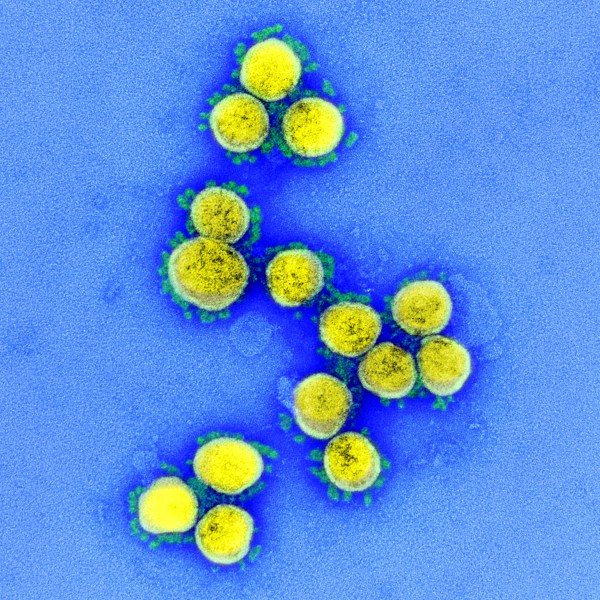
The US has failed to perform genomic surveillance of the SARS-COV-2 pandemic, despite having one of the worst infections of any country in the world by the numbers. Less than 0.4% of SARS-COV-2 infections documented by PCR have had genomic sequencing in this country. Britain has had more than 7% of its infections sequenced. As a result, the British have been able to identify a new and dangerous mutation known as B.1.1.7, a variant that is more than 50% more contagious than the original virus.
See the New York Times article today, January 6, for details of the American virus sequencing deficiency. It is alarming– or prophetic of doom if we do not act now– the federal government must start sequencing at speed.
If we do not get this virus under control quickly, the mutations will soon cause it to escape the vaccines. If that happens, we will have to start all over again with new vaccines– this time against multiple variants of the virus. A return to normalcy could soon be simply an illusion.
(SARS-COV-2 electron microscopic photo courtesy NIAID)
It’s all over but the shouting. Warnock has been declared the winner over Loeffler, and Ossoff is leading Perdue by at least 0.51% with over 98% of votes counted.
Stacy Abrams has been organizing Black people for over two years and registering them to vote. She has succeeded, at least partially. Voter suppression in Georgia has been overcome sufficiently to allow Democrats to win at the Senate level as well as the Presidential level.
At Washington, DC, where the two new Senators will be seated, a riot has been going on in slow motion. The police have clearly not been mobilized well enough to control the crowds, who remain in control of the outside of the Capitol. Apparently the inside of the Capitol is slowly being cleared of protestors by police. The National Guard is on its way, and a curfew has been declared for 6PM– an hour after sunset.
The win in Georgia has been accompanied by a loss in the nation’s capitol. Insurrectionists have been in control of the Capitol, walking calmly through Statuary Hall and occupying the Senate chamber. This is a sad day for our country, but it’s always darkest before the dawn (or brightest at sunset, if you prefer.)
(Hillary by John Hain via pixabay.com)

I am watching on television an out-of-control crowd of protestors that has breached the Capitol building and has been walking through Statuary Hall. Tear gas has been released on the Capitol steps. The current vice president, who is serving as President of Congress during the Congressional certification of the completed Electoral Count, has been ushered off the floor by the Secret Service.
Apparently the current president went before the protestors at noon local time or before to egg them on and they have responded by pushing into the Capitol building to interrupt the procedure of certifying the election.
Narrators on the news station don’t know what is going on; they are showing pool cameras from the outside and inside of the Capitol without being able to clearly describe events.
The cameras have shown protestors on the steps of the building and on the balcony at the top of the stairs. Now a cloud of vapor has appeared on the front of the building.
There is a protestor on the dais of the Senate, shouting “[redacted] won the election!” The National Guard has been formally requested to come to the Capitol building to clear out protestors.
This is clearly an attempted coup by the grass-roots of the Proud Boys and other far-right demonstrators.
Mitt Romney told a reporter for the New York Times that what is going on is an “insurrection.”
(picture by Open Clip Art Vectors courtesy of pixabay.com)
The Washington Post has a new article, dated January 4, 2021, titled “Young ER doctors risk their lives on the pandemic’s front lines. But they struggle to find jobs.” It is about emergency medicine residents and their job prospects during the pandemic.
The gist of the article is that ER doctors are having a hard time finding jobs, at a time when you would think they are in great demand. The root cause of this paradox is that the doctors are employed by outside agencies, not the hospitals nor the federal government. The employers are experiencing lower profits due to a reduced number of paying patients– despite the greatly increased proportion of patients and the record numbers with COVID-19 and respiratory distress– and therefore are reducing hours and number of employees.
This paradox is due to the perverse economics of medicine in this country. Medicine is not supported by the demand of patients for necessary services– instead it is paid for by people who demand services for which they are well able to pay (either by cash or through insurance.) People who demand services are not the same as those who need services to save their lives or relieve their suffering. Instead, they are the people who have money and want medical services that make them more satisfied with their lives.
The fact that people suffer and need medical help for survival does not support medicine in this country. Insurance companies and investment groups support medicine. This situation is different from that in most other countries, in which government officers organize and pay for medical practice based on their assessments of what services are needed by the most people for the good of the general populace.
In this pandemic, the greatest number of sick people and the greatest suffering is being experienced by disadvantaged people with the fewest resources. Money and insurance is concentrated among those least affected by the virus. Thus there is a basic imbalance between resources and need.
Government supported medicine, at least theoretically, is based upon the strategy that overall life expectancy is the primary goal. The development and provision of vaccines is the ultimate expression of this strategy. Capital-supported medicine instead pays for what the people with the most money demand, regardless of their actual needs. At the top, the “warp-speed” vaccine program serves this strategy, but the abdication of responsibility by the federal government in favor of states contradicts it.
Thus the paradoxical situation in the US: emergency room doctors are not in demand by the organizations that pay for the provision of medical care. Vaccines that have been distributed to states are not being administered because the states do not have sufficient resources. This is why life expectancy in the US lags behind that in most other well-developed nations.
(photo by pedro wroclaw via pixabay.com)

Hey Now
This is what’s so horrifying: there’s still so much we do not understand about this virus. Even with a successful vaccine, so many people have been infected already and we just cannot say for sure what the long-term impact might be.
I had covid eight months ago; no lung issues, but many other nasty symptoms such as awful nausea, loss of smell, and severe anxiety. My stomach has been off for the last couple of months; is this related to covid? Last month I felt anxiety on a very high level not experienced since eight months ago.
Covid related? How would we even know? And I’m even more worried for my young child who tested positive for antibodies. He’s complained of stomach pains for quite some time now, but no obvious explanations. It’s hard to stay positive when there are so many unknowns. And that’s coming from someone who has not experienced the worst that covid has to offer.
Miriam S. (in response to Hey Now)
@Hey Now Why is it that we spend more per person on health care in the US but rank around 25 in the world for health outcomes? Would any reasonable person spend more to get less? How does that make any sense? In our US healthcare system, doctors are often forced to make decisions not in the best interest of the patient because healthcare insurance calls the shots.
I went through this personally. My doctor wanted me in the hospital, the insurance carrier did not. And let’s be realistic, doctors, nurses and hospitals all need to get paid. I would wager most of us wouldn’t work for free.
Regarding personal freedoms during this pandemic, if someone chooses to not wear a mask right now and/or go to a big indoor gathering and gets sick, do they have the right to now risk our front line heroes working tirelessly in every community and in our hospitals? Does their right to “freedom” give them the right to risk other people’s health that do follow the guidelines about distancing and wearing a face mask?
I doubt any of the people who wrote the constitution would agree that was the intent. If we all follow the rules, fewer people will get sick. Fewer people will have these devastating long-term complications. We can keep our hospitals from having to turn people away.
We can get through this pandemic as Americans. But if we continue to politicize our health and healthcare in the US, we all are losers. We can and must do better. We owe it to the next generation.
Ed (in response to Miriam S.)
@Miriam S. Your comment is right on in tone and conclusions, but too flattering to the US on data: “around 25th” on health outcomes obscures reality. Life expectancy is the metric that can’t be gamed or manipulated to falsely flatter results.
Developed countries, with a combined population over 700 million, all have a life expectancy of over 80. The US life expectancy is 78 — peer with Cuba, Panama and Poland. The poor die earlier in the US. Health care access is an issue.
US life expectancy will never catch up to developed countries while the US health insurance system leaves a third of the population uninsured or under insured. Does the US want to join the civilized world?
(comments are from a New York Times article on people repeatedly hospitalized with long COVID)
(photo by Sathish Kumar Periyasamy via pixabay.com)
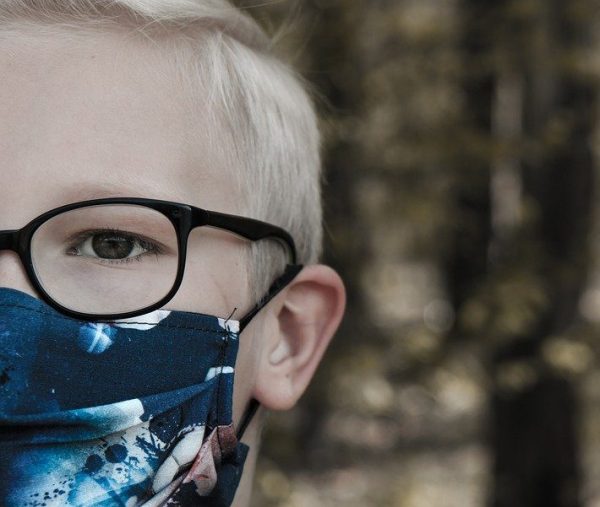
This article appeared in the Journal of General Internal Medicine online July 31, 2020: “Masks Do More Than Protect Others During COVID-19: Reducing the Inoculum of SARS-CoV-2 to Protect the Wearer.” As promised by the title, it details the concept of reducing exposure to the virus by wearing a mask. It explains that a lower dose of infectious virus will lead to a milder infection. This phenomenon was shown by a natural experiment, conducted on two separate cruise ships infiltrated by the virus early in the pandemic:
Closed settings, such as cruise ships, can be particularly illustrative when examining phenotypes associated with SARS-CoV-2. For example, one of the earliest estimates of the rate of asymptomatic infection due to SARS-CoV-2 was in the 20% range from a report of a COVID-19 outbreak on the Diamond Princess cruise ship.37 In a more recent report from a different cruise ship outbreak, all passengers were issued surgical masks and all staff provided N95 masks after the initial case of COVID-19 on the ship was detected.38 In this closed setting with masking, where 128 of 217 passengers and staff eventually tested positive for SARS-CoV-2 via RT-PCR, the majority of infected patients on the ship (81%) remained asymptomatic,38 compared with 18% in the cruise ship outbreak without masking.37
https://www.ncbi.nlm.nih.gov/pmc/articles/PMC7393808/
The article goes on to cite the examples of Taiwan, Japan, Singapore, Hong Kong, and other countries that have embraced universal mask-wearing and have fared relatively much better in case and fatality rates than countries like the United States, where mask-wearing has been inconsistent and politically polarized.
Finally, this is the lede to a Wall Street Journal article dated December 30, 2020:
NEW DELHI—In September, India was reporting almost 100,000 Covid-19 cases a day, with many predicting it would soon pass the U.S. in overall cases. Instead, its infections dropped and are now at one-fourth that level.
India has brought down its virus numbers, despite often being too crowded for social distancing, having too many cases for effective contact tracing and an economy that isn’t well equipped to weather long lockdowns.
One of the main reasons, Indian health officials say, is that the country has managed to encourage and enforce almost universal acceptance of masks without much debate.
From the moment the pandemic landed in this South Asian nation, politicians and health experts have been united about the importance of masks, including Prime Minister Narendra Modi.
(from Wall Street Journal “teaser page” for article)
Need I say more? Even the Wall Street Journal agrees that masks work. I plead with you to wear a mask in public, even after vaccines become available, regardless of your political affiliation.
(SARS-COV-2 Electron Micrograph: photo courtesy NIAID)
“The Dream (Sueno) of Reason Begets Monsters”– Francisco Goya, 1796-99: the pandemic year 2020
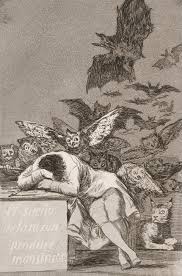
Usually known as “The Sleep of Reason Produces Monsters”, an acquatint done by Francisco Goya, number 43 of 80 (called “Los Caprichos”) produced between 1796 and 1799. The title is a translation from the Spanish and is not strictly accurate. The word usually translated as “sleep” is “sueno” which is more accurately translated as “dream.”
The work is possibly a reaction to the Spanish Inquisition, which was still in full swing in Spain at the time the work was produced. Los Caprichos were primarily satirical in tone.
The work was accompanied by an inscription, which, translated, reads as “Imagination abandoned by reason produces impossible monsters; united with her, she is the mother of the arts and source of their wonders.”
According to Wikipedia, “Implied in Goya’s preparatory inscription, the artist’s nightmare reflects his view of Spanish society, which he portrayed in the Caprichos as demented, corrupt, and ripe for ridicule.”
This art is emblematic of the pandemic year 2020: we dream of monsters and awaken to horrors.

(Wikipedia: The Sleep of Reason Produces Monsters)

