(photo courtesy of pixabay.com and WikiImages)

(photo courtesy of pixabay.com and Free-Photos)

quoted from “Elements of Surprise” article in New Scientist by David Ings.
(blushing panda courtesy of pixabay.com and OpenClipart-Vectors)
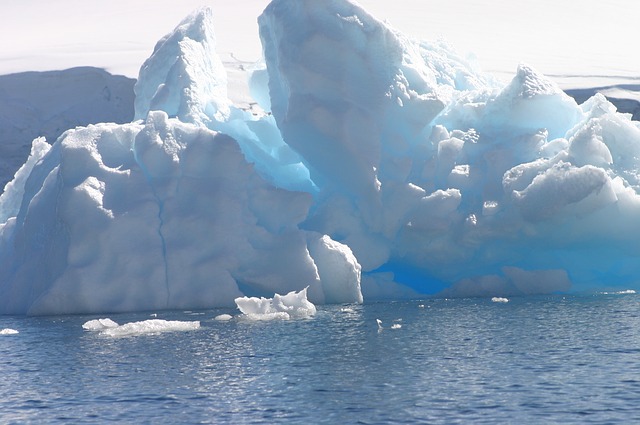
An article in New Scientist reports that the Antarctic is now losing ice at a rate that tracks close to the worst-case scenario described by the 2013 report of the Intergovernmental Panel on Climate Change– a rate that will cause sea levels to rise by 150 mm from Antarctic ice loss alone by 2100. The scientific study that reported these numbers also showed a slight increase in the ice content of the Eastern peninsula, nowhere near enough to compensate for the huge loss from the Western Antarctic.
As recently as 2012, scientists thought that the Antarctic would not suffer any ice loss in the twenty-first century. Then new research revealed huge and growing losses, and in the last year, the losses have been quantified at three trillion tons net in the last twenty-five years. What is worse, the rate of ice loss is increasing– it has apparently tripled in the last five years.
In a paradoxical situation, Mr. Trump is probably convinced that North Korea wants trade deals with the US, when in fact they want nothing of the sort. What they really want is to trade with China, a natural ally because of their similar governmental systems. When you look at current North Korean trade, virtually all of it is with China– and it had been severely restricted last year… but suddenly, just before the summit with Kim and Trump together, trade increased dramatically, back to relatively normal levels. If in addition, financing can be had from Chinese banks, the North Koreans will be able to build their economy and strengthen the current ruling regime rather than suffering the otherwise inevitable collapse of their government if the recent trade restrictions were to continue.
Thus Mr. Trump ensures the survival of the national government with the worst human rights record in the world, according to the United Nations.

In Nicholas Kristof’s op-ed in the New York Times yesterday, he variously described Mr. Trump as being “snookered”, “hoodwinked”, and “outfoxed” because he gave away a great deal to Mr. Kim and received very little in return. It appears that he accepted Mr. Kim’s assurances that he wanted “complete denuclearization” of the Korean peninsula, something he has had on offer since at least 1994, when he contracted in a treaty to end plutonium production. That treaty was abrogated by the US under GW Bush because North Korea appeared to be secretly enriching uranium instead (an equally viable alternative method for producing an atom bomb).
Mr. Kim’s assurances that he would return remains of US soldiers missing in North Korea since the war are also nothing new. Repatriation of remains has gone on since at least 1989 and very few new discoveries (of crashed planes, for example) are to be expected. There are probably less than 3,000 American soldiers still missing who probably died in North Korea during the war. Efforts to find the remains have gone on for thirty years already.
Mr. Trump has elided the issue of North Korea’s human rights record with a reference to “rough” conditions in that country, which the UN says has the worst human rights record in the world:
Likewise, Trump acknowledged that human rights in North Korea constituted a “rough situation,” but quickly added that “it’s rough in a lot of places, by the way.” (Note that a 2014 United Nations report stated that North Korean human rights violations do “not have any parallel in the contemporary world.”)
This statement by Mr. Trump is at least consistent; he has always sidled up to dictators and tyrants all over the world, while insulting leaders of free democracies. He appears to have a special place in his heart for autocratic rulers and may himself aspire to be such a ruler. It remains to be seen whether elements in the US that are capable of a coup d’ etat would offer him the top job in exchange for the support of his 1/3 of the American people.
Nicholas Kristof was struck by the irony of Mr. Trump’s insults to Pierre Trudeau, prime minister of Canada. Mr. Trudeau appears to have enraged Mr. Trump by saying that he, Mr. Trudeau, would not allow his country to be “pushed around” by bullies. It is unclear just what Mr. Trudeau said that was allegedly a lie– according to Mr. Trump.
(clown with balloons courtesy of pixabay.com and alexas_fotos)

What has he accomplished so far ? Please don’t reply criticizing Obama or Hilary, Trump is in office now. Also as a businessman myself who with the help of others built a successful multimillion dollar company from the ground up, my experience doesn’t support your claims about Trump’s business approach. Integrity, hard work and delivering concrete results time and time again. I once had the misfortune of business dealings with Trump’s organization and it was every bit the clown show his administration is.
The negotiations in Singapore have just concluded with a communique; in addition, oral promises were made on both sides: the North Koreans, to begin dismantling nuclear and ballistic missile sites (of which they have over a hundred); the Americans, to suspend military exercises (something no administration has been willing to do for many years). It does not seem hard for Mr. Trump to make a deal with Kim Jong Un when he gives away the store, that is the military exercises, which are, in his most truthful statement of the year, both expensive and provocative. Mr. Trump deserves positive reinforcement for ending military exercises but it would have been more seemly to have coordinated this move with the military and our ally’s military, the people who are actually doing the exercises, which haven’t been officially suspended yet.
We can say, resignedly, that Mr. Trump will receive a tremendous boost in popularity in the US because of this “diplomatic triumph” (which is more like “Let’s Make a Deal”) but we can hope that clear-eye citizens will still see that Mr. Trump and everyone connected with him are still bent on fatally weakening the American government except in military and internal security matters as well as eliminating all government help for poor people. Peace with North Korea, and the benefits thereof, do not change the fact that the Trump administration is by the rich, for the rich. Voters should cast their ballots in their own, middle class or lower class, self-interest, and try to ignore Trump’s foreign policy successes, such as they are.
Kim Jong Un doesn’t need nuclear weapons to oppress his people. That won’t change and Mr. Trump is not going to put any pressure on him to ease up. He likes it that way, the Duterte way, the Xi Jinping way, the Vladimir Putin way. Our democratic values are being sold down the river for a well-done piece of Trump steak.
(clown miniature courtesy of pixabay.com and Alexas_Fotos)

First, the Canadian and American dairy industries are fundamentally different.
Canadian diary farmers average 80 cows, and are usually multigenerational– small and yet still functioning profitably. They receive higher, standardized prices for their milk than do small farmers in the US.
Small American dairy farmers are going bankrupt and committing suicide. Why? They cannot make a profit on milk that costs $3.50 a gallon at the supermarket (about the same price as a gallon of gas). Wholesale “plants must pay minimum prices for milk used for beverage, or Class I, usage. For most of the markets in the 52-city Nielsen report, these are minimum prices set by the Federal Milk Marketing Order (FMMO) or by the CDFA in California.” (Progressive Dairyman, “How much does the farmer get when a consumer buys milk?” 18 November 2011) Unfortunately, those minimum prices are below the cost of production for small dairy farmers. Large dairy producers in the US, on the other hand, are deliberately overproducing milk to get extra subsidies from the federal government.
The US government subsidizes dairy farmers routinely– one estimate was $20 billion in payments for 2015. Most of these payments go to larger dairy producers, despite attempts to cap subsidies. The small dairy farmer, on the other hand, is being squeezed out by low prices and overproduction by larger competitors.
America’s dairy crisis is a classic example of an unregulated market in which supply outstrips demand because the constituent parties are all over producing in hopes of thereby acquiring a greater share of the market.
–commenter on Guardian story about “Why Canadian milk infuriates Donald Trump”
… a subsidy is a sum of money granted by the state or a public body to help an industry or business keep the price of a commodity or service low in order to ensure competitiveness, while supply management comes in the form of granting or paying a guaranteed price for a product or service in order to maintain a certain level of income.
as the article clearly mentioned, US farmers are subsidised, while canadian farmers have supply management – no prize for guessing which system works better . . . .–another commenter on same article
US dairy producers are not suffering because of Canadian dairy farmers but the government’s inability to control the supply within the country via the supply system that is working in Canada. Were Canadians to relax the 270% tariff it would simply destroy their own dairy producers with a flood of American overproduction. And being the comparatively smallish market that we are, it will not save US dairy producers anyways. They would still receive pennies. Sounds like a lose-lose to me.
–a third commenter
“In a competitive market where there is no differentiation between finished product, the demand to cut costs at every level from the store to the farm is intense. There is no way to obtain any added value.” (The same Progressive Dairyman article cited above)
The bottom line is that Canada exports more milk products from the US than the US receives from Canada, and overall there is a net surplus for the US in trade, when you count both goods and services, with Canada. The entire value of the US milk trade with Canada: $600 million.
So why is Donald J. Trump so indignant? Because of a number, one that protects the Canadian system from the American system. The Canadian system is well-regulated, the American system is not. Under the American system, overproduction is actually encouraged and nearly 100 million gallons was dumped last year. The price of milk continues to be less than the cost of production.
Most importantly, Canada doesn’t dump milk in the US at below the cost of production, which is what would happen in Canada if it were not for the enormous tariff of 270%. Despite the tariff, Canada still imports 10% of its milk, while US imports are limited by law to 3% of production. The US produced 215,400 million gallons of milk in 2017, at an average retail price of $3.29 a gallon– $708,000 million or $708 billion in retail cost to the American taxpayer.
As usual with Trump’s outrageous speech, the true story is very different when you look at all the circumstances. Free trade in general is a good thing, but in some cases, the government can reserve the right to protect industries that are threatened by overproduction in other countries. The trade treaties that have been negotiated contain numerous details that involve long and difficult efforts to resolve problems and dispute that go back centuries in some cases. To suddenly declare patiently negotiated treaties “unfair” because of details that don’t look right to people not in possession of all the facts is to disrupt the rules that have been laid down by people who have worked hard to codify them.

(photo courtesy of pixabay.com and Meditations)

First, there were over 42,000 opioid-related deaths in 2016. Second, increases were greatest among older age groups, including a 754% increase in the 55-64 y/o age group. These figures were reported in JAMA open access journal for June 2018.
Third, the blame for these opioid-related deaths falls squarely on the unknown strengths of black-market “heroin”, which has recently received spiking with fentanyl (over 50 times as potent as heroin) to satisfy a saturated market with price drops making heroin cheaper than prescribed pain medications. Fourth, partial blame lies with doctors who prescribe enough opioid pain-killers for patients to develop dependency (which differs from addiction in that the patient requires medication for near-normal functioning but does not display “addictive” behaviors) and then cutting them off, frequently cold turkey. Such patients have no recourse but to turn to the black market, where injectable and nasally administered heroin is cheap, readily available, and highly potent.
A secondary cause of the the increase in opioid deaths is the aggressive marketing of Oxy-Contin for questionable indications and the claim by Purdue that it is always effective when given every twelve hours. A significant percentage of patients have loss of effectiveness within eight hours and by twelve hours are suffering the pangs of withdrawal. This finding has been covered up by Purdue and its pharmaceutical representatives to maintain their reputation as a twice-a-day drug. By contrast, patients given high doses of heroin frequently are able to get by on single daily doses. Use of OxyContin on an eight-hour schedule is not approved by the FDA and is not covered by insurance, so this is seldom a useful approach.
There has been considerable public outcry over the enrichment of a single family from the massive prescription use of OxyContin from Purdue. This has led to public shaming and much discussion of the moral culpability of this super-wealthy family (whom I shall not name, as it is irrelevant to my purposes who they are).
The last factor in the opioid-death crisis is the shameful attitudes of many physicians, who have never suffered from chronic or intolerable non-cancer pain and do not appreciate the debilitating effects of overwhelming pain on a patient’s ability to function or enjoy life. There is a widely held prejudice among physicians that opioids are unnecessary in the treatment of acute or chronic non-cancer pain unless massive trauma is present. Many, many patients suffer in the half-light of intolerable pain that inhibits their abilities to perform activities of daily living, much less enjoy recreational or culture activities. Some physicians are sympathetic, but most of these feel they are being shamed by doctors who have no personal experience of intolerable pain. Those patients with severe, especially inflammatory arthritis, and spinal stenosis who are not served by non-opioid pain-killers are forced to doctor-shop and often never obtain adequate relief of pain.
 Conrad Theodore Seitz