
photo by SamWilliamsPhotos courtesy of pixabay.com
“There is a cult of ignorance in the United States, and there has
always been. The strain of anti-intellectualism has been a constant
thread winding its way through our political and cultural life,
nurtured by the false notion that democracy means that ‘my
ignorance is just as good as your knowledge.”
―
I got this quote from a comment to an article in the Washington Post, but you can also find it here.
Rant begins here:
The comment containing the quote refers to an article about a woman named Judy Mikovits (who has a PhD and used to be a researcher in a former life). She came out with a movie called “Plandemic”, which you should definitely avoid. It has been knocked off of Facebook and several other web sites despite being extremely popular, especially among right-wing-nuts. The reason for the ban? The movie pushes a number of conspiracy theories and other nonsense, related to vaccines and to the pandemic. She claims that the virus is a conspiracy by wealthy people to further burden the poor, who as we know are already suffering disproportionately from the novel coronavirus.
If this were a conspiracy, it would certainly be a clever one. It may backfire. The United States, as well as much of the developed world, even (or especially) China, is in danger of a revolt by the poor against the rich. This danger is brought on by excessive wealth and income inequality, which has left a large proportion of the world unable to afford basic necessities.
At the same time, a small percentage (let’s say 0.1%) is doing exceedingly well, and in some cases likely to advance their wealthy status. They get richer either because of good investment strategies or by subsidies from the federal government, which seems bent on passing out money, first come, first served.
It seems to me as if I’m making this up. I’m not. Despite all my caution and skepticism, I must believe it. I’m shocked– shocked, I tell you– that the government not only allows gambling in the back room (see “Casablanca” with Humphrey Bogart and Claude Rains) but actually encourages poor people to throw away what little money they have on ineluctably losing bets. I’m talking here about state-sponsored “sweepstakes” that keep half of their receipts as a hidden tax that disingenuously claims to be giving “extra” funds to schools (which is deducted from the schools’ normal funding).
Take the payday loan industry. They have been making money hand over fist for years (ever since bosses stopped paying their employees in cash) with loans that carry as much as 400% a year interest. I was disgusted with a convenient small, revolving loan that carried 22.5% interest. I figured I could afford to keep up the payments. I could and did (and still do, because it’s to my advantage in other ways).
Consider the person who has no money for food until the next payday, so they take out a loan (to be paid back on payday, hence the name) that will allow them to feed their families. That loan will have to be rolled over on payday, because paying it back will mean no money for food for another two weeks. The carrying charges on such loans amount to an interest rate well in excess of that which Mafia/Cosa Nostra (Italian: “our thing”) thugs charge to their least stable clients. That’s illegal– isn’t it?
No. It’s perfectly legal. In many cases, the operations are financed by banks that are chartered in South Dakota (or other small states, which allow virtually unlimited interest rates, disguised as “fees”) but that operate all over the US. Many poor people don’t know it, but they can cash their paychecks at the same bank (a long bus ride away) that the check is drawn on, for a “small” fee ($5 and up), even if they don’t have a bank account of any kind anywhere.
Banks don’t advertise this– why should they? They don’t want to provide services at a relatively low, uncompetitive (limited by government regulations) rate. They would prefer to hand that business over to the predatory lending firms that call themselves check-cashing outlets (this keeps the riff-raff– poor employees– out of their lobbies and limits the amount of cash they have to keep on hand).
Now comes the federal government in response to the pandemic. The feds have passed a law that provides forgivable loans to companies with fewer than 500 employees (a loophole allows companies with much larger employee numbers, only at separate physical locations, to benefit from the loans). The loans turn into grants if the money is primarily used to keep employees on the payroll instead of firing them.
A clause in this law (which was passed so quickly and was so large that it became a mare’s nest of provisions, loopholes, and exceptions) excludes companies that obtain more than 50% of their income through making and administering loans. The news story (which I won’t reference as I haven’t time to climb down from this rant) states that these companies get 60% of their income from the loans they make rather than from the fees that they charge to cash checks.
It’s a shame that predatory lenders may have to close up shop because their clients are “welshing” (failing to pay) their payday loans after being laid off. Allow me to indulge in some schadenfreude (German: “joy at another’s misfortune”). Thank you. I enjoyed that.
I realize that the employees of these predatory lenders are living paycheck to paycheck and they may starve if they lose their jobs. Wouldn’t it be just too bad if some of these scamster-led companies were forced to board up their places of business?
What if people who didn’t have enough money to keep a checking account would have to go to the bank which their employer uses and cash their paychecks for a semi-reasonable fee? Someone’s going to have to die to make this happen, and as long as it’s not me that dies, I’m all in favor of it (sarcasm intended).
End of rant [limited to 1000 words].

radial tree of genetic divergence from Balloux et al paper
A ScienceDirect article published May 5 reports that:
Phylogenetic estimates support that the COVID-2 pandemic started sometimes around 6 October 2019–11 December 2019, which corresponds to the time of the host-jump into humans.
The corresponding author, Francois Balloux of the Genetics Institute at the University College London, UK, describes in this paper how the team “curated” 7666 separate virus genomes to reach its conclusions. The pattern of mutations showed that there were introductions from animal to human hosts (zoonotic transmission) in late 2019, somewhere between October 6 and December 11.
Since then, there have been repeated mutations– the team studied 198 different changes (homoplasies– mutations that have emerged independently multiple times) that resulted in changes to the proteins in the virus. Nearly 80% of the mutations resulted in “non-synonymous” amino acid changes in proteins that the virus uses as part of its structure or enzymes used in virus replication or assembly. The mutations at four sites studied on the virus genome result in what is called “convergent evolution”, in which independent changes create similar features in descendants of the original virus.
These mutation sites indicate that the virus has been undergoing further adaptation to its human host since the jump from animal to human. These adaptations are of unknown significance at present, but some may have resulted in increased transmissibility (spread from one host to the next). Another, disputed paper claims that a mutation causing increased spread has taken over. Note that this virus type has the ability to proofread its new creations with an “exonuclease” enzyme, reducing its mutation rate (quote from the first-cited paper):
…Coronaviridae having the unusual capacity amongst viruses of proofreading during nucleotide replication, thanks to the non-structural protein nsp14 exonuclease, which excises erroneous nucleotides inserted by their main RNA polymerase nsp12…
The analysis explained in this paper leads to the conclusion that the virus appeared among humans no earlier than August 2019 (at the absolute earliest) and most likely around October 6, 2019. This analysis shows that the virus has spread all over the Earth rapidly and completely, notwithstanding our surveillance only identifying roughly 3.8 million infections worldwide as of today. The virus has spread quickly due to its high transmissibility and its low impact on human health– most cases are asymptomatic, and they do not hinder a person’s ability to travel or conduct normal business. Only the least healthy among us have been severely affected: the old and the infirm. Many of those who are struck down are people who harbor hidden vulnerabilities, like autoimmune disorders and genetic susceptibility to overwhelming hyperimmune reactions.
The more we learn about the novel coronavirus, the more we find that it is at the pinnacle of evolution: its viral “intelligence” presents the greatest challenge we have ever faced as a human species. Only our most enlightened and humane efforts will overcome the threat the virus poses to humanity. This is no time to disintegrate into squabbling nationalities and political parties; we must now unite and face the situation as one human race.
Something to make you feel better: bioluminescent waves on California beaches via the Guardian

photo by the Guardian
The Guardian has published a story about the wave of bioluminescence washing over the beaches in southern California. The video that accompanies the story is something to watch: a lone dolphin swimming through the waves, followed by a group of dolphins, each with a wake of bright blue following. If you never look at videos on the internet, this is the one to see. I guarantee it will make you feel better.
This is not paywalled. The Guardian asks for donations, and I do send them something every month. But they don’t force you. Just a blurb at the bottom of every page.
I was personally witness to this phenomenon once, many years ago, and I was deeply impressed.
Here’s a link to the video from the story: https://youtu.be/bJcTWr8-mFo
US testing and surveillance failures have led to political, economic, and medical disaster

em coronavirus from NIAID– CC license
What happened to cause 1.25 million cases and 73,000+ deaths from the novel coronavirus in the US as of this morning? There were nearly 3.8 million cases and over 260,000 deaths recorded worldwide at the same time. So the US, with 4 percent of the world’s population, has nearly a third of the cases– and that’s just the ones we can confirm. What went wrong?
There are a few things that we can be fairly certain did NOT occur. The first is the conspiracy theory that the virus was accidentally released from a high-security laboratory in Wuhan. According to the researchers working there, this virus was not being studied so it could not have been released; it simply wasn’t there to get out. Other, similar viruses were the subject of intense study, but none of them were released.
We can also be certain that the virus was not deliberately engineered or released. There is simply no logical motive for Chinese military scientists to create a virus with such a bizarre combination of features– asymptomatic in a large percentage of cases, highly transmissible, and indistinguishable from influenza clinically. What military use would this virus have? Then there is the impact that this had within China. It was devastating– to the very country which would have created it. Simply not credible.
Another theory, that the virus originated in a “wet market” in Wuhan, is more likely, but still uncertain. One factor arguing against this is that only 27 of the more than 40 initially diagnosed patients had some connection to the market. The situation in France, where a case dating to December 27, 2019 was just announced, might be similar to the situation in Wuhan. In that case, it is probable that this virus was circulating there for weeks before it was found when a minority of the patients infected showed up at a hospital with severe disease.
The ultimate origin of this novel coronavirus, patient Zero, will probably never be found. Most likely, there were several people who were infected in the initial jump from animal to man, and most of them had no symptoms at all. The virus is so contagious that they didn’t have to be bitten to be infected. Their contact could have been so trivial that they won’t remember it at all. This makes pinning down the origin next to impossible.
Whatever the origin, once the virus began to circulate internationally, the responsibility for containing it rests with each country affected. After all, the action taken by the US to close its borders to China, Europe, Mexico, and finally, Canada, should have prevented us from being exposed to the rest of the world (I’m not saying that’s true, I’m just saying that’s what some people claim).
China has done its authoritarian best to control the spread within its own country. The escape to other countries, through international travel by US citizens, makes surveillance a vital measure to reduce its impact on the US. What did we do inside the US to control the virus?
The United States made several crucial mistakes in the early stages. The first mistake was in refusing to use the test that the World Health Organization had developed during the initial months. Using this test allowed other countries to see that the virus was spreading rapidly. We simply wanted our own test– there was no other excuse. The test we developed had near-fatal flaws and its use was highly restricted. Not having any test at all made it impossible to see how quickly people here were getting infected.
The second mistake, which followed inevitably from the first, was the failure to do contact tracing or isolation of those exposed. Not having a test made it impossible to identify who was infected or see who was exposed, which meant we couldn’t trace their contacts.
Without testing, the only way to find out we had a problem (besides clinical diagnosis by exclusion) was to look at how many more people were dying than usual. This type of surveillance is always six to eight weeks behind, because that’s how long it takes to collect and collate death certificates.
We know that the overall death rate has increased dramatically. The average daily death rate last year was about 8,000 people (it’s higher in January: 8,300 — than in June: 7,150) and about 1,150 people died on April 29 (that we know of) due to the virus. We won’t know for some months how many people died each day this month. We can only guess that the overall death rate is increased because people are dying from coronavirus.
These two errors, lack of testing and lack of contact tracing, caused us to be blinded to the pandemic’s nature in its early stages. Not knowing that the virus was spreading rapidly made it possible for our leaders to pretend that nothing was wrong.
What’s worse, our testing is still limited to roughly 150,000 people a day and we found over 24,000 new cases (that’s about 16%). We need enough tests so that less than 16% of the tests turn out positive– it should be less than 5%, especially given that testing is only 70-80% sensitive.
This lack of tests and thus lack of known cases made it politically attractive for Republicans to claim that the whole thing was a Democratic “hoax”– which lead to the situation in which we find ourselves today. Large segments of our country (fortunately not a majority) are still claiming that the whole thing is made up, that our death toll is grossly exaggerated, and so on. They will wake up too late, to a savagely dented country.
We are headed for a national depression. When the Republicans realize how badly they are going to lose, they will stop any attempts to spend money for stimulus or relief. They will pivot towards fiscal conservatism and then lay the blame on the Democrats for the slow economic recovery that will result.
They will even blame the Democrats for the deficit brought on by the stimulus spending that they voted for in the first place. They will use the deficit to push cuts to social spending and restrictions on Medicare, Medicaid, and Social Security, just as they did in 2009-2013. Do you remember when the Republicans caused a government shutdown to force the Democrats to accept an austerity budget?
This is the same playbook that worked so well at the outset of the Obama administration. It will work again this time if the Republicans realize that they are bound to lose this election by a landslide, and throw the brakes on spending as early as this summer. Poor people will suffer even more, and the uneducated and unintelligent among them will believe One America News Network, which will say the Democrats did it.

Electron micrograph of SARS-COV-2 virions in vitro
From Science Direct, published online May 3:
We report here a case of a patient hospitalized in December 2019 in our intensive care, of our hospital in the north of Paris, for hemoptysis with no etiological diagnosis and for which RT-PCR was performed retrospectively on the stored respiratory sample which confirmed the diagnosis of COVID-19 infection.
The first two cases previously reported in France were found January 24; both patients had a recent travel history to Wuhan, believed to be the source of the pandemic. The clinical picture for patients with COVID-19 and seasonal influenza is virtually indistinguishable. French scientists recently looked at samples taken from patients between December 2 and January 16, using stored swabs and specifically checking those patients who had tested negative for influenza and other common respiratory viruses. The hospital involved has had a practice of storing samples taken from patients in a deep freeze for four years, looking forward to situations just like this, where they would need to go back and re-analyze old cases.
Of 124 samples, 14 had influenza-positive tests, 28 had other viruses, and one had a co-infection. Of the other 80 patients, 66 were excluded because of their “COVID-19 non-typical medical record[s]”, leaving 14 with influenza-like illnesses. Of these, one only, from December 27, 2019, was found to be positive for SARS-COV-2 on highly sensitive and specific testing. This patient “presented to the emergency ward on December 27 2019 with hemoptysis, cough, headache and fever, evolving for 4 days.” He was 42 years old and had type 2 diabetes mellitus and asthma. One of his children had presented with similar (though milder) symptoms (a few days?) previously.
His medical reports were typical of COVID-19: CT scan of the lungs showed “ground glass” opacities on both sides. He had a low lymphocyte count. His C-reactive protein (a sign of acute inflammation) and fibrinogen (a sign of activated clotting system) levels were increased. A culture from his sputum showed “no pathogens”. He did well and was released from the hospital on December 29. We can guess that he was not well isolated from the hospital staff or from family and friends, and that his infection was passed on.
This patient had no history of recent travel, and no known exposure to travellers from China. He worked as a “fishmonger”. His case was added to the known total of over 86,000 infections in France, 55% of which were passed on from persons unknown.
The highly restrictive nature of the case-finding procedure in this case suggests that there were many more patients who presented with milder illnesses during December 2019 in France, who would have been found to have COVID-19 if they were tested. We can only guess that an unknown person from Wuhan, China brought SARS-COV-2 to France in early or mid-December. That person may have been asymptomatic, as the paper cites a figure of 18-23% of patients without symptoms; other researchers have suggested that this proportion is much larger.
Further retrospective analysis or surveillance may reveal who caused this spread or when it happened. Until then, we speculate that the virus was circulating as early as September 2019 (according to some researchers) or as late as early December. Just where it appeared in humans, and when, will probably never be known for certain; these dates may be the closest we will come.
Face Masks: Do They Work? Not very well. They do make you more cautious. (A brief explainer)
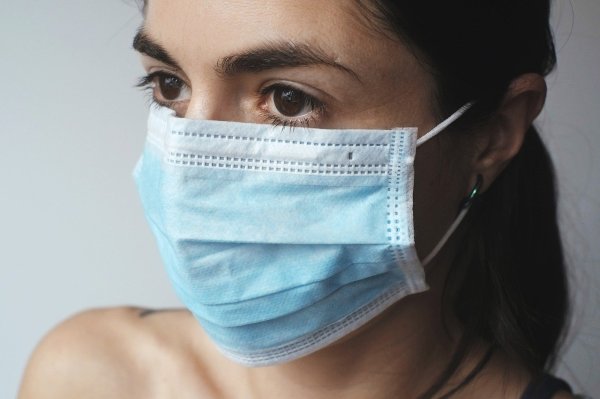
photo by Juraj Varga courtesy of pixabay.com
A new study published on May 4 by the Royal Society DELVE Initiative states that face masks will be beneficial to prevent transmission of SARS-COV-2 (the virus responsible for COVID-19) from asymptomatic or presymptomatic people to others in the public. Masks may not be so effective to prevent the wearer from becoming infected.
Evidence supporting their potential effectiveness comes from analysis of: (1) the incidence of asymptomatic and pre-symptomatic transmission; (2) the role of respiratory droplets in transmission, which can travel as far as 1-2 meters; and (3) studies of the use of homemade and surgical masks to reduce droplet spread.
Note that the study did not support the conventional view that masks would prevent the wearer from becoming infected. Preventing others from catching the virus is viewed as the major benefit. Respiratory droplets are generated during normal breathing and talking as well as coughing and sneezing (in which asymptomatic people presumably don’t engage).
Droplets that you breathe out range in size from 10 microns on down, while those you inhale are generally 10-100 microns (1/1000’s of a millimeter) in size. For comparison, a SARS-COV-2 virus is roughly 120 nanometers in diameter (1 micron equals 1000 nanometers). Droplets generated when you cough are bigger and “snottier”– they contain more mucus proteins.
A “droplet” is considered to be more than 5 microns in diameter; particles smaller than this are considered “aerosols”. The important difference is that aerosols tend to hang in the air longer than droplets– they are suspended and don’t settle down to surfaces for hours.
Surgical masks were originally intended to prevent surgeons from contaminating their patients’ open wounds during surgery. As such, they are highly effective. They prevent droplets containing bacteria (which are much larger than viruses) from falling into wounds and have reduced the bacterial infection rate in most surgery to negligible levels. Surgical masks do not prevent aerosols emitted during normal breathing from entering the air– a point generally ignored by hospitals and their leaders, who tend to equate the more effective N95 respirators with unnecessary expense and bother.
Surgical masks do reduce the emission of viruses in exhaled breath by 3-4 fold, according to the first-mentioned study. This is a significant improvement over the open air. N95 respirators are more effective: first, they seal around the sides (masks have no seal, respirators do– while ventilators breathe for you). Second, they filter 95% of all particles over 2.5 microns out of the air. There are also N99 and N100 respirators, which filter larger percentages of particles.
One caveat: the “N” (as opposed to “P”– “partial”– or “R”– “resistant”) means that the filters are not resistant to oily particles, which are slippier. Remember that the virus itself has a lipid envelope and “lipid” means oily.
Cloth masks are even less effective than surgical masks at filtering the air we breathe. However, the first-mentioned study indicates that there is some protection, especially against the larger droplets associated with coughing. Other studies support mask protections. Some studies (to which I can’t find references right now) say that coughing and sneezing causes large particles to go right through a mask.
The largest effect of wearing masks may be simply psychological: they remind us to be careful of the air we exhale and where it lands. This is not a trivial matter. People not wearing masks may be less cautious and they certainly don’t feel that they are in any danger– otherwise, if you are at risk, why aren’t you at least wearing a mask?
The bottom line: Do wear a mask, to show that you care and you are trying to help. But don’t expect the mask to protect you.

photo courtesy of pixabay.com
Multiple news outlets have “leaked” an administration document (bearing the imprimatur of the Department of Homeland Security but reportedly not shown to what’s his name) that predicts confirmed deaths due to COVID-19 may increase to an average of 3,000 a day (from the current nearly 2,000 a day) by the end of May. The same document also predicts new infections may go up to 200,000 a day. The latter figure is hard to accept given that we are doing less than 150,000 tests a day in the US at present. That’s what the document is supposed to say: more infections than there are tests to diagnose them.
We know that there are many more infections than there are tests simply by reading the headlines: the antibody tests that have been done so far suggest that there are at least ten times as many infections as we are diagnosing currently. Most of those infections are asymptomatic, which is lucky for those who are affected. However, that still means that at least 0.4% of those infected are dying.
All of this means exactly what the general public expects: large majorities in opinion polls believe that the current lockdown is necessary despite its profound economic impact. Large majorities also think that the situation is likely to get worse before it gets better. In sum, we are in for some very heavy weather over the next few months. This crisis is likely to last for a long time, at least until next spring.
So, dear friends, stock up on reading material, dried beans, and rice, because the meat supply is not going to improve and the lockdown will continue. Try to come to an accommodation with whomever you share space. Don’t worry about being evicted even if you can’t pay the rent. No one is going to move in on you right now.
(This post does not cite any sources because it’s all over the news. You can’t miss it unless you’re watching Fox.)

woodblock print courtesy of wikipedia
Since I wrote a post last week quoting Wikipedia’s translation of the twenty-one precepts written by Miyamoto Musashi, I have been reviewing the references at the end of the article “Dokkodo”. I found the first one to be more confusing than enlightening. It included the admonition not to trust Buddhist priests because they gave Buddhism a bad name (shocking to those who have studied Zen, among other disciplines).
The website also asserts a copyright and threatens legal action against anyone who “plagiarizes” the work or publishes derivative versions. I’m not impressed by such threats– it has been my experience that people who assert copyright and make legal threats generally haven’t produced the best work to make copies of in the first place.
The last reference in Wikipedia is to a scholarly article which gives some very deep translation data. It was originally written in German for a journal and the publication is dated 2012. The journal is “The Bulletin of Nippon Sport Science University” and I am guessing that the “Sport Science” refers to judo, fencing (swordsmanship or kendo) or a similar “sport”, which in Japan is a variety of “martial art”. The article is titled “The Last Words of Miyamoto Musashi”, and the author is Teruo Machida, who is said to be in the Foreign Language Department. A link to the .pdf version in English (keep in mind that it’s a translation from German, which is a translation from Japanese) is here. (Note that this is archived by the “Wayback Machine” and may not be current or available on the “live” web.)
A summary of the translation appears at the end of that article:
Dokkôdô (The way that I go alone)
1. I will not oppose the ways of the world.
2. I will not seek pleasurable activities.
3. I will give preference to nothing among all things.
4. I consider myself unimportant, but not the world so great and so deep.
5. I will be free of desire throughout my whole life.
6. I will not regret my deeds.
7. I will not be envious of anybody, good or bad.
8. I will not be sad when [I] must take my leave of any way.
9. I will not seek excuses and I will hold no grudge against myself or others.
10. I will not indulge in the way of passionate love.
11. I will not seek elegance and beauty in all things.
12. I will have no luxury in my house.
13. I will have no delicacies for myself.
14. I will not own anything that will one day be a valuable antique.
15. I will have trust in myself and never be superstitious.
16. Weapons are of the highest importance to me, I will not concern myself with other things.
17. I will always be prepared to die on this way.
18. I will take advantage of no treasure or manor in my old age.
19. Buddhas und Gods are worthy of adoration but I will ask them for nothing.
20. Even if I sacrifice my life I will not sacrifice my name.
21. I will never deviate from the way of Heihô.
In the second year of Shôhô (1645)
The twelfth of May SHIMMEN Musashi
Genshin (handwritten signet)
To Mr. TERAO Magonojô
This translation differs in a few respects from the one given in Wikipedia, but they do not appear to be important differences.
For example, the first precept is translated in Wikipedia as “Accept everything just the way it is” but above, we have “I will not oppose the ways of the world”– there are differences, but the deeper meaning is clear. Take the translation given by hyoho.com, however: “In no way should one act contrary to the great future you have before you”. Make allowance for the awkwardness of the use of “one” followed by “you” in which both refer to the same person, that is the individual addressed. What is this “great future”? It’s the same as “the way things are” or “the ways of the world”– it’s just extremely awkward.
The differences from the translation (noted first above, in this post) make it more confusing than enlightening. The first reference: http://www.hyoho.com/Hyoho6.html — but don’t read it before reading this scholarly article, as it will only confuse you and deter you from looking more closely. Just read it after you thoroughly digest the scholarly article’s explanation of the various meanings of the original Japanese text.
The “Way I go alone” is contrary to most Western thinking in many ways, but on closer inspection an open-minded reader will find it not so daunting. For example, it does not prohibit one from eating “delicacies” altogether, but from seeking them out specially or demanding them for regular fare. It is permissible (according to the detailed explanation in the article) to eat a delicacy (“delicious food”) in the company of important persons to whom it has been served, out of politeness: one shares food that is offered at a communal meal. However, the disciplined person (the “warrior” originally) will have served to himself for regular meals simple, nutritious food– not complicated, highly seasoned or sugared fare.
To take another example, it does not altogether prohibit one from sexual intercourse, merely enjoining what we might call “womanizing”– seeking after women as a pursuit. The translation given in hyoho.com refers to “married life” and this could be understood as an order to be faithful to one’s wife/husband/spouse. This is reasonable.
On further examination of hyoho.com, I find this link which tries to explain the Niten Ichiryu, which appears to be a school devoted to the teachings of Miyamoto Musashi. This school has a “headmaster” who has been selected specially to carry on its traditions; it doesn’t say how the selection is accomplished. The text emphasizes that the school’s teachings are an oral tradition which can only partially be conveyed in print.
I add a further caveat: one must be fluent in Japanese, preferably at least five to ten years of full-time study. Even then, Japanese writing or modern kanji is susceptible to at least two and probably more different meanings. Each individual character has its own history and constellation of meanings. This complex of meanings can be ill-treated in an English translation. Finally, Miyamoto Musashi didn’t write his text in kanji; he used a simple proto-Japanese which doesn’t have Buddhist or Chinese traditions behind each character– specifically to avoid coloring his words with those associations.
Now, isn’t that better than thinking/talking/writing/obsessing about the situation we are in today?
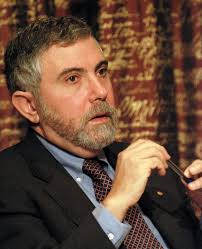
photo courtesy of Wikipedia
This quote comes from a review in the Guardian of a book that consists of copies of Paul Krugman’s old columns from the New York Times. Paul Krugman is an economist who has won a Nobel Prize (not a Pulitzer Prize, pace He-who-must-not-be-named).
Paul Krugman has been a voice crying in the wilderness, complaining of the “zombie arguments” put forth by most, if not all, Republican politicians, pundits, and Very Important People. Arguments such as: “All deficits are bad”, “tax cuts for the rich will increase revenues”, “rich people shouldn’t have to pay taxes”, and the like.
He calls them “zombie arguments” because no matter how many times these arguments are refuted, they will not die. They keep being repeated over and over, in public, in newspapers, and on TV, until the general public either believes them or is too tired to fight them anymore.
He emphasizes that it is critically important, not just to refute the arguments, but to point out that they are made in bad faith: the people who make these arguments know that they are false, but they refuse to admit that they are wrong. They just keep on repeating them, like the Big Lie, which, if repeated often enough and loud enough, is believed by enough people to tip society over into kleptocracy.
We may as well admit that we now live in a kleptocracy, not a democracy. Rich people have taken over government and are using it to further enrich themselves rather than to serve the people.
The people who make these arguments are largely the ones who benefit from them (and the ones who have sold out to them): the one-tenth of 1% who save big money on their taxes. These people get much more benefit out of government, mostly little government, than they pay for. They don’t like (even though they can easily afford) having to pay taxes to support all the people upon whom they depend to buy their goods and shine their shoes.
For example, the owners of WalMart (a tiny few, mainly the Walton family, scions of Sam Walton) find it profitable to pay their employees minimum wage and give them less-than-full-time hours. As a result, these same employees have to be on Medicaid to afford any medical care and have to use food stamps (SNAP, supplemental nutrition assistance program) to feed their families. These expenses are borne by the federal and state governments and paid for by general tax revenue, which (as you well know) comes out of your pocket, not the pockets of WalMart employers (the Walton family). The consequence of this strategy is that the Waltons are among the richest families on Earth (certainly in the top ten, I didn’t bother to check this assertion)– certainly the most profitable company in America.
This is called socializing your expenses and privatizing your profit, a pernicious consequence of unregulated capitalism.
I hope this explains why Paul Krugman won a Nobel Prize but is still pursued by zombie arguments.

photo by Squirrel photos courtesy of pixabay.com
This statement is so obvious (yet so little remarked in the US media) that I will leave it to the Guardian to spell out the details:
Fracking billionaire and Trump donor Harold Hamm was among an elite group of oil and gas executives who met with the president in early April to press for federal help, including access to big loans for businesses hurt by the coronavirus pandemic. It prompted Trump afterwards to promise to “make funds available to these very important companies”.
Major Trump ally Tommy Fisher, who last year landed a $400m Army Corps of Engineers contract to build 31 miles of Trump’s border wall in Arizona, in April received another $7m from the army – despite an active investigation by a Pentagon watchdog into allegations of favoritism after Trump reportedly pushed for Fisher.
Another big Trump donor, Mike Lindell, the chief executive of MyPillow and the chair of Trump’s campaign in Minnesota, got red-carpet treatment from Trump at a press briefing in late March. Lindell then praised Trump, hailing him as “chosen by God” as the president touted the firm’s efforts to make thousands of face masks.
The president’s kid-glove treatment of the three Trump backers, who have donated well over $1m to help Trump and other Republican candidates try to win this fall, underscore how even during an unprecedented national crisis Trump’s priorities and campaign machine often tilt towards giving donors and political allies favors, access and publicity.
These very same companies are either sitting on wads of cash ($2 trillions in cash not repatriated to the US) or have made enormous stock buybacks to raise their stock prices and their bonuses (so much that numbers are not available). They don’t need more money. They need to spend the money that they have to support their customers, so that the customers can start buying their products again.
Take the Walton family again (see next post): the company “Walton Enterprises” was the most profitable in the world by 1988, according to Wikipedia. Yet they ruthlessly socialize their expenses and privatize their profits by forcing their low-level employees to get “health insurance” through Medicaid and to get food aid from food stamps (SNAP). This is the way of kleptocracy: to steal from the poor and subsidize the rich.
I am fatigued from crying in the wilderness. I think I will go and cry into my beer.
 Conrad Theodore Seitz