Coronavirus studies by Engin Akyurt via pixabay.com
The daily death rate for the entire US has gone down, according to worldometer… On the other hand, infection rates are increasing in almost half of states (according to other sources, not noted here). Total cases reported for the US are 2.025 million and 113,000 deaths. New cases are about 19,000 yesterday and 18,000 today, with a seven-day moving average of 22,000. About 450,000 tests are done a day, with 21.655 million tests recorded. The most new cases in a day was recorded on April 24 as 39,072. The number of active cases has been over a million since May 8, and is now 1.133 million. The most deaths reported was on April 21, with 2,693; the number of daily deaths reported has been less than 1,500 since May 28.
Florida has had a dramatic increase in new cases during the last week. The seven-day moving average has jumped from 742 to 1,111 over the last week after staying steady for the last month; the average peaked at 1,143 on April 7. There is no obvious explanation for the increase other than the recent opening of the state and the protests.
New York State, on the other hand, has seen a dramatic decrease. New cases ran over 10,000 a day from April 4 to April 25 but dropped rapidly after that. Cases have been about 1,000 a day for the last week. New Jersey showed a similar pattern and has had much less than a thousand cases a day for the last week.
California has seen a gradual rise in new cases and peaked at 3,600 in a day on June 5. Illinois saw a gradual rise, followed by a gradual decline and peaked at 4,014 new cases on May 12. Massachusetts also had a gradual rise and decline but peaked on April 24. Pennsylvania likewise peaked on April 24 and has declined since then. Texas has shown a gradual increase in new cases all along and peaked at 2,080 new cases on June 5.
That rounds out the states with the most cases. Other states don’t have detailed information on worldometer except for Louisiana, which peaked very early at 2,726 new cases on April 2; Ohio peaked at 1,380 on April 19; Washington peaked at 741 on April 2 and again on May 1 at 834, with a fairly steady lower rate.
Alabama had 425 new cases today. Mississippi had 498. South Carolina had 514. Arkansas had 314 new cases today. All these states are seeing dramatic increases in new cases, despite inadequate testing levels. Northeast coast states have had much higher infection numbers in terms of cases per capita, but also had much higher testing levels. All suffered from their proximity to New York.
Our conclusion: a highly mixed picture, with increasing infections in some states and decreasing levels in others. Florida is a particular area for concern right now. The southern states are also going to see more cases and more deaths over the next few weeks.
As far as the world goes, Brazil is number two for most cases, with over 700,000; they only have a million tests recorded– that doesn’t seem right. Figures in that country are very questionable. South America in general is being hit very hard and has few resources to deal with the problem.
Russia is number three with 476,000 recorded, but say they have done 13 million tests. Spain is number four with 288,000 cases and 4.4 million tests, the most per capita at 95,000 tests per million population. The UK (287K), India(265K), Italy(235K), Germany(176K), Peru(199K with 6,000 cases per million, equal to the US rate), and Iran(173K) round out the top ten with over 170,000 cases. Qatar is an outlier with 24,000 cases per million people but only 2.8 million people.
India and China are outliers with very few infections per million population. In India, it’s probably due to not enough tests. In China, we don’t know how many tests were done nor do we know the true rates of infection due to government censorship.
That’s a lot of figures for one web site. Looking at the rate of infections per million population, you can see the US is seriously compromised at 6,000 per million. Take a look at these figures and decide for yourself.

Gandhara Buddha circa 1900 years ago, courtesy of wikimedia commons
This post is for those of you who do not know who Buddha was/is/will be (there are more than one.) Most of what follows is taken from Wikipedia. The Buddha was a historical person, said to have been born in Lumbini, in present-day Nepal, in 563 BCE (before Christ, or Before the Current Era). He grew up in a place called Kapilavastu, whose exact location is unknown; it is close to the place he was born, in northern India or southern Nepal. Most details of his life are legendary or unverifiable. His given name was Siddhartha, and his family name was Gautama.
Much of what has been passed down to us about the Buddha was popularized by the Emperor Ashoka (ruled circa 268 to 232 BCE) who ruled over most of India from present-day Afghanistan to Bangladesh. He is said to have converted to Buddhism after conquering Kalinga (modern day Odisha) in 260 BCE. Most of what we know about Ashoka comes to us from inscriptions on rock and on stone pillars erected throughout his kingdom, apparently during his reign. Some of these pillars were were put up at the western borders of the kingdom and were in Greek as well as Aramaic and the language of his people, Brahmic.
The inscriptions, called the Edicts of Ashoka, include some of the earliest known Buddhist principles. They prescribe moral virtues, like obedience to one’s parents and elders, tolerance of other religions, and against maltreatment of animals. The texts are not clear in modern English translations, but we can interpolate many of the Buddhist virtues that are extant today.
The events of the Buddha’s life are mostly legendary. It is said that he was born into an aristocratic family; the government locally was apparently republican rather than a hereditary monarchy. According to tradition, he was married and had a son. He is said to have renounced his position and taken to wandering, asceticism, and mendicancy. He is agreed to have studied under two teachers of meditation, first the “sphere of nothingness” and then the “sphere of neither perception nor non-perception.” However, he was still dissatisfied.
He then began to practice extreme asceticism. At one point, he sat down to meditate and decided not to get up until he had reached “full awakening.” He apparently starved himself over a period of seven days into a state of nirvana. It is at this point that he had an enlightening while sitting under a tree now known as the Bodhi tree. He then decided that meditation was the best way and described what he called the “middle way.” Wikipedia says, ” A Buddha has achieved liberation (vimutti), also called Nirvana, which is seen as the extinguishing of the “fires” of desire, hatred, and ignorance, that keep the cycle of suffering and rebirth going.”
After becoming “awakened” and becoming the Buddha (“the Awakened One”), he began to teach others. (There are more than one Buddha, and there were others called Buddha before this one.) He is said to have intended to return to his two meditation teachers, but they had already died. Instead, he gathered some (five?) other ascetics. He “then taught them the “first sermon”, also known as the “Benares sermon”, i.e. the teaching of ‘the noble eightfold path as the middle path aloof from the two extremes of sensual indulgence and self-mortification.’ ” (Wikipedia) The first ascetic was convinced by this lecture.
The Buddha’s second sermon was said to be about the doctrine of “non-self”– the idea that there is no permanent, unchanging self. This lecture convinced the other four ascetics that he had the right idea. His third sermon was the “Discourse on Fire”, “in which he taught that everything in the world is inflamed by passions and only those who follow the Eightfold path can be liberated.” (Wikipedia) By the end of that rainy season (roughly four months) he had convinced some sixty disciples, whom he advised to go and proselytize elsewhere.
For the next forty or forty-five years, the Buddha wandered the valleys of the Indus and Ganges rivers and their tributaries, giving sermons to all walks of life, from commoners to kings. He is even said to have lectured to murderers and cannibals. He is said to have added his son, cousin, half-brothers, and his father as disciples.
His father was said to have become a “stream-enterer”, a term which means that a person has seen the dharma (the set of rules, rights, laws, conduct, and virtues, and so on, basic to Buddhism) and “and consequently, has dropped the first three fetters (saŋyojana) that bind a being to rebirth, namely self-view (sakkāya-ditthi), clinging to rites and rituals (sīlabbata-parāmāsa), and skeptical indecision (Vicikitsa).” (Wikipedia) I’ll have another post about “fetters” because there are several authors who describe different sets of them, either ten or three, and they correspond with other teachings of Buddhism.
It is said that during the latter part of his life, the Buddha settled in one place and that his fame grew, and with it, his disciples. He developed a set of general rules for his “sangha” or religious community. He established an order of female monks or “bhikkhunis.” He critiqued the practices of other sects of ascetics or “sramanas.” He dealt with a schism instigated by his cousin, who it is claimed tried to kill him.
The Buddha apparently lived to a great old age (more than 80), as the various texts about him say that he suffered from back pain and delegated some of his teaching to his disciples so that he could rest. He was asked to appoint a leader for his community (for after he died) but refused, saying in essence that each person (and each group) should depend on itself and that a group had only a certain lifetime which could not readily be extended. He apparently said that he had not held back any truths which he could impart to a new leader in secret.
The early (and later) texts go into great detail about the Buddha’s life and death. For example, they say that just before his death, he received a meal donated by a blacksmith named Cunda, consisting of either pork or possibly truffles (or some kind of mushroom that pigs like.) He began to suffer severe abdominal pain and told his attendant to tell Cunda that the “dysentery” was not Cunda’s fault and the food was not to blame. One contemporary author claims that he must have suffered a mesenteric infarction (blockage of the arteries leading to the intestines, often a result of hardening of the arteries in old age.)
The details of the Buddha’s life need to be taken with a grain of salt. Some of them are probably quite accurate, while others are clearly not. The claim that he was born on a full moon could easily be correct, but could just as easily be hagiographic (a term referring to stories about the lives of saints.) On the other hand, the claim that, at his birth, a famous hermit and seer came down to examine the infant for the “32 signs of a great man” and concluded that he would either be a great king or a great religious leader seems likely to be made up. There are also a number of statements that appear to be purely supernatural, such as the claim that he was given his first monastic robes by a god.
Students of Buddhism may wish to peruse these stories in greater detail– or ignore them. A good place to start, as with everything, is Wikipedia. Trying to dive into the original texts, even in English translation, is sure to be frustrating. Personally, I think that the stories about someone who lived over 2,000 years ago are unlikely to reveal much other than broad outlines. The notion of accurately recording historical details about anyone or anything is a relatively recent development. For a better narrative, I suggest the Herman Hesse novel “Siddhartha” (available widely as it is out of copyright.)
We have, for example, Herodotus (who lived circa 484-425 BCE) as “the father of history”, and if we read him in original translations into English, we find that he records both believable and fantastic “factoids” with equal patience. There is little indication that even someone who sees himself as a historian (if, in fact, he did see himself that way) is not thoroughly credulous when it comes to things he is told. He may or may not even reveal that he has seen something with his own eyes as opposed to having been told that it is so. Finally, even eyewitness testimony is easily mistaken, as we have seen from recent criminal cases in which video evidence contradicts eyewitness statements. It is Herodotus who said, “Of all men’s miseries the bitterest is this: to know so much and to have control over nothing.”
a photo of me, by me, looking quizzical. I’m not mad, really I’m not. Or we’re all mad here.
This is a comic. It is funny. You should look at it. There are over two thousand pages in it already. I laughed. I find it necessary to laugh once in a while. This is the latest: https://xkcd.com/2316/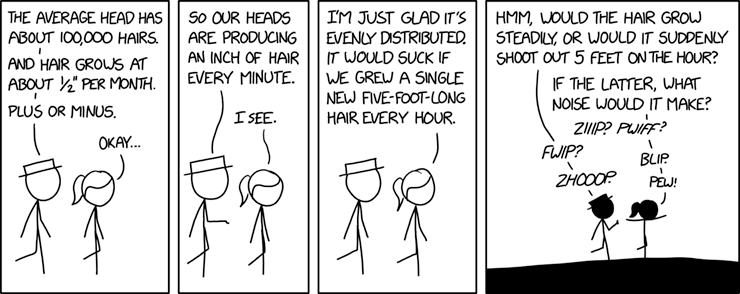
Coronavirus studies by Engin Akyurt via pixabay.com
The study published in both Lancet and New England Journal of Medicine has been retracted because the primary source of the data in the study, Surgisphere, refuses to make the raw data available. It turns out that the aggregated data is implausible for several reasons, not least of which is the large number of patients it covers. Worst of all, the study failed to comply with previous agreements as to data and coding, nor to standard practices in statistics. The following is extracted from a post on the blog RetractionWatch, updated June 4.
From Lancet: “They were unable to complete an independent audit of the data underpinning their analysis. As a result, they have concluded that they “can no longer vouch for the veracity of the primary data sources.” The Lancet takes issues of scientific integrity extremely seriously, and there are many outstanding questions about Surgisphere and the data that were allegedly included in this study.” The problem being, as the retraction notice specifies, that Surgisphere refused to give the authors of the paper access to the raw data so that an independent audit could be performed.
From the retraction notice:
After publication of our Lancet Article, several concerns were raised with respect to the veracity of the data and analyses conducted by Surgisphere Corporation and its founder and our co-author, Sapan Desai, in our publication. We launched an independent thirdparty peer review of Surgisphere with the consent of Sapan Desai to evaluate the origination of the database elements, to confirm the completeness of the database, and to replicate the analyses presented in the paper.
Our independent peer reviewers informed us that Surgisphere would not transfer the full dataset, client contracts, and the full ISO audit report to their servers for analysis as such transfer would violate client agreements and confidentiality requirements. As such, our reviewers were not able to conduct an independent and private peer review and therefore notified us of their withdrawal from the peer-review process.
This does not mean that the raw data is necessarily wrong (or made up out of whole cloth), simply that it could not be independently analyzed. Why would Surgisphere’s data be questioned? Well, according to an open letter to Lancet:
This scrutiny has led to both methodological and data integrity concerns. The main concerns are listed as follows:
1. There was inadequate adjustment for known and measured confounders (disease severity, temporal effects, site effects, dose used).
2. The authors have not adhered to standard practices in the machine learning and statistics community. They have not released their code or data. There is no data/code sharing and availability statement in the paper. The Lancet was among the many signatories on the Wellcome statement on data sharing for COVID-19 studies.
3. There was no ethics review.
4.There was no mention of the countries or hospitals that contributed to the data source and no acknowledgments of their contributions. A request to the authors for information on the contributing centres was denied.
5. Data from Australia are not compatible with government reports (too many cases for just five hospitals, more in-hospital deaths than had occurred in the entire country during the study period).
Surgisphere (the data company) have since stated this was an error of classification of one hospital from Asia. This indicates the need for further error checking throughout the data base.
6. Data from Africa indicate that nearly 25% of all COVID-19 cases and 40% of all deaths in the continent occurred in Surgisphere-associated hospitals which had sophisticated electronic patient data recording, and patient monitoring able to detect and record “nonsustained [at least 6 secs] or sustained ventricular tachycardia or ventricular fibrillation”. Both the numbers of cases and deaths, and the details provided, seem unlikely.
7. Unusually small reported variation in baseline variables, interventions and outcomes between continents (Table S3).
8. Mean daily doses of hydroxychloroquine that are 100 mg higher than FDA recommendations, whereas 66% of the data are from North American hospitals.
9. Implausible ratios of chloroquine to hydroxychloroquine use in some continents.
For example, in Australia 49 received chloroquine and 50 received hydroxychloroquine. However, chloroquine is not readily available in Australia and administration requires authorization from the Therapeutic Goods Administration.
10. The tight 95% confidence intervals reported for the hazard ratios appear inconsistent with the data. For instance, for the Australian data this would imply about double the numbers of recorded deaths as were reported in the paper. The patient data were obtained through electronic health records, supply chain databases, and financial records. The data are held by the US company Surgisphere. In response to a request for the data Professor Mehra replied: “Our data sharing agreements with the various governments, countries and hospitals do not allow us to share data unfortunately.”
In other words, an implausibly large number of patients and opaque record-keeping made the data difficult to swallow. The provenance of the data, Surgisphere, is also in question: an article in Wikipedia summarizes the skepticism that such a tiny company could have access to such a large database of patient records. In conclusion, while the results of the study are entirely possibly correct, the data is extremely suspect for several reasons. The subsequent publication of a paper which found no benefit for prophylactic use of hydroxychloroquine against SARS-COV-2 infection makes the conclusions of this paper more likely, but does not help us reach these conclusions with much confidence.
This is depressingly open-ended. So far, we have not had any reliable studies showing any benefit from hydroxychloroquine. This study, retracted, leaves us up in the air as to any possible benefits. It also damages our confidence in the ability of these two widely respected journals to avoid publishing bad science.
The World is Burning

picture by Open Clip Art Vectors courtesy of pixabay.com
Many people are under tremendous stress at this time. Cases of anxiety, depression, and despair have proliferated as people are forced to the wall by being impoverished, isolated, and killed by an invisible pathogenic virus and its economic side effects. The economy, especially that of the US and South America, has been ravaged. A lack of a safety net for Americans (both North and South) has resulted in a sudden increase in unemployment that strikes already marginal people the most severely. Many people are afraid to go out in public, especially in areas where the virus has struck the hardest. There has been a failure in guidance from the previously most trusted institutions like the CDC and WHO.
On top of this pandemic and its stress upon the American economy (in particular), there has been another death of a black man in police custody. This time, the death was recorded on a video that was circulated throughout the world. The video evoked shock and horror in all who saw it. It has provoked protests all over the world.
While the police were distracted by the protests, opportunists saw their chance and began looting and burning. Those who engaged in looting were motivated not by the death of another black man, but by their prejudices that informed an urge to break and damage society while the police were looking elsewhere.
News media has noticed (but not emphasized) the fact that the looters were able to get away with their activities because the police were massed against the demonstrators. The protestors are being blamed for the inefficiencies of the police– when it is the police who should be blamed for allowing their attention to be distracted from their main purpose. They should have been protecting shuttered businesses instead of intimidating peaceful demonstrators.
Some businesses had to hire their own security guards, while in poor communities, volunteers came down to protect businesses owned by their friends and neighbors. While people had to protect their own businesses, Washington DC was blanketed by anonymous government agents from the Bureau of Prisons acting as police.
The president’s response to peaceful demonstrators on Monday was to violently crack down on the people for a political video he will use in an attempt to be re-elected. He was well-served yesterday by the voice of his former chief of staff, a retired Marine general. General Mattis finally came out and spoke against this monster, telling everyone what he really thinks of his president.
While our attention is on this spectacle and the damage to our country, South America is being beaten to the mat by the virus. Life in the Southern Continent was already marginal, with grinding poverty the rule in every country and democratic governance losing ground to tyranny. Cases of COVID-19 are now proliferating and the entire livelihood of poor people in South America is being destroyed. If you think we are having problems, you should read the news coming out of Brazil and other South American countries.
Today, the supreme irony of George Floyd’s death was revealed. At the time he was killed, he was recovering from COVID-19– no longer infectious, but with the virus still present in his body. He will, at the end, be counted as another victim of the virus. He survived infection, only to be murdered by a policeman. The reaction to his death will bring down a president, and I can think of no-one who more deserved to be taken down. I hope that George Floyd’s death will not be in vain.
(I’m not giving any references in this post, but if you look at the news you will see it’s all there.)
Coronavirus studies by Engin Akyurt via pixabay.com
I found this commentary, published in the “AIDS and Human Retroviruses” journal as a preprint on May 22. It explains the general history of Judy Mikovits’ discredited research and how it came to be found fraudulent. It is complex and difficult to follow unless you are a biologist who studies this field. Nonetheless, I found it to be fascinating and worthy of quoting– as follows:
So, all in all Mikovits has form [sic] as a serial scientific fantasist who has consistently made unsubstantiated claims about mouse retroviruses as the cause of a number of human diseases. The only “evidence” ever published by her was unequivocally shown to stem from laboratory contamination and explicit fabrication of data.
Her reappearance now as an apparently maligned “scientific leader” challenging the orthodoxy on vaccines and COVID-19 would be a source of eye-rolling were she not being taken seriously by countless Internet warriors posting and reposting the trailer for Plandemic. Her claims have been picked up by right-wing commentators in the United States desperate to show that the lockdown measures taken against COVID-19 are a pernicious over-reaction designed to damage President Trump, whose inconsistent handling of the crisis has garnered a huge amount of criticism. In doing so, she is playing with fire in the heightened atmosphere of our “fake news” era. It is incumbent on scientists to call this out for what it is: fabricated nonsense. There is no legitimate debate to be had on these issues, and any credence given to these dangerous conspiracies will lead to even greater suffering resulting from COVID-19. Steer well clear of Plandemic and the claims of Judy Mikovits.
Sadly, this pandemic has been the ground for a huge resurgence of conspiracy theories of all types. Mikovits’ theories are only the tip of the iceberg, so to speak. There are many and various conspiracies alleged, most of them obviously bogus. Be on the lookout for rumors and conspiracy theories. Be highly skeptical and don’t believe anything you can’t prove.
Coronavirus studies by Engin Akyurt via pixabay.com
A study published in the New England Journal of Medicine (NEJM) on June 3 reports that prophylactive (preventitive) treatment with hydroxychloroquine (HCQ) does not work. The study was randomized, double-blinded (neither treating physician nor patient knew which treatment was used) and placebo-controlled (active drug and placebo were given to separate groups.) This represents the “gold standard” for this type of treatment, which is why the paper was accepted for publication by the NEJM– which is the “gold standard” journal for medical studies.
There is little to say, other than to quote the article itself:
We enrolled adults who had household or occupational exposure to someone with confirmed Covid-19 at a distance of less than 6 ft for more than 10 minutes while wearing neither a face mask nor an eye shield (high-risk exposure) or while wearing a face mask but no eye shield (moderate-risk exposure). Within 4 days after exposure, we randomly assigned participants to receive either placebo or hydroxychloroquine (800 mg once, followed by 600 mg in 6 to 8 hours, then 600 mg daily for 4 additional days). The primary outcome was the incidence of either laboratory-confirmed Covid-19 or illness compatible with Covid-19 within 14 days.
RESULTS
We enrolled 821 asymptomatic participants. Overall, 87.6% of the participants (719 of 821) reported a high-risk exposure to a confirmed Covid-19 contact. The incidence of new illness compatible with Covid-19 did not differ significantly between participants receiving hydroxychloroquine (49 of 414 [11.8%]) and those receiving placebo (58 of 407 [14.3%]); the absolute difference was −2.4 percentage points (95% confidence interval, −7.0 to 2.2; P=0.35). Side effects were more common with hydroxychloroquine than with placebo (40.1% vs. 16.8%), but no serious adverse reactions were reported.
CONCLUSIONS
After high-risk or moderate-risk exposure to Covid-19, hydroxychloroquine did not prevent illness compatible with Covid-19 or confirmed infection when used as postexposure prophylaxis within 4 days after exposure.
The study was definitely large enough, and the results definitely showed no significant difference between groups. The rest of the paper is a disquisition on the virus itself and the way the study was done. We can conclude that 1) there is no evidence that HCQ is beneficial at preventing COVID-19 when given after exposure and 2) He-who-must-not-be-named will either ignore this study or call it “fake news.”
picture by Open Clip Art Vectors courtesy of pixabay.com
The US and the world have seen huge protests since the death of George Floyd at the hands of police in Minneapolis on May 25. Over 100 cities in the US have been convulsed by daily protest and nightly rioting. Destruction of property, burning of vehicles, and looting has occurred in parallel with the peaceful protests. Several people have been shot; in one case, a business owner was shot by police. Policemen have suffered injuries, and one was run over by a car (he suffered a broken pelvis.) Two security agents were shot in Oakland (one was killed) in a drive-by incident.
Police and National Guardsmen have reacted to protests with brutality in numerous cases. They have shot protesters with pepper balls, rubber bullets, tear gas, and a variety of chemical agents– even peaceful (but loud) protesters have been attacked. Protesters have seen for themselves that police are as brutal as they have been portrayed in the news media. Many protesters have called for defunding the police forces.
Some police have responded with sympathy to protesters. In these cases, the protests have been entirely peaceful in response. Too many policemen have retreated behind shields and body armor. Too many journalists have been attacked without reason. There is no excuse for brutal reactions to peaceful protest. There is no excuse for police ignoring looters to concentrate on corralling protesters.
The president has blamed “antifa” for the protests and property destruction, but the FBI has said they have not seen the involvement of known antifa members. Instead, right wing extremists have appeared, some carrying assault rifles, and have attacked protesters. One case was reported in which protesters were attacked by a mob wielding baseball bats. The right wing has reacted to protests with their own form of violence and incitement, in some cases even pretending to be “antifa”. This has not been noticed by the president, who would be egging them on if he knew.
What is not yet known is how many protesters have been infected by SARS-COV-2. A spike in cases of COVID-19 over the next weeks could be caused by the huge gatherings of protesters, or it could easily be due to a lack of precautions taken by many people who are now going out in public, eating at restaurants, partying at the beach, or going to bars. We will not know for a couple of weeks how many new cases will be seen.
The protesters have come out in spite of the risks, and they are saying that they are fully aware of the dangers. In contrast, people who are going to bars and restaurants are minimizing the risks. We will not know, unless we ask, who is taking the bigger risk. Minority groups, especially African- and Caribbean-Americans, are being crushed between two deadly forces: the pandemic on one hand, and racism on the other. They are out in the street, protesting, because they feel they have nothing left to lose. What do those who think the pandemic is over have to lose, and why do they think the danger is over?
Police and the Commander in Chief have reacted to people exercising their First Amendment rights with brutality and calls for military intervention– even shooting. The US is deeply destabilized. By all rights, the elections in November should result in rejection of the current administration’s bid to continue their hegemony. Americans have reason to fear that their government will not respond to democratic votes and voices, but rather react with fascism and authoritarian control. Only time will tell.

Air Force Star courtesy of pixabay.com
The Centers for Disease Control reported on June 2 in the MMWR a successful attempt to limit the spread of COVID-19 among trainees in the Air Force. In an unusual setting, authorities were able to limit the number of symptomatic cases of COVID-19 to five out of 10579 trainees admitted to the training center at Joint Base San Antonio-Lackland in April and May. All trainees were quarantined for two weeks; only symptomatic trainees were tested. Of the five who were positive for SARS-COV-2, three were contacts of the first case.
The regimented nature of the Air Force base made it possible to enforce six foot physical distancing, the wearing of face masks, and quarantining of all new trainees as well as isolation of patients with symptoms. As described in MMWR, “During that period, 345 (3%) trainees met criteria for testing and further investigation. Among these, 86 (25%) were tested during arrival quarantine, and five (1%) tested PCR-positive for SARS-CoV-2. Testing also identified five cases of rhinovirus or enterovirus, three cases of parainfluenza, two cases of metapneumovirus, and two cases of influenza B.”
Naturally, asymptomatic cases of COVID-19 were not evaluated. However, by quarantining all new arrivals, it was possible to eliminate transmission even among those who had been asymptomatic– since anyone who arrived with the virus would not have been able to pass it on after two weeks in quarantine.
This unusual case demonstrates that it is possible to control transmission of this virus with strict isolation methods. The precautions were taken in part because of prior epidemics of several viruses, including during the 1918 influenza pandemic. In 1918, basic training camps were overwhelmed by numerous cases of influenza and many deaths. The lessons learned from that pandemic and later epidemics, particularly associated with adenovirus, helped to inform authorities that strict isolation methods were needed.
Success in this setting should not be considered remarkable– failure would have been inexcusable.
Coronavirus studies by Engin Akyurt via pixabay.com
Two papers published in Science Magazine on May 29 and June 1 describe endemic bat coronaviruses and how they mutated into SARS-COV-2. The first paper, published May 29, discusses “Emergence of SARS-CoV-2 through recombination and strong purifying selection”– that is, how the novel coronavirus was evolved through combining parts of other viruses that were both present in the circulation of a non-human host. Then, selection of the “receptor binding motif” (RBM) occurred, winnowing down mutations of the virus into a form that readily invaded cells by a particularly efficient protein on the virus’ spike.
The second paper, published June 1, tells of the wide variety of coronaviruses that were collected from a particular species of bat– the Chinese horseshoe bat– during field studies. Unfortunately, this research was stopped when the grant for the research was cut off by the US government. “In a preprint posted yesterday on bioRxiv, the researchers examine partial genetic sequences of 781 coronaviruses found in bats in China, more than one-third of which have never been published.” The preprint is titled, “Origin and cross-species transmission of bat coronaviruses in China” and details sequence data from all known bat coronaviruses, with a phylogenetic analysis showing the origin of SARS-COV-2.
The study, which collected numerous previously unknown varieties of potentially epidemic zoonotic viruses (those that spread from another species to humans), was stopped prematurely because the administration decided to cut off its funding before it could be completed.
From the paper published June 1:
One “pretty big limitation” of EcoHealth-led study, Gao notes, is that the researchers cataloged the bat viruses by a tiny part of their genetic material. The entire genome of bat coronaviruses consists of about 30,000 RNA bases, but obtaining full sequences is often difficult and expensive. So instead the research team sequenced just 440 bases from the gene that codes for a key viral enzyme, the RNA-dependent RNA polymerase. Gao says getting full viral sequences would have provided much more biological information on the different viruses found.
Daszak says that was going to be the next step but then NIH cut the grant. “We were planning to get full genome sequences from these samples and find out which [viruses] are likely able to bind to human cell surface receptors,” he says. “We won’t be able to do that work without the funding, unfortunately.” And even the hundreds of viruses included in the current paper are only a fraction of what remains to be discovered, Daszak says. “We are looking at maybe 10,000 to 15,000 bat coronaviruses that are out there.”
There is plenty of evidence that some of these viruses are spilling over to humans all the time in southern China, Daszak says. In an earlier paper, Daszak and co-workers found SARS-related antibodies to coronaviruses in about 3% of people they sampled in China living near bat caves, suggesting they had been infected by some of these viruses. He argues that the world needs to change its approach and go from reacting to pandemics to trying to identify dangerous coronaviruses before they emerge. Many more viruses that are closely related to SARS-CoV-2 are just waiting to be discovered in wildlife, Daszak says. “But, of course, if history repeats itself, by the time we’ve found all the rest of the SARS-2 clade, something else will be emerging.”
This is the pernicious effect of cutting off funding for highly productive research just because it involves cooperation with Chinese scientists. This short-sighted decision will render us less able to foresee the next pandemic’s inevitable appearance.
 Conrad Theodore Seitz