
photo by belajati raihan fahrizi courtesy of pixabay.com
Before the pandemic, nursing homes would discharge patients without their consent on a regular basis. Since the pandemic began, the involuntary discharge problem has become a crisis. Nursing homes can take patients who have been discharged from the hospital after a severe bout of COVID-19 and promise to rehabilitate them, getting paid extra Medicare dollars for their care. Usually Medicaid pays for long term patients, but Medicare pays much more for short term nursing home stays.
From a New York Times article of June 21, 2020:
They [nursing homes] are kicking out old and disabled residents — among the people most susceptible to the coronavirus — and shunting them into homeless shelters, rundown motels and other unsafe facilities, according to 22 watchdogs in 16 states, as well as dozens of elder-care lawyers, social workers and former nursing home executives.
Many of the evictions, known as involuntary discharges, appear to violate federal rules that require nursing homes to place residents in safe locations and to provide them with at least 30 days’ notice before forcing them to leave.
While the popular conception of nursing homes is of places where elderly people live, much of their business is caring for patients of all ages and income levels who are recovering from surgery or acute illnesses like strokes. Medicare often pays for short-term rehabilitation stints; Medicaid covers longer-term stays for poor people.
Nursing homes have long had a financial incentive to evict Medicaid patients in favor of those who pay through private insurance or Medicare, which reimburses nursing homes at a much higher rate than Medicaid. More than 10,000 residents and their families complained to watchdogs about being discharged in 2018, the most recent year for which data are available.
The pandemic has intensified the situation.
…
Last fall, the Centers for Medicare and Medicaid changed the formula for reimbursing nursing homes, making it more profitable to take in sicker patients for a short period of time. Covid-19 patients can bring in at least $600 more a day in Medicare dollars than people with relatively mild health issues, according to nursing home executives and state officials.
From a website by people’s law, frequently asked questions regarding “involuntary discharges”
Can a nursing home transfer or discharge me?
Nursing homes can only discharge or transfer residents for very limited reasons. If you do not agree to leave, it is called an involuntary transfer or discharge. Federal and state laws have strict rules about involuntary transfers and discharges. In most cases, there are only five reasons a nursing home can involuntarily transfer or discharge you:
- A transfer or discharge is necessary for your welfare and your needs cannot be met by the nursing home. Your doctor must write in your medical chart why the discharge or transfer is necessary.
- The transfer or discharge is appropriate because your health has improved sufficiently so that you no longer need the services provided by the facility. Your doctor must write in your medical chart why the discharge or transfer is appropriate.
- You are endangering the health or safety of an individual in the nursing home. A doctor must write in your medical chart why the discharge or transfer is necessary.
- You have failed to pay or have others pay the nursing home for your stay. The facility must have given you reasonable and appropriate notice of the amount you owe.
- The facility has stopped operating or, if you are a Medicare or Medicaid recipient, the facility has been decertified or withdrawn from the program.
Do I receive advance notice of a discharge or transfer?
The nursing home must give you a written notice at least 30 days before the proposed transfer or discharge date. A continuing care retirement community must provide 60 days notice. The notice must also be sent to the local Long Term Care Ombudsman, the Department of Health, and any of your relatives who have acted as your representative.
…
Hospital “Dumping”
One tactic that facilities use to achieve an involuntary discharge in a roundabout way is “dumping.” This occurs when a nursing home transfers a patient to a hospital and then refuses to readmit them. In some states, there is a policy in place that requires a facility to hold the resident’s bed for a certain number of days while they are hospitalized. Medicaid will pay for all or part of this bed-hold period, depending on the state, but if a resident is paying privately, they may be responsible for these fees. Regardless of the strategy used to discharge a resident, the facility must still provide a comprehensive care plan for the patient and ensure that they have a safe place to go.
From an NBC news article posted November 19, 2019:
Nationally, long-term care ombudsmen, who advocate for elderly and disabled residents of nursing homes and assisted living facilities, received 10,610 complaints about discharges and transfers in 2017, up from 9,192 in 2015. The ombudsmen, whose work is federally mandated and state-funded, receive more complaints about discharges and transfers than any other grievance.
…
Advocates, experts and the federal government say that nursing homes tend to evict low-income, longer-term residents who receive Medicaid, to make room for shorter-term rehabilitation patients who are covered by Medicare. Medicare reimburses nursing homes at a higher rate than Medicaid, so it’s more lucrative for facilities to house Medicare patients who stay for short stints before recovering and moving elsewhere.
My conclusions: The result of the pandemic has been this: weak, debilitated patients who have barely survived a run-in with COVID-19 are a lucrative business for nursing homes. They respond by kicking out vulnerable long-term elderly or disabled patients to make room for better paying post-COVID recovery patients. The vulnerable patients are easy prey for the virus. The end result is that nearly half of the deaths due to COVID-19 have occurred in nursing homes and another large percentage are elderly, vulnerable people who are not yet in homes– if they survive, they will be sent there to be rehabilitated.
picture courtesy of pixabay.com
Reference this opinion piece by Simon Hattenstone in the Guardian on June 21.
The one thing I hate the most, especially from politicians, is lies. Simon Hattenstone gives a list of Boris Johnson’s most famous lies during his long career and uses the terms “pseudologia fantastica” and “mythomania” to describe his obsession. Compared with [redacted], Boris is something of an amateur. [redacted] lies almost every time he opens his mouth. He even induces people to lie for him: witness Attorney General William Barr.
Friday night, late, Barr announced that Southern District of New York (SDNY) Attorney General Berman had “stepped down” when it wasn’t so, according to Berman. In fact, Barr had held a discussion with Berman in which he offered him another position in the Administration. According to Berman, he had declined the offer and the discussion ended without a conclusion. Barr seems to have jumped the gun and issued a press release saying Berman had resigned. On Saturday, Berman finally agreed to resign after he was told Berman’s deputy Audrey Strauss would take his place instead of an outsider, New Jersey Attorney General Craig Carpenito– the person Barr had wanted to replace Berman.
It seems that, in having [redacted] fire Berman instead of his voluntarily resigning, the post automatically devolved on Strauss instead of Barr being able to hand-pick his successor. This is a defeat for Barr and [redacted]– it appears that it was intended that Carpenito would torpedo the investigations Berman is directing against [redacted] and his cronies.
There are several consequential investigations going on at the SDNY, including one that names [redacted] as “Individual 1” in an inquiry into an illegal “campaign contribution” that actually went to pay off one of [redacted]’s mistresses for her silence during the 2016 presidential campaign. This inquiry includes a subpoena for the president’s financial records from Deutsche Bank which is presently in front of the Supreme Court. We should hear a decision from the high court this summer as to whether that subpoena can go forward.
In fighting the subpoena, the Justice Department absurdly claimed that SDNY could not even investigate a sitting president, much less indict him for criminality. This is not exactly a lie, but it certainly stretches credulity to claim that the law or the Constitution prevents a state attorney general from investigating criminal conduct committed by the president of the United States. Whatever happened to “equality before the law” and “no-one is above the law”? Defending a liar generally requires the defender to add to the lies.
See also this opinion piece by Jennifer Rubin in the Washington Post on June 20: “A Friday night massacre that backfired.”

Gandhara Buddha circa 1900 years ago, courtesy of wikimedia commons
The dates of Siddhartha Gautama Buddha’s life were thought to be c. 563 BCE to 483 BCE (Before the Common Era, or Before Christ), but more recently, a later date has been estimated. Dates of 480 to 400 BCE have been given based on archaeological evidence, but these are certainly not universally accepted. A shrine described in 2013 in a National Geographic article was dated to around 550 BCE at Lumbini, Nepal at the traditional site of the Buddha’s birth. The original shrine consisted of a wooden structure found beneath the modern brick buildings. Nepalese authorities even dated the Buddha’s birth to 623 BCE.
The shrine may have been related to pre-Buddhist worship, however. Traditions of tree worship go back to perhaps 1000 BCE, when the site may have been first cultivated. The Buddha’s mother was said to have grasped a tree at the moment of his birth, providing continuity with previous tree veneration. The Buddha was born into the Shakya tribe, which was “non-Vedic” or “non-Aryan” (not part of the tradition that includes a large body of religious texts including the Rig Veda– origins of Hinduism.) The Shakyas included among their traditions the idea of tree-worship.
There are two important schools of thought that were prevalent at the time of the Buddha: that represented by the Vedic scriptures or Brahmanism and that of the “sramanas”, or those who toiled in the quest for enlightenment. Two sramanas are identified as teachers of the Buddha: Udraka Rāmaputra (“son of Rama”) and Ārāḍa Kālāpa — both names are given in the Sanskrit version here. The first teacher, Arada Kalapa, taught “dhyana”, which is, according to Wikipedia, meant to “withdraw the mind from the automatic responses to sense-impressions, and leading to a ‘state of perfect equanimity and awareness'” or also to attain “‘concentration,’ a state of one-pointed absorption in which there is a diminished awareness of the surroundings.”
The second teacher, Udraka Ramaputra, taught another form of meditation that is known as the “immaterial attainments” or “formless realm.” There is no adequate information in Wikipedia as to these teachings. It does state that the Buddha was recognized by Udraka Ramaputra as having “already attained” the “sphere of neither perception nor non-perception” so it is unclear to me what he taught the Buddha. From Buddhanet.net: “He found that Uddaka could not teach him how to stop suffering, old age and death either, and he had never heard of anyone who could solve these problems.”
A fuller biography of “Shakyamuni Buddha” (“sage of the Shakyas”) is available here. An excerpt describing the ascetic practices and the Buddha’s study under the two teachers is here. The excerpt tells how the Buddha starved himself nearly to death and was revived after he was given a bowl of rice cooked in milk. The five ascetics who accompanied him were apparently turned off by his revival and the fact that he had given up the practice of asceticism.
It is at this point that the Buddha realized, apparently, that he could not learn the secret of life (or how to stop suffering) through ascetic practices and turned to the “middle way.” He is said to have sat meditating until he remembered an experience that he had as a child– a spontaneous enlightenment. He decided then that meditation or “dhyana” was the path to enlightenment.
I am struck by the legendary nature of all the stories about the life of Buddha. There are similar legends surrounding the life of Moses and Jesus. It is difficult to separate the legendary from the real, and I profess considerable skepticism about the details of all the life stories. The existence of actual people behind these legends is probable but not always certain.
Buddhism draws on pre-Buddhist thought in several respects. The idea of karma, that is, that actions have remote consequences, was already established. The theme of rebirth, or being born again, repeatedly, into another body, was also well understood. Jainism, which apparently predates Buddhism, taught that we are trapped in a cycle of rebirth and that we should try to get out of it through practicing non-harm and achieving enlightenment through meditation and self-denial. Asceticism was a practice of the Jains.
Buddhism rejects total asceticism and emphasizes ethical behavior, the practice of loving-kindness or compassion, and treating all living beings as well as humans. There are no gods central to Buddhism, although there are many peripheral god-like beings.
Buddhism rejects many Brahmanical doctrines, first, the idea that the Vedas were divinely inspired texts. The Buddha also criticised ritual bathing, animal sacrifice, and the secret mantras (which is ironic given the later development of Vajrayana– see below.) He held that all his teachings had to be presented openly to everyone. He also rejected divination, fortune-telling, astrology, and the idea that people were born to be superior or inferior (the caste system as it is now known.) The Buddha held that a person is superior only to the extent that he or she behaves in an appropriate fashion.
There are now several varieties of Buddhism, which developed in the centuries after the Buddha’s death. Theravada Buddhism is the oldest and most conservative form. Mahayana or “Great Vehicle” Buddhism is a later form and one of the two main forms now recognized. In Mahayana Buddhism, it is said that “enlightenment can be attained in a single lifetime” even by a layperson.
Vajrayana Buddhism is a variant which is currently practiced by a small number of adherents, particularly in Tibet; it is also called esoteric Buddhism. “Vajra” is a mythical weapon that is used as a ritual object. It involves esoteric transmission– that is, directly from teacher to student in a secret ritual.
Tantric rites are included, which are secret rituals associated with taboos. The Vajrayana Buddhist uses mantras (sacred utterances or words), chants, symbolic gestures or poses, mandalas (geometric figures used to concentrate the mind), and visualizations. This form of Buddhism is highly complex and full of symbolism understood only by the adept.
The variants of Buddhism after Theravada are “Great Vehicle”, “Lesser Vehicle”, and “Diamond (or Thunderbolt) Vehicle”– Mahayana, Hinayana, and Vajrayana respectively.

Electron micrograph of SARS-COV-2 virions in vitro
A graph of the daily new case counts for the US versus counts for Europe (Washington Post June 19, free) shows a peak in early to mid-April, with Europe about a week before the US. Since then, the new case counts have rapidly dropped in Europe, from 30,000 a day to about 4,000 a day. In the US, new cases dropped somewhat, from a peak of near 30,000 to roughly 20,000 a day. New cases have been increasing during the last two weeks. The lowest seven-day average was around June 11, but new cases have been on the rise since. Yesterday, June 19, there were 31,630 new cases reported– the first time over 30,000 since May 1, when 33,263 were recorded.
Whatever the reason, cases in Europe have dropped dramatically since the peak in early April. Cases in the US dropped somewhat, but have remained high. As the Northeast (especially New York) saw relief from their peaks, other regions have seen increases. Some areas, particularly Florida, California, Arizona, and the Southeast, have seen dramatic increases. The Washington Post has an article devoted to graphics (free) of tests, cases, and deaths broken down by state.
Why are cases increasing in the US? It is not due to an increase in testing– daily tests for the US have remained about 500,000 for several weeks. Experts say the lack of precautions is a primary driver. People are not wearing masks and not distancing themselves from one another. They are mingling in sites like bars without masks. Places like Oklahoma have seen more than double the average in cases over the last two weeks, with record highs in the last few days.
There is great danger that the outbreaks in these areas will become out of control. In California, masks were made mandatory a few days ago. Other states, especially those with Republican governors, have not responded well. There has been a lot of political talk. Even the president claims that some people are wearing masks as a sign that “they don’t like me.”
Contact tracing has fallen far behind the number of new cases. Not enough contact tracers have been hired. Cooperation with tracers has been poor. This article in the Washington Post from June 20 (free) discusses the varied state efforts to hire contact tracers– without sufficient money to pay them. Only New York State has been up to speed.
This lack of precautions and failure of contact tracing will lead to uncontrolled outbreaks of COVID-19 in rural areas and red states. The failure of control will manifest more fully this fall. A second wave will start before the first wave has subsided. We are looking at a serious problem this fall and winter.

picture by Open Clip Art Vectors courtesy of pixabay.com
A report in WIRED on June 18 revealed that there was a low incidence of positive COVID-19 tests in people who were voluntarily tested after the protests in Minneapolis. After May 25, there were large-scale protests against police brutality due to the killing of George Floyd. The first night of protests, there was arson, vandalism, and looting, especially in the area around the site of Floyd’s death. After that, there were peaceful all-day marches and demonstrations all over the city. Responding to the protests, free testing sites were set up and over ten thousand people had COVID-19 tests. From the WIRED article:
Of the 3,200 people tested so far at the four popup sites across the metro, 1.8 percent have tested positive for Covid-19, says Ehresmann. HealthPartners, one of the largest health care providers in Minnesota, also reported to the state that it had tested about 8,500 people who indicated that attendance at a mass gathering was the reason they wanted a test. Among them, 0.99 percent tested positive.
These positive rates are low and reflective of a background level of infections rather than transmission during the protests. This low rate may be due to the fact that most of the protests took place during the day and all were outdoors. Most of the protestors wore masks. These findings alleviate the concerns expressed by a number of experts that the protests might be a cause of increased infections. While it is too soon to be certain, Minnesota has not shown an increase in new cases as a result of the protests.
The article goes on to report a low incidence of positive tests in Seattle and Boston. In addition, total rates of new cases in the state of Minnesota have been going down in the last two weeks. The article mentions the protective effects of mask-wearing and the politicization of same. Finally, it discusses the potential effects of the rally in Tulsa– if masks are insufficiently protective in an indoor setting, then the rally could cause an increase in new cases.
The effect of the protests on new cases was also mentioned in an article in Medpage Today for June 18.

picture by mohamed hassan courtesy of pixabay.com
This from an article summary in JAMA Network on June 18:
This survey study of 204 patients with coronavirus disease 2019 found that taste reduction was present in 55.4% of patients, whereas smell reduction was present in 41.7% of patients. Severe nasal obstruction was uncommon at the onset of the disease (7.8%).
The subjects were Italian patients with COVID-19 diagnosed from March 5 to March 23 and who were contacted by telephone afterwards. They had an early onset of loss of smell and taste (taste is mostly dependent on sense of smell, but is more noticeable), usually before they were diagnosed with the disease and before symptoms of fever, cough, and shortness of breath occurred. They also had a low incidence of nasal obstruction, which obviously would impair sense of smell. The significance of this finding is that the virus appears to invade the nose and specifically nasal nerves early in the course of disease. This symptom should be looked at early when asking whether a patient has COVID-19.
It has become more apparent that, in severe cases, the virus will also invade the brain and cause encephalitis– which may be overlooked in cases where the patient is so ill that they are placed on a ventilator. The neurological symptoms may be masked by drugs used to sedate the patient in order to facilitate ventilation. The symptoms that at-home patients relate– night-time hallucinations and nightmares– may also be related to neurological involvement.
picture by Open Clip Art Vectors courtesy of pixabay.com
On the eve of the latest campaign rally by He-who-must-not-be-named, Oklahoma has seen a record increase in coronavirus cases. The Washington Post has daily new case counts broken down by state, and the Oklahoma graph shows an alarming increase over the last three weeks. On June 18, 450 new cases were reported, whereas on May 30, only 80 were reported. The graph is here, under Oklahoma. Scroll down and select “Oklahoma” on the state-by-state breakdown.
These reports should be alarming to anyone who plans to attend this rally. If you intend to be in the arena (assuming you have gotten a ticket, given that hundreds of thousands have applied) you are likely to be exposed to the virus. If 20,000 people (the hall’s capacity) are exposed and all of them are infected, then given a case-fatality rate of 1%, 200 will die– a worst-case scenario but not impossible. If you are planning on being outside to protest, your risks are much more immediate: the president has tweeted a threat to protestors that they will be roughly treated.
Anthony Fauci, head of the National Institutes of Allergy and Infectious Disease (NIAID), is 79 years old and does not plan to be there. Rally organizers are planning to hand out face masks and hand sanitizer, but given the political leanings of attendees, it is unlikely that anyone there will wear a face mask.
This morning we heard that Tulsa has announced a curfew for the next two days between ten PM and six AM. No word on whether those who have gathered early to await seating at the rally will be affected…
photo by Wynn Pointaux courtesy of pixabay.com
It’s fun to see {redacted] flailing around impotently, drowning in a storm-tossed sea of his own excrement. Also fun to see Bolton tossing him a concrete life preserver. And soon to follow, Mary {redacted]’s new tell-all about her family’s shame. Bring on the summer reading season!
…
{redacted] is pushing limits with the end goal of abolishing the First Amendment. He as dictator will get to decide what appears in print, & what doesn’t. Likely this will end up in the Supreme Court, but at that point, massive books sales will have already happened. And the press needs to stop with this nonsense: “The idea that this whole book is being held up after an extensive process feels like an abuse of power…” It IS an abuse of power. It doesn’t “feel” like one. The other problem for {redacted]is that, unlike his family corporation, where NDA’s are legal, Bolton, as a federal employee, has no legality to respect any NDA’s he signed as National Security Advisor. That NDA is null & void & no court will uphold it’s restrictions.
…
There are no heroes in this conflict. Bolton, had he put patriotism above self-enrichment, would have testified in the House or Senate impeachment proceedings. It is implausible that he would have been denied the “necessary” subpoena had he communicated his intentions to the House Dems.
I want to see what’s in Bolton’s book because our democracy deserves to pierce the veil that {redacted]’s enablers have used to try to shield his incompetence from the American Public. But for {redacted]’s daily Twitter rants and repeated lies he might get away with the portrait painted of him in his various propaganda pieces. Heck, somehow 40 percent of Americans approve of this idiot.
But, as for Bolton’s book sales . . . I ain’t buying it.
…
The DOJ suing to enforce a personal {redacted] NDA is simply {redacted]using the DOJ as his personal enforcers. Remember to thank your republican senators appropriately for protecting this great leader the next time they are up for election.
…
“asking a federal judge to order former White House national security adviser John Bolton to stop the release of his book”
Not much to this. Bolton isn’t the publisher, he isn’t releasing the book.
DOJ is suing to “ask” a judge…? Weak tea.
DOJ isn’t suing the publisher, ( because it knows to never argue with someone who buys ink by the barrel)
By the time this is sorted out {redacted] will be in jail for tax and wire fraud and Barr will be “of counsel” somewhere in a galaxy far away.
::: Pity the far away galaxy.
…
It is a felony to classify, or over classify, things not subject to classification in order to conceal illegal activity.
That is not true. Mad King Donald would need to modify Executive Order 13526 to allow him to classify any information that can make The Donald look bad.
Sec. 1.7. Classification Prohibitions and Limitations.
(a) In no case shall information be classified, continue to be maintained as classified, or fail to be declassified in order to:
(1) conceal violations of law, inefficiency, or administrative error;
(2) prevent embarrassment to a person, organization, or agency;
(3) restrain competition; or
(4) prevent or delay the release of information that does not require protection in the interest of the national security.
…
OT little side trip
{redacted] International Golf Club, which leases public land in West Palm Beach, Florida, is requesting rent relief from Palm Beach County after COVID-19 forced President Donald {redacted]’s resort to temporarily close.
Ed Raymundo, the director of finance at the resort, sent a letter to the county’s real estate director Ross Hering on June 5 claiming that the mandated closure of the golf club, which pays the county $88,338 per month, in March caused a “significant impact” on the resort’s operations.
–from WaPo opinion piece on John Bolton’s new book, due out June 23 and already in the hands of bookstores and reviewers (and Mary {redacted]s book, due in August)

photo of a great-grandson by Mary Molina, copyright reserved
The Washington Post on June 17 published an article titled, “COVID Baby Bust Could Lead to Half a Million Fewer Births Next Year” based on observations from the Great Recession of 2007-10 and the influenza pandemic of 1918-19. During the recession, increased unemployment was associated with a decreased birth rate on a state-by-state basis.
There was a nine percent drop in birthrate overall, or 400,000 fewer births. In the influenza pandemic, there were dramatic drops in conception rates during each of three waves of deaths from influenza and pneumonia. Later rates of conception did not rise to make up for the falls.
The article in the Post is based on a piece from the Brookings Institute on June 15, which published this table:

Kearney and Levine, Brookings Institute
This shows the sudden and short-lived drops in conception rates during the waves of influenza that swept the United States (and the world.) The first wave showed a dramatic drop in conception despite only a small increase in death rates. The conception rates did not increase afterwards but returned to the average level.
The Brookings Institute article also mentions a myth that conception rates increase during blizzards and blackouts– as well as a popular claim that conception rates would increase during the lockdown period in March and April. This myth is just that– there is no statistical evidence that this happens. For individual families, increases in income result in more children; however, higher income levels across generations result in fewer children per family.
Increased social stability and wealth lead to lower birth rates in the following generations, smaller families, and a halt to population growth. This has been apparent all over the world since 1970, preventing the population disaster that was expected at the time. Total world population is expected to level off at perhaps ten billion people in the next few decades, barring a worldwide pandemic that kills at a really significant rate.
Within families in a single generation, decisions about having children are related to available income, and losses of income result in fewer conceptions– temporarily. Delayed conception, for a woman, is eventually permanent because fertility declines inexorably with age.
Famines, earthquakes, heatwaves, and disease outbreaks, all events that increase death rates, also cause reduced rates of conception– followed by fewer births nine months later. There were 3.8 million births in the US in 2019. The Brookings Institute article concludes with an estimate of 300,000 to 500,000 fewer births in 2020– unless the labor market continues to be weak in 2020, in which case the decline will be worse. With the restrictions on immigration recently, it is to be expected that total US population will decline even if total US death rates do not significantly increase.
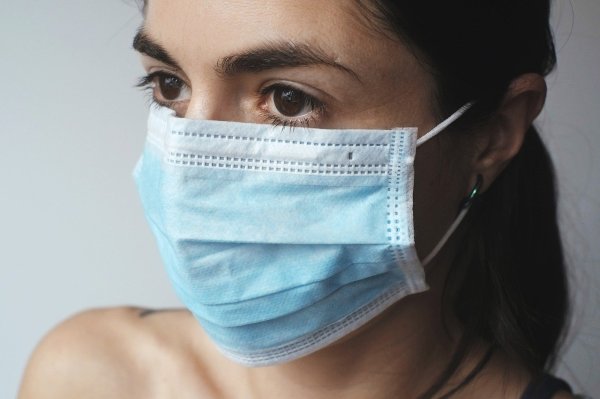
photo by Juraj Varga courtesy of pixabay.com
The Great Clips hair salon in Springfield, Missouri was the site of a non-spreading event in late May. A hair stylist there tested positive on May 21 and continued to work, exposing some 84 customers. However, both she and the customers wore face masks. She worked eight shifts over nine days, despite having symptoms. Another worker at the salon also tested positive, and it is thought that she was infected by her co-worker. She worked on another 56 clients. Of the exposed clients, only 46 agreed to have tests done. None of them came back positive, despite all being exposed for up to thirty minutes apiece in close proximity to the sick workers.
At least 140 people were directly exposed to the sick stylists, and another 200-300 people were in the hair salon during the time the two were working. According to an article in the June 17 Washington Post,
“I expected five to 10 new cases,” said Robin Trotman, medical director of Infection Prevention Services at CoxHealth in Springfield, who consults with the local health department.
This incident is strong observational evidence that wearing face masks is an effective way to prevent transmission of the novel coronavirus. The article continues with another quote from Trotman:
“Which mask worked, the hairdresser’s or the client’s? I think the answer is yes. They both worked,” he said. “The system worked. Universal masking worked. It really doesn’t matter which one.”

