
picture by Open Clip Art Vectors courtesy of pixabay.com
On the eve of the latest campaign rally by He-who-must-not-be-named, Oklahoma has seen a record increase in coronavirus cases. The Washington Post has daily new case counts broken down by state, and the Oklahoma graph shows an alarming increase over the last three weeks. On June 18, 450 new cases were reported, whereas on May 30, only 80 were reported. The graph is here, under Oklahoma. Scroll down and select “Oklahoma” on the state-by-state breakdown.
These reports should be alarming to anyone who plans to attend this rally. If you intend to be in the arena (assuming you have gotten a ticket, given that hundreds of thousands have applied) you are likely to be exposed to the virus. If 20,000 people (the hall’s capacity) are exposed and all of them are infected, then given a case-fatality rate of 1%, 200 will die– a worst-case scenario but not impossible. If you are planning on being outside to protest, your risks are much more immediate: the president has tweeted a threat to protestors that they will be roughly treated.
Anthony Fauci, head of the National Institutes of Allergy and Infectious Disease (NIAID), is 79 years old and does not plan to be there. Rally organizers are planning to hand out face masks and hand sanitizer, but given the political leanings of attendees, it is unlikely that anyone there will wear a face mask.
This morning we heard that Tulsa has announced a curfew for the next two days between ten PM and six AM. No word on whether those who have gathered early to await seating at the rally will be affected…
photo by Wynn Pointaux courtesy of pixabay.com
It’s fun to see {redacted] flailing around impotently, drowning in a storm-tossed sea of his own excrement. Also fun to see Bolton tossing him a concrete life preserver. And soon to follow, Mary {redacted]’s new tell-all about her family’s shame. Bring on the summer reading season!
…
{redacted] is pushing limits with the end goal of abolishing the First Amendment. He as dictator will get to decide what appears in print, & what doesn’t. Likely this will end up in the Supreme Court, but at that point, massive books sales will have already happened. And the press needs to stop with this nonsense: “The idea that this whole book is being held up after an extensive process feels like an abuse of power…” It IS an abuse of power. It doesn’t “feel” like one. The other problem for {redacted]is that, unlike his family corporation, where NDA’s are legal, Bolton, as a federal employee, has no legality to respect any NDA’s he signed as National Security Advisor. That NDA is null & void & no court will uphold it’s restrictions.
…
There are no heroes in this conflict. Bolton, had he put patriotism above self-enrichment, would have testified in the House or Senate impeachment proceedings. It is implausible that he would have been denied the “necessary” subpoena had he communicated his intentions to the House Dems.
I want to see what’s in Bolton’s book because our democracy deserves to pierce the veil that {redacted]’s enablers have used to try to shield his incompetence from the American Public. But for {redacted]’s daily Twitter rants and repeated lies he might get away with the portrait painted of him in his various propaganda pieces. Heck, somehow 40 percent of Americans approve of this idiot.
But, as for Bolton’s book sales . . . I ain’t buying it.
…
The DOJ suing to enforce a personal {redacted] NDA is simply {redacted]using the DOJ as his personal enforcers. Remember to thank your republican senators appropriately for protecting this great leader the next time they are up for election.
…
“asking a federal judge to order former White House national security adviser John Bolton to stop the release of his book”
Not much to this. Bolton isn’t the publisher, he isn’t releasing the book.
DOJ is suing to “ask” a judge…? Weak tea.
DOJ isn’t suing the publisher, ( because it knows to never argue with someone who buys ink by the barrel)
By the time this is sorted out {redacted] will be in jail for tax and wire fraud and Barr will be “of counsel” somewhere in a galaxy far away.
::: Pity the far away galaxy.
…
It is a felony to classify, or over classify, things not subject to classification in order to conceal illegal activity.
That is not true. Mad King Donald would need to modify Executive Order 13526 to allow him to classify any information that can make The Donald look bad.
Sec. 1.7. Classification Prohibitions and Limitations.
(a) In no case shall information be classified, continue to be maintained as classified, or fail to be declassified in order to:
(1) conceal violations of law, inefficiency, or administrative error;
(2) prevent embarrassment to a person, organization, or agency;
(3) restrain competition; or
(4) prevent or delay the release of information that does not require protection in the interest of the national security.
…
OT little side trip
{redacted] International Golf Club, which leases public land in West Palm Beach, Florida, is requesting rent relief from Palm Beach County after COVID-19 forced President Donald {redacted]’s resort to temporarily close.
Ed Raymundo, the director of finance at the resort, sent a letter to the county’s real estate director Ross Hering on June 5 claiming that the mandated closure of the golf club, which pays the county $88,338 per month, in March caused a “significant impact” on the resort’s operations.
–from WaPo opinion piece on John Bolton’s new book, due out June 23 and already in the hands of bookstores and reviewers (and Mary {redacted]s book, due in August)

photo of a great-grandson by Mary Molina, copyright reserved
The Washington Post on June 17 published an article titled, “COVID Baby Bust Could Lead to Half a Million Fewer Births Next Year” based on observations from the Great Recession of 2007-10 and the influenza pandemic of 1918-19. During the recession, increased unemployment was associated with a decreased birth rate on a state-by-state basis.
There was a nine percent drop in birthrate overall, or 400,000 fewer births. In the influenza pandemic, there were dramatic drops in conception rates during each of three waves of deaths from influenza and pneumonia. Later rates of conception did not rise to make up for the falls.
The article in the Post is based on a piece from the Brookings Institute on June 15, which published this table:

Kearney and Levine, Brookings Institute
This shows the sudden and short-lived drops in conception rates during the waves of influenza that swept the United States (and the world.) The first wave showed a dramatic drop in conception despite only a small increase in death rates. The conception rates did not increase afterwards but returned to the average level.
The Brookings Institute article also mentions a myth that conception rates increase during blizzards and blackouts– as well as a popular claim that conception rates would increase during the lockdown period in March and April. This myth is just that– there is no statistical evidence that this happens. For individual families, increases in income result in more children; however, higher income levels across generations result in fewer children per family.
Increased social stability and wealth lead to lower birth rates in the following generations, smaller families, and a halt to population growth. This has been apparent all over the world since 1970, preventing the population disaster that was expected at the time. Total world population is expected to level off at perhaps ten billion people in the next few decades, barring a worldwide pandemic that kills at a really significant rate.
Within families in a single generation, decisions about having children are related to available income, and losses of income result in fewer conceptions– temporarily. Delayed conception, for a woman, is eventually permanent because fertility declines inexorably with age.
Famines, earthquakes, heatwaves, and disease outbreaks, all events that increase death rates, also cause reduced rates of conception– followed by fewer births nine months later. There were 3.8 million births in the US in 2019. The Brookings Institute article concludes with an estimate of 300,000 to 500,000 fewer births in 2020– unless the labor market continues to be weak in 2020, in which case the decline will be worse. With the restrictions on immigration recently, it is to be expected that total US population will decline even if total US death rates do not significantly increase.
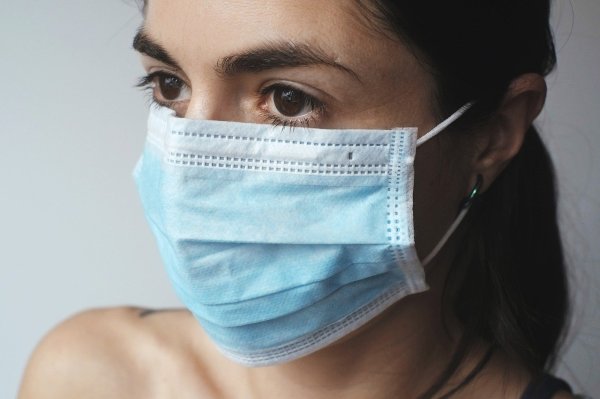
photo by Juraj Varga courtesy of pixabay.com
The Great Clips hair salon in Springfield, Missouri was the site of a non-spreading event in late May. A hair stylist there tested positive on May 21 and continued to work, exposing some 84 customers. However, both she and the customers wore face masks. She worked eight shifts over nine days, despite having symptoms. Another worker at the salon also tested positive, and it is thought that she was infected by her co-worker. She worked on another 56 clients. Of the exposed clients, only 46 agreed to have tests done. None of them came back positive, despite all being exposed for up to thirty minutes apiece in close proximity to the sick workers.
At least 140 people were directly exposed to the sick stylists, and another 200-300 people were in the hair salon during the time the two were working. According to an article in the June 17 Washington Post,
“I expected five to 10 new cases,” said Robin Trotman, medical director of Infection Prevention Services at CoxHealth in Springfield, who consults with the local health department.
This incident is strong observational evidence that wearing face masks is an effective way to prevent transmission of the novel coronavirus. The article continues with another quote from Trotman:
“Which mask worked, the hairdresser’s or the client’s? I think the answer is yes. They both worked,” he said. “The system worked. Universal masking worked. It really doesn’t matter which one.”
photo by Jakub Orisek courtesy of pixabay.com
A close friend of the family is in the hospital with COVID-19. I was depressed by the news as I knew he was at very high risk due to multiple medical conditions. He was working for farm labor contractors, transporting injured workers to medical offices and translating for them. He has been a close friend of our family for thirty years.
He was admitted to the hospital last week and started on remdesivir. He has gone downhill over the last few days and had more than one stroke. He is now on a ventilator. I fear that he will not survive. If he does live through this, he will never be the same. His wife is completely wiped out by this turn of events. She had symptoms of the virus– cough and fever– but recovered quickly. This is the way it usually happens: women are not as severely affected as men.
Our worst problem in this difficult situation is that we are unable to go to his bedside or even to communicate with his doctors. We don’t know if there is an advance directive in place as to his treatment, and we have no way to find out. Our lack of contact with him and his medical team has left us without any way to influence his care or to have any personal interaction with him.
It is one thing to learn about the challenges faced by other people– people I don’t know– when confronted by illness with COVID-19. It is quite another, intensely frustrating and painful, to have personal contact with friends and relatives who have the illness. The only thing that could be worse is to be personally sick with the virus and to be struggling to breathe, with coughing and chest pain. So far, I have been extremely fortunate not to have this experience. I wouldn’t wish it on my worst enemy.
Coronavirus studies by Engin Akyurt via pixabay.com
Statnews.com reported on June 16 that a study found dexamethasone (6 mg once a day, oral or intravenous) improved survival in severe COVID-19: “‘Dexamethasone is the first drug to be shown to improve survival in COVID-19,’ Peter Horby, one of the lead investigators of the study and a professor in the Nuffield Department of Medicine at the University of Oxford, said in a statement.”
From the statnews report:
The study randomly assigned 2,104 patients to receive six milligrams of dexamethasone once a day, by mouth or intravenous injection. These were compared to 4,321 patients assigned to receive usual care alone.
In patients who needed to be on a ventilator, dexamethasone reduced the death rate by 35%, meaning that doctors would prevent one death by treating eight ventilated patients. In those who needed oxygen but were not ventilated, the death rate was reduced 20%, meaning doctors would need to treat 25 patients to save one life. Both results were statistically significant.
There was no benefit in patients who didn’t require any oxygen. The researchers running the study, called RECOVERY, decided to stop enrolling patients on dexamethasone on June 8 because they believed they had enough data to get a clear result.
Dexamethasone is a cheap, generic steroid (a drug that reduces inflammation) that has been widely available for a long time. Its effective doses and side effects are well understood, and it has been used for many indications. These characteristics make it an ideal drug to implement wide use. Its effects in other diseases make these positive results easily understood and expected.
Once a patient has been put on a ventilator for severe COVID-19 with respiratory failure, their chances for survival are poor. In other diseases, a 50/50 chance of survival on a ventilator was expected, but with COVID-19, as few as 12% of patients have survived. This is because lung inflammation leads to a cascade of edema, fluid filling of air spaces, and breakdown of lung membranes. Once inflammation and breakdown is fully established, survival is poor.
The only other way to get around the problem is with extra-corporeal membrane oxygenation (ECMO), a complex technique that is available only at a few regional medical centers. Ideally, treatment of COVID-19 should prevent patients from deteriorating to the point where they need to be on a ventilator, but no such treatment has been available.
Putting patients who appear to be at risk of going downhill based on their dropping blood oxygen saturation would reduce the risk of having to use a ventilator. Early treatment with dexamethasone, along with remdesivir, may prevent this.

William Barr (stolen off internet, probably copyrighted)
I included this picture, not because Billy Barr is the cause of all these problems, or even because he is making our response more difficult. No, I included it because that shit-eating grin is a symptom of what is wrong with our government.
The reason we are having so many problems responding to the triple crisis is that our federal government is not taking decisive action to deal with it. For example, there is no federal government database or tally of how many people are testing positive for novel coronavirus each day, how many are dying, nor how many in each state are being tested. At the same time, there is no use of the Defense Procurement Act to obtain tests or testing supplies, nor for personal protective equipment, for ventilators, or for anything at all. The only use of the Defense Procurement Act so far is to (supposedly) force meat-packing plants to stay open. Even then, the plants can’t stay open if too many workers are sick. The president threatened to use the Act to force car companies to produce ventilators, but it backed down when the companies made concessions. There is no daily coronavirus briefing– not since the president’s staff warned him that it was making him look stupid, and not since he is trying to hide the fact that the pandemic is still raging.
The whole country has been convulsed by demonstrations against police brutality– which have been met with more police brutality. In the face of the pandemic, protestors are being assaulted by tear gas, pepper balls (containing the active ingredient found in hot peppers, only at much higher concentrations), and rubber bullets. The tear gas makes people cough and vomit, not the sort of thing you want when some of them inevitably have active cases of novel coronavirus, even if they are not symptomatic at the moment. Then the demonstrators, most of whom were wearing masks, are being arrested, having their masks torn off while their hands are cuffed behind their backs, and thrown into crowded, unventilated jail cells. A more dangerous place to be in the face of this pandemic could hardly be imagined.
There was even a video-documented case where a policeman tore off the mask of a protestor (who wasn’t being obstreperous) and sprayed her in the face with pepper spray. This may not be as shocking as a policeman suffocating a man who allegedly passed a counterfeit $20 bill to death with his knee on the arrestee’s neck (for eight minutes and forty-six seconds) or another policeman shooting a fleeing drunk driver in the back and calmly picking up his spent shell casings while the suspect lay dying on the street. That may be more shocking than the policeman who shoved a 75-year-old man backwards and watched him stumble and fall, hitting his head on the sidewalk– which followed with the man bleeding from his ear (a sure sign of a basilar skull fracture, for which he was placed in intensive care.) That may not be as shocking as the presidential tweet “questioning” whether the old man was trying to block police communications with his cell phone (which is technically impossible) and “questioning” whether the old man was an “antifa” agitator (when in fact, the old man was a long-time Catholic pacifist who literally wouldn’t hurt a fly.)
None of that is shocking enough. What is shocking enough is the only real policy response of the president: he refuses to “even consider” taking the names of Confederate generals (who after all, were racist, traitorous losers who were responsible for killing many loyal Union soldiers) off of Army, Navy, and Air Force installations. The only excuse for refusing to “even consider” this long-overdue action is to pander to the 39% of the country who are racist, traitorous losers and who plan to vote for him come November.
Where is the organized policy? No-where to be seen. Where is the “leading by example” in response to the advice of all the experts on infectious disease? Missing in action. Where is the “unifying force” that brings our country together? Absent altogether.
Instead, the president is using the pandemic as an excuse to continue and intensify his anti-immigrant policy to the detriment of our economy, even seeking to actively exclude people we need to harvest our crops– people who already have legal worker visas. He is using the pandemic as an excuse to eliminate regulations protecting fisheries from total collapse. He is using the pandemic as an excuse to suspend all inspections of meat-packing plants and eliminate all regulations limiting methane emissions from pipelines. All this and more is being done because people’s attentions are distracted by economic collapse, pandemic spreading, and widespread demonstrations and rioting.
It is no wonder that people are burning down the Wendy’s drive-through where a drunken driver was shot in the back for resisting arrest. It is no wonder that people are smashing windows and looting cellphones from Apple stores (where they immediately turn into bricks as soon as they lose the wifi signals that keep them operating.) The police are too busy trying to intimidate demonstrators to protect vulnerable stores.
It is easy to see why people are angry and fed up with what is going on right now. Unemployed people are not getting their unemployment benefits because the systems are overloaded, and now they are threatened with being kicked off the rolls if they refuse to return to dangerous work.
Black and brown people are suffering from lack of health insurance and at the same time being killed by the virus because of their fragile health status. Black and brown people are being felled disproportionately by the virus at the same time they have either lost their jobs or been forced to work exposed to the virus in “essential” positions– they have good reason to be angry that they are being harassed and shot disproportionately by police.
There is no justice, and as long as there is no justice, there will be no peace.
Samatha (calm) and vipassana (insight): two aims of Buddhist meditation. Also, What is Meditation?

Gandhara Buddha circa 1900 years ago, courtesy of wikimedia commons
The twin aims of meditation, in Buddhist practice, are calming the mind and attaining insight. From Wikipedia:
- Samatha, calm abiding, which steadies, composes, unifies and concentrates the mind;
- Vipassanā, insight, which enables one to see, explore and discern “formations” (conditioned phenomena based on the five aggregates).[5]
Meditation is a practice which predates Buddhism and probably also Hinduism– it has been recognized since at least 1500 BCE, or 3500 years ago, in Vedantic Hinduism. The practice of meditation is recognized in all major religions, including Sufism (an Islamic tradition), Christian “Hesychasm” (from the Eastern Orthodox), and Judaism (in the Kabbalah.) The term defies precise definition: (Wikipedia) “A 2009 study [in the Journal of Psychology of Religion and Spirituality] noted a ‘persistent lack of consensus in the literature’ and a ‘seeming intractability of defining meditation’.”
In meditation, a person sits, lies down, or even simply stands still. It is also possible to meditate while walking or while performing a simple, repetitive task. You attend to one thing or nothing and concentrate the mind. You do not try to do anything at all (at least nothing that you’re not already doing.) One common technique is to concentrate on breathing slowly, in and out; in through the nose (employing the inherent air-filtering capacities of the nostrils and nasal cavities) and out through the mouth (relaxing the diaphragm, allowing it to move upwards and letting the chest collapse.)
A commonly used technique is to concentrate on a single word or phrase. This technique, most used in Tibetan Buddhism, often includes the phrase “Om mani padme hum.” This means, according to Wikipedia (among many other things): “The first word Aum/Om is a sacred syllable in various Indian religions. The word Mani means “jewel” or “bead”, Padme is the “lotus flower” (the Buddhist sacred flower), and Hum represents the spirit of enlightenment.” In Tibet, this phrase is everywhere painted onto hillsides, carved into rocks, or written on prayer flags and prayer wheels.
Meditation also can begin with emptying the mind. One would not try too hard; anything that enters the mind while meditating should be remarked upon then discarded, as if “moving on.” It is important not to try, because trying involves effort, and the effort itself interferes with relaxation. Calm is achieved in part through simply relaxing. Once the mind is emptied in this way, single thoughts that arise can be more easily dealt with. One can acknowledge that a thought is a symptom of the mind’s clinging to the senses, and classify a thought as to whether it means one is obsessing about something in particular. Why would this thought come up now?
Meditation is broadly classified into two forms: open and directed. In directed meditation, one focuses on something or concentrates on a single thought. In open meditation, one simply monitors all thoughts that enter the mind, dismissing them one by one and returning to an empty, mindful/mindless state. You might say that open meditation steadies and calms you, while directed meditation allows you to achieve insight. You can use both forms, either sequentially or all at once.
When one meditates, the brain often enters a state easily recognized on the EEG (electroencephalogram, a recording of the brain’s electrical activity obtained with electrodes attached to the scalp.) A rhythm called the alpha rhythm appears, a slow 8-12 beats per second wave. This differs from the rhythm seen when one is thinking about something, when there are no visible waves. According to brainworksneurotheraphy.com, “Alpha brainwaves are dominant during quietly flowing thoughts, and in some meditative states. Alpha is ‘the power of now’, being here, in the present. Alpha is the resting state for the brain. Alpha waves aid overall mental coordination, calmness, alertness, mind/body integration and learning.”
The practice of meditation has been the subject of scientific research for quite some time. It is attractive especially because it would seem to provide some therapeutic effects for pain, depression, anxiety, drug addiction, antisocial behavior, etc. However, research has not been able to clearly establish whether the benefits of meditation can be separated from the social activities associated with teaching the practice. Nonetheless, it seems to provide some pain relief and, in a 2017 systematic review it was found to help “improve positive prosocial emotions and behaviors.” (Luberto, Christina M.; Shinday, Nina; Song, Rhayun; Philpotts, Lisa L.; Park, Elyse R.; Fricchione, Gregory L.; Yeh, Gloria Y. (2017): “A Systematic Review and Meta-analysis of the Effects of Meditation on Empathy, Compassion, and Prosocial Behaviors”. Mindfulness. 9 (3): 708–24. doi:10.1007/s12671-017-0841-8. PMC 6081743. PMID 30100929).
There are also potential negative effects of meditation. In one criticism, the practice is felt to enhance narcissism– this is true but also highly reductive or simplistic. Meditating in a deconstructive fashion (for example) may result in anxiety, fear, depersonalization, or distorted perceptions. “Unwholesome or frightening visions” are also mentioned as to be expected, in a Theravada Buddhism practical manual on vipassana meditation (Vörös, Sebastjan (2016). “Sitting with the Demons – Mindfulness, Suffering, and Existential Transformation”. Asian Studies. 4 (2): 59–83. doi:10.4312/as.2016.4.2.59-83).
Nonetheless, meditation is a highly effective means of, at least temporarily, obtaining calmness and even insight. See also the Wikipedia article on “meditation” for considerable details on the history and prevalence of meditation in various religions and for therapeutic purposes. From a traditional point of view, see “What is Meditation” by Shiva Shakti Yoga.

sars-cov-2 virions (complete virus) in EM by NIAID (via Medscape.com)
A Scripps Research post dated June 12 describes a mutation called D614G in the novel coronavirus that has come to dominate new infections. The mutation, changes a glycine residue to an aspartic acid residue in the spike protein and stabilizes the spike by making it more flexible. This leads to a 4-5X increase in the number of functional spikes on each virus particle (virion) which improves the virus’ ability to bind to and infect human cells. The research behind this finding is described in the paper “The D614G mutation in the SARS-CoV-2 spike protein reduces S1 shedding and increases infectivity” published by Scripps as a pre-print (before peer review.)
The research was done with a harmless coronavirus ( Maloney murine leukemia virus (MLV)-based pseudoviruses (PVs)) engineered to express the same spike protein as the pathogenic virus. The mutation does not appear to reduce the effectiveness of neutralizing antibodies raised against the SARS-COV-2 virus during natural infection, so there is probably no difficulty with vaccines that are currently being developed.
The mutation does not appear to increase severity of infection. The mutated virus has come to dominate new infections, probably because it is much more efficient at spreading. According to the Scripps Research post, “It is still unknown whether this small mutation affects the severity of symptoms of infected people, or increases mortality, the scientists say. While ICU data from New York and elsewhere reports a preponderance of the new D614G variant, much more data, ideally under controlled studies, are needed…”
The novel coronavirus will continue to mutate. This mutation appears to increase the efficiency of transmission but apparently without making it more severe. Future changes in the virus genome will have unanticipated effects, but they are unlikely to change the basic strategy for preventing transmission: mask wearing, physical distancing (six feet where possible), and frequent hand-washing or sanitizing before and after being in public.

(image courtesy of pixabay.com and Gerd Altmann)
The Washington Post has a good graphic of state by state case and death counts on a daily basis for all US states on this page. You can examine the case counts and death counts as they go up and down on a daily basis. Some states are clearly having problems, while others are getting better. Some states have had more than one peak in case counts. Some states don’t have clear trends at all, either because the totals are too small (like North Dakota and Montana) or else there’s just no clear trend. Sometimes it looks as if the counts are fishy; in other places, they don’t count on weekends. This page is for the nerdily inclined.
 Conrad Theodore Seitz