Moro Rock, Sequoia National Park

This dramatic rocky projection sticks out of the middle of the main part of Sequoia National Park. There is a steep trail guarded by railings set in to the rock on the back side.
Capitalism causes wealth inequality
Here’s an article that discusses a controversial new book by economist Thomas Pikketty: http://www.nytimes.com/2014/01/29/opinion/capitalism-vs-democracy.html?action=click&contentCollection=Science&module=MostEmailed&version=Full®ion=Marginalia&src=me&pgtype=article In the book, Pikketty argues that worsening inequality is an inevitable outcome of free market capitalism. Recent work by many scholars has edged around this conclusion, but Pikketty is the first to come right out and say it.
The solution to this problem is equally controversial: a global income tax. It must be global to prevent wealth from escaping to lax countries. Of course, being global makes it almost impossible to implement.
The alternative to a restorative income tax is worsening inequality and eventual social revolution. Most experts agree that really severe inequality is socially unsustainable, and that increasing unrest will result. In the past, revolutions have occurred in the presence of extreme inequality: the French revolution and the Russian revolution are the two most typical examples.
Here’s another shock value story: a man was treated for snakebite with four vials of rattlesnake antivenom. He spent 18 hours in the Emergency Department. The bill was $89,000, including $20,000 a vial for the antivenom. Of course, Medicare pays about $2,000 a vial. The man was insured by Blue Cross, and they paid about $5,000 a vial. The man paid $5,4000 including deductible and copays.
All this is recorded at this news site: http://www.charlotteobserver.com/2014/01/27/4643457/mooresville-patient-stunned-by.html#.UulSOhBdXNl for the Charlotte (NC) Observer. In the 1980’s, rattlesnake antivenom cost $50 a bottle; a severe case of envenomation might require a dozen or more vials to reverse the shock and vascular collapse. You can see where this might add up; however, rattlesnake bites are extremely rare and the bottles may sit on the shelf for five or ten years. Manufacturing the antivenom is a tedious job, and insurance problems also weigh heavily.
However, it seems obvious that the law governing food and drug manufacturing should provide for “orphan” drugs with regulations that smooth the production of rarely used or small quantity items. The problem of coccidiodin manufacture, which I mentioned before in the context of Valley Fever, is a good example of the need for regulations. Vaccines, even widely used ones, are another example of items that need special treatment to ensure adequate manufactures for the maximum public good. This is a place where special federal regulations are sorely needed to provide for the common good. There is no better example of how government can be good and why government is really needed.
Wood Ears

This is a common fungus that grows on decaying wood and is said to be edible.
Narcissism, a classic case
-
From: Clapso
I’ve noticed ad clicks from my blog a couple of times, and frankly it pissed me off. This is a sore point with me. I don’t charge wordpress or goo goo or anyone for the content I produce which gives them something to attract readers TO THEIR OWN PAGES WHERE ADVERTISING IS PLACED. Why should I have to pay to keep advertising OFF MY BLOG? Sorry, it feels a little like a protection racket you are announcing…
The scientifically impossible I do right away
The spiritually miraculous takes a bit longer - From: Matt; September 18 at 5:57 pm [2012]
Clapso, I’m sorry the fact that WordPress.com is ad-supported bothers you. It is very, very expensive to provide free service to millions of blogs and we have to support it somehow. However we try really hard to make the ads not intrude on your experience. We show orders of magnitude fewer ads than most free services, heck compare the pages on Yahoo or Facebook to pages on WordPress.
[Comment: by Conrad; Frankly, I think Clapso is somewhat egotistical. He seems to be assuming that the blog content he posts is so good that it attracts lots of readers, therefore he shouldn’t have to pay for the service. The only problem with this attitude is that the only way to cash in on Internet traffic is with ads, so he would have the site provider (Matt) lose out either way.]
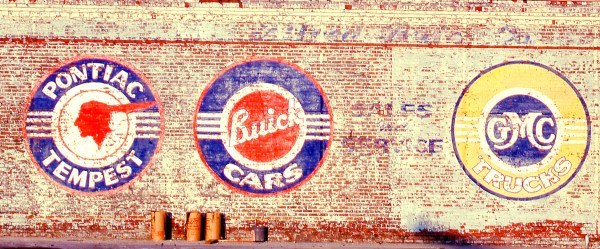
This wall existed in 1988–it may no longer be there.
Tallest Tree, Sequoia National Park

Said to the the tallest tree in the world, about 2,500 years old.
Three Enemas and a Colonoscopy: Who Pays?
Yes, it’s true. It has happened at least three times, and probably many more. The police, suspecting that a man had drugs hidden in his rectum (after a traffic stop), forced him to undergo three enemas and a colonoscopy. Since they found nothing, he sued and was awarded $1.6 million dollars. I hope he got the money, because he needs it to pay the hospital bill. Yes, they billed him for this involuntary violation of his colon. If he was female, it would have been worse, and it was.
See the article, at: http://www.nytimes.com/2014/01/26/opinion/sunday/kristof-3-enemas-later-still-no-drugs.html?hp&rref=opinion in today’s New York Times online.
This is just gross and disgusting. Why wasn’t one enema enough??

These pictographs are at an easily accessible site in Seqoia National Park. Unfortunately, the Indians who lived there when whites arrived did not know their meaning. They are attributed to the Anasazi, who lived there about 1500 years ago.
Income Inequality and the Economy
Here’s a brief, but important article that explains the trajectory of the economy as a result of Reagan’s tax cuts in the early 1980’s. The top 5% of the workforce increased its income dramatically, while the lower 95% stagnated. The lower 95% continued to spend, however, by borrowing more money on the increased value of their houses. This spending came to an abrupt halt in 2008 with the Great Recession, and has not recovered due to “deleveraging.”
See the article here: http://www.rooseveltinstitute.org/econobytes-thursday-january-16-2014. It is referenced in Paul Krugman’s opinion piece in the New York Times online. Krugman says that the Republicans in Congress now are using the deficit as an excuse to make matters worse, by slashing safety-net programs for the poor. By contrast, the Republicans are not proposing anything to help improve the severe income inequality that is now hobbling the economy. See Krugman’s piece at: http://www.nytimes.com/2014/01/24/opinion/krugman-the-populist-imperative.html?hp&rref=opinion
Krugman goes in to much more detail, repeating himself relentlessly on points that we really need to understand. He’s calling for Obama to start supporting programs that reduce income inequality, and he has polls that show the majority of Americans support this policy. Even Republicans, at least the rank and file, seem to be beginning to understand the need to support the lower 95% of the population.

