Skip to content

Roots in the Rocks

2014-02-07

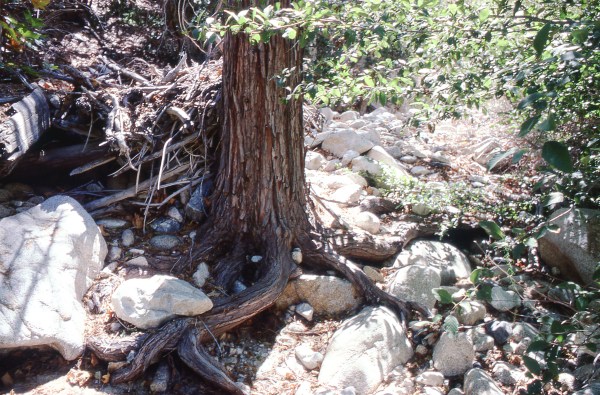
Roots in the Rocks

Another Waterfall

2014-02-06

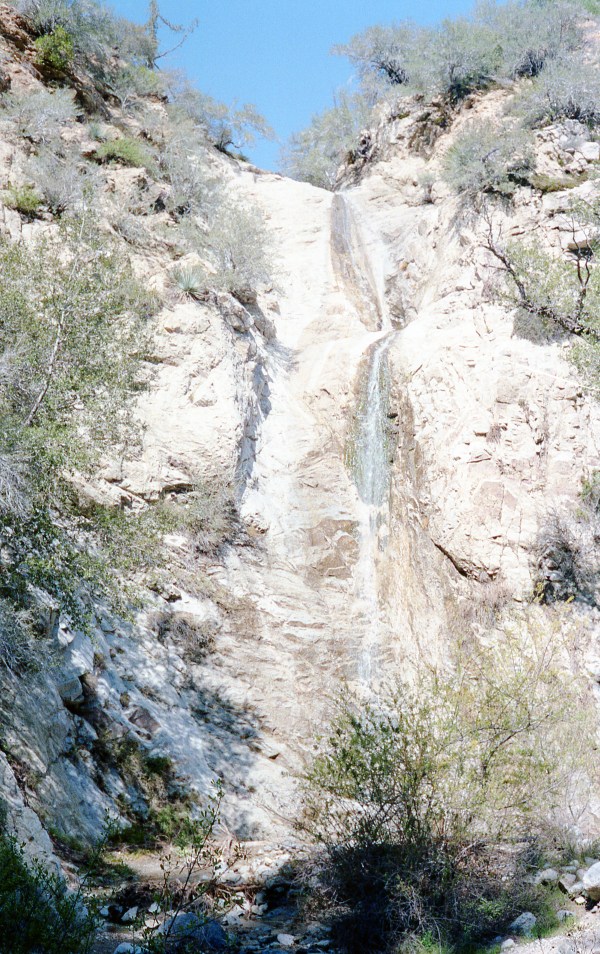
Waterfall

Fog in the Trees

2014-02-05

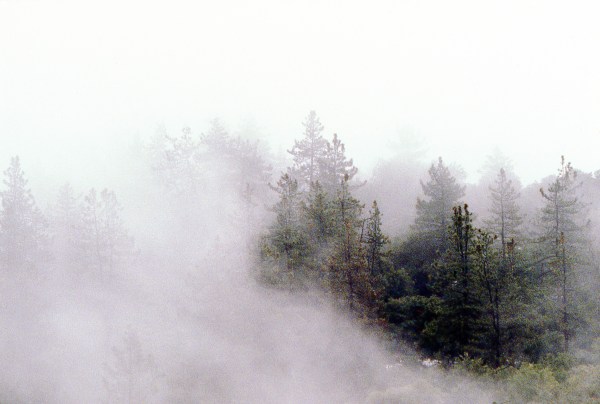
Fog in the Trees

Dry Creekbed

2014-02-05

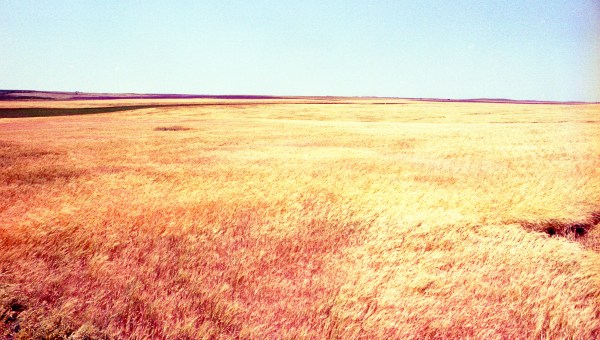
Dry Creekbed

Patient Wanders Away From Bed, Found Dead 17 Days Later

2014-02-02

This apparently happened at San Francisco General Hospital recently.  A disoriented 57 y/o woman was admitted with a bladder infection and given orders: “NEVER leave patient unattended.”  The patient wanders away from bed repeatedly.  One day she disappears, and a search is reportedly undertaken.  17 days later she is found dead in a stairwell.

Now, an investigation reveals that the patient was left unattended by the nurses.  When a search was ordered, it was not systematic, and the stairwells were not searched by sheriff’s deputies responsible for security.  A medical researcher even reported seeing an unconscious woman an a stairwell four days before she was finally found.

You can read all about the story from a local newspaper, SF Gate: http://bit.ly/Ln1qkB    which gives all the details of the sordid story.  It is not stated, however, but I think it may be true, that the hospital is overworked and understaffed, and that contributed to the disaster.  I doubt that the nurses deliberately ignored the order to keep the patient under constant observation.  More likely they were so overworked that they overlooked the need to relieve staff members assigned to watch the patient when they were called away.

Likewise, the sheriff’s deputies who were assigned to hospital security were understaffed and working overtime.  They had not received a comprehensive search plan and thus missed some parts of the hospital.  The hospital administration was trying to supplement or replace the deputies because they were not providing adequate security.

Under these circumstances, a disaster like this is much more likely.  Comprehensive planning must always take into account the risks associated with shortages and poor planning, partial implementations, deliberate personnel problems caused by administration feuds, and so on.

Caught Fish
2014-02-02

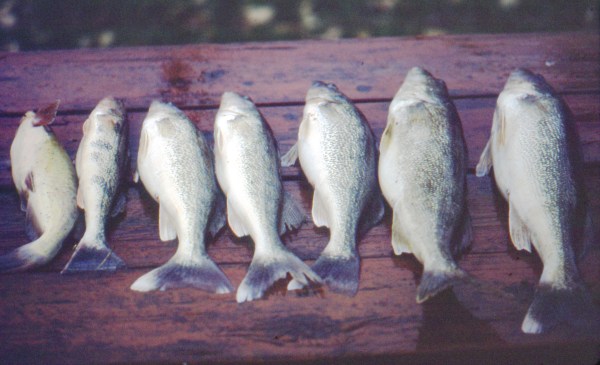
Caught Fish

These fish were caught with a hook and line probably on the Missouri River, definitely in South Dakota.

Dust in the Badlands
2014-02-01

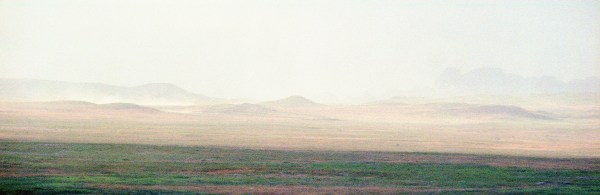
Dust in the Badlands

This photo won first prize in an amateur photo contest and hung in the North Dakota governor’s mansion for a year (1985). It was actually taken in South Dakota.

Moro Rock, Sequoia National Park

2014-01-30

Moro Rock, Sequoia National Park

This dramatic rocky projection sticks out of the middle of the main part of Sequoia National Park. There is a steep trail guarded by railings set in to the rock on the back side.

Capitalism causes wealth inequality

2014-01-29

Here’s an article that discusses a controversial new book by economist Thomas Pikketty: http://www.nytimes.com/2014/01/29/opinion/capitalism-vs-democracy.html?action=click&contentCollection=Science&module=MostEmailed&version=Full&region=Marginalia&src=me&pgtype=article  In the book, Pikketty argues that worsening inequality is an inevitable outcome of free market capitalism.  Recent work by many scholars has edged around this conclusion, but Pikketty is the first to come right out and say it.

The solution to this problem is equally controversial: a global income tax.  It must be global to prevent wealth from escaping to lax countries.  Of course, being global makes it almost impossible to implement.

The alternative to a restorative income tax is worsening inequality and eventual social revolution.  Most experts agree that really severe inequality is socially unsustainable, and that increasing unrest will result.  In the past, revolutions have occurred in the presence of extreme inequality: the French revolution and the Russian revolution are the two most typical examples.

$89,000 for 18 hours of emergency care: The Wild West of Medicine

2014-01-29

Here’s another shock value story: a man was treated for snakebite with four vials of rattlesnake antivenom.  He spent 18 hours in the Emergency Department.  The bill was $89,000, including $20,000 a vial for the antivenom.  Of course, Medicare pays about $2,000 a vial.  The man was insured by Blue Cross, and they paid about $5,000 a vial.  The man paid $5,4000 including deductible and copays.

All this is recorded at this news site: http://www.charlotteobserver.com/2014/01/27/4643457/mooresville-patient-stunned-by.html#.UulSOhBdXNl for the Charlotte (NC) Observer.  In the 1980’s, rattlesnake antivenom cost $50 a bottle; a severe case of envenomation might require a dozen or more vials to reverse the shock and vascular collapse.  You can see where this might add up; however, rattlesnake bites are extremely rare and the bottles may sit on the shelf for five or ten years.  Manufacturing the antivenom is a tedious job, and insurance problems also weigh heavily.

However, it seems obvious that the law governing food and drug manufacturing should provide for “orphan” drugs with regulations that smooth the production of rarely used or small quantity items.  The problem of coccidiodin manufacture, which I mentioned before in the context of Valley Fever, is a good example of the need for regulations.  Vaccines, even widely used ones, are another example of items that need special treatment to ensure adequate manufactures for the maximum public good.  This is a place where special federal regulations are sorely needed to provide for the common good.  There is no better example of how government can be good and why government is really needed.