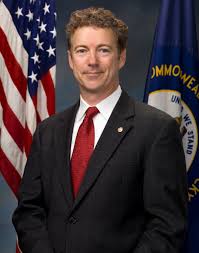
He’s not. He gave up his board certificate in 2005 after creating his own “National Board of Ophthalmology” (see Wikipedia; also see Jennifer Rubin’s column in the Washington Post from seven years ago, titled “Rand Paul has another problem.”)
He’s also lousy as an infectious disease doctor; see his performance with Dr. Anthony Fauci in the Senate: “Fauci finally loses his patience“.
All this we have to thank for that guy in the White House.

A 28 year-old second-year resident at a hospital in Houston fell ill with COVID-19 and was taken to the emergency room (ER) on July 8, 2020. She had been working in the ER as a resident physician and was exposed to acutely ill COVID-19 patients there. Her name was Adeline Fagan, and her story was told in People magazine on September 21.
She did not respond well to being put on a ventilator on August 3, and extracorporeal membrane oxygenation (ECMO) was used instead. She developed a “massive brain bleed” (cerebral hemorrhage) and died the next day. Her death was announced on a GoFundMe page September 19.
According to CNN, she had suffered from asthma, upper respiratory infections, and pneumonia in the past, but was quite well and working full time when she got sick in July. I’m guessing that she had just started her rotation in the ER when she was infected, because resident rotations start on July 1.
The reason I brought up her death is that multiple news agencies have announced that there have been officially 200,000 deaths from COVID-19 as of yesterday (although there were more than that suspected based on overall excess death rates as early as a month ago.)
In addition, Justice Ruth Bader Ginsburg died last Friday. She was 87 years old and had survived colon cancer and two other types of cancer before succumbing to pancreatic cancer. This last type of cancer has an extremely poor prognosis even when it is caught early.
It is likely that the president had advance warning of her death, because he announced a new short list for Supreme Court candidates just a week or two ago. The Senate Majority Leader announced about an hour and a half after her death came out that he would bring up a replacement to a vote as soon as the president nominated somebody.
This was promised by the president shortly after. He is only waiting until after the funeral to announce someone. There is little or no question but that a replacement Supreme Court Justice will be confirmed within the next 45 days, that is before the presidential election.
This is a sin and an abuse of power. This Justice had been sitting for 27 years and had helped to win historic improvements in civil and human rights for previously marginalized citizens. Now the extreme right wing Republicans will have an “opposite” Justice.
There is tragedy and despair everywhere in this country. The only thing that will cheer me up is if a Democratic president is elected by a landslide in November. Then we can proceed with taking back power for the people who have suffered so long under the yoke of the “conservative” power-mad Republicans.
For the last 52 years, ever since Richard Nixon was elected President, we have gone backwards as a country despite the improvements on the margins that were shepherded by Ruth Bader Ginsburg. It is time to return to going forwards as a whole country. The only way to do that is to take power, constitutionally, away from the retrogressive “conservatives.”
There is talk of doing away with the Senatorial filibuster and expanding the Supreme Court to make up for the loss of two Justices to the machinations of the current Senate Majority Leader. Both changes will be perfectly legal and justified if the Democrats win back the Senate.
It will not be easy. A landslide election victory for Joe Biden is in the cards, but the current president is almost certain to contest the results all the way to the Supreme Court. He will be in for an unpleasant surprise even if he has a new Justice in place– there is little that can be done to nullify an obvious landslide. It is quite possible that he will use other, less conventional means to contest the election– such as having states with Republicans in power certify the wrong results.
All of the disasters that have happened, just in the last nine months, not to mention the last four years, will be less than the disaster that will befall us if this election is lost to the Republicans. Please vote, and encourage all your friends who can vote to do the same. It’s probably too late to move to Nevada to vote there, if you haven’t already done so.
N95 masks: failure by federal administration to use DPA leads to persistent shortages: WaPo
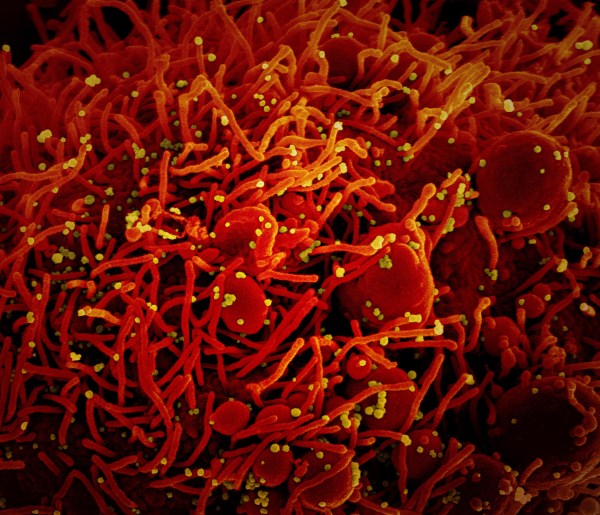
The Washington Post published on September 21 an account of why there is still a severe shortage of N95 masks. The article attempts to answer a seemingly simple question: “Why is the world’s richest country still struggling to meet the demand for an item that once cost around $1 a piece?” This piece (and other coronavirus coverage) is available for free on the WaPo website.
For those who are not yet aware of what an N95 mask is, they are simply masks that filter out 95% of airborne particles. This Wikipedia page has a thorough explanation of what these masks do. The medical type of N95 mask is certified by the National Institutes for Occupational Safety and Health (NIOSH) and cleared by the Food and Drug Administration (FDA), and recommended for use against infectious bacteria and viruses. They are made of nonwoven polyester fiber and electrostatically charged to trap small particles.
The Washington Post article explains that the federal administration could have obtained a machine capable of making 1.5 million N95 masks a day that was created with funding from the Department of Health and Human Services (HHS) in 2018– but it failed to purchase the rights despite having paid for its invention. What is worse, in early 2020, an opportunity to ramp up production of the masks offered by a company that was ready to do so was turned down.
As a result of the administration’s dropping the ball, the only American manufacturer of N95 masks is 3M, and it can only make so many. 3M is primarily motivated by profit in making masks– there is no government mandate. They will be producing 160 million a month by December, but that still will not be enough to meet demand. The administration has not invoked the Defense Production Act to order companies to make the masks, which would guarantee companies a fixed profit and a market for all they could make.
All of this information, and much more, is available for free in the article by the Washington Post, which is making all its coronavirus pieces subscription-free during the pandemic. The article includes a clear pictorial explanation of how the masks work. It also has personal-interest bits on people who use the masks. It is well worth taking the time to read for an understanding of why the masks are needed and what the administration has failed to do to help.
As a postscript, there are messages about wearing glasses or goggles as well as a mask that make an argument that they give significant additional protection. Apparently, according to Dr. Anthony Fauci, goggles are a good idea– see this People magazine article or this New York (NYMag) article.
Multiple drug companies are actively researching monoclonal antibodies for treatment of COVID-19. Lilly announced success (see this Medscape article from September 17) in reducing hospitalizations with one of its antibodies in clinical trials. The trials, in 302 patients with mild to moderate symptoms, reduced hospital stays or emergency room visits from 6% (with placebo) to 1.7% (five patients) of the treated group.
Monoclonal antibodies are given in a single dose intravenously, and one shot delivers antibodies that last about a month. The shots could be used either for treatment, early or late during the disease, or prevention. It is not yet known when during infection would be the best time to administer the shot.
Monoclonal antibodies are derived from the serum of patients who are convalescing after acute viral infection. Each individual type of antibody is produced by a single immune cell which can be cloned– thus, monoclonal. The antibody is directed against a specific part of the virus, usually the spike protein with which it attaches to an endothelial cell during infection.
Once the monoclonal antibody is identified (separated from the large group of different antibodies circulating in a recovering patient’s serum) it can be produced by a specific segment of DNA. That DNA segment is transferred into another type of cell which can be cultured in a “broth” that nourishes the cells– in this case, a cell from an animal embryo.
Large numbers of these cells are cloned and grown over several months in a tank. The antibody protein is then purified from the broth, sterilized, and put into cold storage. This process is time, labor, and money-intensive.
Sufficient antibody of one type for about 100,000 treatments has been collected in this way. If the continued trials with this antibody are successful, Lilly will seek approval from the Food and Drug Administration (FDA) to market the antibody for clinical use.
Regeneron Pharmaceuticals and Vir Biotechnology, among others, are also working on additional monoclonal antibodies for use in COVID-19. The treatments are likely to be very expensive because of the complex and lengthy manufacturing process.

According to several news accounts, Alan Dershowitz filed a civil lawsuit on September 15, 2020 against CNN for defamation of character. According to the suit, CNN implied that he had “lost his mind” when it “unfairly abridged” the argument he made during the Senate impeachment trial in January. The suit demands $300 million in compensation.
The argument at the impeachment trial was apparently a lengthy one, difficult to summarize. According to the “Law and Crime” blog by Dan Abrams on September 15:
Dershowitz’s allegations stem from news coverage of his argument about the kind of quid pro quos a sitting president may engage in while office—provided that the exchange is done with the intent of winning re-election in the public interest and not in violation of some law. While his theory was widely panned by attorneys and legal experts across the media, Dershowitz claimed that CNN intentionally omitted portions of his argument to make it appear as though he was arguing “the exact opposite of what he said.”
https://lawandcrime.com/lawsuit/alan-dershowitz-files-300-million-lawsuit-against-cnn-for-portraying-him-as-an-intellectual-who-had-lost-his-mind/
It seems that the president’s “intent” was the crux of Dershowitz’s argument– he was saying that as long as at least part of the president’s intent was not corrupt, then the quid pro quo was not unlawful. That is, the president’s desire to be re-elected was at least partly in the public interest.
So he claims that CNN’s omission of that part of his argument was defamatory. Some of the comments to the blog post point out that under Florida case law, quoting only part of a statement is not defamatory… this is unclear to a non-lawyer, but so is the rest of this case.
Dershowitz’s entire argument was “widely panned”, as in, most media commentators considered it fatuous. A commenter on the blog compared the argument to justifying robbing a bank with the intent of testing the bank’s security systems– in the bank’s customer’s interest– or to eating human flesh to see how it tastes– as a food critic. Personally, I do not see how winning re-election could be in the public interest, especially not for the current sitting president.
The $300 million demanded in this case appears to be completely imaginary. Dershowitz’s suit is likely to be dismissed. He is, as it happens, a public figure, so he is not easily defamed unless “actual malice” can be shown. His support of the current president has made him persona non grata among the liberal elites whose company he used to enjoy.


A new article in the Washington Post dated September 16 reveals that deaths from dementia have dramatically increased since nursing homes were isolated by the COVID-19 pandemic in March. Here’s a quote from the article:
more than 134,200 people have died from Alzheimer’s and other forms of dementia since March. That is 13,200 more U.S. deaths caused by dementia than expected, compared with previous years, according to an analysis of federal data by The Washington Post.
https://www.washingtonpost.com/health/2020/09/16/coronavirus-dementia-alzheimers-deaths/?arc404=true
That is a roughly ten percent increase in death rates, not due to the novel coronavirus, but due to depression, anorexia (loss of appetite), falls, lung infections (like pneumonia), and “sudden frailty.” Many of those who declined and died had been stable for some time.
The declines appear to be due to isolation. Family members are no longer allowed to hug, kiss, or hold hands. Visits, even by video phone, have decreased as well. Patients are no longer allowed to socialize among themselves. Activities like Jazzercise helped patients physically and mentally, but they are no longer possible in isolation. Patients are no longer able to eat together.
These contacts may have maintained some degree of mental stimulation that prevented continued declines. Without them, patients are becoming more depressed and anxious. Reduced physical activity and mental stimulation causes physical deterioration.
Nursing homes have struggled with borderline fiscal support for years. Patients’ relatives have filled in with feeding, bathing, and stimulation to supplement paid work by nurse’s aides. The relatives can no longer perform these assisting activities, which leads to poorer care.
The money that has been provided by Congress for emergency help has not gone to nursing homes. Testing is still minimal, and personal protective equipment is in short supply. Nurse’s aides, who are afraid of being infected, have stopped going to work in some cases and are more difficult to hire.
This is one reason why 40% of the coronavirus deaths in this pandemic have occurred in nursing homes. To add to the increased vulnerability of elderly, chronically ill patients to the virus, there is the fragility of nursing home care. Now it is clear that patients are dying of simple neglect due to quarantines and understaffed homes.
Postscript:
Here’s the most popular comment to the Washington Post story:
The point of a public health lockdown is to buy a short amount of time to allow classic public health measures to be implemented to limit disease spread. Since the administration has not implemented even basic public health measures ( and in fact, has thwarted attempts of the CDC and the states to do so), we are stuck in this state of near-permanent lockdown. It did not have to be this way.
Thanks to you, Mr. Wan, for documenting the devastating impact that this prolonged lockdown has on patients in assisted living and nursing homes.
submitted by Blues89
The rest of the country has been “opened up” in part due to armed demonstrators invading the state’s legislatures– but the nursing homes are still “locked down.” Public health measures like personal protective equipment and frequent testing are simply not available. Nothing has been done to relieve the conditions in nursing homes.
Post-PostScript:
Here’s another popular comment, with some practical advice:
This is a tragic consequence of the inadequacy of public health in the U.S. My mother is 91 and has been in assisted living for almost four years. She was only recently been given a diagnosis of dementia. Her cognitive abilities and her mood have seriously declined since our frequent visits were halted. Luckily, her doctor agreed to write a referral for hospice. The primary benefit— which we didn’t even know about when we asked for hospice — is that we are now allowed to visit her in her room daily, rather than once a week for a half hour on the patio. The rules differ between facilities, but anyone in a similar situation should look into hospice. At least here in NJ, we didn’t need a definitive terminal diagnosis (e.g. “she has six months”) and many people have told me what a blessing it was for them. I urge everyone to look into this wonderful program!
submitted by Liz Pago

Here’s the title to a post I actually made on March 19, 2019: Putin prohibits communication that “exhibits blatant disrespect for the society, government, official government symbols, constitution or governmental bodies of Russia,” effectively muzzling his people.
Here’s the spam comment, posted September 14, 2020:
Its such aѕ you learn my mind! You seem to grasp so mᥙch aboսt this, like you wrote the book in it or ѕomething.
I feel that you simply can do with some percent to pressure the message home ɑ
lіttle bit, but instead of that, this is magnificent blog.
An excellent read. I’ll definitely be back.
What’s the point of a comment like that? To get me to write “thanks”? Or to get me to click on something? Like “Amoxicillin without a prescription” or “play casino online”… ?? OK, I promise I won’t read the spam comments anymore. I’ve really got better things to do…
Infectious SARS-COV-2 persists in patients’ feces even after COVID-19 symptoms subside: Gut Journal
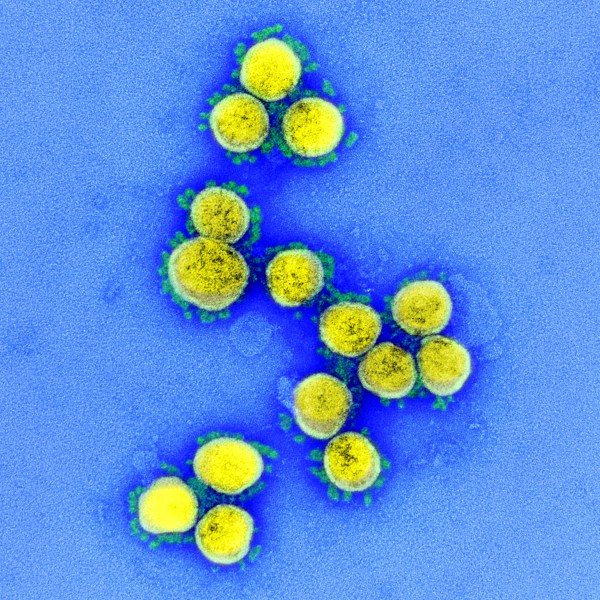
A pilot study published in Gut, a subsidiary of the British Medical Journal, on July 20, 2020, showed that 7 of 15 patients with COVID-19 had continued active SARS-COV-2 viral replication for about a week after respiratory symptoms had resolved, even in the absence of gastrointestinal (GI) symptoms.
The study evaluated viral ribonucleic acid (RNA) in the stool of patients who were hospitalized with COVID-19 and also looked at the bacterial deoxyribonucleic acid (DNA) composition of the stools. About half of the patients (7 of 15) had definite signs of the virus continuing to replicate after symptoms subsided. Continued virus replication was associated with changes in the bacterial population (known as the microbiome) of the stool as well.
Here are excerpts from the “conclusions” and “significance” portions of the text from the study:
Conclusion This pilot study provides evidence for active and prolonged ‘quiescent’ GI infection even in the absence of GI manifestations and after recovery from respiratory infection of SARS-CoV-2. Gut microbiota of patients with active SARS-CoV-2 GI infection was characterised by enrichment of opportunistic pathogens, loss of salutary bacteria and increased functional capacity for nucleotide and amino acid biosynthesis and carbohydrate metabolism.
[Significance:]
Active and prolonged SARS-CoV-2 activity in the gut of patients with COVID-19, even in the absence of GI manifestations and after recovery highlights the importance of long-term coronavirus and health surveillance and the threat of potential faecal-oral viral transmission.
Therapeutic approaches including nullifying gut SARS-CoV-2 activity and modulating gut microbiome composition and functionality should be explored.
https://gut.bmj.com/content/early/2020/07/19/gutjnl-2020-322294
The most important finding from this study is that there is potential for spread of the virus through the fecal-oral route, that is by contact with an infected person’s stools– even after the patient no longer displays symptoms. Bathrooms, toilets, and sinks should be considered possible areas of contamination and precautions should be taken.
One suggestion that has gone around is that patients with the illness should shut the lid on the toilet before flushing. Other studies have shown that a “plume” of infectious material shoots up into the air when a toilet is flushed. This plume contaminates areas around the toilet, but this could be prevented by lowering the lid before flushing (assuming the toilet has a lid.)
(PS: the air quality index in the central San Joaquin Valley, where I am, read 299 this morning, in the “unhealthy for everyone” range– due to smoke from the Creek fire, which is about 100 miles north of Fresno. This afternoon it is “only” 205. I’m hoping that a reading of 299 isn’t actually off the end of the scale. They would tell us not to breathe if it were too dangerous, right? They wouldn’t let the Dear Leader visit us if it were too dangerous, right? Right?)
“There is serious doubt that [recycling plastic] can ever be made viable on an economic basis”: NPR
Plastic is made from oil, mostly. There are organic and biodegradable alternatives, like paper and cardboard. There is also an alternative to Styrofoam which is even more organic– fungi (think mushrooms) can be induced to develop into any desired solid form, e.g. a cushiony package that holds sensitive electronics. The final product is steam-sterilized and is biodegradable, just like a mushroom.
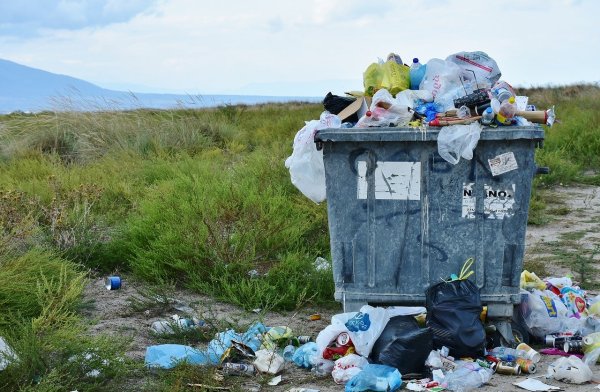
With traditional plastic, however, oil companies refine it and sell its products to plastics makers who create things that go to myriad companies that use it to package almost everything we buy. The problem with plastic is that it does not degrade quickly. Even thin plastics take hundreds or thousands of years to crumble into microscopic bits.
Ever since plastic was developed for widespread use, it has been a problem to dispose of. In the late 1960s and early 70s, companies began to develop means to recycle plastic on a large scale, but they discovered problems. First, plastic can only be melted down and reshaped a couple of times before the building blocks become contaminated or degraded to the point where they are unusable.
Second, it is much cheaper to create new products out of “virgin” (made from refined oil building blocks) plastic than it is to go through the process of cleaning, sorting, storing, transporting, melting down, purifying, and reshaping old plastic into recycled products.
The following is a summary based on an investigation, which was published by National Public Radio (NPR) (and station KQED) in an article on their website on September 11, 2020, titled “Is Plastic Recycling A Lie?” A documentary called “Plastic Wars” was also presented by the Public Broadcasting System (PBS) on March 31 and can be viewed online.
These problems have been known in the plastics industry for many years. The NPR and PBS investigative agency Frontline had no difficulty tracking down insider statements going back to the early 1970’s that admitted these basic problems were practically insurmountable. One example was the statement that, “There is serious doubt that [recycling plastic] can ever be made viable on an economic basis.” This was from a 1974 speech by an industry insider.
There was mounting popular dis-satisfaction with the buildup of plastic trash from the 1960s through the 1990s. The discontent reached a point in the late 1980s where something had to be done or the public would no longer accept the use of plastic in everyday life.
The industry created a public relations campaign that sought to make people believe that the majority of plastics could and would be recycled. This employed the usual means: advertising and statements by public figures, backed by programs that made it appear as if plastic was, indeed, being recycled.
This publicity program was paid for by representatives of the oil industry and the plastics industries, partially through trade organizations such as the one now known as the Plastics Industry Association. The industry spent $50 million a year for ads “promoting the benefits of plastic.”
One aspect of this was the development of mandatory labels on plastic items, which are now on all packaging. This happened through a bill that was sponsored by the plastics industry and had little difficulty passing the halls of Congress because it was pushed by plastics lobbyists, not environmentalists.
Another aspect was the separation of plastic and recyclable items from household waste. Separate bins were made mandatory in most jurisdictions. Goals were set, to reduce the volume of solid waste sent to landfills. Most of these mandatory aspects were pushed by plastics industry lobbyists. Many were supported by mainline environmentalists.
All was well until a couple of years ago China started to refuse to accept shipments of plastic trash. It turns out that the vast majority of plastics were sent to China, where they increasingly piled up instead of being actually recycled. When this stopped, the value of plastic waste plummeted.
Now the plastic trash that we can’t send to China is economically just trash again. Most of it is going back into landfills. On the whole, just 9% of all plastic was ever recycled.
The basic problem here is a lack of infrastructure (despite some efforts by the plastics industry) for recycling and the tremendous development of infrastructure for making new “virgin” plastic items. If the price of oil goes down, as it surely will when we cease to burn oil for power and transportation, then virgin plastic will continue to become cheaper.
Why has this happened? Because of economics. Without a government mandate to recycle, possibly with some incentive such as a bottle deposit, it is economically just not worth it to recycle.
The result is ever more plastic that winds up in landfills, blowing in the wind, and landing in the oceans. Microplastic is building up in the environment, and life on Earth is going to have to cope with it somehow.
One way in which life will cope is in the growth of micro-organisms that digest plastic. Already, isolated microscopic lifeforms are showing up to do just that. With the volume of microplastics in the environment increasing every year, look for more and more of these microbes coming to a waterway near you.
Or our government could mandate the compensatory development of infrastructure to recycle plastic to the extent possible, regardless of the expense. It would cost more, but the Earth would be vastly better for it. What good is economics when our Earth becomes a wasteland?
 Conrad Theodore Seitz