- 1Tergooi Hospital, Department of Psychiatry, Blaricum, The Netherlands.
- 2Brain Center Rudolf Magnus, University Medical Centre Utrecht, Department of Psychiatry, The Netherlands.
- 3Department of Psychosis Studies, Institute of Psychiatry, King’s College London, UK.
- 4Brain Center Rudolf Magnus, University Medical Centre Utrecht, Department of Psychiatry, The Netherlands. Electronic address: m.p.m.boks@umcutrecht.nl.
Although cannabis use is associated with an increased risk of developing psychosis, the cannabis constituent cannabidiol (CBD) may have antipsychotic properties. This review concisely describes the role of the endocannabinoid system in the development of psychosis and provides an overview of currently available animal, human experimental, imaging, epidemiological and clinical studies that investigated the antipsychotic properties of CBD. In this targeted literature review we performed a search for English articles using Medline and EMBASE. Studies were selected if they described experiments with psychosis models, psychotic symptoms or psychotic disorders as outcome measure and involved the use of CBD as intervention. Evidence from several research domains suggests that CBD shows potential for antipsychotic treatment.
Publication History
- Issue published online: 29 JAN 2009
- Article first published online: 29 JAN 2009
- (Received August 31, 2006, Revised October 30, 2006, Accepted November 20, 2006)
Article first published online: 29 JAN 2009
DOI: 10.1038/sj.bjp.0707133
2007 British Pharmacological Society
Background and purpose:
A nonpsychoactive constituent of the cannabis plant, cannabidiol has been demonstrated to have low affinity for both cannabinoid CB1 and CB2receptors. We have shown previously that cannabidiol can enhance electrically evoked contractions of the mouse vas deferens, suggestive of inverse agonism. We have also shown that cannabidiol can antagonize cannabinoid receptor agonists in this tissue with a greater potency than we would expect from its poor affinity for cannabinoid receptors. This study aimed to investigate whether these properties of cannabidiol extend to CB1 receptors expressed in mouse brain and to human CB2 receptors that have been transfected into CHO cells.
Experimental approach:
The [35S]GTPγS binding assay was used to determine both the efficacy of cannabidiol and the ability of cannabidiol to antagonize cannabinoid receptor agonists (CP55940 and R-(+)-WIN55212) at the mouse CB1 and the human CB2 receptor.
Key results:
This paper reports firstly that cannabidiol displays inverse agonism at the human CB2 receptor. Secondly, we demonstrate that cannabidiol is a high potency antagonist of cannabinoid receptor agonists in mouse brain and in membranes from CHO cells transfected with human CB2receptors.
Conclusions and implications:
This study has provided the first evidence that cannabidiol can display CB2 receptor inverse agonism, an action that appears to be responsible for its antagonism of CP55940 at the human CB2 receptor. The ability of cannabidiol to behave as a CB2 receptor inverse agonist may contribute to its documented anti-inflammatory properties.
British Journal of Pharmacology (2007) 150, 613–623. doi:10.1038/sj.bjp.0707133
- Adán de Salas-Quirogaa,b,c,1,
- Javier Díaz-Alonsoa,b,c,1,2,
- Daniel García-Rincóna,b,c,
- Floortje Remmersd,
- David Vegaa,c,
- María Gómez-Cañasa,b,e,
- Beat Lutzd,
- Manuel Guzmána,b,c, and
- Ismael Galve-Roperha,b,c,3
aCentro de Investigación Biomédica en Red sobre Enfermedades Neurodegenerativas (CIBERNED), 28049 Madrid, Spain;
-
Edited by Leslie Lars Iversen, University of Oxford, Oxford, United Kingdom, and approved September 16, 2015 (received for review August 3, 2015)
Significance
Marijuana is the most commonly used illicit drug, and its consumption constitutes a serious health concern. The psychoactivity of the plant is exerted by its cannabinoid constituents, especially Δ9-tetrahydrocannabinol (THC), which acts by engaging CB1 cannabinoid receptors. Despite the large knowledge accumulated on how THC affects the adult brain, its molecular and functional impact on neuronal development remains obscure. This study demonstrates that remarkable detrimental consequences of embryonic THC exposure on adult-brain function, which are evident long after THC withdrawal, are solely due to the impact of THC on CB1 receptors located on developing cortical neurons. Our findings thus delineate the risk of cannabis consumption during pregnancy and contribute to identify precise neuronal lineages targeted by prenatal THC exposure.
Abstract
The CB1 cannabinoid receptor, the main target of Δ9-tetrahydrocannabinol (THC), the most prominent psychoactive compound of marijuana, plays a crucial regulatory role in brain development as evidenced by the neurodevelopmental consequences of its manipulation in animal models. Likewise, recreational cannabis use during pregnancy affects brain structure and function of the progeny. However, the precise neurobiological substrates underlying the consequences of prenatal THC exposure remain unknown. As CB1signaling is known to modulate long-range corticofugal connectivity, we analyzed the impact of THC exposure on cortical projection neuron development. THC administration to pregnant mice in a restricted time window interfered with subcerebral projection neuron generation, thereby altering corticospinal connectivity, and produced long-lasting alterations in the fine motor performance of the adult offspring. Consequences of THC exposure were reminiscent of those elicited by CB1 receptor genetic ablation, and CB1-null mice were resistant to THC-induced alterations. The identity of embryonic THC neuronal targets was determined by a Cre-mediated, lineage-specific, CB1 expression-rescue strategy in a CB1-null background. Early and selective CB1 reexpression in dorsal telencephalic glutamatergic neurons but not forebrain GABAergic neurons rescued the deficits in corticospinal motor neuron development of CB1-null mice and restored susceptibility to THC-induced motor alterations. In addition, THC administration induced an increase in seizure susceptibility that was mediated by its interference with CB1-dependent regulation of both glutamatergic and GABAergic neuron development. These findings demonstrate that prenatal exposure to THC has long-lasting deleterious consequences in the adult offspring solely mediated by its ability to disrupt the neurodevelopmental role of CB1 signaling.
The only thing lacking in this study is the issue of dose response relationship. How much drug is the fetus exposed to when the mother smokes pot? If the typical ditchweed is used, very little, but if edibles are used, or the mother is dependent on the drug, a great deal, since it i s stored in ffat and doesn’t cross the fetal/placental barrier.
Words Worth Repeating
Time spent in reconnaissance is seldom wasted.
- Do not think dishonestly.
- The Way is in training.
- Become acquainted with every art.
- Know the ways of all professions.
- Distinguish between gain and loss in worldly matters.
- Develop intuitive judgement and understanding for everything.
- See those things which cannot be seen.
- Pay attention even to trifles.
- Do nothing which is of no use.
Do not think dishonestly.” You must make an honest appraisal of yourself, your attacks and your defenses, your strengths and your defects, of the environment, its wide avenues and narrow defiles, and of your opponent, his attacks, his strengths, and his vulnerability.”The Way is in training.” Constant training is the way to perfection. The Chinese character for “the way” means a discipline, a road, or a point of view”Become acquainted with every art.” This rule and the next one are meant to encourage what athletes often call “cross-training” here meaning a very broad form of eclectic training. The “art” referred to here is not just painting or sculpture.
- “Know the ways of all professions.” This would include law, medicine, retail sales, sword sharpening, and so on.
- “Distinguish between gain and loss in worldly matters.” This I take to mean that one should not accumulate worldly goods, but the text is ambiguous.
- “Develop intuitive judgement and understanding for everything.” This is, I think, what it says.
- “See those things which cannot be seen.” This does not mean to see things which are invisible but to see things which are difficult to see.
- “Pay attention even to trifles.” This means just what it says.
- “Do nothing which is of no use.” This one is a little harder to figure out but appears to mean to avoid wasted motions and ineffective activities.
Do Not Think Dishonestly
- The way is in training.
- Become acquainted with every art.
- Know the ways of all professions.
- Distinguish between gain and loss in worldly matters.
- Develop intuitive judgement and understanding for everything.
- See those things which cannot be seen.
- Pay attention even to trifles.
- Do nothing which is of no use.
A study published on Wednesday in The Lancet, following one million middle-aged women in Britain for 10 years, finds that the widely held view that happiness enhances health and longevity is unfounded.
“Happiness and related measures of well-being do not appear to have any direct effect on mortality,” the researchers concluded.
“Good news for the grumpy” is one way to interpret the findings, said Sir Richard Peto, an author of the study and a professor of medical statistics and epidemiology at the University of Oxford.
He and his fellow researchers decided to look into the subject because, he said, there is a widespread belief that stress and unhappiness cause disease.
Such beliefs can fuel a tendency to blame the sick for bringing ailments on themselves by being negative, and to warn the well to cheer up or else.
via Happiness Doesn’t Bring Good Health, Study Finds – The New York Times.
I was paradoxically cheered by this piece of bad news, confirming my long held suspicions that people who are happy are just fooling themselves.

Leonard Bernstein 1965… I was in a creative writing class with his daughter in 1970-71. Pretty sure I didn’t take this picture as I didn’t know him then; but I found it somewhere on the web and as I can’t find it again, I’m going to hope that this constitutes fair use.

Conrad Theodore Seitz MD 1982-3, when I was about Leonard’s age; taken from a tripod in my living room one winter’s evening. With a set top antenna, only one snowy channel came through from Rapid Ciry. There was a twenty five foot tall wooden post behind the house that held an antenna, which picked up all three channels plus PBS, but I didn’t bother with it.
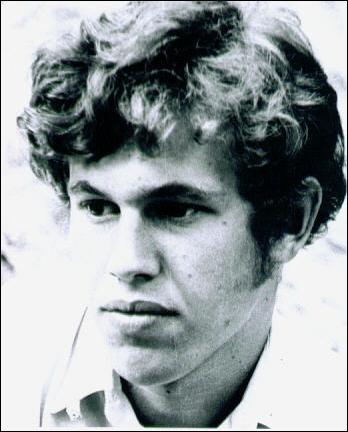
Conrad Theodore Seitz, aged fourteen, taken by my mother in the summer of 1969 outside her house in Larkspur CA (Marin Country)
 \
\
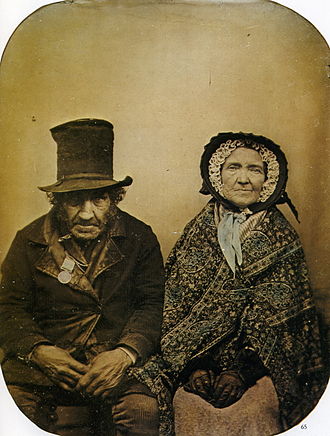
Anonymous couple, circa civil war; pretty sure this one’s copyright has lapsed. Note the medal the man is wearing on his coat.
My gravatar website: www.gravatar.com/Conradseitz#photo-0
Additional remarks on the Retraction Watch website:
…is being done for legal reasons based on the advice of counsel” may mean “We forgot to read the small print in the contract with our funding source saying they could veto what we published and they didn’t like what we found”
And that looks like a clever way to publish something despite the sponsor of the research not wanting it published, it the retraction gets you out of the legal trap, that is.
My original comment post follows (augmented afterwards by repeated proofreading):
I agree with both these reasons and they are good reasons, which means that I think people should implement them, as long as they can get back door approval of the publish//retract strategy from their funding sources… and even if they can’t, because devious funders may send you mixed mss then stab you in the back when you try to follow through. And if that happens, you didn’t want any more funding from them anyway. Which will get you published in retraction watch at least.
The only difference is you may lose your career a la the Whittemore affair, but if the lab closes down maybe it’s worth it.
This will have advantages for the individual student and researcher as well. In fact, I think that this would be ideal for an individual or retired researcher who just wants to file such items as case reports and actual studies.
For example, I had my own hearing tested recently and this is what I came up with: my hearing is nearly perfect for my age. A person hears in different ways. When one is not expecting to hear anything, the ear will be sensitive to random sounds, the deflection of the width of a hydrogen atom being enough to create a signal. A t these times, one hears what I will call “secondary” sounds… dampened things down so that one hears the secondary late echoes bouncing off of objects in the room or transmitted through hollow objects. Under these conditions, sounds come through only as single clicks regardless of their actual frequency. The timing of the echo will produce the effect of a sound frequency, and then the actual frequency will be inferred at higher level of processing in the brain. The result is truly random sounds, which are extremely relaxing if interpreted correctly. If misinterpreted they can lead to the sensation that one is hearing noises or even voices in one’s own head.
I had the misfortune to examine a man once who was considered a paranoid schizophrenic. He was having a driver’s physical, but I had plenty of time to talk to him and I wondered why he was being given an extremely low dose of an antipsychotic drug. It turned out that he heard voices in his head, but he was otherwise normal. He could be described as a little paranoid, but then most undereducated men are and he was functioning normally. I just renewed his driver’s certificate.
By the way, I did my first research study, “Finding circadian rhythms in Pterophyllum eimeki (the common angelfish)” in my parent’s kitchen, with my father’s fish and equipment he brought home from his psychology laboratory at MacMurray College in Jacksonville Illinois, when I was eleven years old in 1964. and I got to go to the State Science Fair in Champaign-Urbana, where my stepmother was studying for her PhD in statistics. The study used fish in a tank, two tanks, one with one fish and the other with three, both with light cells and light sources (like those that used to open bank doors for the customer), hooked up to an “event recorder” which produced a line on a 4″ wide inked tape. The study was supposed to last twenty days but it ended after eighteen because algae grew over the aquarium walls and obscured the light source. I was still able to get a significant circadian activity signal by cutting the data into two periods of ten days each with two days overlap. I found that the three fish tank woke up a half an hour before it was to get light in the morning, which woke up the one fish in the tank next to it. Angelfish turned out to be perfect for the experiment because they produced one short signal when crossing the beam sideways, and one long signal when passing through the beam long ways (they are a very flat, pancake-shaped fish.)
I now realize that the fish were responding to those infrasounds created when my parents got up and used the bathroom first thing in the morning–two rooms away in a solid steel reinforced concrete building three stories tall. Fish are anchored to the building by the water in their tanks resting on the counter. Thus they can feel the vibrations that start early in the morning and appear to anticipate everyone else’s waking up. What they are really doing is resetting their circadian clocks each morning, while in isolation the clock would run a little slow.
I spent long hours on the living room floor manually counting up the signals on the paper tape, and then had my stepmother help me to analyze the data statistically. My father suggested the experiment, I looked it up and found that no-one had yet studied circadian rhythms in angelfish. My father supplied all the reseach materials and the fish. The fish consented to be studied by eagerly gathering at the surface to be fed, and especially by not dying during the experiment. They remained in perfect health for some time after that, back in the big group fish tank.
This is the first time this study has ever been published anywhere, and I am grateful to Retraction Watch for allowing me the space to contribute this advancement of scientific knowledge. I acknowledge no conflict of interest except that I liked fish and my father was pushing me into an experimental career.
I am now retired, but I still have the orignal paper tapes (the data) in my garage. No autopsies were done on the fish, who died of natural causes (they were eaten by my cat.) (Correction: I made up the part about the cat.)
This study will be cross published in Retraction Watch so even if it disappears from here it will be available there.
Correction: the original paper tapes have long since been lost, and the fish have died due to asphyxiation after their big fifty gallon tank mysteriously burst late one evening.
Depression is not a side effect of cancer; it is a side effect of dying.
- 1Department of Psychiatry, New York University Langone Medical Center, New York, NY, USA.
- 2Department of Psychiatry, New York University Langone Medical Center, New York, NY, USA. Donald.Goff@nyumc.org.
Abstract
A convergence of evidence shows that use of Cannabis sativa is associated with increased risk of developing psychotic disorders, including schizophrenia, and earlier age at which psychotic symptoms first manifest. Cannabis exposure during adolescence is most strongly associated with the onset of psychosis amongst those who are particularly vulnerable, such as those who have been exposed to child abuse and those with family histories of schizophrenia. Schizophrenia that develops after cannabis use may have a unique clinical phenotype, and several genetic polymorphisms may modulate the relationship between cannabis use and psychosis. The endocannabinoid system has been implicated in psychosis both related and unrelated to cannabis exposure, and studying this system holds potential to increase understanding of the pathophysiology of schizophrenia. Anandamide signaling in the central nervous system may be particularly important. Δ(9)-Tetrahydrocannabinol in cannabis can cause symptoms of schizophrenia when acutely administered, and cannabidiol (CBD), another compound in cannabis, can counter many of these effects. CBD may have therapeutic potential for the treatment of psychosis following cannabis use, as well as schizophrenia, possibly with better tolerability than current antipsychotic treatments. CBD may also have anti-inflammatory and neuroprotective properties. Establishing the role of CBD and other CBD-based compounds in treating psychotic disorders will require further human research.
This abstract is a review of studies demonstrating that the effects of cannabis can simulate schizophrenic psychosis and that a component of cannabis called cannabidiol can relieve the symptoms. It lends strength to the prohibition of cannabis use, as well as alcohol use, by minors. Alcohol use is a major causative risk factor for car crashes, whereas cannabis use can produce paranoia and reduces likelihood of driving at all.
Daily Marijuana Use Is Not Associated with Brain Morphometric Measures in Adolescents or Adults
- Barbara J. Weiland1,
- Rachel E. Thayer1,
- Brendan E. Depue2,
- Amithrupa Sabbineni1,
- Angela D. Bryan1, and
- Kent E. Hutchison1
1Department of Psychology and Neuroscience, University of Colorado Boulder, Boulder, Colorado 80309, and
2Department of Psychological and Brain Sciences, University of Louisville, Louisville, Kentucky 40292
The Journal of Neuroscience, 28 January 2015, 35(4): 1505-1512; doi: 10.1523/JNEUROSCI.2946-14.2015
Recent research has suggested that marijuana use is associated with volumetric and shape differences in subcortical structures, including the nucleus accumbens and amygdala, in a dose-dependent fashion. Replication of such results in well controlled studies is essential to clarify the effects of marijuana. To that end, this retrospective study examined brain morphology in a sample of adult daily marijuana users (n = 29) versus nonusers (n = 29) and a sample of adolescent daily users (n = 50) versus nonusers (n = 50). Groups were matched on a critical confounding variable, alcohol use, to a far greater degree than in previously published studies. We acquired high-resolution MRI scans, and investigated group differences in gray matter using voxel-based morphometry, surface-based morphometry, and shape analysis in structures suggested to be associated with marijuana use, as follows: the nucleus accumbens, amygdala, hippocampus, and cerebellum. No statistically significant differences were found between daily users and nonusers on volume or shape in the regions of interest. Effect sizes suggest that the failure to find differences was not due to a lack of statistical power, but rather was due to the lack of even a modest effect. In sum, the results indicate that, when carefully controlling for alcohol use, gender, age, and other variables, there is no association between marijuana use and standard volumetric or shape measurements of subcortical structures.
This study contradicts the highly publicized study that was so widely noticed in the popular press but has been attacked as misrepresenting its data set. Of course, this study received no notice in the press, which is what is expected in studies that contradict popular studies, like the “impending global cooling” study of 1970… see also next post.
The Power Plant at Moro Rock, With Seagull

this is about the best I could do with this image. My photography instructor would have told me to move the camera to get a different image, but then the seagull would probably have flown off

