
photo of book by Peter H courtesy of pixabay.com
A news release from NIAID (National Institute for Allergy and Infectious Diseases) dated April 29 provides more information on the positive results of a study of remdesivir in COVID-19. Here is an excerpt:
Preliminary results indicate that patients who received remdesivir had a 31% faster time to recovery than those who received placebo (p<0.001). Specifically, the median time to recovery was 11 days for patients treated with remdesivir compared with 15 days for those who received placebo. Results also suggested a survival benefit, with a mortality rate of 8.0% for the group receiving remdesivir versus 11.6% for the placebo group (p=0.059).
Medpage today also reported on this trial and another one by Gilead comparing five and ten-day courses of remdesivir. It appears that both courses of treatment were equally effective. Finally, the same article reported that the Chinese trial mentioned last week was “inconclusive” because not enough patients were enrolled to obtain statistical significance. Full results of that trial were published in the Lancet on April 29. 237 patients were enrolled, not enough to achieve statistical power to discern a difference (although patients on the drug recovered more quickly). The full article in Lancet is behind a paywall, but from what I read earlier, patients were not given remdesivir early enough to get full benefit from the drug.
That’s it for me today. Thanks for reading this far.
photo of book by Peter H courtesy of pixabay.com
Gilead pharmaceutical company announced this morning that it had received “positive results” from a trial of 800 patients with a placebo control in the treatment of COVID-19. No further details were given at this time. This was reported by multiple news sources including Bloomberg, CNBC, Fox Business, MarketWatch, the Boston Globe, and the New York Times. The PharmaLetter, however, reported that an Indian group had urged the Indian Government to revoke Gilead’s patent on remdesivir:
On April 9, the Cancer Patients Aid Association (CPAA) wrote to the Health Ministry and the Pharma Ministry urging them to revoke the Indian patent granted to remdesivir. The CPAA wants the drug available to those in need at affordable prices. Remdesivir was granted a patent as recently as February 2020.
In a letter to the Prime Minister’s Office and the Commerce Minister, CPAA Founder YK Sapru said the patent needs to be revoked given the lack of novelty and inventiveness – the main criteria necessary for patent protection to be granted to a novel compound.
Remdesivir is an analogue of the nucleotide adenine, a basic building block of the virus’ genetic structure: its RNA (ribonucleic acid). The virus depends on its genes to reproduce, and the genes consist of a long string (about 30,000 units) of ribonucleic acid building blocks. There are four RNA bases: adenine, uracil, guanine, and cytosine. These four bases are used in a code. Each base is a part of a triplet, which codes for an individual amino acid. Amino acids are linked up according to the code into proteins.
This coding system is ancient, going back well over a billion years to the beginning of life on Earth. Some scientists think that ribonucleic acid chains functioned in primitive life forms as proteins do today, that is, as enzymes and structural parts of primitive cells. This is controversial, but there is some good evidence that RNA formed the basis for a pre-protein life form billions of years old. RNA and its descendant, DNA, are now used to store the information needed to produce proteins, which are essential elements of all living things on Earth.
Apparently, remdesivir, as an analogue of adenine, is incorporated by the growing RNA chain and causes a defect in structure or premature termination of the chain. This stops the virus from creating new copies of itself and prevents the infection from spreading. Whether remdesivir is patentable or not (and this is probably not a serious challenge to the patent), it is potentially quite useful in treating COVID-19. Clearly, it needs to be administered as early as possible in the course of infection. If given too late, it may not prevent the over-reaction of the immune system called a cytokine storm which appears to be the final killer late in the course of the most serious infections.
Gilead may or may not have a really good drug on its hands, but it seems to have mastered the art of publicity. The company has pushed back against a Chinese study which appeared to show poor effectiveness, in part by challenging how the study was done and whether the drug was given early enough. If the current study can withstand critical scrutiny, we will see dramatic rises in stock value. Our question, going forward, is “How much will Gilead charge us (the US federal government and insurers) for administering remdesivir to patients who need it?”
If recent history is any guide, a lot of money will change hands. Gilead’s previous money-maker was a drug for Hepatitis C which costs thousands of dollars per tablet. Since hepatitis C is a major cause of disability, much of the cost is borne by Medicaid and Medicare, which are bankrolled by the US federal government. Now that Congress is throwing trillions of dollars at relief for the pandemic, it has good reason to regret that it did not establish a drug-cost negotiation clause to its Medicare part D (prescription drug benefit) plans.
Rules for living by Miyamoto Musashi

woodblock print courtesy of wikipedia
1. Do not think dishonestly.
2. The Way is in training.
3. Become acquainted with every art.
4. Know the ways of all professions.
5. Distinguish between gain and loss in worldly matters.
6. Develop intuitive judgement and understanding for everything.
7. See those things which cannot be seen.
8. Pay attention even to trifles.
9. Do nothing which is of no use.
–Miyamoto Musashi (Buddhist name Niten Doraku) 1584?–1645 CE(AD)
photo by Victoria Borodinova courtesy of pixabay.com
This post is a request for feedback from readers of this blog. I would like to know two things: first, do you see ads ever when you look at my blog posts? I’m guessing that I have too few readers to bother with anyone placing ads here, but I need to know from you because the ads (if they are there) are invisible to me, except for a placeholder which says, “from time to time you may see ads here.” That’s not enough for me, because one of the rules I live by is, “7. See those things which cannot be seen [i.e. are invisible]”. (See my post about the rules for living by Miyamoto Musashi, a world-famous medieval swordsman and author of “Five Rings”… or will I have to post the rules again? They begin with “1. Do not think dishonestly [i.e. be honest with yourself]”.) I have asked this question before, but never heard back from any readers, so I don’t know the answer yet.
Second, have you ever been forced to “register” with WordPress in order to read any portion of my blog posts? This just came up when I requested a naive reader (someone who doesn’t use a computer much and never looked at my blog before) to look at one of my most recent blog posts. They were asked to “register” with WordPress and then asked which domain name they wanted to use. This struck me as very odd and I suspect that WordPress is trying to corral people in order to increase their advertising revenue.
I can tolerate ads (after all, that’s what “free” is, as in “ad-supported” like the Weekly Reader) but I don’t like the idea of innocent readers being forced to register with WordPress when it’s supposed to be a freely available (anonymous) web hosting portal, or whatever you want to call it.
Please tell me if you have been asked to register, and if you see any ads.
Yes, I know, it’s not as bad as smoking cigarettes or Facebook, but it’s still a time-sucker, and we have so little time left. Tempus fugit (Time flies).

Lake Tekapo photo by Holger Detje courtesy of pixabay.com
New Zealand plans to loosen its coronavirus lockdown this week, since the count of new infections has dropped considerably, according to this article on the National Public Radio (NPR) website dated April 27. Five new cases showed up Monday, out of a population of just under 5 million. The country reported a total of 1472 cases, with 19 fatalities; there was a high of 89 new confirmed infections on April 9 but the trend has been markedly downward recently. According to CNN, 82% of cases have recovered.
A two week quarantine for all people entering the country was instituted on March 14 after the first case was reported on February 28. On March 19, all foreigners were banned from entering the country, a blow to New Zealand’s tourist business– but few tourists have shown an interest in travelling recently anyway. A stay at home order wasn’t instituted until March 23. Now, the lockdown will be eased, but businesses that involve close contact, like hairdressers and public gyms, will not yet be allowed to re-open.
The country’s universal health system has been partly responsible for the aggressive system of contact tracing, which now has a capacity to make 10,000 calls a day. The prime minister has appeared on Facebook Live and has answered questions with complete transparency, an important prerequisite for buy-in to isolation measures for the public. New Zealand also has a low capacity for intensive care beds and feels responsible for preventing travellers from transiting the country on the way to the Pacific Islands, which are even more vulnerable to being overwhelmed by uncontrolled spread of the virus.
To date, New Zealand has carried out about 126,000 tests and has a capacity for 8,000 more a day. Only 1% of tests have come back positive.
New Zealand’s experts, according to CNN, say that the key to preventing uncontrolled spread of the virus is a combination of good leadership and reliance on the advice of scientists. Opinion polls say 87% of the population approves of the government’s handling of the crisis. However, the country depends on tourism for a lot of its revenue, and the unemployment rate will increase to 13%. Despite the economic effects, the country plans to remain isolated for some time, possibly until there is a vaccine available.
Another response to the crisis: the Prime Minister, Jacinda Ardern, and her cabinet have taken a pay cut. This willingness to share the burden is another reason why so many approve of the government’s response.
This country’s defense against the novel coronavirus shows that it is possible for a democratic, open country to be effective in times of crisis with transparency, honesty, and willingness to listen to the experts in formulating policy. All these features stimulate public buy-in for radical measures that cause significant economic pain– and make authoritarian behavior unnecessary. How I wish that our country could follow a similar course.

rotten apple photo by Bill Kasman courtesy of pixabay.com
The New Yorker published an interview with the economist Jeffrey Sachs on April 21. The subject was the catastrophic American response to the coronavirus pandemic. He “was known as a ‘shock therapist,’ for advising the Soviet Union on its controversial transition to a free-market economy. Since then, Sachs has shifted his focus to poverty alleviation and international development, becoming one of the most visible academics in the world.” Highlights from the interview include the following:
The only way to have a viable economy and society is to control this epidemic. So it’s not really a trade-off. The question is how to be effective in controlling the epidemic and driving the transmission of the disease to very low levels. Simply letting the virus run through the society would be unacceptably costly, and that’s why essentially no country in the world is doing that. The real issue is to be effective in the response, and unfortunately the United States has not been effective so far.
With this statement, Sachs rejects the notion that there is a trade-off between controlling the virus and ruining the economy. The point is that people will be so afraid of contracting an infection that they will refuse to come out of their houses and the economy will be ruined anyway if the virus is not controlled.
Sachs is unsparing in his criticism of our political leadership, in particular the man at the top:
[redacted] is the worst political leader I have experienced in all of my professional life, which is forty years of working with governments at a high level. I’ve never seen anything like the narcissism of this man, and here we are, a country so rich in expertise, in resources, in capacities, and yet we’re watching a complete failure of a political response—with a massive loss of life—in real time. It’s quite shocking, because [redacted] not only does not know how to approach this issue but he blocks those who do.
(I apologize for not being able to redact certain names from the hyperlinks.)
Sachs believes that one of the reasons there are bad governments in poor areas is due primarily to poverty, rather than the other way around. That is, there are poor places with people who are competent and intelligent, who have no influence because they lack the necessary resources. Poverty is not the result of bad government; poverty is a cause of bad government.
Conversely, in wealthy countries, good government is not a given; well-to-do countries can have incompetent leaders, especially if the political system is corrupt. Sachs is very specific about the situation in the US:
We don’t lack the means to carry out good responses in the United States; we lack the leadership to do so, and there are reasons for that. Basically, American politics has become deeply corrupt over decades, and it became so corrupt that normal governance already collapsed many years ago. And people with resources and knowledge know it, but they haven’t cared, because things have more or less gone on O.K., and the stock market has been booming, and even though in almost any private conversation [redacted] is viewed as a complete dolt and a complete incompetent, that was more or less laughed off as manageable because he wasn’t doing too much damage, either.
That’s the real situation. Nobody here has viewed government as actually very functional for a long time, and not because it couldn’t be. It has been increasingly designed to fail. Specifically, it’s been designed to respond to powerful lobbies that want deregulation or tax cuts or some special privileges rather than to function in a normal way. And powerful people shrug their shoulders at that, because for the élites that’s been O.K., but it obviously hasn’t really been O.K. for a long time.
I can’t begin to paraphrase the excoriating language that Sachs uses– only to say that “he wasn’t doing too much damage” elides the reactionary judges that [redacted] has had confirmed to important positions in our judiciary branch, prior to the onset of the pandemic. Sachs does mention rising mortality rates due to “deaths of despair”, backtracking on climate change (supposedly, “the noise from windmills causes cancer”), and widening wealth and income inequality.
Sachs has a damning indictment for the American response to the novel coronavirus:
The United States is completely failing at the federal level to control this epidemic. It’s a tragedy. We’re losing tens of thousands of lives unnecessarily because of the shambolic failure of Trump and his team to mobilize the vast resources of our country, both human and material. At the same time, there are poor countries that are doing much, much better at controlling the epidemic. Take a country like Vietnam, which is a low-income country in East Asia, and close to China, but for a variety of reasons they acted very quickly to stop the transmission of the virus, to a much greater extent than we did.
There is also the way the US has responded to the need for international help to control the pandemic:
what I am recommending is that the International Monetary Fund [IMF] provide emergency financing at essentially zero conditionality, other than that it be used responsibly. And that the World Health Organization [WHO] work with governments that have the potential to supply additional equipment—that’s China, Korea, Japan, and a few others—and use the emergency financing and the availability of this urgently needed equipment to get it to these countries in need.
Yet the federal government, under the direction of [redacted], has suspended funding to WHO. We were the largest contributor, by far, to the budget of WHO, yet we are now attempting to undermine their work by going around them and directly funding organizations in other countries– without coordination and without the network of experts WHO has built up over the years. Not only will the federal government be culpable for thousands of unnecessary deaths in this country– we will also be a tree across the road for international efforts to contain the virus.
Sachs does not leave Barack Obama out of his critical line of sight. He blames Obama for believing that it was not politically possible to increase funding for international aid to fight malaria, AIDS, tuberculosis, and so on, the killers of many millions a year even in normal times. He says, “aid from the U.S. to developing countries is 0.16 per cent of G.D.P.” The cost of controlling malaria worldwide is only three to five billion dollars a year, and the US doesn’t even contribute most of that money.
He credits Bush for beginning the AIDS control program that saved many lives, even though Bush didn’t initially believe it was politically possible. He blames Obama for not having the political vision to expand these worldwide public health and development programs. Granted, Obama faced unprecedented opposition from the entire Republican Party, House and Senate, to all of his programs. That reactionary opposition continues today, with [redacted] trying to eliminate every program that had Obama’s name on it.
The capper comes in the last two paragraphs of the Sachs interview, in which he blames tax cuts for the rich in the destruction of the post- World War II international order:
So this is not fundamentally about resource constraints. It’s about caring, attention, philosophy of life, and politics, a sense of ethics and morality, a question of whether it’s really America First and everyone else be damned or whether it’s a question of trying to make a world that works more effectively. There are other things that are bigger, more expensive issues, like decarbonizing the energy system. But it’s also not a consequential number compared with the stakes of our lives, and it’s also neglected. Why?
Our political system for forty years now, since Ronald Reagan, has basically been dedicated to tax cuts, especially for rich people and corporations, and both parties—of course with the complete obsession of the Republican Party and maybe the semi-reluctance of the Democratic Party—have given tax cuts every two or three years since 1981. So now you’re coming to me and saying, Well, after this crisis, we’re going to have the fiscal crisis. We will, absolutely. We’re going to have a budget deficit this year of ten to twenty per cent of G.D.P., but at some point we’re going to say, What is important for our country? What do we really want to pay for?
(I apologize for the length of this blog post. I got carried away by the polemical value of Jeffrey Sach’s comments. I’m sorry that Barack Obama was too cautious but it is true that he was stonewalled by a united group of reactionary, racist conservative Republicans. It is also true that when Democrats win this November, the Republicans will suddenly pivot back to fiscal conservatism as an excuse to cut all federal programs other than the military.)
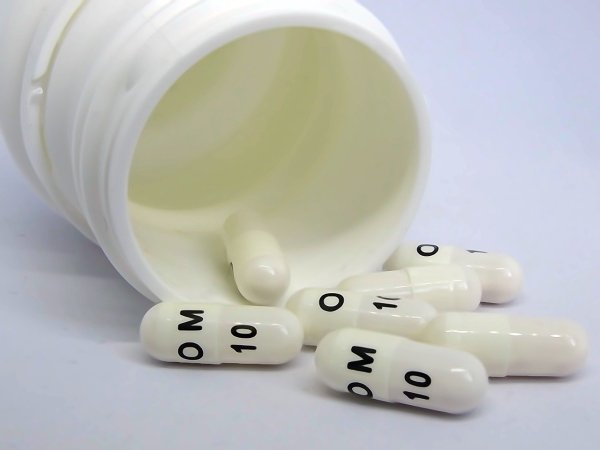
photo by Petra Goeschel courtesy of pixabay.com
A report from Science magazine dated April 26 describes an effort at Northwell Health (a large hospital/clinic chain in New York City) to test the efficacy (positive effects) of famotidine against the novel coronavirus (SARS-COV-2). Famotidine is an over-the-counter remedy for heartburn that has been available for years. It is less expensive than the more potent and powerful drug omeprazole, which is widely used here for acid reflux and peptic ulcers.
Dr Michael Callahan, an infectious disease specialist, was in China (coincidentally) during the early days of the pandemic that started there. He was in Nanjing to study avian flu and he followed his colleagues to Wuhan in mid-January to study the new cases of COVID-19 that were appearing. He became curious as to why poorer patients were not dying as rapidly as those more well-off, and discovered that many were taking famotidine for chronic heartburn because it was much cheaper than omeprazole. He found that those who had been on famotidine were dying at half the rate of those who were not. The data was crude, and it was impossible to conduct a statistical analysis because there were so many confounders (other factors that might have influenced the outcome).
When he returned to the US, he began to analyze the effects of famotidine and discovered that it inhibited a key enzyme that the virus uses in its growth process: papainlike protease. He began to organize efforts to conduct a clinical study. His work was complicated by the fact that, at that time, hydroxychloroquine (HCQ) was grabbing all the attention. He was forced to include HCQ as a standard treatment in his study, which devolved (grew into) a combination of HCQ by itself and HCQ with famotidine. That was the only way he could do a study, which he deplores, but Kevin Tracey, who is in charge of Northwell’s research efforts, said, “Is it good science? No… it’s the real world.”
It took weeks to obtain enough famotidine for injection (as opposed to the oral form of tablets, which is in good supply), but once this was available, the study began on April 7. The researchers aim to include a thousand patients in this protocol, which will take several weeks to complete.
In the meantime, encouragement came from anecdotal reports by people with acute COVID-19 who consumed the oral form of famotidine and showed rapid improvement. These reports cause concern among researchers because there could be a run on famotidine by anxious people who want to try the drug on themselves, either for prevention or because they think they have the disease already. There is a distinct possibility that people will try this on their own and consume the available supply of over-the-counter tablets long before scientific results are available.
I don’t recommend that anyone run out and buy this drug on their own, particularly since they are unlikely to take it at the right time. Many people have an unreasoning fear of this virus (not entirely unjustified) and are willing and able to try anything, no matter how far fetched, that might work. This was shown when a man and his wife consumed chloroquine intended as a component of an aquarium cleaner because they had heard that [redacted] called HCQ a “game changer” for the pandemic. The man died and his wife became critically ill but recovered. Famotidine is unlikely to cause such drastic effects, but it may be toxic in people with bad kidneys.
The time to take famotidine would be when you know you have the virus, when you have a headache and fever, but before you get pneumonia– but who is able to make rational decisions when they are acutely ill? Especially when this virus appears to cause neurological problems and possibly infect the brain. Hallucinations may follow, encephalopathy and strokes.
Nevermind. Try not to think about it right now, just think about all the smart, experienced people who are working on cures that will come before you get sick. Don’t let xenophobia or fear of other countries distract you from the work that people all over the world are doing to find the answers. As the Science article’s concluding paragraph says:
Callahan has kept busy since his return from China. Kadlec deployed him on medical evacuation missions of Americans on two heavily infected cruise ships. Now back to doing patient rounds in Boston, he says the famotidine lead underscores the importance of science diplomacy in the face of an infectious disease that knows no borders. When it comes to experience with COVID-19, he says, “No amount of smart people at the [National Institutes of Health] or Harvard or Stanford can outclass an average doctor in Wuhan.”

photo by Sasin Tipchai courtesy of pixabay.com
An article in the Los Angeles Times from April 23 describes the quarantine and isolation practices in Vietnam that have contributed to their successful, continuing fight against the novel coronavirus. When Vietnamese authorities first heard about the new virus, they immediately implemented a plan that they had used against SARS (severe acute respiratory syndrome) just very recently (in 2004).
A few days after the first reported death in China from the virus, the health ministry held a high-level meeting with US and World Health Organization (WHO) officials and laid out their “containment plan”. Vietnamese officials were spurred on by a suspicion of China that goes back hundreds of years to medieval invasions from their larger neighbor to the north. Their plan was successful at limiting the number of known infections to 268 with no known fatalities– out of a country of 95 million people. US officials, according to the article, find their numbers credible (unlike the numbers from China). There have been no new infections in a week, and there are plans to re-open for business this week.
From the article:
Experts credit Vietnam’s early, decisive steps: swiftly banning nearly all travel from China, suspending schools in mid-January even before recording any infections, quarantining tens of thousands of people and employing the extensive Communist Party apparatus to communicate distancing measures and trace the contacts of COVID-19 patients.
The response was made possible by a Leninist one-party system that is often criticized for maintaining secrecy, silencing dissent and trampling on individual rights — but that has proven adept at tackling health crises since it was the first nation to stamp out the SARS epidemic nearly two decades ago.
Say what you will (and I do) about the lack of civil rights in Vietnam, their approach to controlling the virus has been successful, so much so that they are able to produce consumer goods and protective equipment in quantity for shipping to needy customers in the US.
But–I believe that it is possible to succeed in controlling this pandemic without resorting to totalitarian/authoritarian methods.
However, we would have to have total transparency and honesty from all government officials and clear plan of action. This plan includes self-isolation of every contact to someone known to be ill and the contacts of those contacts. It includes testing of everyone who contacts someone known to be ill, whether symptomatic or not, at an interval that allows us to catch asymptomatic carriers (that is, a week or two after contact). It also includes testing everyone who wants to be tested, whether they are sick or not. Most important, we must recognize that even universal tests will not catch everyone who is sick or a carrier. Finally, we must test everyone who dies at home, even if they are suicides or homicides. How do we know that someone has not committed suicide or killed a loved one because they had the virus?
On that grim note, I will close. But, to be clear, I want to say again: it is not necessary to be or to become a totalitarian state to win the war against the novel coronavirus. It is only necessary to inform everyone of the stakes involved, talk them into buying in, and supply them with the tools they need (food, medicine, entertainment, jobs) to stay isolated. If that means giving a homeless person a home, I say, well, it is about time. (What did he say? Ohmygod, housing for the homeless, just because of SARS-COV-2?… well, why not?)

tan tian Buddha by Kon Karampelas courtesy of pixabay.com
The Washington Post ran an op-ed by Martin Lee, a Hong Kong human-rights activist, on April 20. He was arrested on April 18 and he says in the op-ed: “They took as evidence my cellphone and the T-shirt I wore to a demonstration last August that drew 1.7 million people [article in Guardian]— about a quarter of the population.” He was arrested and, apparently, released on bail. His crime? Participating in that huge demonstration, which didn’t have a permit despite its size.
Hong Kong’s government had been liberal in allowing permits for demonstrations that did not interfere with public order. Since the pandemic struck, the people have been unwilling to come out in public to protest and endanger their health by promoting contagion.
This arrest tells you immediately what sort of police state the Chinese Communist Party rules over. In a neighboring territory, Hong Kong, which is advertised as operating under “one country, two systems” and is protected by a Basic Law (a sort of constitution), one can now be subject to arrest for “subversion” or “sedition”.
Article 22 of the Basic Law states “No department of the Central People’s Government … may interfere in the affairs which the Hong Kong Special Administrative Region administers on its own in accordance with this Law.” This restriction is being ignored by Chinese officials who “interfere in the affairs [of Hong Kong government]” with impunity because people no longer protest in public.
“Subversion” and “sedition” are terms not often used in American politics because we value “liberty” more than we value “order”. Liberty, under the First Amendment to our Constitution, guarantees “freedom of speech” and the right to peacefully advocate for lawful change.
Freedom of speech, however, does not give us the right to advocate violent overthrow of our government, nor the right “to shout ‘fire’ in a crowded theater”. In other words, it is not lawful to try to incite panic or, for example, encourage violent attempts to exit a place that is in danger of being overwhelmed by conflagration.
“Sedition” is sometimes defined as:
“an illegal action inciting resistance to lawful authority and tending to cause the disruption or overthrow of the government“
This means that there is a gray area between peacefully protesting and advocating constitutional change, by voting or by passing changes to laws that are unpopular or inappropriate– and unlawfully advocating for extra-constitutional change through disruption of government, such as a coup or widespread violations of constitutional law. Some protesters, desperate for change, may be willing to be arrested for advocating a change that is threatening to the government– civil disobedience.
Totalitarian governments are hypersensitive to protest and interpret any disagreement with the views of authorities as a threat. These governments redefine “subversion” and “sedition” in ways that, in this country, infringe upon our First Amendment rights to speak and peacefully petition the government “for redress of grievances”.
The Chinese government and the Chinese Communist Party are particularly sensitive to any speech or public expressions that may cause people to advocate for change. This is most obvious in the Chinese government’s treatment of protests that have garnered the vocal, public support of at least a quarter of the population of Hong Kong– even without a permit to demonstrate.
These officially unsanctioned protests have occurred against a background of a society in Hong Kong that tends to be submissive and consensus-seeking. The consensus among the people of Hong Kong has turned towards revolt against the Chinese government’s encroachment on personal freedoms, but since the onset of COVID-19, people are choosing safety from infection over peaceful protest.
Demonstrations against the Chinese government’s attempts to force Hong Kong citizens to submit to Chinese laws that severely restrict dissent have stopped because there is a pandemic raging. Social activities in which people cannot observe “social distancing”– staying 6 feet apart and wearing masks– have ended.
This silence has allowed the Chinese government to tighten its hold upon Hong Kong without fear of public dissent. Under cover of the pandemic, the Chinese government has set about arresting and punishing public figures who have participated in the demonstrations of last year.
These demonstrations were technically illegal because a permit for public assembly had been denied in certain cases (where disruption of commerce or other risks were perceived by the local government). The local government, however, had chosen not to enforce that law because of extremely widespread public support for those demonstrations. Apparent public silence, after many years of giant demonstrations, has given the Chinese government cover to come in and punish those who dare to commit “subversion” and “sedition” according to their hypersensitive interpretation of dissent.
Dissent in Hong Kong is being suppressed by the Chinese government in violation of the “one country, two systems” principle. The pandemic has given them the cover they needed to proceed with their attacks upon basic civil liberties in the territory of Hong Kong. The only Chinese territory that the Chinese central government cannot control is Taiwan. We must support the independent democratic government on the island of Taiwan to show the Chinese people what good governance actually looks like, as opposed to the totalitarian surveillance state administered by the Chinese Communist Party on the mainland.
A personal note: the virus and me

(random baby from my wife’s iphone)
This out-of-focus photograph illustrates how I felt on February 28, 2020. I didn’t know what was going on, I had no memory of the past; in fact, I had no past. I do remember thinking, when I first heard of the virus going around in Wuhan, this is going to be a veryveryvery serious problem. I had really no conception of just how serious it would be. Every day there are more infections and more people die. Yesterday, there were 2,340 deaths from COVID-19; 889,661 people were confirmed to have been infected in the United States according to Johns Hopkins. According to Worldometer, there are 912,913 confirmed cases in the US. There were 419 cases and 7 deaths recorded in Fresno County (my county) per Johns Hopkins. We have been in a government ordered community quarantine (whatever that means) since March 20. These numbers will be out of date by the time you read this post.
The staggering, eye-popping speed of infections and deaths here and throughout the world is staggering and eye-popping. I don’t know what to think. I must be extremely anxious, but my pulse, blood pressure, and temperature are normal. Maybe I should check them again.
Very little has changed for me. I do the same things every day, same as I did before this started. I don’t go anywhere. I sit in front of the computer. I go out and dig in my garden. I water the lawn and the flowers. One thing has changed. I’ve given up watching the news. I read the news on my new-ish iPhone, for three or four hours a day, but it’s always the same. The president has done and said something alarming and disgusting, maybe to restrict someone’s rights or throw someone off a government program. Now, he’s on TV for two hours every day, which I especially avoid. I can’t stand to see him or hear his voice. The prospect of having him for president for another four years is enough to make me vomit, but there’s nothing I can do about it. I can’t even stop Devin Nunes, the representative in Congress for my rural neighborhood.
I can’t clearly remember what I used to do before all this began. Was everything really the same? My parents have been safely dead for some time. My wife has been semi-retired for some time. I have been retired for more than ten years. I recovered from surgery on my spine four years ago. Nothing has changed, but everything is different.
Now I live with a virus. It is too small to see, but so big that it overshadows everything. I think this is a good place to stop, because I can’t stand thinking about it for too long. I will go to seek solace in an old movie, or a few minutes of meditation, or a cheese sandwich. Anything but that orange-haired man-beast and that ugly little coronavirus.

