
pollution by marcinjozwiak courtesy of pixabay.com
From Nature Climate Change on May 19:
Daily global CO2 emissions decreased by –17% (–11 to –25% for ±1σ) by early April 2020 compared with the mean 2019 levels, just under half from changes in surface transport. At their peak, emissions in individual countries decreased by –26% on average. The impact on 2020 annual emissions depends on the duration of the confinement, with a low estimate of –4% (–2 to –7%) if prepandemic [sic] conditions return by mid-June, and a high estimate of –7% (–3 to –13%) if some restrictions remain worldwide until the end of 2020.
We see a lesson here. Surface transportation is responsible for a large proportion of climate-changing gases emitted into the atmosphere. If we were to transition to electric-powered (or even hydrogen-powered) vehicles for getting about, we would see a dramatic decrease in greenhouse gas emissions. If not, we will continue to suffer the effects.
Another problem: fires in the sub-arctic regions of Russia (Siberia) are increasing this spring. According to EcoWatch, 5 million acres are currently burning in Siberia and Eastern Russia. Last year saw an enormous number and size of fires as the permafrost thawed and humans were unable to control ignitions. Many of these fires are spontaneous, the result of lightning hitting dry vegetation. The existing fire control systems are not up to the task of stopping these fires, and the Russian economy is in such bad condition that it is unrealistic to expect any reinforcements. The remoteness of most of these fires also militates against control. These circumstances (the cratering Russian economy) are a result of the pandemic weakening oil prices, on which the Russians depend for foreign exchange. Thus, there is a negative effect of the pandemic on greenhouse gases as well as a positive effect from reduced vehicular activity.

(fiddler by Moshe Harosh courtesy of pixabay.com)
Today, the revival of “Comment of the Day” because I’m too lazy to write another post about the virus:
(By “noappforthat” in Washington Post, commenting on a column about the firing of the Inspector General for the State Department– which column appears to pin the firing on investigations that the IG has been doing about the $8 billion arms sale to the Kingdom of Saudi Arabia, OK’d by the State Department despite the murder and dismemberment of the renegade Kashoggi in the Saudi Embassy in Turkey… )
These petty details don’t matter. How about the illegal wars waged against Iran, China and Venezuela? How about the systematic undermining of international institutions from WHO, to the EU to NATO to the WTO? How about the 100,000+ dead Americans attributable to a combination of incompetence and deepening social inequalities? How about an administration loaded up with sycophants that openly engages in the worst forms of nepotism and cronyism, making even the worst tinpot dictatorships look like paragons of democracy and accountability? How about routine violations of the rule of law? Patent corruption? Abuse of powers? Undermining the independence of the judiciary? Radical worsening of income disparities and racism in America fuelled by toxic politics and right-wing policies? The debased and puerile reporting of it all? The US media and the political opposition wax indignant over various follies, insults and misdemeanours, opine on matters partisan and personal, and turn blind eyes to the complete failure of US democratic institutions, the vulgarity and venality of president and congress alike, and the disgraces that both the Democratic and Republic political parties have become. It isn’t the presidency in America that’s been taken ill; the entire nation is deeply diseased. Americans may not regard matters this way, but assuredly the rest of the world looking on does. A deeply flawed electoral process pitting an inept, decrepit and disgraced Biden against a buffoon incumbent will scarcely put things right. The presidential election is another symptom, not a cure.
That’s some pretty harsh sentiments! I would not go so hard on ex-Vice President Joe Biden, as he is the only electable alternative to He-who-must-not-be-named. Mr. Biden may not be a highly competent young man with vigor and verve, but he is an alternative. If you can’t see a difference, you are not paying attention. Remember that personalities count (that’s about the only thing that distinguishes the candidates, in fact). Mr. Biden’s personality is sweet and tolerant, whereas the other one is a sociopathic, malignant narcissist… and the “Democratic Socialist” Sanders is almost as much a narcissist as our buffoon-in-chief.

photo by WikiImages courtesy of pixabay.com
The sun goes through a more or less regular cycle of sunspots, from minimum to maximum and back again every eleven years. Sunspots are directly related to solar flares, in which gigantic balls of charged particles come shooting off the surface hundreds of millions of miles into space, right past and through the Earth in many cases. These balls of charged particles interfere with electrical systems on Earth, although they are somewhat attenuated by the atmosphere. These flares result in auroral displays– and the aurora borealis is something you should try to watch when you get the chance. Unfortunately, you won’t see any auroras for quite a while, as we are in a deep minimum right now.
Here’s a release from NASA in June 2017 that includes a nice picture of a solar maximum and minimum. It’s no longer being updated so it’s not of much help this year. Shouldn’t there be a story on NASA’s website about the solar minimum? You would think so, but then you’d be wrong.
Today, Newsweek ran a story describing the current minimum as a deep solar minimum– but referred to spaceweather.com, so going to that site, we find: a post from March 31 reminding us that we will not be able to determine when the solar minimum occurred for six months after it has passed. Although it was predicted for April 2020, we will not know for sure until October. By then, sunspots should have picked up at least a little. So far this year, according to Newsweek, there have been 104 days without sunspots– including the last five days, according to SILSO (Sunspot Index and Long term Solar Observations) (not secure site). Here’s the daily plot, which shows nothing since the first of May.
The last great solar minimum occurred between 1645 and 1715 and is known as the Maunder Minimum (see Wikipedia: solar minimum). “The Maunder Minimum occurred with a much longer period of lower-than-average European temperatures which is likely to have been primarily caused by volcanic activity.”
Solar “insolation” is reduced by 0.1% or so during a minimum and has no effect on Earth temperatures. Although sunspot activity was relatively high during the twentieth century, it had nothing to do with anthropogenic warming. What’s more, the current solar minimum has nothing to do with the current, uh, you know.
This post is intended as a distraction. I suggest, in particular, that you visit the NASA site linked above and spend some time looking at the sun (not directly, you understand, that would be unwise and certainly unpresidential) (can’t we leave Him out of at least one post? No.).
Coronavirus by Engin Akyurt via pixabay.com (open access)
Moderna announced results of Phase I clinical trials of a COVID-19 vaccine, resulting in a 700 point rise in the Dow stock market index. The announcement was carried on all the online news networks as well as print and television. A total of 45 humans received the vaccine, in three dosages: low, at 25 micrograms, medium, at 100 micrograms, and high, at 250 micrograms of lipid nanoparticles bearing mRNA transcripts for the coronavirus spike protein. The vaccine was given twice, at two-week intervals, with the first dose given in late March.
Two weeks after the second dose, 8 patients were tested at the low and medium doses for “neutralizing” antibodies (antibodies which were able to stop the virus from infecting human cells in a test tube), and all had sufficient levels. The antibody levels in four patients who received the 25 mcg dose were described as similar to the levels found in patients who had recovered from the natural illness caused by SARS-COV-2, and antibody levels in four patients who received 100 mcg exceeded those found in natural infection.
According to some media reports, a significant proportion of patients developed fever and other symptoms after receiving the vaccine. Three out of four patients who received the second 250 mcg dose had grade three (out of four) “systemic” reactions (serious but not “life-threatening”). Such adverse reactions are typical for vaccines but their frequency is concerning and will probably eliminate the 250 mcg dose from consideration.
Higher frequencies of such “systemic” adverse reactions militate against higher doses of the vaccine, which in turn limit its effectiveness. However, if a lower dose is settled on finally, more of the vaccine would be available for more patients.
These results clear Moderna to continue on to Phase II of clinical trials. These trials will be done in a larger group of patients– some 600. They will determine which dose is optimal for widespread adoption in Phase III, which will begin in July if all goes well in Phase II. The final phase will determine whether the vaccine is really effective in stopping natural infections and the illness COVID-19 in the wild.
A news release from NIH (the National Institutes of Health) on March 16 announced the commencement of phase I clinical trials for this vaccine, mRNA-1273. The news release described it as being a fruit of previous research with coronaviruses, specifically the ones which caused SARS and MERS. The vaccine consists of messenger RNA (mRNA), which is actually the cell’s own normal method for producing proteins; mRNA is translated within the cell into the spike protein of the virus’ envelope with which it attaches to the outside of cells.
The mRNA is enclosed within a lipid nanoparticle; this lipid is like the cell’s own envelope and allows the mRNA to enter a cell. Injecting this will induce the person’s cells to produce the spike protein, which will in turn stimulate an antibody response. The antibody will attach to any spike proteins in circulation; if the affected spike protein is attached to a virus the antibody will physically block the virus from invading cells.
When inducing immunity in this fashion, there is always a risk that the presence of circulating spike protein will cause a reaction identical to that which occurs during a natural infection: fever, chills, body-aches, and so on. The scientists would be surprised if there were not at least some level of “systemic” reaction of this nature.
Due to the exigent circumstances, a greatly accelerated program has been planned which will include a much smaller number of patients than is usually recruited for Phase III studies. Once Phase III is completed– which will take 6 months– general distribution of the vaccine can begin. This is planned for January 2021. I expect that this timetable will be adhered to, for political reasons: the president has promised a vaccine by this date. Whether the results of the Phase III trials are good or not, the vaccine will be given out as scheduled.
A second vaccine was reported in an NIH release on May 15: a single dose of ChAdOx1 nCoV-19, an investigational vaccine against SARS-CoV-2, has protected six rhesus macaques from pneumonia caused by the virus. This vaccine was created at the University of Oxford. Human trials began on April 23. This vaccine uses a “replication-deficient” (unable to grow) adenovirus to carry a SARS-COV-2 protein, which induces an immune response. The results were reported on BioRxIv on May 13.
Another report, in Biospace on May 18, states that AstraZeneca will produce 30 million doses of this vaccine for the UK by September and 100 million by the end of the year. This would represent an example of a vaccine limited to a specific country– a thing that has been deplored by some.
There are over a hundred different vaccines somewhere in the pipeline, but only a total of eight have advanced far enough for clinical trials. According to Kyodo News on May 16, these eight vaccines include: Inovio in the US, Pfizer and BioNTech SE in Germany, and four in China. Another six vaccines are in preclinical evaluation in Japan.
Global News of Canada reported that Phase I trials of a Chinese vaccine produced by CanSino Biologics had begun on March 16 and that Phase II trials are underway; further trials in Canada had been approved by Prime Minister Trudeau as of the article’s date, May 16. The vaccine is called Ad5-nCoV and uses an adenovirus as well, like the one called ChAdOx1 nCoV-19. According to CTV News, this vaccine could be produced in Canada and China.
Apparently, vaccines of several types could be in use by early next year. Which vaccines are most successful remains to be seen, but the number of cases worldwide by then will be at least ten and possibly a hundred million.
Lancet: Investigation of an early outbreak of COVID-19 in Germany: their patients zero through five

Electron micrograph of SARS-COV-2 virions in vitro
Read this study in the Lancet from May 15: Investigation of a COVID-19 outbreak in Germany resulting from a single travel-associated primary case: a case series. Or, better yet, read the summary in the Medium coronavirus blog from this morning. This looks like a great coronavirus blog, and it has 18,000 followers, but I just found it today. So far behind.
Coronavirus by Engin Akyurt via pixabay.com (open access)
We earlier reported on a Stanford antibody prevalence study performed in early April and published on MedRxiv on April 14. This study, which included 3,300 people who had blood tests attempting to discern antibody to SARS-COV-2 (the agent which causes COVID-19), claimed that there were as many as 85 times as many infections as nasopharyngeal swab tests had ascertained. The greater number of infections reduced the case fatality rate (the proportion of infected people who die) to roughly 0.1%, closer to the rate observed with seasonal influenza (which has a case fatality rate of less than 0.1%).
The results of this study are a little hard to swallow because they seem to exaggerate the number of infections somewhat. Now, a whistleblower complains, as reported by Buzzfeed News on May 15, that the test used to detect the antibodies had a significant false-positive rate, making its estimates suspect. With the small percentage of subjects found to have positive results, the number of false-positive tests could have been double the number of true positives. In addition, the people who volunteered for the study likely thought they had been infected and wanted to be tested to confirm this: the recruitment information emphasized this.
The whistleblower states that the study was partially funded by the JetBlue Airways founder David Neeleman, and that he “sought out the study authors for their congruent policy views” and funded their work accordingly. They further state that Neeleman was in contact with the authors during the study, in part to encourage them to make conclusions that he supported (not a good way to do science). The research wound up being cited by those on the right wing (link to NYT opinion piece) who claimed that the severity of the novel coronavirus infection was overstated and that the period of shutdown was unwarranted. Some of those who used the study for support aired their views on Fox Business News.
If we use the study’s results more carefully, we discover that the actual number of people infected with the new virus in Santa Clara County is probably much smaller than they stated. The study states that 1.5% of the people studied had positive antibody tests, with a sensitivity of 82.8% and specificity of 99.5%, and after adjustment it calculated that 1.2% of the study’s patients were positive. After weighting for the population characteristics of the county, it states that approximately 2.8% (between 1.3 and 4.7%) of the people in the county had been infected with the virus. Since there were only 1,000 confirmed cases at that time and the test implied that there had been between 14,000 and 91,000 cases, the study concluded that there had been a vast undercount of cases.
While there had certainly been a dramatic undercount of virus cases for numerous reasons, including lack of access to tests and asymptomatic infections, the conclusion that was made was an exaggeration. Those who wanted the new virus to be less lethal jumped to the conclusion that, with the confirmed number of deaths, the death rate was as low as 0.1%. This is wrong because of the reasons mentioned before, as well as another reason: the confirmed number of deaths was also too low.
Since that study was released, the county coroner made news by indicating that the earliest known COVID-19 death had occurred in early February. This was based on tests conducted on autopsy cases of people who had died at home, and is, again, “only the tip of the iceberg.” Only a few of those at-home deaths have even been evaluated for the virus. Some of those who died were thought to have had “obvious” heart attacks or strokes, but we now know that SARS-COV-2 can actually bring on these terminal events.
A study of the Spanish population was recently released, as reported in El Pais on May 14. This study (with nearly 70,000 people tested) indicates that, overall, about 5% of the population of Spain, or 2.3 million people, have been infected with SARS-COV-2. The antibody prevalence ranged from 14.2% in Soria province, to 11.3% in Madrid, down to less than 2% in isolated regions. Since the confirmed number of cases was only about 230,000 (as of the date of the article), this means that 90% of the cases went uncounted. Based on the antibody percentage, the actual death rate, with 27,000 deaths, is between 1 and 1.2%.
In truth, we have seriously undercounted both the number of cases (by a factor of ten or more, not a factor of 50-85 times) and the number of deaths (by an unknown factor, but possibly less than double). Putting all this together, we can estimate that the real death rate is between 0.4 and 1.2%– less than the 6% previously suggested, but certainly far more than the rate we find with seasonal influenza (less than 0.1%).
There’s a lot of uncertainty surrounding the number of people who have had the virus, and some people are exploiting the uncertainty for political reasons. Those who want the death rate to be low so that we can stop “social distancing” and “safer at home” policies and “jump start” the economy are probably wrong. Most Americans sense this and are justifiably afraid to venture forth without more information about who has the virus and what we can do to avoid getting sick. We hope that the delusional optimists (who seem to be on the right-wing end of the political spectrum) do not consolidate control of the country.
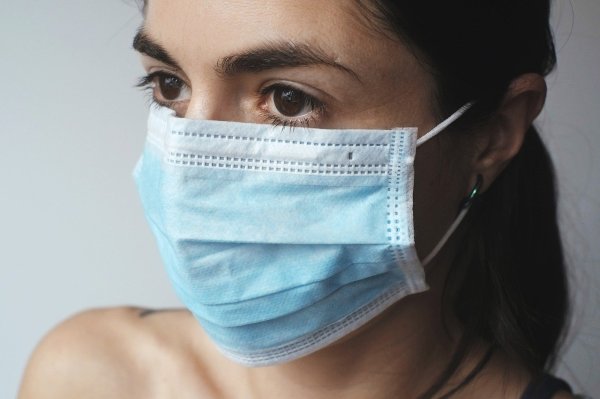
photo by Juraj Varga courtesy of pixabay.com
A “brief report” published in the Proceedings of the National Academy of Sciences on May 13 shows that small saliva droplets emitted during speech can linger in the air for eight minutes or more. This study did not involve people infected with SARS-COV-2, the virus that causes COVID-19, partially for safety reasons. However, it did demonstrate that these droplets are big enough to contain infectious virus and small enough to “float” in ambient air for minutes.
It makes us beware of stagnant indoor air and provides data from which we can strongly recommend that people wear masks whenever in social situations. We can be sure that the virus is transmitted through the air we breathe while speaking as well as by contact with contaminated objects or hand-to-hand.
The research used sheets of laser light to illuminate saliva droplets emitted by people during normal speech; they found an average of a thousand droplets per second ranging from roughly 1 to 500 microns (thousandths of a millimeter); those less than 10 microns can literally float in the air almost indefinitely. Each droplet can contain viruses in addition to 95-99% water, dead epithelial cells, bacteria, and other debris. On drying out, such particles maintain their infectious load but can float even more effectively. This is the mechanism by which the measles virus can stay in the air for two hours after a measles patient leaves the room, waiting to infect the next susceptible person to come along.
We don’t yet know how many virions (individual virus particles) it takes to establish an infection in a susceptible person; it may be as few as one or as many as several thousands. In any case, the probability of exposure is nonzero– not a reassuring prospect.
From the study’s abstract:
Highly sensitive laser light scattering observations have revealed that loud speech can emit thousands of oral fluid droplets per second. In a closed, stagnant air environment, they disappear from the window of view with time constants in the range of 8 to 14 min, which corresponds to droplet nuclei of ca. 4 μm diameter, or 12- to 21-μm droplets prior to dehydration. These observations confirm that there is a substantial probability that normal speaking causes airborne virus transmission in confined environments.
It has long been recognized that respiratory viruses can be transmitted via droplets that are generated by coughing or sneezing. It is less widely known that normal speaking also produces thousands of oral fluid droplets with a broad size distribution (ca. 1 μm to 500 μm) (1, 2). Droplets can harbor a variety of respiratory pathogens, including measles (3) and influenza virus (4) as well as Mycobacterium tuberculosis (5). High viral loads of severe acute respiratory syndrome coronavirus 2 (SARS-CoV-2) have been detected in oral fluids of coronavirus disease 2019 (COVID-19)−positive patients (6), including asymptomatic ones (7). However, the possible role of small speech droplet nuclei with diameters of less than 30 μm, which potentially could remain airborne for extended periods of time (1, 2, 8, 9), has not been widely appreciated.
In a recent report (10), we used an intense sheet of laser light to visualize bursts of speech droplets produced during repeated spoken phrases. This method revealed average droplet emission rates of ca. 1,000 s−1 with peak emission rates as high as 10,000 s−1, with a total integrated volume far higher than in previous reports (1, 2, 8, 9). The high sensitivity of the light scattering method in observing medium-sized (10 μm to 100 μm) droplets, a fraction of which remain airborne for at least 30 s, likely accounts for the large increase in the number of observed droplets.
The amount by which a droplet shrinks upon dehydration depends on the fraction of nonvolatile matter in the oral fluid, which includes electrolytes, sugars, enzymes, DNA, and remnants of dehydrated epithelial and white blood cells. Whereas pure saliva contains 99.5% water when exiting the salivary glands, the weight fraction of nonvolatile matter in oral fluid falls in the 1 to 5% range.
The independent action hypothesis (IAH) states that each virion has an equal, nonzero probability of causing an infection. Validity of IAH was demonstrated for infection of insect larvae by baculovirus (15), and of plants by Tobacco etch virus variants that carried green fluorescent protein markers (16). IAH applies to systems where the host is highly susceptible, but the extent to which IAH is valid for humans and SARS-CoV-2 has not yet been firmly established. For COVID-19, with an oral fluid average virus RNA load of 7 × 10⁶ copies per milliliter (maximum of 2.35 × 10⁹ copies per milliliter) (7), the probability that a 50-μm-diameter droplet, prior to dehydration, contains at least one virion is ∼37%. For a 10-μm droplet, this probability drops to 0.37%, and the probability that it contains more than one virion, if generated from a homogeneous distribution of oral fluid, is negligible. Therefore, airborne droplets pose a significant risk only if IAH applies to human virus transmission. Considering that frequent person-to-person transmission has been reported in community and health care settings, it appears likely that IAH applies to COVID-19 and other highly contagious airborne respiratory diseases, such as influenza and measles.

not a millipede– much prettier. photo by tomekwalecki courtesy of pixabay.com
Science magazine (scienmag.com) published an article on May 15 about a newly described species that was discovered when a scientist perused a twitter image showing the head of a millipede (not shown here because I’m not sure that photo is open access) with a parasitic fungus. Ana Sofia Reboleira of the National Natural History Museum of Denmark in Copenhagen was “scrolling through Twitter” (something I avoid) when she saw an image that caught her eye. It was “a photo of a North American millipede shared by her US colleague Derek Hennen of Virginia Tech” that had a few small spots that looked out-of-place. With a colleague, she searched her museum’s large trove of millipede specimens for similar spots.
“Together with colleague Henrik Enghoff, she discovered several specimens of the same fungus on a few of the American millipedes in the Natural History Museum’s enormous collection — fungi that had never before been documented.” She highlighted the discovery as an example of how “social media” can facilitate unexpected connections. She happened to be an expert in the field and she was communicating with other expert professionals and interested amateurs. This is a positive side-effect of facilitated communication between people with specialized or incomplete knowledge on abstruse subjects.
From the photograph, I wouldn’t know if a millipede or a deep undersea creature was the subject. I couldn’t guess how magnified the photo was, nor exactly what the fungus was (although the tiny spots were helpfully circled in red). I would have described it as “not human”. “Damn it, Jim”, I’m a doctor, not an entomologist (with apologies to “Bones” from Star Trek). That’s one reason I didn’t reproduce the photo in the original article– you probably wouldn’t have known it either. This picture, from pixabay, is much more agreeable, and is the nicest “millipede” photo they had.
I don’t use Twitter much. I depend on the internet news outlets to notify me when something of importance or outrage is twitted, usually by twits. Likewise, I do not spend time on Facebook. There are other, better sources for news, and I’m not a social sort anyway. I don’t like being thought of as the product rather than the user. I can’t much help the fact that WordPress considers me a product as well.
So: cheers to the entomologist, and I hope her job at the Natural History Museum is secure (I think it is). Denmark, as the happiest country in the world (or is it the Netherlands?), has a lot going for it, including high taxes and a very secure social safety net. It is also highly democratic, NOT socialistic. Burger-flippers are paid the equivalent of $22 an hour, and the burgers only cost 27 cents apiece more than in the US. Well worth it.
This diversion from the pandemic was brought to you by Conrad Theodore Seitz.
Buddhism and numbers: three, five, and eight. Briefly going over the Noble Eightfold Way today.

photo by Phramaha Narinthep Thongchai courtesy of pixabay.com
“Three” refers to “the triple gem”: the Buddha (a man, a historical person); his teachings (the documents preserving his oral advice); and the monastic community (the monks and nuns who worked to advance Buddhism)– or indeed the entire Buddhist community as a whole.
In Tibetan Buddhism, there are also the three “inner roots” (the lama or guru, the yidam or “Buddhahood”/”awakening”, and the Kandrini or “sacred female spirit”), three “secret roots” (the channels through which spiritual energy flows, the breath, and “point” or “dot”), and three “ultimate roots” (too complex to mention here).
There are more “threes” in Buddhism, but we’ve already gotten too complicated for a short post.
“Five” refers to the “Five Precepts” mentioned yesterday:
- I will not kill.
- I will not steal.
- I will not lie.
- I will not have inappropriate sex.
- I will not take intoxicating substances.
“Eight” refers to the Noble Eightfold Path, what Wikipedia describes as “an early summary of the path of Buddhist practices leading to liberation from samsara, the painful cycle of rebirth.” The Eightfold Way consists of the following:
- Right understanding; in Wikipedia, this means an understanding that: “our actions have consequences, that death is not the end, that our actions and beliefs also have consequences after death”… this is karma.
- Right intention; this is, per Wikipedia: “the practitioner resolves to leave home, renounce the worldly life and dedicate himself to an ascetic pursuit.”… this is abandoning your old way of life.
- Right speech; (Wikipedia quotes from the Pali canon here): ” Abstaining from lying, from divisive speech, from abusive speech, and from idle chatter”… this is talking right.
- Right conduct; (again, quoting from the Pali canon): “Abstaining from killing, abstaining from stealing, abstaining from sexual misconduct”… this is doing right.
- Right livelihood; (Wikipedia quoting from a book by Vetter, 1988): “living from begging, but not accepting everything and not possessing more than is strictly necessary”… this is living by begging, not so responsible if everyone were to do it.
- Right effort; (paraphrased from Wikipedia) this refers to efforts of the will to avoid sensual desire (not just sex, but desiring any sensation) and aversion, including hatred, anger, and resentment… this is hard.
- Right mindfulness; (quoting from Wikipedia again, referring to the vipassana (insight meditation) movement): “never be absent minded, [be] conscious of what one is doing”… this begins meditation. (Note that meditation has two aims, according to Wikipedia: insight and calming.)
- Right concentration; this appears to be concentrating without having a single object in mind. Here Wikipedia begins by referring to Bikkhu Bodhi (an American Theravada monk), and his idea is: ” right concentration meditative factor in Buddhism is a state of awareness without any object or subject, and ultimately unto nothingness and emptiness.” This is another step in meditation.
The Noble Eightfold Way can have many different interpretations, as many as there are people who encounter it. It could be interpreted differently depending on what period of life you are in when you find it; later you could interpret it differently. We’ll leave it at that today.
photo by Jakub Orisek courtesy of pixabay.com
According to an article in the New York Times (NYT) published May 14 on their world updates page, the UNICEF has warned of an increase in child mortality rates, not directly due to novel coronavirus infections (which rarely affect children severely), but due to lack of routine medical care and vaccinations. Poor nations, especially in Africa, are dependent upon overstressed clinics for preventative medical care for children. These heavily subsidized or fully funded clinics provide vaccinations, physicals, and medical care for most illnesses, especially for children, all over Africa.
Workers at these clinics report that parents are afraid to bring their children in because they may come in contact with infected people and come down with the virus themselves. At the same time, medical services are “overstressed or curtailed” because of the pandemic (this quote references a news release from UNICEF and research published in Lancet Global Health):
About 1.2 million children in more than 100 countries are at risk of dying from preventable causes every six months because health services are overstressed or curtailed by the coronavirus pandemic, UNICEF said this week.
The figure is in addition to the 2.5 million children age 5 or younger who already die every six months in 118 low- and middle-income countries.
Put another way, the roughly 13,800 young children who die every day will be joined by more than 6,000 others whose lives could have been saved.
UNICEF said the estimate was based on a study published in the Lancet Global Health journal by researchers at the Johns Hopkins Bloomberg School of Public Health.
The Lancet study models decreased access to maternal and early childhood medical care, giving a broad range of estimates for increased mortality. The findings are reproduced here:
Our least severe scenario (coverage reductions of 9·8–18·5% and wasting increase of 10%) over 6 months would result in 253 500 additional child deaths and 12 200 additional maternal deaths. Our most severe scenario (coverage reductions of 39·3–51·9% and wasting increase of 50%) over 6 months would result in 1 157 000 additional child deaths and 56 700 additional maternal deaths. These additional deaths would represent an increase of 9·8–44·7% in under-5 child deaths per month, and an 8·3–38·6% increase in maternal deaths per month, across the 118 countries. Across our three scenarios, the reduced coverage of four childbirth interventions (parenteral administration of uterotonics, antibiotics, and anticonvulsants, and clean birth environments) would account for approximately 60% of additional maternal deaths. The increase in wasting prevalence would account for 18–23% of additional child deaths and reduced coverage of antibiotics for pneumonia and neonatal sepsis and of oral rehydration solution for diarrhoea would together account for around 41% of additional child deaths.
These broad ranges of mortality are produced from three separate scenarios that describe different responses and time courses for the pandemic. They account for maternal deaths and mortality in children under 5. They predict fewer interventions to reduce mortality during pregnancy and in childbirth, loss of newborns, reduction in antibiotic treatment for pneumonia and neonatal sepsis, lack of oral rehydration therapy for diarrhea (a major source of mortality in children, surprising to us in the developed world), and lack of food supplement programs (without food, medicine would be useless).
These figures are predictions, not certainties. Much could be done to fight this risk of higher death rates in mothers and children. One thing that would help is increased financial support from the US federal government for overseas medical and food supplement programs. During this time, when the purse strings have been loosened for federal spending, increased foreign aid would be a minimal additional expense that would save many more lives.
According to Wikipedia, the US spent about $20 billion on foreign aid through USAID (the United States Agency for International Development) and a total of $35 billion for economic aid in 2018; another $15 billion went to military aid. By comparison, $100 billion of the $2.9 trillion obligated so far to economic stimulus packages by Congress is going to reimburse US hospitals for their expenses in treating the virus, according to this story in Politico on March 25. Another $34 billion was sent to the airline industry in the last package, enacted into law March 27. (Since then, Congress has taken no other formal actions, which is fodder for another story. — Referencing a web site called “gov tracker” that calls itself “the leading non-governmental source of legislative information and statistics”.)

