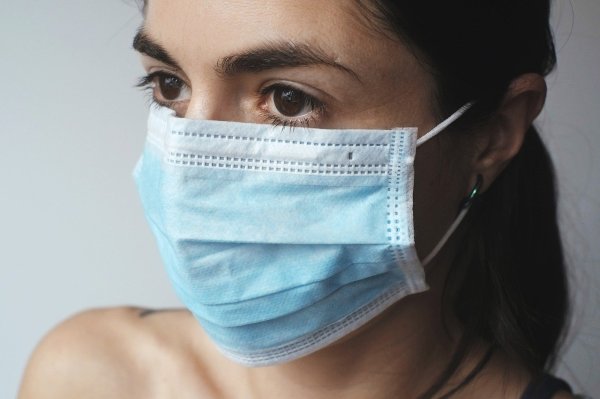
photo by Juraj Varga courtesy of pixabay.com
A “brief report” published in the Proceedings of the National Academy of Sciences on May 13 shows that small saliva droplets emitted during speech can linger in the air for eight minutes or more. This study did not involve people infected with SARS-COV-2, the virus that causes COVID-19, partially for safety reasons. However, it did demonstrate that these droplets are big enough to contain infectious virus and small enough to “float” in ambient air for minutes.
It makes us beware of stagnant indoor air and provides data from which we can strongly recommend that people wear masks whenever in social situations. We can be sure that the virus is transmitted through the air we breathe while speaking as well as by contact with contaminated objects or hand-to-hand.
The research used sheets of laser light to illuminate saliva droplets emitted by people during normal speech; they found an average of a thousand droplets per second ranging from roughly 1 to 500 microns (thousandths of a millimeter); those less than 10 microns can literally float in the air almost indefinitely. Each droplet can contain viruses in addition to 95-99% water, dead epithelial cells, bacteria, and other debris. On drying out, such particles maintain their infectious load but can float even more effectively. This is the mechanism by which the measles virus can stay in the air for two hours after a measles patient leaves the room, waiting to infect the next susceptible person to come along.
We don’t yet know how many virions (individual virus particles) it takes to establish an infection in a susceptible person; it may be as few as one or as many as several thousands. In any case, the probability of exposure is nonzero– not a reassuring prospect.
From the study’s abstract:
Highly sensitive laser light scattering observations have revealed that loud speech can emit thousands of oral fluid droplets per second. In a closed, stagnant air environment, they disappear from the window of view with time constants in the range of 8 to 14 min, which corresponds to droplet nuclei of ca. 4 μm diameter, or 12- to 21-μm droplets prior to dehydration. These observations confirm that there is a substantial probability that normal speaking causes airborne virus transmission in confined environments.
It has long been recognized that respiratory viruses can be transmitted via droplets that are generated by coughing or sneezing. It is less widely known that normal speaking also produces thousands of oral fluid droplets with a broad size distribution (ca. 1 μm to 500 μm) (1, 2). Droplets can harbor a variety of respiratory pathogens, including measles (3) and influenza virus (4) as well as Mycobacterium tuberculosis (5). High viral loads of severe acute respiratory syndrome coronavirus 2 (SARS-CoV-2) have been detected in oral fluids of coronavirus disease 2019 (COVID-19)−positive patients (6), including asymptomatic ones (7). However, the possible role of small speech droplet nuclei with diameters of less than 30 μm, which potentially could remain airborne for extended periods of time (1, 2, 8, 9), has not been widely appreciated.
In a recent report (10), we used an intense sheet of laser light to visualize bursts of speech droplets produced during repeated spoken phrases. This method revealed average droplet emission rates of ca. 1,000 s−1 with peak emission rates as high as 10,000 s−1, with a total integrated volume far higher than in previous reports (1, 2, 8, 9). The high sensitivity of the light scattering method in observing medium-sized (10 μm to 100 μm) droplets, a fraction of which remain airborne for at least 30 s, likely accounts for the large increase in the number of observed droplets.
The amount by which a droplet shrinks upon dehydration depends on the fraction of nonvolatile matter in the oral fluid, which includes electrolytes, sugars, enzymes, DNA, and remnants of dehydrated epithelial and white blood cells. Whereas pure saliva contains 99.5% water when exiting the salivary glands, the weight fraction of nonvolatile matter in oral fluid falls in the 1 to 5% range.
The independent action hypothesis (IAH) states that each virion has an equal, nonzero probability of causing an infection. Validity of IAH was demonstrated for infection of insect larvae by baculovirus (15), and of plants by Tobacco etch virus variants that carried green fluorescent protein markers (16). IAH applies to systems where the host is highly susceptible, but the extent to which IAH is valid for humans and SARS-CoV-2 has not yet been firmly established. For COVID-19, with an oral fluid average virus RNA load of 7 × 10⁶ copies per milliliter (maximum of 2.35 × 10⁹ copies per milliliter) (7), the probability that a 50-μm-diameter droplet, prior to dehydration, contains at least one virion is ∼37%. For a 10-μm droplet, this probability drops to 0.37%, and the probability that it contains more than one virion, if generated from a homogeneous distribution of oral fluid, is negligible. Therefore, airborne droplets pose a significant risk only if IAH applies to human virus transmission. Considering that frequent person-to-person transmission has been reported in community and health care settings, it appears likely that IAH applies to COVID-19 and other highly contagious airborne respiratory diseases, such as influenza and measles.

not a millipede– much prettier. photo by tomekwalecki courtesy of pixabay.com
Science magazine (scienmag.com) published an article on May 15 about a newly described species that was discovered when a scientist perused a twitter image showing the head of a millipede (not shown here because I’m not sure that photo is open access) with a parasitic fungus. Ana Sofia Reboleira of the National Natural History Museum of Denmark in Copenhagen was “scrolling through Twitter” (something I avoid) when she saw an image that caught her eye. It was “a photo of a North American millipede shared by her US colleague Derek Hennen of Virginia Tech” that had a few small spots that looked out-of-place. With a colleague, she searched her museum’s large trove of millipede specimens for similar spots.
“Together with colleague Henrik Enghoff, she discovered several specimens of the same fungus on a few of the American millipedes in the Natural History Museum’s enormous collection — fungi that had never before been documented.” She highlighted the discovery as an example of how “social media” can facilitate unexpected connections. She happened to be an expert in the field and she was communicating with other expert professionals and interested amateurs. This is a positive side-effect of facilitated communication between people with specialized or incomplete knowledge on abstruse subjects.
From the photograph, I wouldn’t know if a millipede or a deep undersea creature was the subject. I couldn’t guess how magnified the photo was, nor exactly what the fungus was (although the tiny spots were helpfully circled in red). I would have described it as “not human”. “Damn it, Jim”, I’m a doctor, not an entomologist (with apologies to “Bones” from Star Trek). That’s one reason I didn’t reproduce the photo in the original article– you probably wouldn’t have known it either. This picture, from pixabay, is much more agreeable, and is the nicest “millipede” photo they had.
I don’t use Twitter much. I depend on the internet news outlets to notify me when something of importance or outrage is twitted, usually by twits. Likewise, I do not spend time on Facebook. There are other, better sources for news, and I’m not a social sort anyway. I don’t like being thought of as the product rather than the user. I can’t much help the fact that WordPress considers me a product as well.
So: cheers to the entomologist, and I hope her job at the Natural History Museum is secure (I think it is). Denmark, as the happiest country in the world (or is it the Netherlands?), has a lot going for it, including high taxes and a very secure social safety net. It is also highly democratic, NOT socialistic. Burger-flippers are paid the equivalent of $22 an hour, and the burgers only cost 27 cents apiece more than in the US. Well worth it.
This diversion from the pandemic was brought to you by Conrad Theodore Seitz.
Buddhism and numbers: three, five, and eight. Briefly going over the Noble Eightfold Way today.
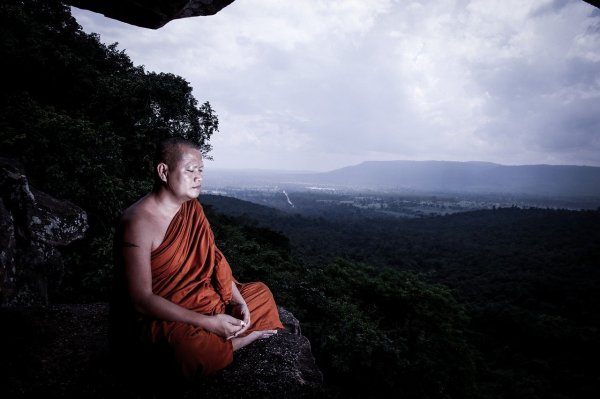
photo by Phramaha Narinthep Thongchai courtesy of pixabay.com
“Three” refers to “the triple gem”: the Buddha (a man, a historical person); his teachings (the documents preserving his oral advice); and the monastic community (the monks and nuns who worked to advance Buddhism)– or indeed the entire Buddhist community as a whole.
In Tibetan Buddhism, there are also the three “inner roots” (the lama or guru, the yidam or “Buddhahood”/”awakening”, and the Kandrini or “sacred female spirit”), three “secret roots” (the channels through which spiritual energy flows, the breath, and “point” or “dot”), and three “ultimate roots” (too complex to mention here).
There are more “threes” in Buddhism, but we’ve already gotten too complicated for a short post.
“Five” refers to the “Five Precepts” mentioned yesterday:
- I will not kill.
- I will not steal.
- I will not lie.
- I will not have inappropriate sex.
- I will not take intoxicating substances.
“Eight” refers to the Noble Eightfold Path, what Wikipedia describes as “an early summary of the path of Buddhist practices leading to liberation from samsara, the painful cycle of rebirth.” The Eightfold Way consists of the following:
- Right understanding; in Wikipedia, this means an understanding that: “our actions have consequences, that death is not the end, that our actions and beliefs also have consequences after death”… this is karma.
- Right intention; this is, per Wikipedia: “the practitioner resolves to leave home, renounce the worldly life and dedicate himself to an ascetic pursuit.”… this is abandoning your old way of life.
- Right speech; (Wikipedia quotes from the Pali canon here): ” Abstaining from lying, from divisive speech, from abusive speech, and from idle chatter”… this is talking right.
- Right conduct; (again, quoting from the Pali canon): “Abstaining from killing, abstaining from stealing, abstaining from sexual misconduct”… this is doing right.
- Right livelihood; (Wikipedia quoting from a book by Vetter, 1988): “living from begging, but not accepting everything and not possessing more than is strictly necessary”… this is living by begging, not so responsible if everyone were to do it.
- Right effort; (paraphrased from Wikipedia) this refers to efforts of the will to avoid sensual desire (not just sex, but desiring any sensation) and aversion, including hatred, anger, and resentment… this is hard.
- Right mindfulness; (quoting from Wikipedia again, referring to the vipassana (insight meditation) movement): “never be absent minded, [be] conscious of what one is doing”… this begins meditation. (Note that meditation has two aims, according to Wikipedia: insight and calming.)
- Right concentration; this appears to be concentrating without having a single object in mind. Here Wikipedia begins by referring to Bikkhu Bodhi (an American Theravada monk), and his idea is: ” right concentration meditative factor in Buddhism is a state of awareness without any object or subject, and ultimately unto nothingness and emptiness.” This is another step in meditation.
The Noble Eightfold Way can have many different interpretations, as many as there are people who encounter it. It could be interpreted differently depending on what period of life you are in when you find it; later you could interpret it differently. We’ll leave it at that today.
photo by Jakub Orisek courtesy of pixabay.com
According to an article in the New York Times (NYT) published May 14 on their world updates page, the UNICEF has warned of an increase in child mortality rates, not directly due to novel coronavirus infections (which rarely affect children severely), but due to lack of routine medical care and vaccinations. Poor nations, especially in Africa, are dependent upon overstressed clinics for preventative medical care for children. These heavily subsidized or fully funded clinics provide vaccinations, physicals, and medical care for most illnesses, especially for children, all over Africa.
Workers at these clinics report that parents are afraid to bring their children in because they may come in contact with infected people and come down with the virus themselves. At the same time, medical services are “overstressed or curtailed” because of the pandemic (this quote references a news release from UNICEF and research published in Lancet Global Health):
About 1.2 million children in more than 100 countries are at risk of dying from preventable causes every six months because health services are overstressed or curtailed by the coronavirus pandemic, UNICEF said this week.
The figure is in addition to the 2.5 million children age 5 or younger who already die every six months in 118 low- and middle-income countries.
Put another way, the roughly 13,800 young children who die every day will be joined by more than 6,000 others whose lives could have been saved.
UNICEF said the estimate was based on a study published in the Lancet Global Health journal by researchers at the Johns Hopkins Bloomberg School of Public Health.
The Lancet study models decreased access to maternal and early childhood medical care, giving a broad range of estimates for increased mortality. The findings are reproduced here:
Our least severe scenario (coverage reductions of 9·8–18·5% and wasting increase of 10%) over 6 months would result in 253 500 additional child deaths and 12 200 additional maternal deaths. Our most severe scenario (coverage reductions of 39·3–51·9% and wasting increase of 50%) over 6 months would result in 1 157 000 additional child deaths and 56 700 additional maternal deaths. These additional deaths would represent an increase of 9·8–44·7% in under-5 child deaths per month, and an 8·3–38·6% increase in maternal deaths per month, across the 118 countries. Across our three scenarios, the reduced coverage of four childbirth interventions (parenteral administration of uterotonics, antibiotics, and anticonvulsants, and clean birth environments) would account for approximately 60% of additional maternal deaths. The increase in wasting prevalence would account for 18–23% of additional child deaths and reduced coverage of antibiotics for pneumonia and neonatal sepsis and of oral rehydration solution for diarrhoea would together account for around 41% of additional child deaths.
These broad ranges of mortality are produced from three separate scenarios that describe different responses and time courses for the pandemic. They account for maternal deaths and mortality in children under 5. They predict fewer interventions to reduce mortality during pregnancy and in childbirth, loss of newborns, reduction in antibiotic treatment for pneumonia and neonatal sepsis, lack of oral rehydration therapy for diarrhea (a major source of mortality in children, surprising to us in the developed world), and lack of food supplement programs (without food, medicine would be useless).
These figures are predictions, not certainties. Much could be done to fight this risk of higher death rates in mothers and children. One thing that would help is increased financial support from the US federal government for overseas medical and food supplement programs. During this time, when the purse strings have been loosened for federal spending, increased foreign aid would be a minimal additional expense that would save many more lives.
According to Wikipedia, the US spent about $20 billion on foreign aid through USAID (the United States Agency for International Development) and a total of $35 billion for economic aid in 2018; another $15 billion went to military aid. By comparison, $100 billion of the $2.9 trillion obligated so far to economic stimulus packages by Congress is going to reimburse US hospitals for their expenses in treating the virus, according to this story in Politico on March 25. Another $34 billion was sent to the airline industry in the last package, enacted into law March 27. (Since then, Congress has taken no other formal actions, which is fodder for another story. — Referencing a web site called “gov tracker” that calls itself “the leading non-governmental source of legislative information and statistics”.)

tan tian Buddha by Kon Karampelas courtesy of pixabay.com
Here are five simple rules (precepts) that all Buddhists are supposed to follow, taken from Wikipedia’s article on Buddhism’s “Refuge”; they are also discussed at length in the article on the “Five Precepts”:
- Refrain from killing.
- Refrain from stealing.
- Refrain from lying.
- Refrain from improper sexual conduct.
- Refrain from consuming intoxicants.
Simple, straightforward, but open to interpretation or even a little quibbling. Let’s consider how this is interpreted by Buddhists:
- Refrain from killing. (Particularly human beings, but this means all forms of animal life. Some nominally Buddhist peoples do a lot of killing.)
- Refrain from stealing. (Begging is OK, even mandatory for monks.)
- Refrain from lying. (Simply remaining silent is alright.)
- Refrain from improper sexual conduct. (Again, the extent of this is open to interpretation; for a monk, this might mean refraining from all sexual activity of any kind.)
- Refrain from consuming intoxicants. (This means alcohol and opium.)
All of these do-nots are open to interpretation among non-Buddhists. I’m not a Buddhist, but I consider these rules to be very seriously important to follow when I can. There are situations in which they have to be broken in order to survive, but I might consider life not worth living if it is necessary to transgress some of them to get on.
What about the Golden Rule? “Do unto others as you wish to be done to.” Not there.
Let’s consider the boundaries of these rules, just for the sake of argument; we’ll talk about their incompleteness some other time.
First, to refrain from killing. To destroy a human is obviously wrong, unless perhaps that human is intent on destroying you and cannot be stopped without resort to lethal violence. In certain circumstances, one might allow oneself to be killed to avoid breaking this rule. I won’t get into that just now– maybe later. More realistic: does this prohibition on killing extend to animals that are often used for food, such as cattle, sheep, pigs, goats, birds, fish? Many Buddhists would agree. They prefer to be vegetarians. Some people only avoid “red meat” and allow fish or even chicken. They draw the line at mammals, I guess.
On the other hand, you have to kill other living things in order to survive. Even a plant is a living thing, has feelings (although it may be difficult for us to sense when those feelings are hurt). Since Buddhism long predated microscopes, bacteria and fungi were not up for discussion as living things. Thus, we might include plants and allow for the harvesting of an elemental diet (such as “Soylent Green”, a foul substance which causes bad-smelling flatus but contains all essential nutrients, derived from microbial sources). Let’s move on.
Second, to refrain from stealing. That’s fairly easy, assuming you are not in extreme need among a people that won’t allow you to beg for a living. Some Buddhist monks live by begging or survive on donated items. (As an aside, Muslims consider charity or giving alms to be a religious obligation.)
Third, to refrain from lying. This particular rule is one that I find very hard to break. I think it is because I was raised in a household where there was a free rein of lies. I came to hate lies, even those which were told in the service of “not hurting your feelings”. Thus I find lying particularly abhorrent, even lying to yourself. This brings me to Miyamoto Musashi’s nine rules, the first of which I translate as “Do not think dishonestly”. I find that rule sacrosanct. Don’t lie to yourself. I won’t accept “little white lies”– they’re just as bad. The only untruth I will allow is to remain silent, and even that is to be observed with extreme discretion. That’s the way I am– I think Buddhists in general are probably pretty loose about this. Please feel free to disagree with me in the comment section.
Fourth, to not engage in improper sexual conduct. Again, this is also found in Miyamoto Musashi’s 21 rules (but not his nine rules), in which lust and love are frowned upon. I think this rule is open to so much interpretation that it would take a very long post to cover it. Let’s just leave it that I think faithfulness to one’s spouse is the most important thing. Also, I don’t much approve of sadism or masochism, or lack of consent in general.
Fifth, don’t take intoxicating substances. I’m pretty tolerant about this, but some Buddhists find it particularly galling to find others abusing alcohol or cannabis, or even tobacco. But what about tea and coffee? Aren’t they intoxicating to some extent? That’s a deep discussion right there. MM doesn’t mention intoxicants even in his extensive 21 rules, although he does have “I will not seek pleasurable activities” and “I will have no delicacies for myself” (the latter refers to food). Somewhere it says that the samurai is not supposed to get drunk, although he (it’s always a man) is allowed to drink.
There is a disconnect between observing these rules oneself and disapproving of others who don’t observe these rules. Where to draw the line? The first two– killing (of humans) and stealing– I’d consider calling the police if these came up. You should also, particularly if you personally are being transgressed upon. Don’t let anyone kill you without at least calling 911 first. The rest of the rules, although I try to observe them myself, I’m somewhat tolerant of others abusing. I don’t like being lied to, but what is a fellow to do when his president keeps lying to everyone? I’ve complained and complained, and nothing gets done. Perhaps in November, things will change. We’ll see.
That’s about all I want to say about this today. I’ll have more later, I promise. I’d like to write about the Noble Eightfold Way at some point. In the meantime, do feel free to tell me what you think.

photo by Peter H courtesy of pixabay.com– chosen for its cheerful “vibe”
This post is based on an article published on the website Vox.com on May 13, titled “Expert’s 7 best ideas on how to beat Covid-19 and save the economy”. These ideas are not new or unusual, and most of them have been mentioned before, multiple times. Here they are, again, with reasons why:
- Everyone should wear masks. Not because they protect you from catching the virus– they don’t– but because they prevent you from passing it on to others. If you have the virus, and you are asymptomatic or minimally symptomatic, you are breathing it out with every breath. You especially send it out when you speak, whether or not you cough or sneeze. This could be particularly problematic in an enclosed space, like an elevator or a car or bus. Anywhere that you are within six feet of another person, they are at risk of receiving significant quantities of virus when they breathe in your exhaled air, unless the respired particles are trapped by your mask. Transmission levels have been calculated to be reduced to one-twelfth if 80 percent of the population were to wear masks, according to Vox. One study that supports mask use is from 2009, looking at the H5N1 influenza pandemic, reported in the Journal of Emerging Infectious Diseases. The federal government should be supporting companies that produce protective equipment here in the US and guaranteeing that they will purchase all the equipment that is manufactured, even if it is not immediately needed; whatever is left over will go into a stockpile for future use.
- Use all available means to accelerate vaccine production. This includes methods that carry some risk of “barking up the wrong tree” but that could “bear fruit”. For example, we could recruit a group of young, healthy (at low risk of serious disease) vaccine recipients to deliberately expose themselves to the virus. This would greatly accelerate the development of effective vaccines because most of the lag time, once a vaccine is found to be safe, involves waiting for vaccine recipients to be exposed to the virus to find out if it works or not. If vaccine recipients were exposed reliably to the virus six weeks after receipt, effectiveness levels would become evident in a few days. This step alone could save six months of development time (phase III of trials). Another expedient measure is to stockpile ingredients that will be needed for all vaccines: the glass vials, rubber stoppers, syringes, and needles used for storage and administration. The specialized glass needed for vaccine bottles is already known to be in shortage. A third measure is to scale up production of vaccines known to be safe before they are found to be effective. Scaling up production is a major bottleneck for vaccines. The latter two of these expedient measures require investment by the federal government in guaranteed markets for the vaccines and supplies.
- More and smarter testing. Advocates for more testing are legion, and there is no point in repeating their arguments here. Smarter testing, however, should be emphasized. It is not enough to test people after they get sick. Persons who are at high risk, either of being infected or after infection, should be prioritized before they develop symptoms. This includes people who work in hospitals, not just doctors and nurses but all ancillary personnel. Also included are grocery store workers, cab drivers, police and fire responders, residents of nursing homes, and elderly people who live at home. People with severe obesity, high blood pressure, diabetes, chronic lung disease, and heart disease should be proactively tested. Again, the federal government should be buying every test and supply item that is made, encouraging all producers to ramp up their capabilities, and stockpiling whatever is left over.
- Hiring and training an army of contact tracers. At least 300,000 people should be brought on and their jobs guaranteed for the next two years by the federal government. This will help control transmission of the virus and reduce unemployment as well.
- Stop the spread of virus within households. With people mostly confined at home, the virus efficiently spreads through households. When it is introduced to the house by the one person who has to go out to work in contact with the public, or go grocery shopping for the rest, the virus will rapidly spread because people at home are closely confined and can’t isolate from one another. This is especially true in poor households where people don’t have the room to reserve one bathroom and one bedroom for each person. When one household member is old or chronically ill, even if they don’t leave the home, they will catch the virus from others who do go out– especially if they need personal care. Successful quarantining requires that those who are identified as having the virus be removed from the home and isolated elsewhere– perhaps in a newly empty hotel room (there are plenty of those available with the collapse of the hospitality industry).
- Allow everyone to use the outdoors– public parks, for example. There is little risk of virus transmission outdoors, especially if people wear masks. This will have the benefit of helping people’s mental health: a little fresh air and exercise will go a long way towards relieving quarantine fatigue. Closing parks and recreation areas does little to help reduce transmission and increases people’s anxiety about being cooped up.
- Spend the money needed to stimulate the economy. Rather than just bailing out corporations, money should be delivered to people who need it to pay their rent and buy food. The simplest way to do that is to give $2000 a month to everyone who has lost their jobs and doesn’t have enough savings to tide them over. The second place where money is urgently needed is to support state and local governments, who are unable to operate in the red and are likely to lay off essential workers if they are not paid. Thirdly, small businesses who don’t have “existing banking relationships” have been frozen out of the federal stimulus program by its basic terms. A guarantee to pay all expenses, including payroll, up to $5 million yearly for the next two years (or until the situation returns to something resembling the prior normal) for companies that do not have existing small business loans, helps relieve economic hardship and prevents wholesale bankruptcies and closure of businesses. The federal government is able to borrow money at less interest than the recent inflation rate, essentially for free, so there is little to be lost and much to be gained in terms of future economic growth to pay back all that borrowed money.
These are some simple, yet radical ideas that will go a long way towards helping us to recover from this pandemic without risking the destruction of society as we used to know it. All it takes is for the Congress to act. (Easy to describe, hard to imagine that it will happen.) If we don’t do something like this, then we will face a spreading depression that will resemble the Great Depression except that it will come on much more suddenly. That’s on top of the deaths of 150,000 to 200,000 people over the next year.
How the Buddha got a face, continued
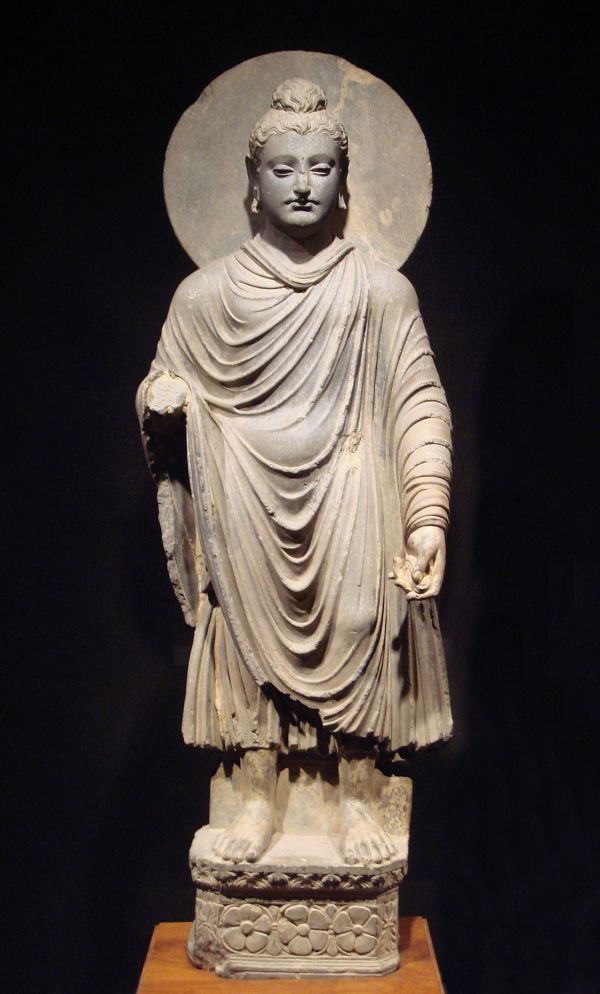
(Gandhara Buddha, Tokyo, 0-100 CE, courtesy wikimedia commons)
FOR THE FIRST six centuries after his death, the Buddha was never depicted in human form. He was only ever represented aniconically by a sacred synecdoche — his footprints, for example; or a parasol, an auspicious mark of kingship and spirituality; or the Wisdom Tree, also known as the Bodhi Tree, under which he gained enlightenment.
How does one give a human face to god, especially to he who was never meant to be a god nor ever said one word about god?
The other problem with representing the Buddha in human form, as the great Sri Lankan art historian Ananda K. Coomaraswamy points out in his 1918 essay “Buddhist Primitives,” is that early Buddhism was disdainful of art itself. He writes: “The arts were looked upon as physical luxuries and loveliness a snare.” Quoting the Dasa Dhamma Sutta, an early Buddhist text, Coomaraswamy adds: “Beauty is nothing to me, neither the beauty of the body nor that that comes of dress.”
“In the omission of the figure of the Buddha,” writes Coomaraswamy, “the Early Buddhist art is truly Buddhist: For the rest, it is an art about Buddhism, rather than Buddhist art.”
Kushans were descendants of pastoral nomads who settled in India during the second century BC– pushed out of China into Afghanistan, then finally reaching India. They developed a form of Buddhism called Mahayana (“Great Vehicle”). They were heirs to Greek, Chinese, Persian, and Indian ancestors. They spread their religion along the trade routes that extended into China and Korea, and eventually Japan.
The Kushans were syncretic, that is, they mixed and synthesized cultural and religious traditions from all four of the areas they entered: Greece, China, Persia, and India. They adopted Bactrian (a middle Iranian language), which they called “the Aryan language”. They adopted Buddhism but venerated the gods of Greece, India, and the Zoroastrians.
The greatest Kushan king was Kanishka, great-grandson of Kujula Kadphises, who conquered Greek Bactria (Afghanistan) in the first century A.D. A headless statue of him in the Mathura museum carries the inscription, “The Great King, King of Kings, Son of a God, Kanishka.” He was something of a narcissist– a quality with which most kings are endowed.
The Kushans established two centers of statuary production, Mathura (which has a speckled red sandstone), and Gandhara (which has an ash-colored schist). Both centers produced Buddhas, with heads. The Gandhara center’s Buddhas have a Hellenistic (Greek) appearance, slender (and idealistic?); the Mathura statues are fuller-bodied, with soft stomachs. The latter resemble the Buddhas of the East, more obese-looking. They have a slight smile.
Under Kanishka, monasteries and other Buddhist centers were established, and the Buddhist texts were translated into Sanskrit. This became the major language of Buddhism.
Kanishka issued coins bearing the image of Buddha– his face. He was recognized as the great patron of Buddhism in China and is related to the establishment of the first Buddhist temple in China, the White Horse Temple near Luoyang.
After the collapse of the Han empire, the Chinese warlords embraced Buddhism as being more egalitarian than Confucianism, which made them feel disrespected as commoners. Between the fourth century BC until after the sixth century AD, when Buddhism was fully established in China, Buddhist texts were translated into Chinese and became the source of Chinese knowledge about Buddha’s life.
The traffic of monks and scholars between India and China lasted well until the 12th century, when Muhammad bin Bakhtiyar Khalji, a Turkic chieftain, destroyed the great Buddhist university of Nalanda, in what is today the eastern Indian state of Bihar.
The statues of the Kushan empire and the coins of Kanishka represent the first time the Buddha’s face was pictured– six centuries after his death. Buddhism started as a religion without art. It was not until the Kushan, with their syncretism, that he became visualized.
(From the New York Times magazine, “How the Buddha got a face”, Sunday, May 10)
picture by DarkWorkX courtesy of pixabay.com
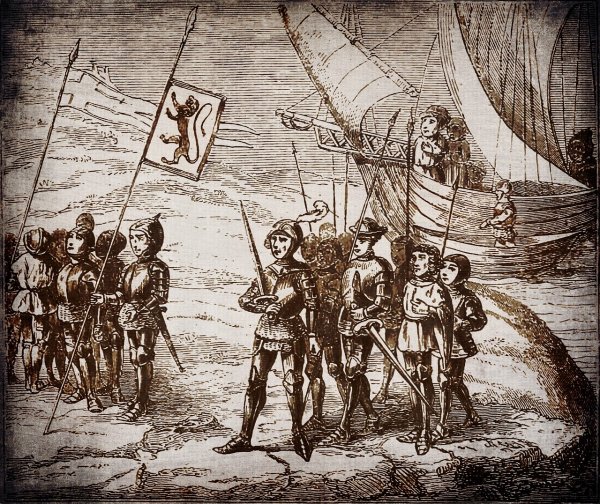
I chose the picture for this blog post because it takes us back to the first contact between Europeans and Native Americans. This contact unintentionally set off epidemics of influenza, smallpox, hepatitis, and other diseases that wiped out up to 90-95% of the population of the Americas. These epidemics occurred even before the Spanish conquest. The indigenous peoples had no immunity and weak inherent resistance to these diseases (due to a relative lack of genetic diversity) and almost all of them died as a result. Estimates of the native population of the Americas before Columbus run to roughly 100 million people– of which 4.5 million in the US claim ancestry today. (Sorry, you’ll have to look up the references to this information yourself; I suggest you begin with the book “1491: New Revelations of the Americas Before Columbus” by Charles C Mann. “Guns, Germs, and Steel” also has information about the infections that caused this near-extinction.)
Doctors Without Borders has sent medical help to the Navajo nation to assist in treatment of COVID-19 patients at the overwhelmed hospitals there, according to a piece published May 12 on WTHR (Indiana) and attributed to the Associated Press. This organization, which normally helps at locations outside the US during medical emergencies, has been dispatched to the hardest-hit site in New Mexico.
According to the article, the virus was seeded in a religious service at the remote Navajo reservation by a man who had been to a basketball tournament in Tucson, Arizona and then returned to his homeland. He attended a service at the “Chilchinbeto Church of the Nazarene” and passed the infection on to locals there. Since mid-March, the virus has spread everywhere, and these numbers are surely an undercount due to lack of testing:
With roughly 175,000 people on the reservation, which straddles Arizona, New Mexico and a small corner of Utah, the Navajo Nation has seen 3,122 cases – a rate of nearly 18 cases per 1,000 people. At least 100 people have died.
Once started, the virus spread rapidly among households on the reservation, where a third of the houses have no running water. The precious liquid is stored in tanks that are refilled sporadically by truck. Washing one’s hands, much less taking baths, is a luxury that is rationed. Large families live together in tiny houses that become hotbeds for virus transmission once seeded.
Another story, from “New Mexico in Depth” dated May 11, states that Native Americans make up 50% of the deaths (and 57% of confirmed cases, according to the NYT) in that state as compared to 11% of the total population. The following story discusses the suicide rate among the same population, which is double that of non-natives.
People who live on these reservations all over America are disproportionately poor and suffer from “co-morbid” conditions like obesity, high blood pressure, diabetes, and alcoholism. Access to health care and medical treatment is critically limited, mostly to clinics run by the Indian Health Service (their coronavirus statistics page is here, showing 5,467 positive tests of a total 57,252 tested). This is a seriously underfunded part of the federal government’s Native American treaty obligations going back to the establishment of the United States. The level of response to this crisis may be understood from the title of this NBC story: “… health center asked for [coronavirus] supplies. It got body bags…”
Indian reservations obtain most of their money from running casinos, which have been established across the US over the last thirty years as the federal government further limited its already weak funding for Native American internment. Nearly 500 casinos, according to this NYT story, have been shut down completely since the pandemic struck. These casinos had been creating $17.7 billion a year in tax revenues in 2019. 40% of reservations operate casinos.
The unemployment rate on reservations has always been greater than 50%, and according to a private communication from a Jesuit who worked there, approaches 80%– while 70% of casino employees are not natives (thus, the burden of casino closings falls upon local whites even more than on natives).
The NYT story also discusses the delays in disbursement of $8 billion which was authorized by Congress in aid to Native American reservations. The money was included in relief bills passed over a month ago, but it has been delayed by problems with the applications for payment. Alaskan natives, who depend upon oil leases for much of their revenue, were included in the relief payments. Political appointments to the administration’s team running the Indian agencies have been accused of routing money to corporations with which they have relationships.
Meanwhile, the Republican governor of South Dakota has demanded that checkpoints at the entrances to reservations there be removed. Tribal leaders have refused, citing the threats from outsiders. There is little that a checkpoint can do to stop the virus; the sites are primarily political statements that hearken back to the Wounded Knee demonstrators of the 1970’s.
The threat to Native American life is real and overwhelming. The NYT article compares it to the demise of the buffalo in the late 1800’s, which forced indigenous peoples to move to reservations (run more like internment camps) and made them dependent on distribution of cattle meat by the federal government.
The extreme threat to Native American survival compares well with the threat that this pandemic poses to poor people. Those people who were well-off and able to “shelter in place” with sufficient food and other resources will experience this virus as merely a “damned nuisance”. The people who were already on the edge will be tipped over into the abyss.
How the Buddha got a face

photo by Einfach-Eve courtesy of pixabay.com
[Somewhere in India, now known as Sarnath] It was here, scarcely 15 miles from the airport, among fields now yellow with mustard flowers, that a renunciant prince had, upon gaining enlightenment some 25 centuries ago, given his first sermon, setting what Buddhists call the Wheel of Dharma into motion. At a deer park once called Isipatana, now Sarnath, a 35-year-old Gautama Buddha, hardly older than Christ when he climbed the hill of Calvary, revealed the eightfold path to liberation from suffering, his four noble truths and the doctrine of the impermanence of everything, including the Self.
FOR THE FIRST six centuries after his death, the Buddha was never depicted in human form. He was only ever represented aniconically by a sacred synecdoche — his footprints, for example; or a parasol, an auspicious mark of kingship and spirituality; or the Wisdom Tree, also known as the Bodhi Tree, under which he gained enlightenment.
How does one give a human face to god, especially to he who was never meant to be a god nor ever said one word about god?
(From the New York Times magazine, “How the Buddha got a face”, Sunday, May 10)

clown face nebula by 272447 courtesy of pixabay.com
Severe virus infections have caused or at least been associated with development of psychiatric disorders like schizophrenia and bipolar disorder. A new article in Medscape.com published May 8 adds COVID-19 to the list of possible cofactors. Researchers Emily Severance, PhD, and Robert Yolken, MD at Johns Hopkins University in Baltimore are studying a possible association of the new virus with psychiatric disorders.
“Over the years there have been data showing an association between exposure to general respiratory viruses such as the flu and subsequent psychotic episodes. This association was especially evident in studies of the aftermath of the great influenza of 1918,” Severance, assistant professor of pediatrics, Johns Hopkins University, Baltimore, Maryland, told Medscape Medical News.
In a 2011 study, an association was found between common coronaviruses that cause colds and the development of psychiatric problems. Two of these viruses, known as HKU1 and NL63 (that cause cold symptoms), were found to show particularly higher levels of antibodies in the blood of sufferers than in controls. The researchers are building on this to start a new study comparing the four common cold viruses and the new coronaviruses– SARS (now known as SARS-COV-1), MERS, and SARS-COV-2 and their association with psychiatric disorders.
The best-known association between infection and mental disorder is the parasite Toxoplasma gondii (found in cat feces) and schizophrenia in the offspring of women who were pregnant when they came down with this infection. A journal review study from 2018 tells us many details of the relationship of schizophrenia to this parasitic infection. The relationship between other infections and psychiatric disorders is not as clear cut, but there are reasons to suspect that viral infections can cause mental problems.
The novel coronavirus is particularly sneaky, and preliminary anecdotal reports suggest that psychosis and hallucinations can occur during the course of acute infection. Night-time hallucinations have been reported by many who are ill with fever. There are suggestions that this virus can directly infect nerve and brain structures, causing breakdown of normal signalling. The loss of smell is one well-publicized example.
Influenza (not a coronavirus disease) can cause an increased risk of bipolar disorder by nearly four times in children of women who were acutely ill during pregnancy. The risk for schizophrenia was even greater: a seven times increase occurred if women were infected in the first trimester.
The new study will use stored blood from patients with psychiatric disorders and collect new samples from those with and without COVID-19. A barrier to this work is the higher priority of studies looking at treatments for, and susceptibility to, COVID-19. Nonetheless, the researchers hope to complete sample collection within the year, possibly piggy-backed on other, more acute studies.
The aftermath of the pandemic may find us with post-traumatic stress symptoms among hospital workers as well as the general public who are exposed to others dying around them and the uncertainty surrounding this situation. In addition, we will likely find an increase in serious psychiatric disorders after the pandemic has died out.
As a family physician and potential patient, I find that the multifarious manifestations of COVID-19 are especially disturbing. Who knows when one of us will fall victim to this virus, or if not the virus, to the economic fallout from having to quarantine ourselves to avoid it? Who knows what odd symptom may be a harbinger of acute infection?
 Conrad Theodore Seitz