A note about New Jersey governor Chris Christie: as followers of the news know, he has run the government of New Jersey like his own personal corporation, using the machinery of government to punish or reward his enemies and friends to a frighteningly vindictive extent. The incident known as “BridgeGate” in which one of his highest personal assistants was caught ordering a partial closing of an essential bridge from New Jersey into New York that caused an enormous traffic jam, simply to politically punish a Democratic mayor who refused to endorse him, is just one example of his pettiness and disrespect for his constituents.
Now comes a federal Justice Department look at his responsibility in the quashing of indictments against Sheriff Trout of Hunterdon County in western New Jersey. The sheriff and undersheriff were subjects of a grand jury investigation that returned 43 indictments for abuse of office, but the indictments were quashed by the Christie administration. The story was aired in a long article in the New York Times in 2013, prompted by a whistleblower who was fired for his pains. The federal Justice Department has only recently begun to investigate this situation.
The reason I bring this up here is that a top pharmaceutical company executive, Robert Hariri of Celgene, has been mentioned (but not indicted) in this case. It seems that Mr. Hariri is a big supporter of Governor Christie, and he was given “fake law enforcement identification” by the sheriff above after doing a favor for the undersheriff.
This tidbit was mentioned in an International Business Times article about the federal investigation, and I quote:
”
The county prosecutors’ case against Trout and her underlings also involved embarrassing allegations about a particularly prominent figure — Robert Hariri, a high-level executive at the pharmaceutical giant Celgene, which is headquartered in New Jersey. Though Hariri was not charged, county prosecutors alleged he had obtained fake law enforcement identification from the sheriff’s office after he flew Russo on his private jet to a conference in Washington.
Hariri was a major contributor to Christie’s campaign as well a[s a] member of the governor’s transition team. Celgene employs Christie’s former chief of staff, Richard Bagger, and the firm has made $160,000 worth of donations to the Republican Governors Association — which until recently was chaired by Christie. Celgene occupies a seat on the board of Choose New Jersey, which has funded Christie’s international travel.
”
Thus, we see that the pharmaceutical industry is a strong supporter of one of the most corrupt governors in the United States, who had been mentioned as a potential candidate for the Republican nomination to run for President of the US. Unfortunately for Mr. Christie, “Bridgegate” has scotched his plans in this regard and revealed to potential Democratic supporters (whom he has courted) that he is no better than the average Republican candidate.
The IBT article can be found here: http://www.ibtimes.com/chris-christie-administration-target-new-federal-criminal-probe-1806644
Snow Filled Runnel

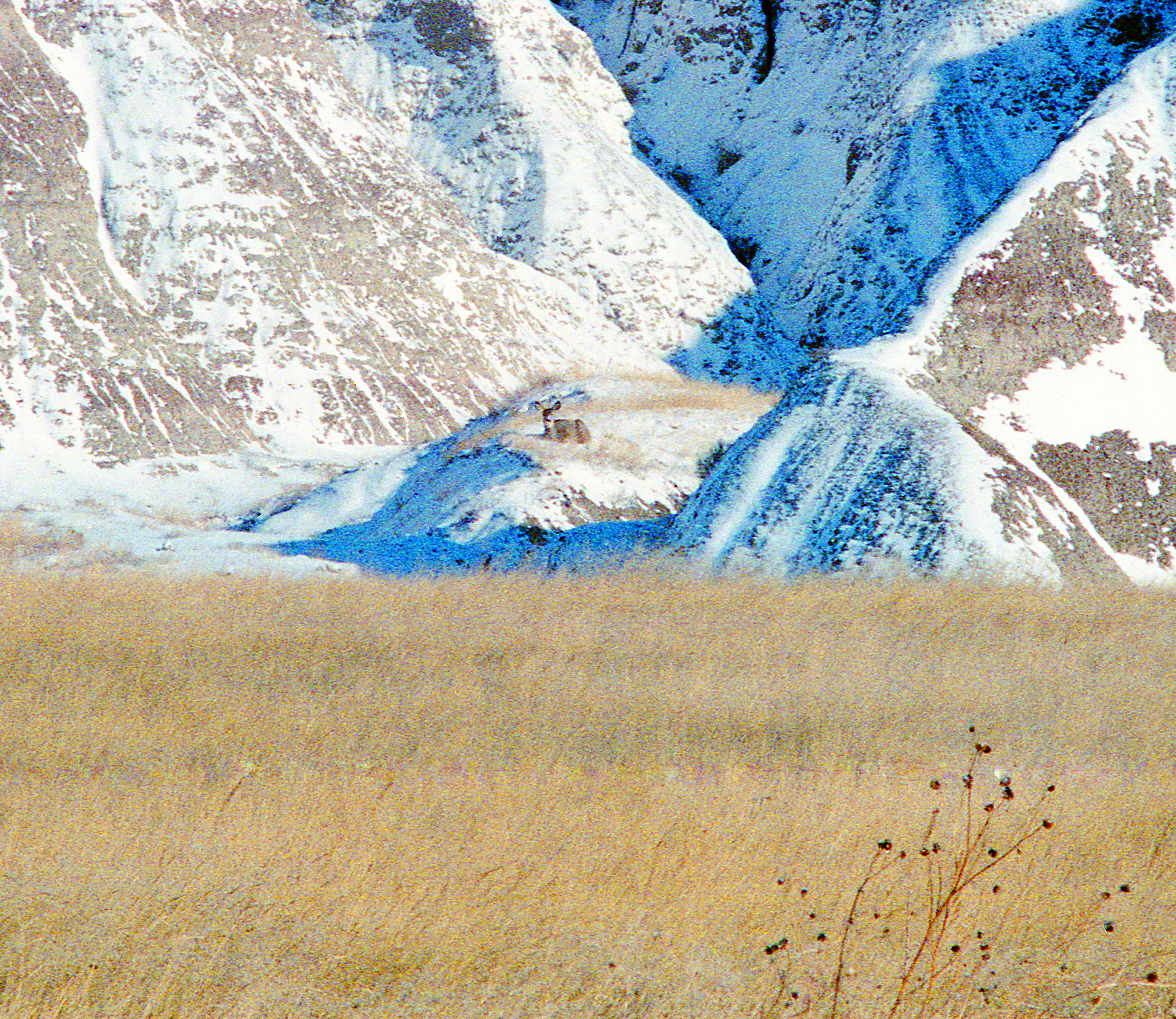
Mule Deer Resting on a Snowy Hillside
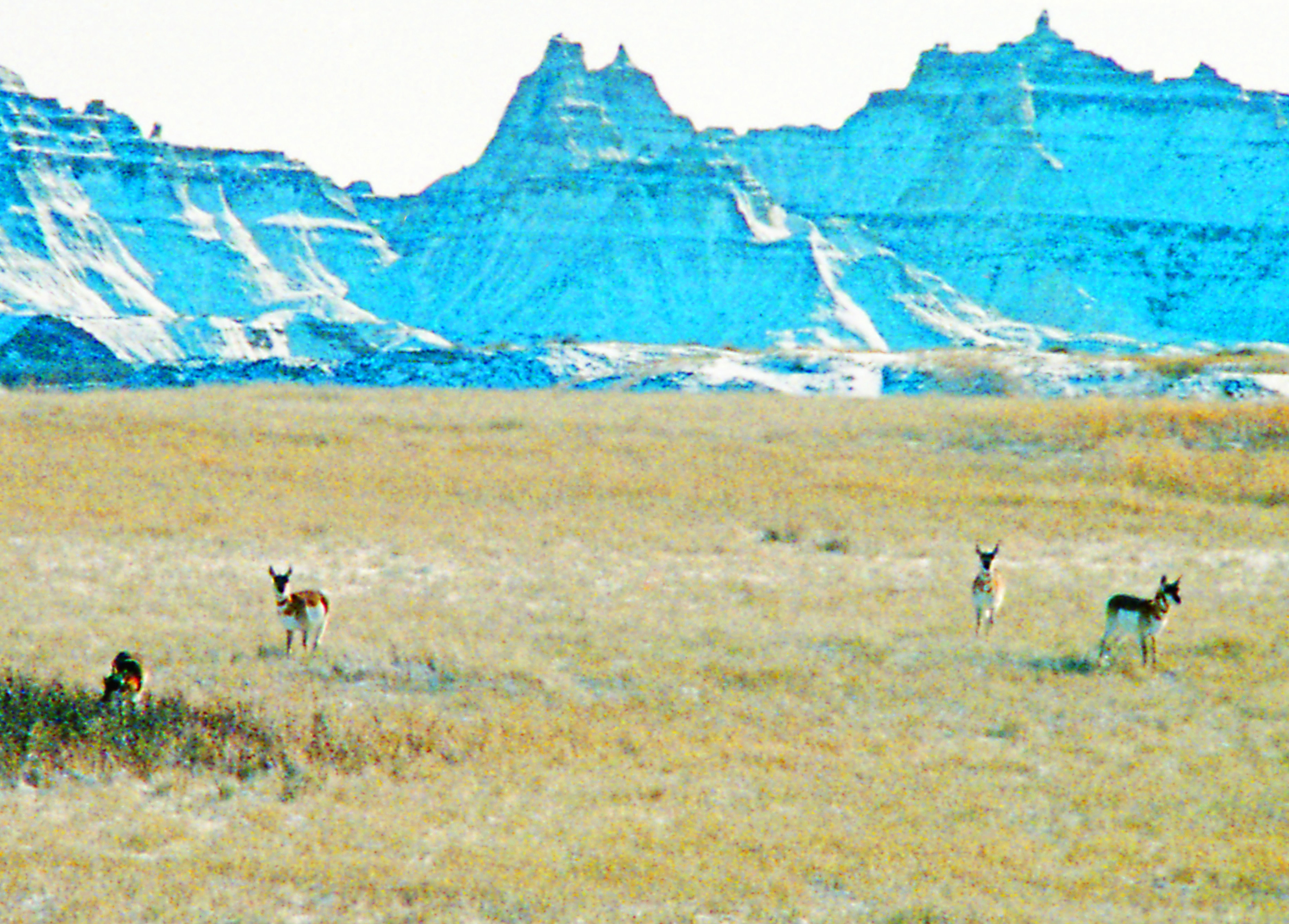
Antelope in Snowy Badlands
From the New York Times online yesterday:
“After adjusting for inflation, the average income for the richest 1 percent (excluding capital gains) has risen from $871,100 in 2009 to $968,000 over 2012 and 2013. By contrast, for the remaining 99 percent, average incomes fell by a few dollars from $44,000 to $43,900.
That is, so far all of the gains of the recovery have gone to the top 1 percent. By contrast, this group suffered only one-third of the income declines during the preceding recession.”
A graph accompanying the article shows that the percentage of income received by the top 1% was below 10% between approximately 1950 and 1988. Before and after that period, the percentage was greater than 10%, starting in 1912, when accurate records began to be kept, until 2013, the last year for which figures have been calculated. In addition, the graph shows an extremely steep rise in the percentage between 1988 and 1991, and an equally steep drop between 1940 and 1945.
These numbers show the effects of two factors: first, the second world war, and second, the reductions in taxes on the wealthy passed during the Reagan and first Bush administrations. If we include capital gains, the figures are even more unbalanced.
The graph also shows that rapid economic growth and popular government are coincident with a relatively low percentage of income going to the top 1% of wage earners. It would be trite to call the period from 1950 to 1968 the “golden age” of American society, but there appears to be a significant correlation between relative equality of income and good economic times.
These figures suggest to the sophisticated economist that relative taxes on high wage earners should be higher than they are now. It is clear that the higher income individuals can afford higher taxes than they are paying now, and that lower income individuals need higher wages and lower taxes to improve their percentage of total income.
The NYT article is at: http://www.nytimes.com/2015/01/28/upshot/gains-from-economic-recovery-still-limited-to-top-one-percent.html and I recommend that you study the graph closely for its parallels to American growth and prosperity.
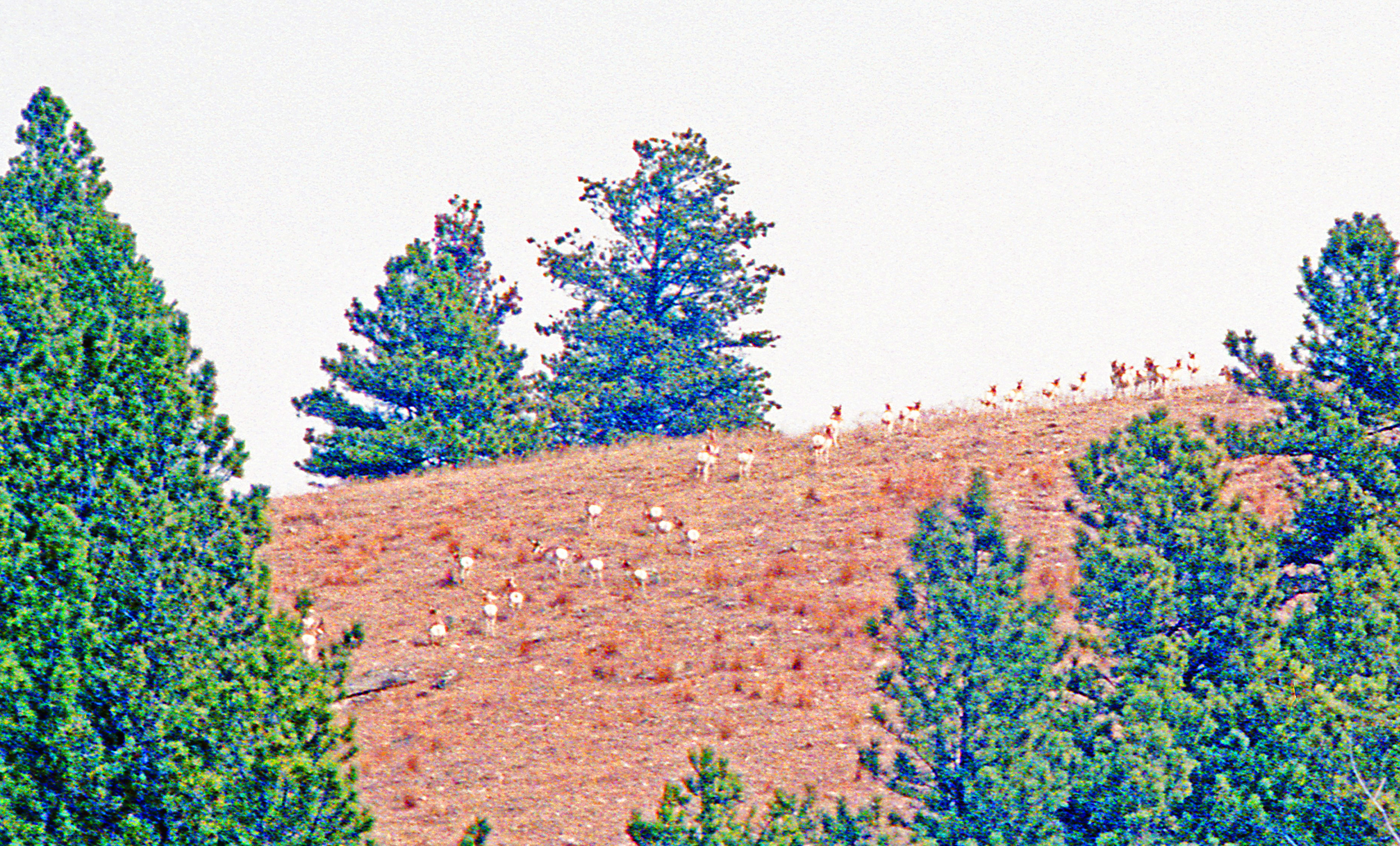
Crowd of Antelope (Closer)
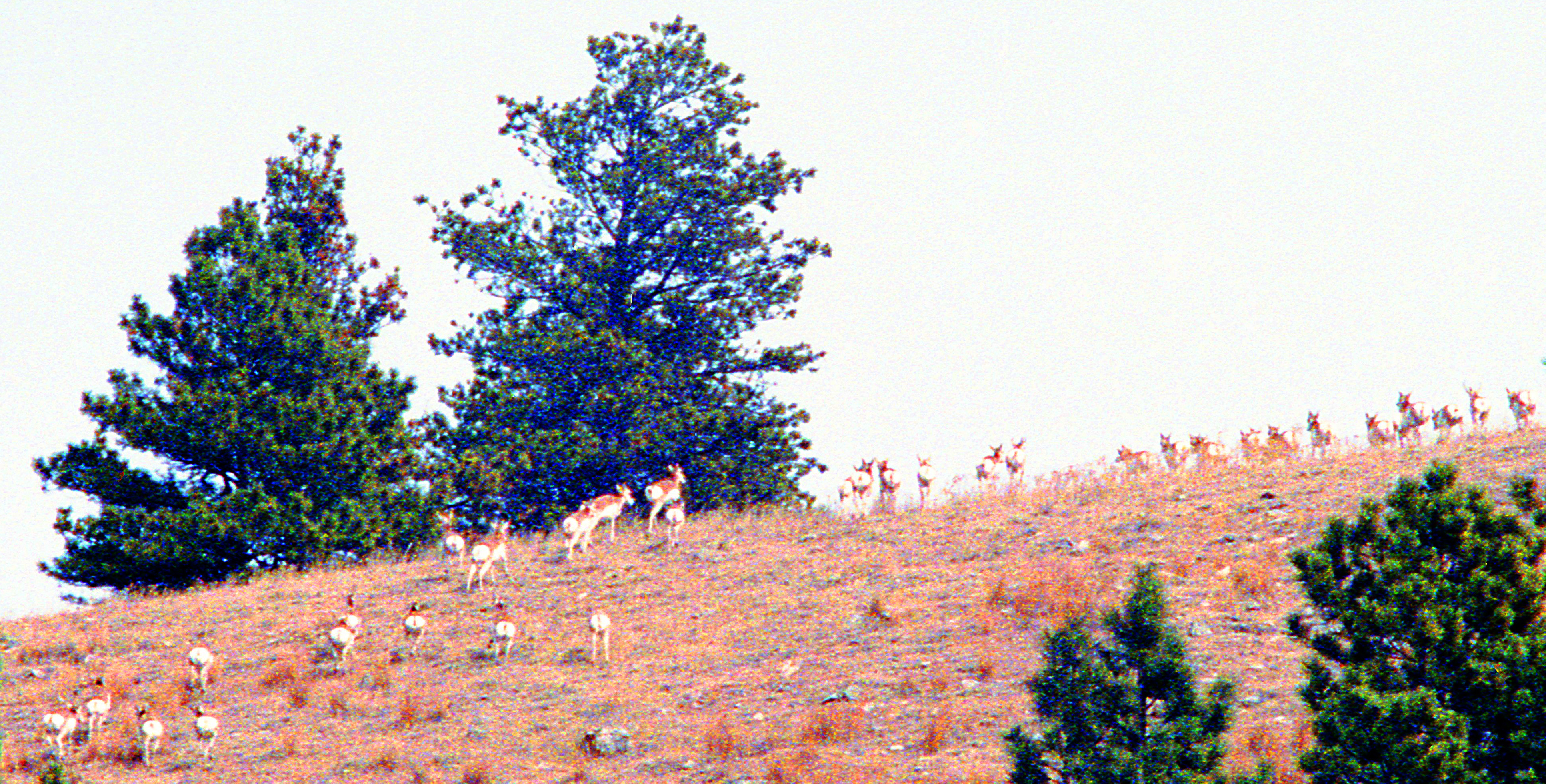
Crowd of Antelope
Whatever Happened to Ebola?
Last fall we had several posts on the Ebola epidemic that struck Liberia, Sierra Leone, and Guinea. We noted that the experts had predicted the possibility of 1.4 million cases of Ebola by this time (the end of January.) That prediction was a worst-case possibility based on nobody doing anything to put the brakes on the spread of the virus.
Since that time, much has happened. In particular, local people have dramatically changed their behavior, partly on the basis of government propaganda and instructions on how to prevent the virus from jumping from person to person. In particular, the traditional both-cheeks kiss greeting has been abandoned by many Liberians. Families have been allowing government workers in protective suits to pick up corpses (the body is actually most infectious after death.) Some families are still hiding in the bush with their sick relatives to avoid the possibility of the corpses being buried in unmarked graves or cremated. Cremation, or an unmarked grave, would make it impossible for relatives to mourn properly (horrifying eventualities to traditional West African sensibilities.)
In addition, the US military has set up numerous Ebola treatment centers where patients can be cared for safely, and small amounts of international money have helped to bring more resources to bear on the problem. There is still a dire shortage of funds and workers to care for Ebola patients, but things have improved.
As a result of these changes, the number of new cases of Ebola has dropped dramatically, especially in Liberia. A total of more than 21,000 cases have been counted, with over 8,600 deaths, but there are now only 5 new cases in the entire country of Liberia (which was seeing over 300 new cases a week last fall.) There are still people falling ill every day, especially in Sierra Leone, and the death rate is still approximately 60%, but fewer patients are coming to light and treatment centers are no longer overflowing with patients waiting for others to die to free up beds.
There is every reason to believe that the epidemic can be brought under control, especially since companies producing Ebola vaccine are starting to deliver limited amounts to the epidemic areas (with more to come.) The greatest risk is that people will forget about Ebola now that the epidemic is no longer raging out of control.
The World Health Organization, recognizing its failure to respond in a timely fashion to this Ebola outbreak, and remembering that it failed to put in place recommendations given after the 2009 influenza epidemic, has finally endorsed the program developed back then. They are now more serious about establishing a global cadre of emergency health workers, a fund to be used in new epidemics, and stepped up efforts to work on vaccines, diagnostics, and treatments for new epidemic infectious diseases. In addition, the head of WHO has publicly recognized that they are the only agency with a global mandate to be a first responder to emerging infectious diseases. This is a reversal of the policy stated last summer, which was based on a very limited budget and the political nature of the organization. The political emphasis of WHO personnel has both hampered its ability to respond to emergencies with high expertise personnel, and inhibited early use of large monetary appropriations.
Perhaps a realignment of WHO’s priorities to expertise from political appointments and the development of an emergency fund will allow the necessary vigilance to respond appropriately to future infectious emergencies.
Some time ago I posted about a man named Anil Potti who was, for a while, riding high in the medical research community on the basis of a fraudulent method for predicting which cancer patients would respond to which particular medications.
It has come to light that, in 2008, a third year medical student who was working for Potti wrote a letter to his supervisors detailing his concerns about the fraudulent treatment methods that Potti was inflicting on some 100 patients with advanced cancers. This letter was dropped in a bottom drawer and ignored until further complaints were made by others with more advanced standing in the research community. The medical student chose to repeat his entire third year of school in order to get a better research experience in a different lab.
The feces has finally encountered the fan, and Potti is going to be a defendant along with his mentor and his institution, Duke University in a civil trial which begins next Monday. Retraction Watch, a fascinating blog, has detailed 11 retractions of papers by Potti along with other expressions of concern. The Cancer Letter has a long and detailed summary of the events surrounding Potti’s frauds, which went unpunished from 2007 until last year, despite the exposure via the medical student’s letter of Potti’s essential misdeeds in 2008.
The article in The Cancer Letter lays bare the behavior of Duke University professors and deans, who chose to ignore the early warnings and now are subject to civil penalties in a suit brought by cancer patients who were misled by claims that they were receiving the latest in tailored therapies.
Read the article in The Cancer Letter here: http://www.cancerletter.com/articles/20150123_2 and here: http://www.cancerletter.com/articles/20150123_3#.VMOqWbPOqWA.twitter as well as the Retraction Watch summary of his retractions here: http://retractionwatch.com/2012/02/14/the-anil-potti-retraction-record-so-far/
Antelope Browsing


