Skip to content

A Late Note About Donald’s Rhetoric: Lies and Authoritarianism

2016-11-17

As the Republican candidate for president in 2016, Donald J. Trump has accomplished many things. He engaged in rhetorical tactics unprecedented in recent American electoral history. He was straightforwardly misogynistic. He repeatedly endorsed obviously false claims. There were frequent open discussions of the intentions behind his many odd comments, retractions, semi-retractions and outright false statements.

On a certain level, the media lacked the vocabulary to describe what was happening. Trump was denounced repeatedly for “lying” and at times the apparently more egregious “bald faced lying.” But that is not a sufficient description. Neither was the charge by the philosopher Harry Frankfurt that Trump was in fact a master of “bullshit,” which is distinct from lying in that the speaker is not just communicating information he knows to be false, but is unconstrained by any consideration of what may or may not be true. While this description is technically true, it is at best terribly misleading. This presidential campaign has revealed that our academic and media class has insufficiently grappled with the problem of mass communication.

Liberal democratic societies by definition have a pluralism of value systems. This poses a problem for the politician seeking to gain office, just as it does for the advertiser seeking to gain customers. The total audience consists of sub-audiences with conflicting value systems. The problem of mass communication in a liberal democracy is that of creating and conveying a maximally appealing message to an audience made up of groups with conflicting value systems.

There is a familiar way to respond to the problem in United States presidential politics. It is to convey shared acceptance of a value system to one specific group of voters, while concealing one’s commitment to it to other groups in the audience. In the 2012 campaign, the Republican candidate Mitt Romney repeatedly said that President Obama was weakening the work requirements on welfare. The claim was immediately debunked. In an essay for The Stone, I used Romney’s strategy to explain this familiar response to the problem of mass communication. The goal was to communicate to a certain group of white Southern voters that Romney shared their racial attitudes. But the strategy of communication was sophisticated enough that it provided plausible deniability to the many Republican and independent voters who do not share racist ideology.

Trump has taken an entirely distinct approach to the problem of mass communication.

In “Origins of Totalitarianism,” Hannah Arendt writes:

Like the earlier mob leaders, the spokesmen for totalitarian movements possessed an unerring instinct for anything that ordinary party propaganda or public opinion did not care to touch. Everything hidden, everything passed over in silence, became of major significance, regardless of its own intrinsic importance. The mob really believed that truth was whatever respectable society had hypocritically passed over, or covered with corruption … The modern masses do not believe in anything visible, in the reality of their own experience … What convinces masses are not facts, and not even invented facts, but only the consistency of the system of which they are presumably part.

According to Arendt, the “chief disability” of authoritarian propaganda is that “it cannot fulfill this longing of the masses for a completely consistent, comprehensible, and predictable world without seriously conflicting with common sense.”

The goal of totalitarian propaganda is to sketch out a consistent system that is simple to grasp, one that both constructs and simultaneously provides an explanation for grievances against various out-groups. It is openly intended to distort reality, partly as an expression of the leader’s power. Its open distortion of reality is both its greatest strength and greatest weakness.

Donald Trump is trying to define a simple reality as a means to express his power. The goal is to define a reality that justifies his value system, thereby changing the value systems of his audience. Two questions remain: What is the simple reality that Trump is trying to convey? And what is the value system to which this simple story is intended to shift voters to adopt?

Trump regularly says that America’s “inner cities” are filled with Americans who are impoverished, and of African-American descent. According to Trump, these are places of unprecedented horror. In a tweet on Aug. 29, 2016, Trump wrote: “Inner-city crime is reaching record levels. African-Americans will vote for Trump because they know I will stop the slaughter going on!”

This has continued as one of the central themes in his campaign; there is supposedly an unprecedented wave of violent slaughter. In November 2015, Trump tweeted an image of the following statistics about race and murder from 2015, supposedly from a source called the “Crime Statistics Bureau of San Francisco,” which does not appear to exist. It included wildly inaccurate figures that indicated that a large majority of white people killed were being killed by black people.

In the United States, around 14 percent of the population is of African-American descent. White Americans make up around 75 percent. If 81 percent of white American citizens who were murdered in 2015 were murdered by a small minority group of American citizens with some kind of vaguely generalizable profile, it may be worth addressing in policy. However, F.B.I. statistics from 2014 tell us that 15 percent of whites are killed by their black fellow Americans, and 82 percent of white Americans are killed by their white fellow American citizens. Fact checkers of Trump’s tweet were displeased.

Trump’s narrative about “inner cities” is so old that young people are unfamiliar with it. There is no national crime wave. While increases have occurred in cities like Chicago and Los Angeles, violent crime in the United States remains at historic lows. (A thorough study of this topic can be found at FactCheck.org.)

The simple picture Trump is trying to convey is that there is wild disorder, because of American citizens of African-American descent, and immigrants. He is doing it as a display of strength, showing he is able to define reality and lead others to accept his authoritarian value system.

The chief authoritarian values are law and order. In Trump’s value system, nonwhites and non-Christians are the chief threats to law and order. Trump knows that reality does not call for a value-system like his; violent crime is at almost historic lows in the United States. Trump is thundering about a crime wave of historic proportions, because he is an authoritarian using his speech to define a simple reality that legitimates his value system, leading voters to adopt it. Its strength is that it conveys his power to define reality. Its weakness is that it obviously contradicts it.

Trump is, as Frankfurt asserts, certainly openly insensitive to reality. But he is not carelessly insensitive. To lump Trump’s rhetoric into a category that includes advertising is strange. It is prima facie bizarre to be satisfied with a description of the rhetoric of a dictator like Idi Amin’s as “insensitive to truth and falsity.” Why have we been satisfied with such descriptions of Trump? Perhaps our media, as well as our academic class, assumes that we are healthy liberal democracy, and not susceptible to authoritarian rhetoric. We now know this assumption is false.

Denouncing Trump as a liar, or describing him as merely entertaining, misses the point of authoritarian propaganda altogether. Authoritarian propagandists are attempting to convey power by defining reality. The reality they offer is very simple. It is offered with the goal of switching voters’ value systems to the authoritarian value system of the leader.

This campaign season has been an indictment of our understanding of mass communication. Either we lacked the ability or concepts to describe authoritarian propaganda, or we lacked the will. Either way, we must do better.

Describing what Trump has done requires us to talk not just about the importance of honesty and accuracy, but also about power, value systems and in-groups vs. out-groups. It also requires us to confront the failures of elite policy that have led to an erosion of democratic norms, primarily public trust, that make anti-democratic alternatives suddenly acceptable.

[Author’s note: this was written on November 6, 2016, but failed to make it into the blog before the election.  My apologies for the delay.]

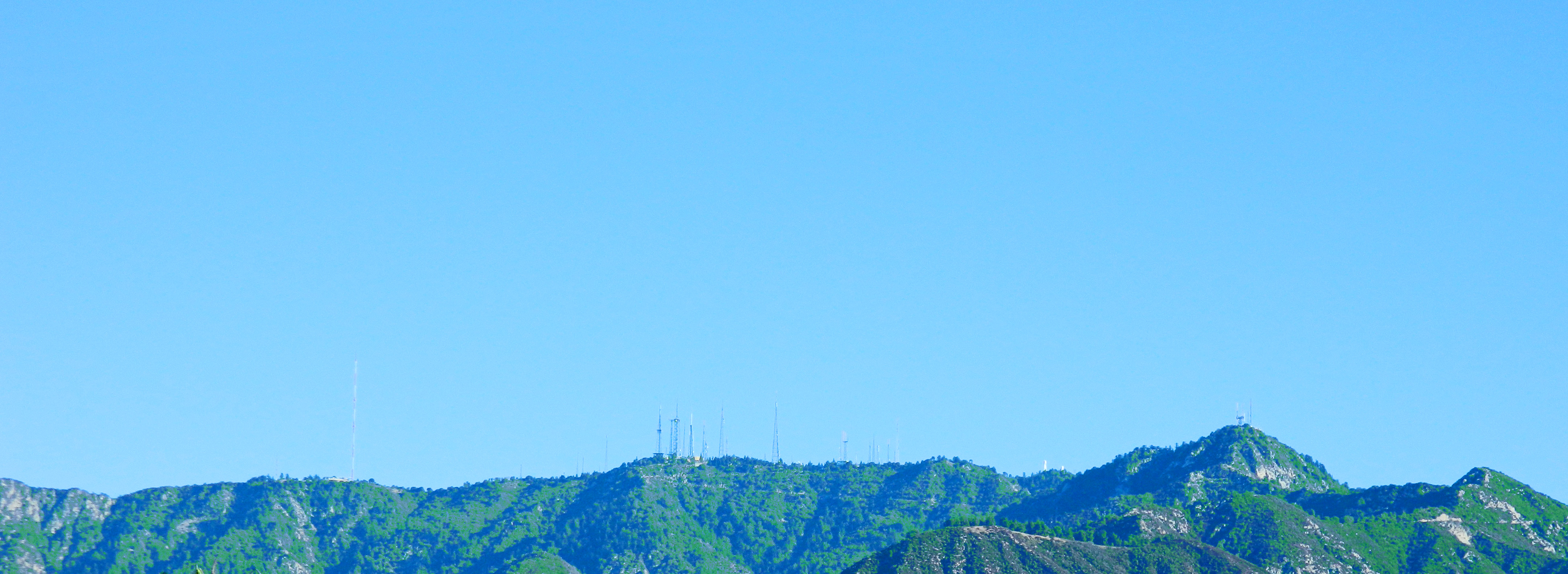
Antennas on Mount Wilson, Above Pasadena

2016-11-17

dscn1360a

The Kakistocracy Begins

2016-11-17

That word, “kakistocracy”, has been on everyone’s lips during the last few days.  I thought it was a great word until I discovered that it had already been appropriated long before the election by a blog run by a rabid conservative (I won’t link to it because the content made me ill.)  Kakistocracy is simply defined as “government by the worst people.”

This post will be somewhat disjointed; it is mostly sourced from a New Yorker article by Ryan Lizza.

It seems that Donald has no strong feelings about any policy but publicly adopts any stance that is popular, regardless of whether it is consistent or logical, and regardless of whether it is conservative or liberal.  In addition, he has shown that he will accept Russia’s guidance on policies that affect that state.  Accordingly, he has already specifically ruled out fighting genocidal Syrian strongman Bashar al-Assad because he is supported by Russia.

In addition, he has said that he wants to retain the two most popular aspects of Obamacare: the coverage of offspring up to age 26 and the acceptance of all applicants with coverage for pre-existing conditions.  He hasn’t said how he will get the insurance companies to accept that without the mandate that all people have to get insurance, which was the price that insurance companies demanded for accepting the two popular aspects mentioned in the last sentence.  It sounds as if Donald won’t be able to repeal Obamacare at all without dropping those popular aspects; how is he going to handle this dilemma?

Donald’s transition team, so far, includes the following:

Former House Speaker Newt Gingrich, who is 73 y/o and resigned from Congress in 1998 after destroying Congressional comity.

Lt. General Michael Flynn, forced out of Pentagon in 2014, and an analyst on RT (TV station funded by Russian govt and known for Russian propaganda)

Rudy Giulani, who took millions from foreign interests not aligned with US policy at all and is also a rabid conservative.  Giulani once said:  “I do not believe that the President loves America.”

Alabama senator Jeff Sessions, “whose last appointment to a federal position was rejected, in 1986, after a cascade of allegations that Sessions made racially insensitive remarks, including that he believed the Ku Klux Klan was ‘O.K. until I found out they smoked pot.’” (from New Yorker article)

Another four on transition team are three of Donald’s adult children and his son-in-law Jared Kushner (whose father was imprisoned by disgraced New Jersey governor Chris Christie.)  These are the children who Donald said would be running his business empire while he is president.

These are the individuals who will be guiding the transition to Donald’s government.  They will have to have top-secret security clearances.


In addition, Donald’s top two advisors will be Steve Bannon, late of the racist/conspiracist web site Breitbart, and Reince Priebus, who will be chief of staff.  Neither man has ever served in the federal government.

Alex Jones, radio conspiracy theorist, received a call from Donald shortly after the election thanking him for his help.

This is how the kakistocracy begins.

Here’s What Your Votes Have Gotten You– Courtesy of the New Yorker

2016-11-17

Donald Wants to Restrict Your Freedom of Speech

2016-11-16

Our president-elect has promised to “open up our libel laws” so that he can sue newspapers (and private individuals) “and win lots of money.”  He has infamously been involved in over 4,000 lawsuits and has filed seven “libel” suits, all but one of which he has lost (the one suit he lost was by default when the private person’s lawyer didn’t show up for an arbitration hearing.)

The implications of Donald’s promises are chilling but his chances of changing libel law are slim.  Fortunately, libel is not a liberal-conservative dissension area, and the courts have been very clear about their opinions in this regard.  There is an article that details Donald’s failures in lawsuits over negative statements about him in the Media Law Resource Center, titled “Donald J. Trump is a Libel Bully but Also a Libel Loser

The article makes clear, following opinions by judges dismissing Donald’s lawsuits,

…opinions expressed in the form of “rhetorical hyperbole,” “rigorous epithets,” and “the most pejorative of terms” are protected from liability, so long as the opinions do not veer to into factual accusations, such as accusing someone of a crime, unethical conduct, or the lack of professional integrity in a manner that would be proved true or false.

Donald even filed a lawsuit against the comedian Bill Maher in California after Maher promised to donate $5 million to a charity of Donald’s choice if he would produce a birth certificate proving that he was not the offspring of an orangutan.  When Bill failed to donate the money after Donald produced a birth certificate, Donald’s lawyers sued.  They quickly withdrew their suit when they discovered that California has a law called an anti-SLAPP statute (SLAPP=Strategic Lawsuits Against Public Participation) that awards lawyer’s fees to the defendant in any lawsuit that is determined to be intended to silence public criticism of malefactors:

It was obvious to media lawyers that Maher could seek a quick dismissal under the U.S. Supreme Court decision Hustler, which held that statements about a public figure reasonably understood to be a caricature, parody, or satire – a joke – are not actionable under any theory of liability claiming a falsehood.[66]

Maher also had a very good chance of winning an anti-SLAPP motion under California’s anti-SLAPP statute. Although Trump’s lawsuit against Maher was labeled a “breach of contract” lawsuit, Trump’s lawsuit targeted Maher’s speech about a matter of public concern – Maher’s critique of Trump’s “racist,” anti-Obama birther campaign while Trump explored a presidential bid [67] As it turns out, Trump’s birther campaign likely helped catapult Trump to the GOP presidential nomination three years later.

The California law (also passed in a few other states in different forms) gives relief against Donald’s tactic of suing people in order to cause them grief and great expense rather than to actually win.  This tactic, forcing people to hire lawyers to defend against groundless suits that have no chance of actually succeeding, is more dangerous in these cases than any legal risk because there is always a risk that, if you don’t appear in court to defend yourself, your opponent may win by default.

One of Donald’s victims discovered this when she was sued for declaring that the Miss Universe contest was rigged.  Her lawyer was incompetent and not licensed to practice law in the jurisdiction in which Donald brought arbitration claims against her.  The judge in the case, clearly biased in Donald’s favor, awarded him $5 million.  Fortunately, although she never paid any money, Donald’s lawyer declared the judgement satisfied.  This case is also detailed in the article cited above.

There is a risk, however small, that Donald will force changes in libel law or otherwise abridge our freedoms of speech because he appears not to understand our fundamental constitutional rights.  Nor does he comprehend, despite the experience of having brought numerous lawsuits, the details of our libel laws.  This is our greatest risk– that an ignoramus will destroy our basic rights because they don’t fit his narcissistic notions.

Things that will be Lost

2016-11-15

Roe v. Wade.  Obamacare.  Medicare (will be replaced by a voucher program.)  Social Security (depends on Republicans other than Donald.)  Freedom of Speech.  Privacy (there is a rumor that the NSA will be given free reign to spy on all Americans when Donald takes office.)  Regulations to curb pollution from coal-fired power plants.  Dodd-Frank financial regulations.  The estate tax (applies to 5,300 of the richest Americans); the Alternative Minimum Tax.  The Paris Climate Change Agreement (this will be harder to ditch than other things); payments to the United Nation’s climate fund.  The Education Department.  The Environmental Protection Agency. The North American Free Trade Agreement; the Trans-Pacific Partnership.  Deferred Action for Childhood Arrivals (protects undocumented/illegal immigrants who arrived here as children); deferred action for parents of Americans and lawful permanent residents (currently blocked by a 4-4 tie in the Supreme Court.)  See also this article in the New York Times.

Hillary Won Popular Vote By 1.5 Percent and Lost Electoral College by less than 140,000 votes in Florida and Michigan

2016-11-15

According to the New York Times, Hillary Clinton won the popular vote by more than 2 million votes, or 1.5 percent.  This is more than Kennedy won in 1960 (0.2 per cent) and Nixon in 1968 (0.7 per cent), as well as Gore’s loss to Bush in 2000 (he won the popular vote by 0.5%.)  It was less than Carter’s win in 1976 (1.7% of the popular vote) and Bush’s win in 2004 (2.4% of the popular vote.)

There is a clear trend here.  You can win the popular vote by a substantial margin and still lose the electoral vote, but only if you have the support of voters in large states and not the support of voters in small states.  A margin of 120,000 votes separated Hillary and Donald in Florida, with 29 electoral votes.  A margin of 12,000 votes in Michigan, with 16 electoral votes, separated the two.  If the votes had gone the other way in two states, a total of less than 140,000 votes, Hillary would have won.  Or if Hillary had won Pennsylvania, which she lost by 68,000 votes; or if she had won Wisconsin, which she lost by 27,000 votes.

It is just possible that Republicans could have cheated to win in those two states.  It is also more likely than not that the Republicans didn’t cheat, but voter suppression allowed them to win.  There are many possibilities, all working together to lead to Donald’s win.

Then there are the demographic breakdowns.  Donald won 42% of women, including 47% of married women; what prompted married women to vote for Donald?  What prompted 58% of Protestants and 52% of Catholics to vote for Donald, including 54% of people who attended church at least once a month?  Why did 49% of white college graduates vote for Donald, versus only 45% for Hillary?  We think we know why 67% of whites without a college degree voted for Donald.  52% of (all races of) those under 45 voted for Hillary, although a majority of whites in all age groups voted for Donald.  52% of those with incomes under $50,000 a year, and 49% of those with incomes under $100,000 voted for Hillary.  Small majorities of those who decided for whom to vote since September voted for Donald, whereas those who had already decided where for Hillary by an equally small majority.

We may well ask: why would any woman vote for Donald?  Indeed, why would any woman, any Latino, any religious person, or anyone with a low income vote for Donald?  Clearly all of these people voted against their own self-interest, a trademark of Republican voters in general.

All of these questions point towards the inability of Hillary’s campaign to get its message across to the people who needed to heed it most.  Why?  I suspect that the effectiveness of Republican propaganda is so great that it induces people to vote against their own self-interest because of the delusional state that is created by their messages.  These issues need to be closely studied if Democrats, and progressives in general, are to win future elections.

Self-referential Comics By xkcd

2016-11-10

With thanks to xkcd.

The Worst Has Happened

2016-11-09

In the general disaster that was yesterday’s presidential election, a few details might have been missed.  For instance, Hillary won (by 0.2%) the total popular vote.  In the District of Columbia, over 92% of votes were for Hillary.  Who would know what’s really going on better than the residents of our nation’s capital ?

The question I have, is will Donald retaliate against his accusers as he has promised?  Will he build a wall on the border with Mexico, and will the Mexican government pay for it?

The only bright spot is Donald’s promise to invest in our infrastructure.  With all of Congress on his side, he will have the opportunity to make good on this promise.  We will see if this promise is for real, or just more hot air.

Republicans Make it Harder to Vote, and Cheat to Get Their Way.

2016-11-08

I draw your attention to an article in the Harvard Law Review, dated January 7, 2014 and written by Richard L. Hasen, which discusses Republican attempts to make it harder for people, specifically poor people (who are disproportionately black, Mexican, and Democratic) to VOTE.

This article explains that Republican briefs before the courts have made thinly veiled attempts to decrease the ability of people who are challenged by lack of money, time, and opportunity to vote.  They try to claim that their obstructions are really political in that they are trying to decrease Democratic opportunities, and that their attempts are to be adjudicated in the legislatures rather than in the courts.

The article points out that the Fourteenth Amendment’s “equal protection of the laws” clause should be strictly interpreted:

Courts should apply a more rigorous standard to review arguably discriminatory voting laws. When a legislature passes an election-administration law (outside of the redistricting context) discriminating against a party’s voters or otherwise burdening voters, that fact should not be a defense. Instead, courts should read the Fourteenth Amendment’s Equal Protection Clause to require the legislature to produce substantial evidence that it has a good reason for burdening voters and that its means are closely connected to achieving those ends.

Currently, partisan gerrymandering of election districts causes disenfranchisement of minority and poor voters.  Republicans in state legislatures claim that the gerrymandering is purely for the benefit of a party rather than to disadvantage poor or minority voters.  This is disingenuous because Republicans are disproportionately white and well-to-do, while minority and poor voters gravitate to the policies favored by the Democratic Party.

The article begins with a review of the conflict that occurred in turn of the 20th century North Carolina, where the reverse segmentation took place: black voters almost exclusively signed up for the Republican Party, and electoral reforms were enacted by a Republican and Populist-majority state legislature.  Participation in elections soared after the reforms, reaching over 85% of eligible black voters in 1896, but the exclusively white Democrats were appalled.  The Democrats, in a vicious backlash, started a campaign of violence and fraud, preventing blacks from voting; they took over the Legislature  in 1898.  They then passed highly restrictive voting laws, after which blacks could no longer register to vote.  This situation prevailed until the Voting Rights Act was signed into law.

The various laws used by Democratic whites in the South to prevent blacks from voting also had a negative effect on poor whites.  For example, poll taxes made registering prohibitively expensive for poor people regardless of color.  Property requirements, literacy tests, and residency restrictions also worked against poor people, many of them sharecroppers who moved frequently and thus could not establish residence long enough to satisfy the laws.  These laws, in addition to personal intimidation and violence, practically eliminated blacks from the voting rolls in the South until the Voting Rights Act was passed.

The Democratic Party was the beneficiary of voting restrictions and Democrats in Congress prevented blacks from being represented in federal government or receiving federal help against Jim Crow for many years.  The Republican Party was wiped out in the South and became a minority party federally, consisting of a semi-liberal Eastern wing and a dominant, rabidly conservative Midwestern wing.  When the Democrats under Kennedy and Johnson began to legislate black equality, they did it without the help of any Southern Democrats; only the Supreme Court pointed the way.

Suddenly the Democratic Party became the party that helped black people, and Southern whites deserted the party en masse while newly enfranchised blacks joined, admiring Kennedy.  The Republicans, who were already all white because of the disenfranchisement of blacks, accepted the former Democrats into their conservative coalition.  Nixon and Agnew pioneered the deeply illegal policy of the big lie: the claim that Republicans support the “little people” (whites whose power had been infringed.)  This catapulted the Republican Party into power under Reagan, with the Watergate scandal quickly “explained away” as a noble but overzealous mistake that saw Nixon rehabilitated before his death.

Nixon’s politics of resentment and personal destruction, the support of stingy rich people, and the flight of bigoted whites, formed a party that became the essence of all that is evil in politics: hatred of anyone who was different, disgust for those who were less advantaged, envy of those who succeeded by being honestly talented and ethical, and willingness to achieve power by cheating.

There was a union in one party of bigoted whites and the wealthy, who had been in the Republican Party since it became the party of big business in the late 1890’s.  This conjunction of racists and rich people was driven on by Richard Nixon and his tactics of extra-legal aggrandizement of power.  The result was a party that supported the rich and used any tactic available to get and hold on to power, including propaganda, campaigns of slander and libel that spread big lies, harassment by purportedly legal investigations into malfeasance that actually used the power of the prosecutor to frighten and intimidate law-abiding citizens, and finally secret involvement in assassinations.

(All but the last few paragraphs is derived from information in Wikipedia.  The last three paragraphs are my own invention.)